Five stars or none: my review ratings explained.

OLYMPUS DIGITAL CAMERA

I thought I’d better post this before it’s time for my March reviews (coming soon, of course).

Whilst sharing my monthly reviews with you I’ve been wondering what makes me really love some books. I often read books, even those written by friends, which are fine – no criticism – but which don’t attract my five star rating. Not because they’re badly written. Not because there’s anything wrong with them. Because they aren’t exactly right for me. So what is?

To begin with, my five star book has to have impeccable grammar. If the writer uses things like fragmented sentences they have to know what they’re doing and break the rules carefully, showing quite clearly that they know the rules in the first place and are breaking them for special effects. I can easily be ‘thrown’ by dangling participles for example, though I usually have no objection to prepositions at the ends of sentences.

Then there’s the structure of the writing. (I’ll come to plot later.) Repetition annoys me, whether it’s repeated adjectives or repeated information. It’s acceptable in dialogue where it might relate to a character’s speech patterns, but not elsewhere. Too much use of flashbacks annoys me. Flashbacks can be interesting but for me, they need to be used very sparingly and I need very clear signals that the section is not in the same ‘timeline’ as the main story. The same applies to recounts, where you find out what is going on through a letter, a phone call or a character spending time bringing everybody up to date. Changes of point of view have to be shown quite clearly, preferably by an extra line break or a new chapter. I recently mentioned Joanna Trollope, who switches point of view in the middle of paragraphs. Ugh! Information dumps are occasionally necessary but should be punctuated with action. Even in a long serious lecture real people move, cough, look out of the window etc. Characters should do this too. It’s almost unbearable when characters ‘tell’ other characters what they should know already, presumably so that the reader will be better informed. There are other ways to educate the reader. I like plenty of dialogue but find it hard to cope with the way some authors try to use a different way of saying ‘he/she said’ with every line. The word ‘said’ doesn’t shout at the reader and provided it’s occasionally changed to ‘asked’ or similar, the dialogue flows smoothly. There are better ways to tell us the character was shouting or laughing than to use these verbs instead of ‘said’.

I can accept typos as long as they aren’t frequent. There are some mainstream publishers who seem to expect their authors to do all their own proof reading and even writers like Terry Pratchett and Robin Hobb are not immune. But provided the typos are few and far between, I’m just sympathetic. Sympathy takes a nose dive when it comes to an inability to recognise homonyms and an obvious reliance on a spell checker to catch them, which it can’t. Similarly, I object when writers use long words and choose the wrong ones. Again, spell checkers are not the best judges of this. You need to know what you’re doing before you use a spell checker in much the same way that it’s better to have some kind of grounding in arithmetic before using a calculator.

I personally dislike books that can’t make their minds up about style. Some highly respected writers (e.g. Hilary Mantel) move from first to third person, from plain narrative to a kind of screenplay, etc. in an effort to retain the attention of the reader. It doesn’t do anything for me other than irritate me although I know some critics regard the practice with awe. I am less concerned about the type of admonitions given in books such as the Chicago Manual. To begin with, novels are not journalism, which is what the Manual was always intended for. Also, if you look at almost any page in any of the classics or modern classics (e.g. Lord of the Rings)the Chicago Manual and its advice (or the equivalent when the book was written) has been, thankfully, ignored. The past tense, formed using ‘was’, is sometimes essential. Adverbs have an important part to play in description. Etc. I do not want my fiction (or serious non-fiction) written in journalese.

I also find it almost impossible to read long stories in present tense. There is a growing tendency to use it. I think it’s some kind of effort to make text resemble the way films give us an immediate look at what is happening. I can read it when the writing is a very short story but anything longer and I get quite stressed at the immediacy and would truly rather keep it for films! Short passages in e.g. a crime story can be effective, provided they really are short and the writer reverts to past or narrative tense as soon as possible. When people are talking about something that happened to them, even recently, they usually use the past narrative tense. Present tense tends to be used only by people who have a poorer command of language and this is another reason I think the practice annoys me when used for characters who are clearly reasonably well educated within their ‘world’.

I also find it quite difficult to read sustained passages in italics. Sometimes authors use italics for e.g. letters but I always hope they won’t be long. I find italics visually disturbing (perhaps the very reason we use them for emphasis) and always wish I could easily change the font of the text as well as the size.

The formatting has to be reasonable. I abandoned a book in March because it had line breaks after every two lines and I simply couldn’t concentrate.

So – impeccable grammar and excellent style, with my own personal quirks attended to. I need these, and quite often I can tell within a page or so whether I’m going to get them. If one is missing, the book can still hold my attention because of the content or something else I appreciate. (With Trollope it’s her descriptions and her witty ways of expressing characters’ opinions.) Having got those or most of those, there’s the question of content.

I like well developed characters who appeal to me from the start. I’m never attracted to characters I would not like to meet in real life and don’t much enjoy reading a story told from the point of view of a villain or even someone I just disapprove of. I accept that such writing might be clever and interesting – admirable, even. All I’m saying is that it isn’t to my taste. So if, for example, a crime story starts with a look at the crime from the point of view of the criminal, I’m quite likely to abandon it without caring whether they are caught or not. I want to know the feelings of the victim or of the investigator from the beginning. This is not quite as much of a problem in fantasy or romance, of course, though there may well be e.g. romantic detective stories I have not read because of this type of introduction.

Sometimes, characters just bore me, and if after a few pages I couldn’t care less what happens to them, that’s also a signal to give up. I’m sure there are other readers who would follow their adventures with eagerness and it isn’t a criticism, just an observation that is more about me than about the writer. I find it very hard (though not impossible) to get interested in vampires, ancient Egypt, medical and technical research, or high school and college students so books about any of those have to try harder to ‘hook’ me.

My favourite characters live on in my head long after their ‘story’ has finished and I admire the writers who can create these new fictional friends for me. Sometimes I will turn to fanfiction, my own or that of other writers, to explore the further adventures of characters I love.

Once we have characters who have ‘hooked’ me we reach plot. I hate plot holes with a really fierce hatred. I have read crime stories published by the big mainstream publishers where questions are raised and never answered or where I can see the flaws in the information given. I have read fantasy or sci-fi where the basic premise of the story or world is never properly explained. I have read romances where the ‘chemistry’ between the main characters is not obvious, or not obvious enough to explain their apparent passion. In all genres there are stories where events clearly couldn’t happen the way they’re described. I know I once wrote a story where a minor character could not possibly have been where I said they were at the time stated. I caught the error and if I hadn’t my editor would have done, I hope. It’s easily enough done, but it certainly throws me out of the story and I find it hard to get back in. The same applies to other types of incorrect information. I remember reading a historical romance set in the time of the Borgias and based on some real characters. As soon as the writer had chocolates served at a party I lost all trust in her and never regained it. (Whilst chocolate arrived from South America at the end of the Middle Ages, chocolates, in the form of sweets as opposed to the drink, were not created till much later). This need for correct information is just as strong in fantasy and sci-fi. Good writers build a fictional world and must stick to the ‘rules’ they themselves lay down, whether those refer to our reality or another. And of course their editors must be aware of the pitfalls. I personally gave up on writing about a world with two moons because I couldn’t get my head round the difference this would make to things like tides and seasons.

So my favourite writers have a grasp of language and style that appeals to me. They introduce characters I can’t bear to leave. Their plots are handled deftly and I can trust their information.

Finally, they need an underlying message I can relate to though I don’t want to be preached at and I don’t enjoy fiction that is just a vehicle for pushing an agenda – I’d rather read non-fiction for that, and I probably read as much non-fiction as fiction, if not more. Non-fiction also needs good language and style as well as trustworthy information. Info dumps are slightly more acceptable but there are still ways of splitting text into manageable portions.

I want to read things that agree with my world view. I am aggressively anti-racist, anti-sexist, anti-homophobic, etc. I accept that other people will have different religious and political views but don’t want their beliefs pushed at me. I believe in human rights for everyone. I don’t expect all the characters to agree with me but the overall tenor of the book should be acceptable. I know that horrific acts take place in our world and am interested (though not happy) to read about them in non-fiction but would prefer my fiction to have less of a focus on the gory, the depressing, etc. unless I can be assured of a happy ending. Escapist? Up to a point – the point where my fiction and non-fiction reading diverge.

For example, a pair of books I read about a year ago one after the other were The Spanish Holocaust by Paul Preston and Too Many Fairy Princes by Alex Beecroft. The Preston book dealt in horrendous detail with the Spanish Civil War and I was mesmerised, distressed and interested enough to seek out more books on the subject. Alex Beecroft’s fantasy, whilst it did deal with a kind of civil war in a fae kingdom, gave me romance, beauty and hope, a sort of counterpoint to the realities of Franco’s regime.

I rarely read books in the same genre without a hiatus to read something else. When I give something five stars I really really mean it! Any flaws at all lead to a four star rating. Books that are good enough in their way, possible even excellent for other readers, and quite often technically good get three. Then there are those with two (lots and lots of flaws but I carried on reading) and one (dire). An abandoned book might not mean any flaws at all, just that the book wasn’t to my taste. I abandon books that don’t interest me after a very short trial. I give five start rating to books I would absolutely recommend and those vary enormously.

To sum up:

Five stars: I adored it and would recommend it highly
Four stars: I liked it and would recommend it but there are criticisms
Three stars: fine but not really my ‘thing’ – neutral about recommendations and suggest readers look at the blurb.
Two stars: fascinating enough to finish but exasperating because of all its flaws; not really recommended
One star: dire. (I rarely finish a one star book but some short stories fall into this category)
Abandoned: abandoned (!) and that could be either content or style. As with three stars, read the blurb.

February Reviews (late)

I forgot to post these and we’ve nearly reached April and the March ones.

I’ll use my star system – five for excellent, four for good with flaws, three for OK, two for not recommended, and one for dire.  I’ll post at greater length about my ratings another time.

February television: series and films:

A million ways to die in the west ***** Hilarious and thought provoking. I loved this, with its amusing yet gripping plotline and its subtle commentary on America past and present.

Elementary (pilot)*** Well, it was watchable and if it was on at a friend’s house I wouldn’t look away, but I was disappointed. I thought it tried so hard to make itself thoroughly ‘transformative’ that it lost sight of the original concept.

The world’s most extraordinary homes (4 episodes)**** I enjoyed this series but admit to having fallen asleep once or twice. I adored the house built into one of NZ’s protected forests and was fascinated by the underground homes. Some of the others worried me because I thought the architects had not considered what might happen if the owners were permanently or temporarily disabled – or their visitors or families were. There is perhaps something to be said for the EU rules on making all new buildings accessible to those in wheelchairs.

The great interior design challenge ***** I don’t often watch ‘reality’ TV but this series had me absolutely gripped. Interior design is something that really interests me and I got completely caught up in the designs and in the competition element. I knew only one person could win but I was slightly disappointed – I would have voted for the other finalist. An added bonus was the information about the various types of houses the competitors were assigned with some history of the areas.

Sherlock season 4*** I didn’t enjoy this at all. No criticism of the actors who did really well and were worth watching. I didn’t like the way it strayed so far from the original idea into fairly gruesome and unpleasant territory and into realms where I found it hard to suspend disbelief. Initially I disliked the emphasis on Mary’s past as a spy, then towards the end of the series I disliked the new discovery of the female Holmes. In so many crime shows recently (Whitechapel, Ripper Street, Hawaii 5.0) the focus has switched from the cases and the methods used to solve them and homed in on the lives of the main characters. The change of emphasis doesn’t appeal to me. That isn’t saying it’s either good or bad – just that it isn’t for me.

Books – I’ll comment properly on the four and five star ones. 17 this month if I ignore some I quickly abandoned because they just weren’t of interest to me. I haven’t included  abandoned titles in this list because it isn’t fair to authors who might be perfectly good if their stuff is what you’re looking for.

Five on Brexit Island/Bruno Vincent*** (humour) OK but not very funny.

Just Stay/Aria Grace*** (m/m romance) OK but I wouldn’t bother with any more by the author. The writing is fine, but the plot is ultimately forgettable.

So this is Christmas/Josh Lanyon**** (m/m romance/crime) A lovely addition to the Adrien English series, which all fans thought was over. But even after the guys get together, there are crimes to be solved. And some of them happen at Christmas. This one is a missing persons case. Adrien and Jake are an interesting couple and the extended family adds to the feeling that these are real people. Recommended if you already know the series.

The Secret History of Fantasy/ed Peter S. Beagle**** (anthology with extra essays) Mixed quality, as most anthologies are. The essays, by Peter Beagle, Ursula Le Guin and David G. Hartwell talk about modern fantasy, its genesis, history, etc. and there seems to be a small amount of snobbery directed at the kind of fantasy that involves any kind of fae, though why, when they all approve of Tolkien, I have no idea. One of my all time favourite twisted fairy tales is in the book: Snow, Glass, Apples by Neil Gaiman, which turns Snow White on its head.

There are 19 stories altogether.

9 (incuding the Neil Gaiman) are good or excellent

7 are OK or interesting

3 were boring but well written

The Gaiman story was the only one I had seen before. Recommended if you’re interested in what I can only describe as alternative fantasy.

How it Works: The Dog/Jason Hazeley and Joel Morris ***** (humour) These Ladybird books for adults are hilarious and this one is no exception. The style and format are based on the Ladybird children’s books. Recommended for dog lovers.

The Complete Mary Berry Cookbook**** (cookery) I got this at a massively reduced price in Aldi and it was worth it. The recipes are good and so are the explanations about various techniques and ingredients. However, if I had paid full price I might have been annoyed. The editors (Dorling Kindersley) had made a lot of proofing errors, putting the wrong pictures with some recipes, and leaving out essential information for others. Nothing I can’t cope with but I’m a fairly experienced cook. I’m busy going through it again to note the recipes and tips I want to access quickly. Most of our good recipe books are in Portugal and it will be nice not to have to consult the laptop and then carry the info in my head to the kitchen!! Recommended for serious cooks but not for the beginners because the errors make some of it confusing. I should also perhaps say that yes, I read cookbooks cover to cover.

The Tales of Beedle the Bard/J.K.Rowling**** (fantasy) I’ve kept meaning to read this! It was very sweet though I like the commentaries on each tale, by Albus Dumbledore, better than the tales themselves. An interesting addition to the Potter pantheon and I was impressed that JKR could make me believe (whilst reading) that these were genuinely old tales. Recommended for HP fans.

I’m Watching You/Karen Rose**** (crime) I like Rose’s books – formulaic, yes, but gripping. The usual scenario – cop meets woman lawyer/teacher/etc in the course of a serial killer murder case and romance ensues. I found I’d read this before – the titles and blurbs tend to merge and my paperbacks are in Portugal. Last time, I see, I gave it five stars – perhaps it wasn’t quite as exciting second time around because whilst I was still enjoying the story, I remembered who the villain was. Recommended for anyone who enjoys crime/romance. However, I will only now be buying this author in second hand bookshops. The Kindle price, let alone the hard and paper back versions, is prohibitive. I have one more on my Kindle which I will probably read soon.

Faery Born/Donna Joy Usher**** (fantasy) A witch discovers she is half fae and that she’s good at fighting. She joins the border guards to protect both peoples from goblins. There is also a budding romance with a fairy prince. Well written and a fresh approach to both fae and witches, but although it’s the first in a trilogy I won’t be buying the others because there is too much fighting for me and I can do with slightly less gore in my escapist fiction – goblin brains over breakfast don’t altogether appeal. However, if bloody battles are your thing and you like feisty heroines and fantasy, I can recommend this.

Once upon a dream/Megan Derr**** (m/m fantasy/short stories)This is a collection of the author’s short twisted fairy tales written at various times in her career. Some are excellent and others are boring. Like JKR Derr has captured the ‘voice’ of old fairy stories and when the tales are good, they’re captivating. Recommended for readers who like to see fairy tales given a new look.

The Sinclair Selkie/Chris Quinton**** (m/m fantasy romance) Well, obviously, a story in which human meets selkie. There’s a mystery, too, and the whole plot is excellent. However, as with another friend’s selkie story, (Priddy’s Tale by Harper Fox). I was disappointed not to learn more about the kingdom under the sea. I shouldn’t really criticise either of them for that – these were the stories the authors wanted to tell – but for me personally, this lost a star for the omission. Recommended for anyone who likes the Scottish Isles and selkies.

Half Broke/AE Wasp**** (m/m romance) This is part of a series about military veterans and it explores issues of PTSD among those returning from war and those who have had trauma in their lives at home. Set on a ranch with some nice minor characters including some interesting children. Recommended but I’m not sure I’ll be following the series and indeed another story set in the same series was one I abandoned as being so impenetrably American that it was not really accessible for non US readers.

Next of Kin/Joanna Trollope**** (family story/modern fiction) I wasn’t going to read this but it was in the same hardback as the other book of hers I read last month. Again, the writing is beautiful – superb descriptions, well developed characters, interesting turns of phrase, etc. etc. But again, the plot just doesn’t exist. The characters react to a death in the family in various ways. That’s it. I don’t totally regard this as a novel because it has very little in the way of beginning, middle and end, it relies on flashbacks and some confusing changes of viewpoint, and is more of a portrait of a family than a story. I gave it four stars for the writing, but I’m not sure I should recommend it.

The Challenging Behaviours Pocketbook/Fintan O’Regan***** (psychology/education) This was a refreshing book. It spent very little time on the causes of challenging behaviour but actually described examples and suggested sensible ways to deal with it. I really feel it ought to be required reading for the staff at my grandson’s current school. Recommended.

Lessons in Love/Charlie Cochrane***** (m/m romance/crime/historical) I realised I hadn’t read any of Charlie’s books and in fact had mixed her up with another author. As she’s a friend on DW, WordPress and FB (and might be reading this) I thought I should rectify the matter. I adored this book. It’s set in Cambridge where two academics in the first years of the twentieth century get drawn into investigating crime, and into each other’s lives. The characters are wonderful, the mystery and conclusion are satisfying, and the historical element is interesting. The very best thing is that this is the start of a long series so I have lots more pleasure to come. Charlie was published by Samhain, who have just closed, but I managed to get the first eight books before they disappeared. Apparently they are to re-appear either with another publisher or self published. Highly recommended.

Wanted, A Gentleman/KJ Charles***** (m/m romance/historical) I loved this. The story is a regency romance that turns regency romances upside down with one of the main characters a freed slave and the other a disgraced writer. Apart from the characters, who are interesting and let the author explore concepts of how much we owe to other people and why, and the meaning of freedom, the story is a standard one of an eloping heiress and attempts to prevent her marriage at Gretna Green. One friend who is a reviewer on Goodreads thought it was too short but I enjoyed it very much. I like all KJ Charles’ writing because she invariably casts new light on the society her characters are inhabiting. Recommended for anyone who enjoys regency romance.

St Nacho’s/ZA Maxfield***** (m/m romance) A gorgeous romance which also manages to explore the psychology of addiction, of guilt, and of different kinds of love. I got it as a ‘freebie’ and wasn’t expecting too much but it was one of my favourite books of the month. Highly recommended.

Fanfic – a good haul of ‘keepers’ this month.

I’ve given a rough wordcount so that you know whether or not you’d have time to read them! They’re all on AO3. No ratings – I only tell you about five star fics. I’ve also given the URLs. Guests are welcome to read on the Archive though some authors have disabled guest comments. If you like the story you can still leave kudos.

The Last Shreds of Autumn/merripestin (Lord of the Rings) 16k Frodo/Sam. The story takes place in the ‘gaps’ of canon, starting in Rivendell. Beautifully told and very plausible.

http://archiveofourown.org/works/366658/chapters/595983

My Time/Pale Rider (The Professionals) 58k This is essentially a ‘prison fic’ exploring issues about prison. Doyle is in prison after his (canon) trial – he doesn’t escape a sentence. So we see the British prison system through his eyes. The slash is minimal and serves as a background rather than a main part of the story. Blink and you’ll miss it. Very well researched and extremely thought-provoking.

http://archiveofourown.org/works/8878033

Oak and Mistletoe/HildyJ (The Hobbit) 55k An AU in which Smaug never took Erebor. Prince Thorin comes to Bilbo as a last resort. Bilbo is a healer or wiseman, and Thorin is seeking a cure for an inability to use his senses. A nicely told story, with a long build-up to romance. There are a couple of short sequels on AO3

http://archiveofourown.org/works/3674136/chapters/8123694

They Do That Sometimes/nagi_schwarz (Stargate Atlantis, Stargate SG1) 8k John’s nieces are kidnapped and the team goes into action, helped by Daniel Jackson. Exciting and ‘different’. An m/m element is present but only as background and there is no explicit romance.

http://archiveofourown.org/works/8883298

Rich and Strange/hedda62 (Lewis) 18.5k A gripping case fic with a first time romance blossoming at the same time. The story is very loosely based on concepts in The Tempest, and there are lots of Shakespearean and other literary references to intrigue the reader.

http://archiveofourown.org/works/482648

Next month (which is approaching rapidly), I hope to be more organised and do reviews at the beginning, after which I hope I can keep it up all year!

Monthly reviews


Since I’ve been subjecting my social media friends on Dreamwidth and LiveJournal to reviews which have sparked interesting conversations, I thought I’d post them here too. Of course, I’m now running to catch up because the end of January and even the end of February are well behind us, but by the end of this month I’ll be in sync with my other blogs. Providing them with reviews was a commitment to a new year’s resolution.

Let’s see how long I can keep it up…

I’ll list the books I’ve read each month but will only review in depth the ones I either adored or think are important. I’ll include long fanfic that I think deserves to be read. I’ll also mention films, plays and TV series but only when they’re over, and again, only the things that mattered to me.

Reading first.

The excellent:

The Folklore of Discworld/Terry Pratchett and Jacqueline Simpson
A fantastic look at the Discworld myths, legends and superstitions, comparing them with their earth counterparts. Quite informative about earth and very funny about Discworld. The co-author is a folklore specialist. Lots of explanation as to where Pterry found some of his inspiration and a great deal of tongue-in-cheek research about cross-cultural fertilisation between here and there.

Hexbreaker/Jordan L.Hawk
I quite liked her Widdershins books and expected to be mildly entertained – and then was blown away. She creates an early twentieth century alternative New York with shape shifters and witches as ‘normal’ elements in the population and puts them in an m/m crime story. Lovely writing and I really hope that there’s going to be a series, which is her usual m.o. I desperately want to leave a review somewhere but know I didn’t buy it on Amazon. I can’t work out where I did get it but strongly suspect somewhere like All Romance which of course is now scattered to the winds. Any advice?

Brexit: What the hell happens now?/Ian Dunt
Useful book which doesn’t so much bemoan leaving as explore what could happen next. Pulls together all the threads we’ve been getting in the news and presents them along with credible alternative scenarios stretching years ahead. Frightening and serious but contains advice both for politicians and protesters.

Pwning Tomorrow/ed EFF
25 stories – speculative fiction based around modern technology and where it might lead. Like most anthologies, this is mixed but I think everyone would find at least some stories that would appeal. I got it as a freebie because I’m a member of Electronic Frontier Foundation but they ask people to spread the word so if you want to give it a try, donate at https://supporters.eff.org/donate/pwning-tomorrow

Monks and Wine/Desmond Seward
We got this very cheaply and it’s out of print but there are some sensible offers on Amazon. I would recommend it highly. The book traces the influence of monasteries on viticulture and along the way describes the various areas, buildings, etc. and gives the non-Catholic reader (like me) a useful amount of information about things like the differences between monks, friars, etc. and their history. It was published in 1979 so the final chapter: ‘Monks and wine today’ is perhaps less inspiring than the rest because obviously a lot will have happened since then!

My Lady Dis/ChibiMethos
Gorgeous fanfic (http://archiveofourown.org/works/1401862). The story is now in my head canon and bridges the gap between The Hobbit and Lord of the Rings. Dain invites Dis to join the rest of the family (what’s left) in Erebor and on the way she has to pass through Mirkwood. Thranduil comes himself to escort her and brings Tauriel who had a baby by Kili (so film canon, not book) and therefore considers herself a widow. The women bond, the baby is wonderful, and Thranduil ends up in love with Dis. All perfectly believable and romantic without being over sweet. Beautifully written and a lovely long story (51,426) that unfolds slowly with lots of diversions and extras. I suppose it’s het romance, which doesn’t always appeal to me, but the culture clash of elves and dwarves made it instantly intriguing.

The reasonable:

The Modern Natural Dyer/Kristine Vejar
Interesting and useful.

Dead in L.A./Lou Harper
M/m crime. Quite well done and readable.

The Best of Friends/Joanna Trollope
I like her writing, her world building and her characterisation but deplore her plots.

Needing A Little Christmas/Silvia Violet
Pleasant and nicely written m/m Christmas romance.

Fractured Hymns/A.M.Arthur
Competent exploration of PTSD in an m/m romance context.

Neurocomic/Farinella and Ros
Beautifully drawn and produced ‘comic’ exploring the brain.

And two to avoid:

Incognito/L.A.Watson
Rather confusing and badly put together m/m crime story. I am still not sure who anybody worked for or what happened.

A Matter of Scale/Jonathon Burgess
The cover and blurb of this freebie were delightful – a wizard takes on a litter of baby dragons. Very short, badly formatted, and not terribly well written. Plus, he only really takes them on at the end.

So – 13 published books and about the same number of fanfics though only one is mentioned here.

Screen and stage.

We went to The Curious Incident Of The Dog In The Night Time.

The National Theatre production finally left London (well, no, it’s still in London till summer but the tour started) and came on tour, starting in Salford at The Lowry. Simon Stephens, who adapted Mark Haddon’s book for the stage, came from Stockport so is a ‘local lad’. The Lowry was a great venue to start the tour. Local/regional TV made the most of it! Bruce McGregor, one of the (new) touring cast, is a close friend and near neighbour of ours – he had been regaling us throughout rehearsal time (which was in London) with dire tales of ‘bootcamp’ and various injuries. The performance is amazing – lots of exciting sound and light to show us neurotypicals how Christopher experiences the world, and lots of strenuous work by the actors who literally throw and carry Christopher around. I had already watched a programme about the adaptation and staging and was fascinated by the end result.

Highly recommended if it comes to a theatre near you. The only downside was the cost. After paying for three of us (husband, daughter and me), plus car parking, plus programme, plus pre-show drinks (beer and ginger beer so nothing spectacular) we felt we might need to take out a mortgage. And we didn’t go for the expensive seats – Bruce had warned us that you actually get a better view of all the movement from high above.

Then we went to Alice In Wonderland at Hyde Festival Theatre.

This was adapted for the stage by a couple of local writers/producers/directors and performed by a cast drawn from a local amateur theatre group working with a local children’s drama academy. The adaptation was excellent. The show was full of music and clever lighting, with some stunning choreography, dance sequences and costumes. I just wish whoever taught the children to move so well had taken the time to train them to speak a little more slowly and facing the audience. One or two were ‘naturals’ but the majority were inaudible. However, the story was carried bravely by the adult actors and the whole evening was very enjoyable. The entire event, including a programme, only cost two of us the price of one seat at The Lowry (and parking was free).

We went with some friends, one of whom is a pianist who works closely with the local theatre group. His wife was, like me, a teacher, and remembers teaching one of the writers/producers at primary school. She said that in those days he was hopeless and nobody thought he’d ever amount to anything. How wrong can schools be??!!

I’ve already posted about my reactions to To Walk Invisible, the BBC film about the Brontë Sisters. It was one of my TV highlights for January.

The series that had me hooked all January was Class, the Doctor Who spin-off which was totally gripping. It was broadcast two hour-long episodes at a time, starting at 10.30 on a Monday night and given very little publicity. I have not seen it mentioned once online and am wondering if I was the only one to see it? (And adore it.) If it’s still on iPlayer or if it’s repeated and you get the chance… It’s all set in Coal Hill Academy where Clara taught, and a group of sixth formers have to battle aliens. One of them is, in fact, an alien and he is in love with another of the group, a Polish boy. One of the teachers is an alien, too and then there’s the new headmistress. The Doctor did try to rescue things at the start but then went off in his Tardis and left them to it. There is to be another season but it won’t make much sense unless you saw this one.

I watched The Real Marigold Hotel On Tour (in USA and Japan) and The Real Marigold Hotel (in India) and was fascinated both by the cultures they explored and by the celebrity pensioners themselves. They (and their needs and beliefs) seemed about as alien to me as the places they visited did to them. It was all worthwhile for the in depth look at ordinary life in Japan and India.

I’ll be posting my February reviews in a day or two.

Walking in the footsteps of the ‘greats’.

p1110271_resized

Last weekend I finally managed to watch Sally Wainwright’s ‘To Walk Invisible’ which I had saved on iPlayer and which was about to be withdrawn even from there. I had put off watching, thinking I knew the story backwards, forwards and upside down and would be bored by two hours of it. However, from the first few moments I was absolutely hooked and really on edge at the exciting parts, even when I knew what would happen. It was brilliantly scripted, produced and acted. It also made me think of my own history.

The reason I am so familiar with the Brontë story is that I went to Casterton Boarding School for Girls which is the school (albeit in different buildings) Charlotte and Emily attended, together with their sisters Maria and Elizabeth who died of typhoid and whose graves are in the churchyard at Casterton.

To say the Brontë sisters and their works were shoved down our throats is the understatement of the decade, never mind the year.

You can see a brief history of the school if you Google the Wikipedia entry. It’s in a village of the same name on the edge of the Lake District, just outside Kirby Lonsdale. The sisters attended the school at Cowan Bridge in a building that is still there. Later, the clergy daughters’ school merged with a school for servants (housekeepers?) at Lowood, and together the schools moved into new buildings in the village of Casterton. (The three villages are not far apart.) Recently, the school merged with Sedbergh – a boys’ school – and so far as I can tell from my own visits and from those of friends/former classmates, the school we attended effectively no longer exists.

I am in touch with all my class with the sad exception of four who died (suicide, cancer, car crash and heart attack) so I have just over 30 ‘old girls’ to keep in touch with. It’s a bit like having 30 sisters who unfortunately don’t live in the same town. Because it was a boarding school, we were very much thrown into each others’ company, evenings and weekends, during term time, without any input from siblings or parents. There were house mistresses and matrons, and prefects, but we relied on each other. I was there from the age of 9 to 17. Think about it…There were in fact a few ‘day’ girls: the vicar’s daughters, and the doctor’s daughter spring to mind. But they were the exception.

We slept in dormitories, changing dorm from time to time. The largest I was ever in had 16 beds, and the smallest, 3. By the time we reached sixth form status we had 2-bed cubicles but these were separated by low walls and we could still talk to everyone. When we visited (as a class) for the millennium Founder’s Day celebrations we found that most girls were in 2 bed rooms and that a cluster of separated rooms was still known as a dorm.

We were divided into houses. The junior department was in a building called Brontë House and the houses within it were Lowood and Cowan – fierce rivals. The photograph at the head of this post is of Brontë House a few years ago before it was sold off for conversion to flats.

I was 9, as I said, and didn’t really understand all the fuss about the famous writers or the school’s history. We were taught to be proud of the connection and shown the graves. The senior school had portraits lining the walls of the main corridor and when we went there for assemblies etc. some portraits were specially singled out. There was the ‘founder’, William Carus Wilson, who was, we were told, the template for Mr Brocklehurst, and Miss Beale, who was very pretty (and very Victorian) during her time at Casterton and was the presumed model for Miss Temple. She later left and became the first headmistress of Cheltenham Ladies’ College. The school song, in those days, was ‘Jerusalem’ and not the many-versed history that is sung today (I have no idea whether that has survived the merger but I wouldn’t weep for it).

We were taken to the senior school when I was nearly 11 to watch Wuthering Heights – it was in episodes so clearly was on television (there was a projector with a big screen in the hall) but I have not been able to trace it. It might have been a repeat of an earlier series. Or perhaps BBC showed a film in weekly parts? I had no idea what was going on but developed a deep and abiding dislike not only of Heathcliff but of all the characters and indeed of the entire story. I honestly think we were exposed to it too young…

We read it of course, which simply served to increase my dislike. We also read Jane Eyre and at the time I liked it. I was a little older, I think.

Our route to school (and back at the end of term) was by train over the Pennines so we had a close relationship with the moors and fells where the sisters grew up and wrote. The same fells surrounded the school and we went on enforced walks at weekends and runs during the week. I was never sure whether to blame William Carus Wilson, the fictional Mr Brocklehurst, Charlotte, or Jane Eyre. I didn’t feel I could ascribe hockey or lacrosse to any of them but the games fields were in full view of the fells so there was still a feeling of connection with the history and the fiction.

There were occasional parallels between our universe and that of the sisters. I vividly recall a flu epidemic when we were all just bundled into the first available bed as they filled dorm after dorm and designated them as sick bays, so that denizens of different houses (the senior houses were called after ex-headmistresses) were all mixed in together. It was impossible not to think of Jane’s typhoid epidemic, which of course was based on Charlotte’s real experience.

We were encouraged to see ourselves as potential wives and mothers, preferably of good Christian men with whom we could spread the gospel and perform charitable works. If we were intelligent we could try for university but once graduated, there would be the same expectations.

There were, in my day, 250 girls in the school aged between 8 and 18, and there were 50 special places for the daughters of clergymen, with much lower fees than the norm. I was one of these recipients of a ‘clergy place’ and we were very aware of our status, and of the fact that our fathers got to know each other (and the vicar, who was the school chaplain) over the years. We were, we were told, the spiritual ‘descendants’ of Charlotte, Emily, Maria and Elizabeth. Anne was never mentioned; of course, she never attended the school. Branwell was never mentioned or if he was it was in hushed tones and I think we possibly conflated him with Heathcliff.

My home experiences in the school holidays involved living in a country parsonage rather like the one at Haworth though we had a washing machine – and an Aga. It was something else that made the Brontës’ life seem very close and personal.

I gradually read not only Wuthering Heights and Jane Eyre but also The Professor, Agnes Grey and The Tenant of Wildfell Hall. I think I like Anne’s style best of the three writers although I can see the literary merit in all of them. They were all surprisingly feminist for their time, especially since they were living in a country parsonage with very little contact with the wider world. Their characters were feminists of a kind, though I was amused when my daughter, reading Jane Eyre for GCSE, threw it down and declared that Jane was a wimp, always just reacting to events and never making things happen.

I have, of course, visited Haworth. A close friend lives near there. I have also visited the house on Dominica that was the original for the house where Mrs Rochester was supposed to have grown up in Jean Rhys’ Wide Sargasso Sea. I am familiar with all the countryside that provided the locations for the more recent TV series.

I feel as though perhaps I ‘own’ Jane Eyre (or perhaps it owns me?) in a way that doesn’t occur to me with other books. It is by no means my favourite ‘classic’ – I would struggle to choose between Austen’s entire oeuvre and some of Trollope’s Barchester novels for that, and might even come down on Trollope’s side, with Ayala’s Angel in top place – not Barchester but wonderful. However, Charlotte ‘speaks’ to me, as a pupil at Casterton, as a student of literature, and as a writer. I don’t necessarily answer.

15 favourites (and another 15)

OLYMPUS DIGITAL CAMERA

Fellow writer Sheenah Himes posted a list of authors. She said:

The Rules: Don’t take too long to think about it. Fifteen authors that you will always auto-buy
List the first 15 you can recall in no more than 15 minutes. Tag at least 5 friends, including me, because I’m interested in seeing what authors my friends enjoy and I always like to add to my TBR !!
By the way any one that sees this please feel free to join in on it!! I want to see as many authors as I can under this!!

I don’t auto-buy anything, even bread or milk, but I do look out for particular authors. I didn’t spend much time on this and I will have left out important names – yours might well be one of them! But some are absent either because so far I’ve only read one work/series and my mental jury is still out, or I’ve liked most of their stuff and then come across something they wrote that I found really dire and that has made me wary. Or, in one sad case (Ruth Sims) because the writer died so I know there’ll be no more. For the same reason my second list doesn’t include writers like Tolkien or Pratchett, or any of the ‘classics’. The names are not in any kind of order, either alphabetical or favoured! Just instant response.

I needed two different lists… (and it still only took 15 minutes)

1. m/m romance including detective/fantasy/contemporary

Rhys Ford

J.C. Charles

Harper Fox

Heidi Cullinan

Alex Beecroft

Charlie Cochet

Chris Quinton

Alexandr Voinov

Jaime Reese

Jordan Castillo Price

Keira Andrews

Tamara Allen

Joanna Chambers

Angela Benedetti

Sarah Granger

2. longer, less genre-specific (though some have m/m elements) novels including detective/fantasy/contemporary

Alyx J. Shaw

Anel Viz

Tanya Huff

Seanan McGuire

Naomi Novik

Ben Aaronovitch

Deborah Harkness

Tracy Chevalier

Sharon Penman

Stephen King

Neil Gaiman

Lindsey Davis

Kate Elliott

Phil Rickman

Ian Rankin

Consider yourself tagged, because, like Sheenah, I love to see what other people read and enjoy.

The picture is the story tree outside Marple library, in Cheshire, UK.

New year reviews, resolutions and wishes.

113-new-year

HAPPY NEW YEAR to you all!


Reviewing 2016 and resolving for 2017.

My favourite books of the year.

We’ll start with non-fiction:

A Slip of the Keyboard/Terry Pratchett – autobiography mixed with articles and speeches about writing.

The Establishment (And how they get away with it)/Owen Jones – a look at modern Britain and the problems in our politics, media, etc.

An anthropologist on Mars/Oliver Sacks – case studies of patients with interesting conditions such as visual problems and autism.

Thinking in Pictures/Temple Grandin – autobiography by the famous autistic writer/speaker/designer of animal handling facilities

The Road to Little Dribbling/Bill Bryson – more humour from the American who see Britain through fresh eyes.

Then fiction:

Gryphons/Alyx Jae Shaw – sprawling sci-fi with romance, coming of age, excitement, and social commentary (see more details at https://jaymountney.wordpress.com/2016/04/13/gryphons-a-review/)

Return on Investment/Risk Return/Aleksandr Voinov – really gripping novel and sequel set in the world of banking; I suppose it might be seen as an m/m romance but it’s so much more.

The Second Footman/Jasper Barry – fascinating story of a young bisexual man who seeks revenge for family disasters in nineteenth century France.

Have you seen her?/Karen Rose – I will try anything by Rose – formulaic thrillers with an undercurrent of romance, yes, but they invariable grip me.

I will also read anything by Kate Elliott (sci fi/fantasy) and Lindsey Davis (history/historical thrillers) but have not come across anything new recently (which is not to say there isn’t anything).

Series.

Closed series:

Temeraire/Naomi Novik. Dragons in the Napoleonic Wars.

Gay Amish Romance/Keira Andrews. Detailed and intriguing look at the US sect.

Nightrunners/Lynn Flewelling. Fantasy series with m/m elf/human partners as spies.

Fall of the Gaslit empire/Rod Duncan. Steam-punk politics and mystery for a woman who passes herself off as her (non-existent) brother to get work as a private investigator.

The Magpie Lord/KJ Charles. Witches, magic and mysteries plus m/m romance in an alternate regency England.

Open series (so I’m looking forward to more):

Rivers of London/Ben Aaronovitch. Magic and policing with a diverse cast set mostly in modern London.

October Daye/Seanan McGuire. Urban fantasy with a parallel fairyland accessed from San Francisco.

Captain Lacey Regency Mysteries/Ashley Gardner and Jennifer Ashley. Captain Lacey turns private investigator on his return from the Napoleonic wars with injuries that preclude further military service.

Dowser Series/Meghan Ciana Doidge. Fun magic and mystery in modern US.

Merrily Watkins series/Phil Rickman. A woman vicar in the Welsh Border country (English side) is persuaded to take on a second role as diocesan exorcist. Great mysteries, a scattering of supernatural hints, and some wonderful characters to ‘invest’ in. I don’t like the author’s one-off novels nearly as much and perhaps that’s why – I like following Merrily and her family and friends.

Seraphina/Rachel Hartman – fantasy, and a new ‘take’ on dragons.

What I’m currently reading: (and yes, I usually have more than one book ‘on the go’)

The Folklore of Discworld/Terry Pratchett and Jacqueline Simpson. A really good look at folklore in both our world and Terry’s Discworld, and how ideas spread, mutate, etc. (Paperback in the lounge.)

Pwning tomorrow – an anthology of short fiction from the Electronic Frontier. Like most anthologies the contents are mixed but there are some excellent stories building on current IT trends to posit a chilling future. The EFF want their book widely shared and you are encouraged to donate and download at: https://supporters.eff.org/donate/pwning-tomorrow (On my Kindle so available to take out.)

The Secret History of Fantasy ed Peter S Beagle. Another mixed collection with some gems and some interesting commentary by Beagle and Le Guin. It contains one of my all-time favourite stories by Gaiman: a new twist on Snow White. (Paperback upstairs for bedroom or bathroom reading.)

Monks and wine/Desmond Seward. Engrossing account of how, where, when and why monks contributed to the history of wine in Europe and elsewhere. (Hardback upstairs for bedroom or bathroom reading.)

Well now – non-fiction of all kinds and then huge helpings of fantasy, dragons, murder, and romance. Yes, that about sums up my reading tastes. I read 118 books in 2016, two of which were re-reads. That’s over two a week and I also read novel length fanfiction so I suppose it’s quite a lot!

My favourite films/shows/DVDs of the year:

2016 doesn’t seem to have been the year of the cinema for me and although I’ve watched quite a lot of films on DVD the only one that stands out is:

Pride. A fantastic (and true) story of how some LGBT people from London campaigned alongside the Welsh miners during the miners’ strike.

2016 seems to have been a desert in terms of my theatre going, too. though we have booked for The Curious Incident of the Dog in the Night Time at the Salford Lowry theatre later this month. (At least partly because we know one of the cast and there’s a party after the first night…)

I’ve been catching up on series:

Game of Thrones Season 4. Season 5 was in my Christmas presents so that’s sorted – and I’m not bothered by spoilers because I have read and love all the books so far and just wish he’d get the story finished. For anyone who doesn’t know it – politics, murder and mayhem in an alternate universe that is loosely based on the Wars of the Roses with added magic and monsters.

Lewis Season 8. Season 9 (the final one) was also among my gifts. Again, for the unaware, murder mysteries set in Oxford.

The West Wing Seasons 6 and 7. I had never watched the final seasons though I’ve owned them for years. This was a fascinating way to access American politics and their electoral process through a fictional but very real series and it truly helped me (a Brit) to set the US election in some kind of context.

Ripper Street Season 3. Victorian policing in the aftermath of Jack the Ripper. I loved the series and the acting but it has become very dark. Season 3 ended quite satisfactorily for me and I think I will give later seasons a miss.

I’m hoping to try Yuri on Ice (Japanese anime m/m romance) and Westworld (cowboys and robots series based on the film, which I liked) – both highly recommended by friends. I really wish there would be more Spiral (Parisian cop show), and am hoping for another season of The Bridge (Swedish/Danish cops this time).

Actors I would watch in anything:

Aidan Turner though I can’t say I particularly liked And then there were none (January 2016)

Johnny Depp

Ben Whishaw

Sean Bean

Richard Armitage

David Tenant

James Nesbitt

Lenora Crichlow

Helen Mirren

Judy Dench

Allison Janney

Billie Piper

Maggie Smith

Music

My classical favourites are unchanged: Mendelssohn and Bruch violin concertos followed closely by Rodrigo Concierto De Aranjuez. I’m always surprised by my choice because I would have said the piano is my favourite instrument, but there we are.

Current favourites in non-classical (i.e. things I play a lot) include Cohen’s Hallelujah, Jagger’s Streets of Berlin and Hozier’s Take Me To The Church. All musically interesting, angsty and hard to pin down.

My ongoing fandoms: (Why yes, I am a still, and probably for ever, a keen consumer and producer of fanworks.)

These are the ones I will always read in and sometimes write in:

Harry Potter – various pairings or none but I usually prefer it when the characters have left school.

Lewis – and my writing is a crossover with Harry Potter. I don’t usually read anything under 1000 words, but I do follow all the challenges, secret santas, etc. even when I don’t contribute.

The Hobbit/LotR – I can get lost in long Hobbit fanfic for days but my own writing tends more to the LotR end of the story.

I’ve read all the Professionals Big Bang fics this year and will still read novel length works but tend not to bother with anything under 1000 words. I haven’t written anything recently.

Stargate Atlantis. I have downloaded all the longer stories in the secret santa and am looking forward to luxuriating. I really ought to finish my own WIP…

Bandom – there’s a dearth of long AU fics – the kind I adore – since the bands started to disintegrate. I have never written in the fandom but some of my all-time favourite reading is there.

Hawaii 5.0 I love the longer fics but have lost interest in the show – too much stress on family problems and not enough on the tight team ensemble/casework that attracted me in the first place. I’ve written the guys into a spoof crossover but I find writing American characters difficult.

Star Trek. I like most of the characters and enjoy the sci fi component. I don’t write it myself because the combination of mostly US cast plus technical detail looks hard to manage.

My most popular works according to AO3 are still

The Paths of the Living (LotR and my first/only threesome/incest story)

First (Rome, and perhaps the story I’m most proud of.)

The Crying Game (Grimm, written for a challenge and unlikely to be followed – I wrote a ‘first time romance’ for them, including a case to solve, and that, says my brain, is that.)

I continue to be a bit of a fandom magpie. Working for AO3 as a staffer brings me into contact with a lot of fandoms I would not usually consider and I will try anything once! That and icon making (which I find relaxing) are my other main contributions to being a fan. I didn’t manage any conventions this year but did have meet-ups with fannish friends from various places – Portugal, Germany, England, and Finland (although she lives in UK and I saw her in Portugal). There was to be a meeting with a US friend who was visiting UK but when we saw the rail prices and timetables we gave up. One sad note was the loss of a Pros artist friend in Japan, in January 2016. It wasn’t just the rich and famous who disappeared from our lives.

Altogether a satisfying year in terms of reading, watching and listening, and I hope 2017 will be as interesting and full of mostly excellent surprises.

Resolutions.

I’ve decided that quality is better than quantity – and more likely to be achieved. So I thought long and hard about what I didn’t do in 2016 and what I want out of 2017. I ignored the ongoing things that we all promise ourselves every year like healthy eating or tidying the shelves. Here are my three resolutions, which I am calling the 3 Ps.

1. Publish, publish, publish. There are two novels and a novella languishing on my hard drive which are doing nobody any good at all. Last year I managed one novel, some poems on WordPress, some flash fics on WordPress and Dreamwidth and some fanfic on AO3. Must do better!

2. Post, post, post. I can hardly believe how few posts I managed in 2016. I must try harder, prepare stuff in advance, cross post to various social media, and regard it all as marketing myself as well as my work. I have very little idea of why it doesn’t happen but I am determined to make more effort!

3. Photograph (and photoshop). I love making e-cards, icons, banners, online jigsaws and my own book covers. I find it really relaxing and have the quite costly tools to do it properly. However, somehow it gets crowded out of my life and I don’t want that to happen!

I suppose I had better look back at this at the end of the year!

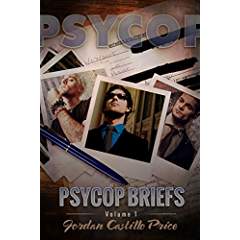
Psycops Briefs – a review.

108-psycop-briefs-review

As a long-time subscriber to Jordan Castillo Price’s newsletter I was asked to review her new publication in return for a review copy. A bonus (from a writer’s point of view) is that she is doing her own research into how the number of reviews affects sales in the early days of a book’s life.

Psycops Briefs is a delightful addition to the Psycops series. At first I was dubious and thought it couldn’t stand alone, but am now persuaded it would actually act as a good introduction to the lives of Victor and Jacob, luring the reader into their world and getting them to buy the main novels.

Victor is a medium who works for the police and his lover is also a policeman. The chronicles of their experiences include m/m romance, straightforward policing, supernatural effects, some philosophising, and quite a lot of humour. Their world is like ours except that psychic abilities are recognised and employed. Although the characters live and work in Chicago, they seem, like the characters in all the best books, to be people the reader has actually met and liked. I feel quite sure that if I were ever to cross the Atlantic and visit their city I would expect, confidently, to see them at work and to visit them in their lovely converted home.

The short stories in this collection are not a sequel to the novels but are concurrent – glimpses of the lives of our ‘heroes’ outside the main narrative. There is a lot of variety. The point of view is sometimes Vic’s and sometimes Jacob’s. The stories are in turn sweet, mysterious, gruesome and gripping. Some are very brief and some are chaptered novellas. Few of them are mysteries in the sense that the main novels are, but they explore those other mysteries of character and motivation and give us more insight into the personalities and backgrounds of all the people involved.

I have loved the whole series from the start. The characters, including the minor characters, are so rounded, and the details are engrossing, whether we are reading about the ghosts Vic encounters, the meals the men eat, the trials of home decoration or the things their friend Crash stocks in his ‘magic’ shop. The writing is beautiful – the kind of writing that seems so effortless you absolutely know a great deal of work has gone into it. It is elegant, sophisticated, grammatical, well-structured, and well edited, and the plots draw you in from the first page. Not by any means always the case for the genres these books fall into! This applies to the shorts in Psycops Briefs as well as the longer novellas and novels. Moreover, Price always sets the scene carefully, making sure her readers are not worried or distracted by trying to think about who minor characters might be, or exactly what Vic’s abilities encompass.

There are particular favourites of mine in this collection: Stroke Of Midnight is the perfect New Year’s Eve story, the novella Everyone’s Afraid of Clowns is exciting enough for Halloween reading and also thought provoking at any time, and the final novella, Witness, gives a lot of information about both our heroes in a ‘show-don’t-tell’ fashion that could be used in a writing master class.

In short, I admire the whole series immensely and this is a very worthy addition. I see it is named Psycops Briefs I and I really hope this means there is at least another volume to come. Buy it if you already know Vic and Jacob. Buy it if you don’t, but would like to meet them. Buy it and enjoy!

Highly recommended.

AMAZON: http://amzn.to/2dLNZyv
BARNES&NOBLE: http://www.barnesandnoble.com/w/psycop-briefs-jordan-castillo-price/1124749167
ITUNES: https://itunes.apple.com/us/book/id1161581878
KOBO: https://store.kobobooks.com/en-us/ebook/psycop-briefs-volume-1
PAPERBACK: http://amzn.to/2e0k6ud

And in other news, yes, I’ve been MIA – internet problems in Portugal caused a total breakdown of even my erratic posting habits. I’m back in UK and will try to do better!

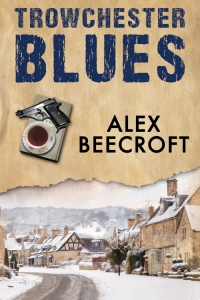
Trowchester Blues by Alex Beecroft – a review

TrowchesterBlues_Series_0

I just finished the third book in Alex Beecroft’s Trowchester trilogy so thought I’d review them all at once. The books are modern m/m romance and are linked by the location, the fictional town of Trowchester which becomes very real to the reader over the course of the stories. The main characters of one book reappear as minor players in the others which is satisfying because we get to know that lives continue after each volume ends. Alex creates very three dimensional characters, with real lives, real problems and real adventures. I found myself caring very much what happened to them all.


In the first book, Trowchester Blues, Michael, who has anger management problems, has left the Metropolitan police in difficult circumstances and comes to his father’s house in Trowchester. He meets Finn, a man with a delightful bookshop and a shady past. Finn’s past catches up with him and his rescue needs Michael’s skills. We meet some of the cast of the later books through the book group Finn runs on a Friday evening and through the restaurant run by another member. This is a delightful story of two people from very different backgrounds meeting  and making it past their differences to find happiness. The bookshop itself is almost a character and is gorgeous.


Blue Eyed Stranger introduces another member of the book group, Billy, who is a Morris dancer and a musician. He also suffers from severe depression, a condition explored in the story. He meets Martin, a half-Sudanese teacher whose passion is Viking re-enactment, when their acts clash at a fair. Martin has his own problems, not least with his job where the head finds a possibly gay black teacher who tends to diverge from the narrow curriculum difficult to accept, and there are obstacles to be overcome before Martin and Billy can get together. Martin eventually moves to Trowchester where the book ends with strong indications of a happy future for both men. Along the way, the reader learns a lot about Morris dancing, Vikings and early music.


Blue Steel Chain brings us the story of James, an archaeologist who is curator of Trowchester Museum and a member of the book group. He is in the process of a difficult separation from his musician partner when he becomes involved with Aidan, who is trying to escape a seriously abusive relationship. Aidan is asexual; he falls in love with James but would prefer to avoid sex. The story explores this aspect of Aidan and affirms people who fall into this category, showing how they can have satisfactory and loving relationships. It is also perhaps the most exciting book of the trilogy because Aidan’s abuser turns out to be worse than anyone thought and James has to rescue Aidan twice. The first time, he does this with the help of Finn and Michael but the second time he is on his own. However, the gentle archaeologist finds himself victorious.


Altogether, the entwined stories of this group of people give us a rich exploration of a number of characters, problems, and hobbies or careers with realistic adventures to draw and maintain the reader’s interest. Plus an in-depth knowledge of Trowchester and a wish that it wasn’t fictional!


The books are published separately and as a collection by Riptide Publishing.

http://riptidepublishing.com//titles/collections/trowchester-blues-collection


Recommended – and they are better read as a trilogy! Alex has just been told that Blue Steel Chain is an All Romance Ebook bestseller – but if you haven’t read the first ones, start at the beginning! You won’t regret it!

Gryphons: a review

51Je1sbAXeL._AA240_QL65_

I was lucky enough to read the first draft of this book and loved it then. I bought the ‘polished’ and extended version when it came out. The author, who has published with various Indie publishers, couldn’t find a home for this so published it on Lulu. As a result, the print version is quite expensive for a paperback but is worth every penny. I promised a review, and must state straight away that although I know the author online, I have paid full price for the paperback book and the review is completely impartial. However, I would recommend the e-book version for anyone who is either poor or not sure!

Gryphons is a difficult novel to categorise. It has moments of almost unbearable poignancy, a lot of humour, quite a bit of violence and some gripping plot arcs. I found myself skimming ahead to check whether some of the characters to whom I’d given my heart survived to the end. It was no good relying on the first version – the author changed quite a lot and I couldn’t be sure.

Some reviewers have called it a young adult book and some refer to it as a story of coming of age. It has those elements and much of the narrative is seen through the eyes of Dahlia, a teenager. This gives it a freshness that lets the reader look at the world from the perspective of one who is a native but not yet prepared to accept everything she is told.

On the other hand, it’s a story about a rock band, albeit one on another planet, formed in the aftermath of war: a story of love, friendship, prejudice, betrayal, loyalty and, above all, survival.

And on the third hand, it’s pure sci-fi, set on a brilliantly realised world and given the clever ‘frame’ of a visit from people (mostly musicians) from Earth for a festival.

The world of Sferkkaa is still suffering the ravages of invasion and brutal alien occupation. Somehow or other they have picked up radio signals that introduced them to Earth music and the idea of rock bands has taken off like wildfire, giving excitement and the cult of celebrities to a population that needs better housing, more food, and perhaps books but can’t get them any time soon. The focus of the book is on the most famous band, The Mortified Gryphons.

The five band members were all fighters with the resistance. They are typical, perhaps stereotypical celebrities but they are also world-weary ex-military. In the course of the story they meet and befriend teenagers, including a young musician, a visitor from Earth and a schoolgirl. They also experience sickness, worry, terror, love and hope. They compose, practise, play and listen: music fills the story. And despite the fact that they are rich, there is no more food for them to buy than there is for the rest of the population.

One of the parting shots of the defeated invaders was to distribute a poison that killed most of the women from babies to grandmothers. So all families, even non-combatant ones, have known loss. The few women and girls who survived are treated with great respect, unless, like Dahli, they manage to break the law. Once it is realised that children grown in vats suffer all kinds of problems there are scientific efforts to enable men to carry babies. However, carrying a baby to term places huge stresses on the males who choose to do it, and is not something to be undertaken lightly.

There are all kinds of interactions between Earth people and Sferkkaans that call into question our notions of what is alien. There are also other ‘aliens’, imported from yet other planets, giving rise to complex questions of prejudice and what it means to be ‘human’.

This is a long story (700 pages in the paperback version) with unforgettable people and a beautifully detailed world. The tapestry of Sferkkaa is woven slowly and seamlessly until by the end the reader feels they have visited the planet and know its landscapes, its cities, its flora and fauna and its various climates. The philosophical questions that underpin the story are deftly placed in the course of events, with the actions and reactions of the characters speaking louder than any argument. The characters are intensely real and the reader is invited to share their physical and mental suffering, hoping against hope that things will turn out well for at least some of them. Nothing, in this respect, can be taken for granted but the ending is satisfying, and we can leave Sferkkaa with hope for the future.

Altogether, this is science fiction at its best, showing us an alien world with a story line that helps us to set our own behaviour in context, with a focus on fascinating individuals against a backdrop of technical change and another planet. It is beautifully written. In a book this length I would expect some editing flaws and typos, but they are very few and far between; I have seen more in books edited and published by the big publishing houses. The style is assured, the plot structure is excellent and the descriptions of everything from scenery to emotions are amazing, engaging the reader in an intense experience of a year in the life of another world.

Go and buy it. Go and tell your friends about it. You won’t regret it!

NeuroTribes by Steve Silberman: a review

OLYMPUS DIGITAL CAMERA


NeuroTribes by Steve Silberman

I can’t praise this book highly enough. Anyone interested in autism, in the history of psychology or psychiatry, and even in the history of medicine should read it.

I have written a long review because I am anxious to ‘sell’ the book.

The author is a science journalist who became aware of what appeared to him to be a rise in the number of autism diagnoses. He was fascinated and decided to research the subject. The result was this book, which charts the history of the recognition and diagnosis of the condition, the problems along the way, and the outlook for the future. He gives in-depth information about the research but matches that with plenty of interesting reading about both the researchers and the children and adults who formed the basis for their work.

I felt at the end – well, actually by about half way through – that I had a much clearer picture of what had happened over the years to produce the current situation in autism research and in the way autistic people and their families are treated by various authorities and for that matter by the general public. As the grandparent of an autistic child I have been very aware that information is patchy, that many people who should know what they are doing and saying don’t, often through no fault of their own, and that the stellar research at the highest levels is not always trickling down to local authorities, schools, doctors, and so on.

Silberman starts with Asperger, whose work with ‘different’ children in Vienna just before and then during the second world war was to some extent informed by his passionate desire to save these children from Nazi attempts to discriminate against anyone who did not conform. He certainly saved a number of children from euthanasia although in the end many of those he saved died in a bombing raid on the institution where they were living. The syndrome he recognised became known as Aspergers and was for many years thought to be different from autism. It was characterised by high intelligence and Asperger’s own assertion that these people were essential to human development went some way towards differentiating them in the minds of the public from individuals with more average skills. Asperger himself managed to escape from Nazi Austria where he would almost certainly have been executed. His work, however, did not escape with him. He was ignored for a long time even though some of his researchers also reached America.

The next part of the book is focussed on Kanner, another refugee from Europe who was an excellent salesman, marketing his own expertise in a climate that had people puzzling over a condition that was thought to be rare and that had attracted very little research, possibly because of the wide variety of ways in which it presented. Kanner managed to sell the idea that the problems faced by those he studied were due to bad or cold parenting, and he initially diagnosed the condition as early-onset schizophrenia. He thus suggested to a public that was beginning to be aware of the condition that families were in some way to blame, and that ‘sufferers’ were in need of mental health treatment, usually institutionalisation. This had a profound effect on the attitudes of teachers, doctors, psychiatrists etc. across the western world, and because of the lack of prior research there was no-one qualified to contradict Kanner. Even Asperger, who was ignored by Kanner, was unable to make any headway because most of his subjects had been ‘high functioning’.

Kanner’s followers, even though some of them deviated from Kanner’s path, continued to regard the condition as something in need of treatment – a disability, or illness, or lack. Some of the treatments Silberman describes are horrific, others well-meaning but inevitably ineffective. All are fascinating as a progress chart through autism research. The author goes into a lot of detail about the lives of some of the people involved and in some instances their autistic children or ‘patients’.

Once it was realised that autism had nothing to do with schizophrenia, things should have improved. To some extent, they did, but by now there was the abyss, in the public mind, between the high functioning Asperger’s individual who might be strange but was an asset to society, and the autistic person who might have communication problems and was in need of special education etc.

Today, the consensus is that there is an autistic spectrum, and individuals can be diagnosed as ASD (autistic spectrum disorder) and be almost anywhere on the spectrum, from the erratic genius to the near-vegetable. Just like ‘neurotypicals’ (the rest of us), autistic people are as different from each other as is possible to imagine. In other words, like all of us, they are each unique.

The work of pioneers like Lorna Wing in UK has done much to alter perceptions at the upper levels of research. Simon Baron-Cohen at Cambridge is currently doing excellent work. Lorna and her work are described in detail by Silberman but Cohen only gets a mention – I think the book went for editing and proofreading well before Cohen’s more recent work became widely known.

Wing was unwilling to accept American ‘knowledge’ about autism for her daughter, and was determined to conduct her own researches.

Another strand of research relied on autistic people themselves. Now that diagnosed individuals were growing older and recognised that they were part of a group, and not just individually ‘strange’ they came together in conferences, study groups and networks of people who were able to add enormously to our understanding of autism. People like Temple Grandin, whose mother resembled Lorna Wing in her determination not to accept any kind of institutionalisation for her child, have been able to articulate for us the way some autistic adults perceive the world.

Then there was the film industry. Silberman explores in depth the making of films like Rain Man and its effect on public consciousness. It was the precursor of works like The Curious Incident of the Dog in the Night-Time (now turned into a stage play) and the brilliant portrayal of a high functioning autistic ‘heroine’ in the Swedish/Danish series The Bridge. Rain Man did perpetuate the idea of the autistic savant – a fairly rare presentation of the condition – but did much to alter attitudes to autism among the general population.

Silberman ends on a positive note (with plenty of recommended further reading) because he shows just how far we have come, how Kanner’s theories held back research and how they have been shown to be a dead end. He praises modern researchers and leaves the reader with hope for the future.

However, he also points to the desperately slow speed at which any modern findings trickle down to the ‘coal face’ where teachers, general practice doctors and nurses, and for that matter parents and their neighbours work. There is a long way to go.

It is quite clear from the book that autism is a condition which makes individuals function quite differently from their neurotypical peers, but has no need of treatment in any psychiatric or medical sense. Of course a child who cannot communicate will benefit from careful work regarding communication, and a child who fears noise or light can be gradually desensitised. But these are on a par with the needs of neurotypical children and are not specific to autism. What is specific is a different way of perceiving the world and the people in it. Until teachers, in particular, understand that and allow for it, autistic children and their families will continue to face problems.

The more books like Silberman’s are read and then recommended to any students going into any work involving children, the more likely we are to have a future in which those problems become rarer.

Please try to get this book from your local library. I would suggest buying it but really, I’d like to see it on library shelves in the hope that the word will spread!!