Last Christmas

heart_png680

Last Christmas…

I remember it as clearly as yesterday, and you’re lying when you say it all passed in an alcoholic blur because of your new job and celebrating and so on. We were living together so it would have been a bit hard to fool me that much. Most of the time you were sober and a bit morose about having to move, to leave, even though you were pleased with the new status and even more with the new pay package.

I gave you my heart…

…right after the office party, on the way to the station. You were grumbling about having to pretend we weren’t together and I suggested we should stop pretending, let the world know, get married (it’s legal now, after all) and let the office busybodies have their nine days’ wonder, shock and salacious gossip. I said I would come to London with you, find a job somewhere, somehow, so that we could be together. We stopped under one of those huge streetlights on the station approach and you kissed me right there in public. Well, OK, there weren’t many public around and the ones there were were wrapped up in their own thoughts and destinations. But you kissed me without looking over your shoulder and I remember the sleet glistening on your hair under the light, the fiery coldness of your lips and the way my heart sang. Then you held my hand till we had to leave loose and run helter-skelter for the last train, laughing.

Neither of us had had that much to drink. We never did at those office things, too scared, I suppose, of giving ourselves away. So instead I gave my heart away and when we got home we fucked, or rather made love, till almost dawn.

The very next day …

It was Christmas Eve and we went into the village to buy a tree. We thought they might be cheaper, with less than twenty-four hours to go. We found a really nice little tree outside the supermarket, with a huge ‘reduced’ sign on it and we were just going to go in when Anna, that new girl from the typing pool, came past. We hadn’t known she lived in the same suburban village as us; she’d left the party early and of course we normally travelled in by car so we wouldn’t have run across her. She looked surprised then asked if we were together, with one of those smirking, knowing looks that some people seem to find appropriate. I was just saying yes, proud and dizzily happy when you said no, we were just flatmates. I felt the bottom drop out of my world.

We didn’t even decorate the tree and it just stood there all dark and bare till I threw it out on New Year’s Eve, tired of the needles dropping on the carpet, dry and spiked like my thoughts.

You left on the Sunday night and you tossed me your keys without a care in the world.

This year…

I was surprised to see you, pleased for you to hear about the promotion and the return up north, but not impressed that you seemed to think I’d just have been waiting all year, like some kind of doll you can throw into a box and take out again when it suits you. You were never that great a ‘catch’ despite the inflated salary. I could always have found someone else but we were good together or at least I thought we were. You didn’t. obviously.

… someone special.

He’s already asked me privately and he’s arranged this romantic public proposal under the mistletoe at his mum’s house. They know, too, so there won’t be any outcry, just lots of people pleased for us. He’s really dependable, and not bad-looking. I’m going to be happy.

But sometimes, very privately, I just wish it was last Christmas all over again.


(I wrote this a few years ago to a prompt from a writing group. I’ve tweaked it slightly to bring it up to date. It’s a kind of homage – and maybe we all wish it could be last year and 2016 could be re-run with edits?)

I don’t believe in ghosts, but…

OLYMPUS DIGITAL CAMERA

OLYMPUS DIGITAL CAMERA

One of my writer friends posted a true ghost story of her own for Halloween so I thought I’d apologise for my long (inadvertent) absence by doing the same thing.

She presents her story very simply and leaves it to her readers to decide whether or not there is or was anything supernatural going on.https://louiselyonsauthor.com/2016/10/30/creepy-halloween-true-story/

My own story is similar in that I know there are all kinds of subconscious effects that might well have influenced what I am about to tell you. I am not a believer in any kind of afterlife but I do think there are a lot of unexplained things in the world. One day, some of them will be better understood.

A few years ago we went on a long trip that took us from Harwich in UK to Hamburg in Germany and then along the Baltic coast into Poland until we reached the eastern border. We alternated between camping and staying in small hotels or B&Bs. At the border we turned inland and decided to visit the Wolf’s Lair, Hitler’s military headquarters on the ‘eastern front’ where he planned a lot of his campaigns. At the time, I knew very little about it, being more familiar with Berchtesgaden in Bavaria and the V1 and V2 launch complexes in northern France.

We found ourselves booking to stay on the campsite inside the complex. This meant we got the campsite ‘free’ as part of our ticket and could explore the site before the main tourist influx in the morning, both of which benefits appealed. However, once we had registered, the gates were locked and we were stuck with the bar etc. they provided. We could have walked out of the site but the car was effectively imprisoned overnight. The nearest village was quite a distance and of course we had no idea whether it would be worth the walk. It wasn’t a particularly good campsite (inadequate hot water) but we settled down after eating at the bar. Poor food but we didn’t starve. I still knew nothing about the place other than the fact that it existed.

During the night I awoke several times, aroused by noise. I am virtually certain I was actually awake and not dreaming, though I have no such certainties about the actual source of the noise. There were two types of noise. One was very loud barking by a group of dogs – large breeds judging by the pitch of the sound. The other was the noise of trains, arriving, slowing, stopping, and then leaving. Neither sound was accompanied by anything else – no ‘visuals’ and nothing to suggest any kind of story. Nor did I hear any kind of conversation.

In the morning, I complained about the dogs and we realised that there were none on the site and that the nearest farm was too far away for me to have heard their dogs so clearly under any kind of weather conditions. As we walked around the site I saw rail tracks and thought fleetingly that they might explain the trains. But they were overgrown with grass and ended at the border of the complex. There were no railways in use anywhere near the site.

I read about the site and how it was used later, both on the way round through the explanations at each of the ruins, and in booklets we bought and were given. Yes, there were guard dogs, and yes, there were trains. I suppose I might have thought of both in advance but neither were things I would necessarily have associated with headquarters of this kind. Most of my reading had suggested Hitler’s staff travelled by car and that guards would have been soldiers. It was only when we learnt how massive the headquarters was that I realised that the dogs and trains made sense. And that only happened when we toured the complex after a broken night’s sleep.

A nice finishing touch to the experience was seeing and hearing a (very live) raven sitting on a tree opposite the ruins of Hitler’s bunker. He seemed to be expressing an avian opinion of the entire thing.

You can see photos and information about the site here: http://www.thirdreichruins.com/wolfschanze.htm

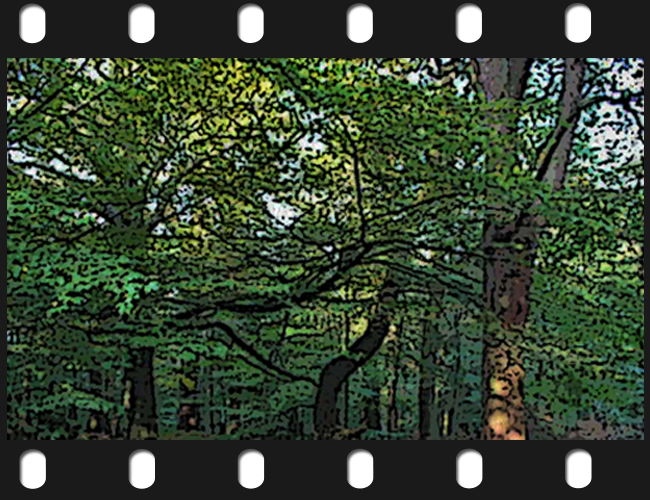
We took a lot of photographs (including one of the raven) but at the time did not have digital cameras. Rather than trying to find old albums and scanning in pictures I have merely used and photoshopped one of my more recent photographs of summer trees. My abiding memory of the site is of trees encroaching, softening, and eventually hiding all evidence of this ‘wolf’s lair’.

Ghost noises? I have no idea! I just know I heard them.

Feeding Frustration – a very short story


OLYMPUS DIGITAL CAMERA

It was really extremely annoying.

He had been studying the new layout all day. Previously, when food had been loaded onto the platform it had been the work of moments to climb the pole and demolish the pile of goodies. Then, for some bizarre reason, they had greased the pole.

It had taken a few days to work out a route. There was a rope strung across the area diagonally. Sometimes it hosted an array of damp cloth and he found it hard to negotiate but usually he could simply skim along, leap to the feeding platform and indulge. He thought they might move the rope so that even a prodigious leap would not take him to the platform, but really, why should they?

He was sure the changes, like the greased pole, and the occasional cloth hangings could not be directed at him. The food was still put out regularly and even though some birds came to peck and play there was always plenty left. He knew he didn’t frighten the birds, much; they knew he was not a predator so it was a case of live and let live.

And now, today, there were new hazards.

The rope was still there. There were no damp cloths. But there were strange translucent plastic shapes with the rope running through them. When he tried to navigate one it skittered and whirled so that he was decanted to the ground. He tried again. Same result. A starling was, he thought, laughing at him.

The platform was full of delicious snacks and besides, he was hungry. He chittered angrily and felt that the snap and click from the stone hole near the feeder was perhaps the last straw. He had a vague idea that the food providers were laughing at him, too, and somehow recording his despair.

Another question to consider.

OLYMPUS DIGITAL CAMERA

Just one question and answer this time.

Sequels: Have you ever written a sequel to a story you wrote, and if so, why, and if not, how do you feel about sequels?

Well now. Sequel queen. That would be me.

If I like a story I don’t really want it to stop. This applies to my own work just as much as to stuff I read. If characters and a world come to life they do as we do and carry on with their lives, so there I am, watching and listening. Sequels are just the recounting of what I see and hear. I can turn away for a while, but the stories will carry on and be waiting for me. Sometimes they (or rather the muse narrator/s) hammer on the door. Some short stories are just an account of an event – beginning, middle and end – and I can polish that, present it to readers and close the door. Still, the world behind the door goes on and I can re-enter it any time.

I have to say I love sequels to stories I have enjoyed and happily buy trilogies or even longer series by favourite authors.

My original work includes sequels.

My fantasy detective novel The Scroll was published last year and has just been joined by a sequel, The Market. Then a further sequel, The Crown, is written and awaiting some tweaking, amendments, and a final proofread. The Shore (book 4) is in note form and is swirling round my brain. There will be six novels in the series eventually.

My fae saga has sequels – and a kind of concurrent story that can be read alongside the second book. The first book is ready to format.

I have another m/m fantasy novel that isn’t really finished yet because there is a lot of rewriting to do but there is also a sequel in the pipeline. The Virgin and the Unicorn will be followed by another story in the same ‘verse but I haven’t got time to feed the bunny at the moment (or the unicorn, or whatever).

As most of you know, I also write fanfiction and often think in terms of sequels when challenge-fests or prompt-fests are presented to me. When I’m reading fanfic, just as with original work, I’m always pleased when an admired author writes a sequel.

So sequels? A resounding ‘yes’!

More reflections on writing

OLYMPUS DIGITAL CAMERA


Titles: Are they the bane of your existence, or the easiest part of the fic? Also, if you do chaptered fic, do you give each chapter a title, or not?

I don’t always find them easy. Usually, by the time I’ve finished a story some theme or focus will become clear and will suggest a title to me. Of course, I then have to decide whether it will make sense to my readers, and check that it doesn’t clash with another story in the same genre (or fandom if it’s a fanfic). Lots of people write stories with the same title – and of course there’s no ownership or copyright in titles – but we try not to overlap in the same sandpit if only because it makes each book less visible to possible readers or purchasers.

For original fic there’s a further issue. If I’m writing a series, I need to make sure the titles link the books together as well as being easily remembered. So I try to use the same format – it’s no good calling book 1 The Scroll and book 2 The one where they go abroad. Again, the titles usually suggest themselves towards the end of the first draft and sometimes earlier.

For fanfic, I didn’t, for ages, title chapters in a long work. In fact, after some formatting problems with a long fanfic ‘novel’ I backed away from chapters altogether. However, recently I posted a collection of drabbles which I called Monsterfest (because it was in response to prompts in a comm duiring October) and I used chapter titles to enable people to find the monster they wanted. It worked OK. I prefer, as a reader, to have chapter titles as it makes searching easier if you come back after a long pause. So I try to treat my readers as I would like to be treated.

For orginal fic I also use chapter titles, not just so that readers can search easily, but to give them a flavour of what the chapter might concern. Formatting chapter titles to create a live chapter section for Amazon or Smashwords is horrendous. Just saying.


Where do you get the most inspiration (also, at least in the fandom world, known as plot bunnies) for your stories?

I suppose from my subconscious though obviously that must be influenced by outside factors. I have always told myself stories in my head, whether about the characters in a book or film I liked or about original characters of my own. Sometimes these develop into fully grown ‘bunnies’ and have to be written because one of the main characters insists.

We all, whether we admit it or not, get inspiration from other things we have read or heard. Sometimes it might be unconscious and sometimes you might be aware that you are heavily influenced by e.g. a Chaucer storyline or a Shakespeare scene. If the inspiration is a current writer, I always cite. If it’s a writer who is out of copyright then I feel it is only polite to at least mention them to my readers in the summary or notes.

One example is my self published novella, The Lord of Shalott.

https://www.smashwords.com/books/view/533349

The first section is based on Tennyson’s poem and inspired by Loreena McKennit’s ballad. I am happy to tell people that and send them to the sources.

Another example is my SGA fanfic …Till A’ The Seas Gang Dry… (On Archive Of Our Own). The title and the general theme of the story are from Robert Burns’ poem which I quote at the end – full lyrics because it’s out of copyright, of course.


When you have ideas, do you sit down and start writing right away, or do you write them down for future use?

It depends how busy I am. Once I start writing something I keep on to the end, sometimes forgetting to cook dinner, go shopping, get dressed or whatever else I ‘should’ be doing. So if I am already in the middle of something any new ‘bunnies’ have to wait their turn. I do make a brief note of them but in such cryptic terms that even I am sometimes hard pressed to recall what I wanted to write. If the story idea is a sequel to something I am already writing or have written then obviously it has to be filed and approached at the appropriate time.


Do you ever get ideas from other people’s stories or art in the same genre or fandom?

I have never consciously been inspired by other people’s stories or art, but my favourites must influence my thinking. The only exception is when I have been doing prompts for a challenge with other writers. But that’s more a case of everybody responding to the same prompt though obviously discussion plays a part.

My new novel is published

needs resize for publishing

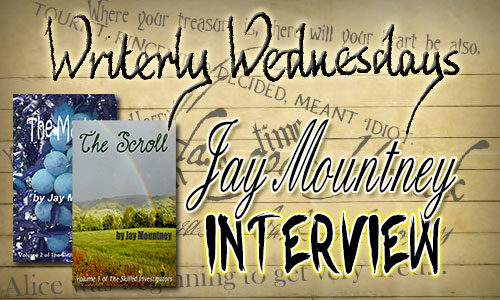
‘The Market’, the second volume in my fantasy detective series ‘The Skilled Investigators’ has now gone ‘live’ on Smashwords and Amazon.

My heroine, an elf called Genef, started her training as an investigator in the first volume, ‘The Scroll’. Her ambition to be a detective became entangled in a very personal case involving a serial killer. She was assisted by her brother, Fel, and a young dragon, Scratch, who was accidentally imprinted on her at his hatching.

After a successful conclusion and the gifting to Genef of two ‘skills’, one from one of the killer’s victims and one from the guild of investigators as she was accepted, Genef was given an assignment that would take her overseas in search of some stolen royal jewels.

Fel and Scratch accompany her in this second story. What should be a straightforward investigation into theft and a retrieval of the goods suddenly turns darker with murder and kidnapping. Fel and Scratch are in danger and Genef is without help, her mentor having remained in Lonis. She solves the crimes but not all the jewels are found, leaving the way open for a third volume.

In fact, there are six volumes planned altogether in the series. ‘The Crown’ is written but needs some editing and minor rewrites before formatting.

When I published ‘The Scroll’ I created some free coupons on Smashwords to give to people who agreed to write reviews there. However, the reviews did not materialise and I have decided this time to keep the coupons for my betas and others who have in some way helped me.

Marketing ‘The Market’ is a conundrum. The book does stand alone but would probably be more appealing to anyone who had read ‘The Scroll’. I am telling you about it here and would love it if anyone reblogged this post. One or two writer friends have kindly offered publicity on their blogs in the form of reviews, interviews, etc.

A word of warning. If you have an e-reader that is not a Kindle, use Smashwords if you’re going to buy! They have various formats, including mobi which can be uploaded to a Kindle, whereas Amazon only deliver to Kindle or the Kindle app.

Here are the pages to visit:

Amazon:

Smashwords:

https://www.smashwords.com/books/view/618455

More musings about writing.

dragon5

More questions and answers.

Genre: do you prefer certain genres of fic when you’re writing? What kind do you tend to write most?

I write mostly fantasy. (This works for fanfic, too. I have written a few ‘real world’ fics in one or two fandoms but even in cop buddy fandoms I’ve managed to drag in werewolves or dragons or switch everybody back into the middle ages.)

My original work is all, at the moment, in the fantasy genre. I have some plot bunnies that aren’t – for example a novel based around my mother’s wartime experiences – but whether they’ll ever get written is another matter. Oh, except that I also write poetry, and non fiction in the form of travelogues, but I don’t think I’ll widen the scope of this meme to include those.

Have you ever attempted an “adaptation” fic of a favorite book or movie but set in a different fandom or setting?

I suppose this would apply to an original fic that followed the plotline of source material that was well known in much the same way that West Side Story follows Romeo and Juliet or the current BBC Sherlock reboots Conan Doyle’s hero.

I might use a general style or ‘world’ such as accepting the usual ‘facts’ about Arthurian legend, but not the plot. Even when I wrote The Lord of Shalott I veered very sharply from Tennyson’s poem. However, I tweaked the story of Snow White for Silkskin and the Forest People and deliberately tried to keep to the traditional plot points and ending, at least partly to highlight the differences in my story. I did once write a semi-spoof cop buddy fanfic based on The Hobbit and The Lord of the Rings – a group of us were deliberately writing in the style of a book and the others had to guess which.

These are novellas. For novels, I don’t lack for plots of my own (although I accept the theory that there are only nine or ten in the world altogether) – I only lack time – so I don’t go looking for other ideas. However, I know lots of writers do and I enjoy reading the results.

Do you prefer canon or fanon when you write? Has writing fanfic for a fandom changed the way you see some or even all of the original source material?

The question is almost meaningless for original writing because there is no canon and no fanon. Although I suppose there is the issue of whether to stick to the main traditions when writing in, for example, Arthurian legend, or about dragons.

When I write fanfic I use canon where appropriate. Certainly for things like the essential character traits of the main characters, their looks, and their ‘relationship’ in terms of things like boss/employee or partners, etc. I enjoy exploring the characters and seeing how I think they might react in another story, or with different characters I bring in.

Of course, when writing an alternative universe it is only possible to take canon so far. I really enjoy putting canon characters in a totally different situation and seeing how they would behave. I’ve done this since I was a small child and played with the characters from my books and stories in my head. I remember a sort of strip cartoon but in book form, about a mouse called Mary Mouse. You have no idea where Mary Mouse got to or what she did in my mind!

And no, I don’t think writing fanfic has ever changed my perception of the source material. Nor has writing within the broad category of legends. Why should it? Canon is canon – open to interpretation and commentary but not open to being changed. I will have various interpretations from the start – all of them inspiring different kinds of story but none of them changing my basic view of the original.

The only caveat I have here is that when I wrote The Lord of Shalott I inevitably spent a great deal of time with Tennyson’s poem. I realised that I had always taken a general atmosphere from it, some kind of dreamy but sad romance with lush details. As I studied it more closely it began to irritate me in many ways. Not the story or the characters, just the construction of the poem and some of the language the poet used. So, litcrit of the source material but I still enjoyed the original story! I meanderd through various mediaeval versions too.
Ratings: how high are you comfortable with going? Have you ever written higher? If you’re comfortable with NC-17, have you ever been shocked by finding that the story you’re writing is gen rated instead? How explicit are your original works? If some of them are explicit, are you ever shocked to find yourself writing something general, with no sex or violence?

I don’t set out to write violence or erotica. These arise within the story, depending on where the characters take me and how much they want me to disclose in the course of the plot. I am personally perfectly happy to read explicit descriptions provided they are well written, and am happy to write them myself if I think the story demands them.

I currently have four books self published. Three of them are in the adult only section on both Smashwords and Amazon. They are fairly ‘tame’ by a lot of standards but are still explicit enough to be restricted on the shelves. I think that’s correct – parents and teachers can judge what their children are ready to read when they are quite young. Once they are old enough to realise that they don’t have to tell the truth when asked their age online and have the means to make their own purchases, then I have no problem with them accessing restricted material. I would only add that being Brit I tend to think of 16 as the cut-off age for independence whereas American sites go for 18 which I see as odd. In UK (and in some states) people can marry at 16 – and yet they can’t read about explicit sex?? And if they can marry at 16 there must be some kind of exploration of the issues, at least in theory, in the playground or in lessons, well before that. (I would not like pre-pubertal readers to access ‘adult’ material because they might well misunderstand and be upset by it.)

My novel, on the other hand, is mainstream or general.

The same applies to my fanfiction. Some of it contains explicit sex and some has no sex or violence at all.

I do think that the blurbs or summaries for books and stories should let the reader know roughly what they’re about to read (or reject) but beyond that I think it’s a case of ‘reader beware’.

So yes, I write sex. I tend not to write kinks much, but that’s partly for fear of getting them wrong. And so far as the sex is concerned I tend to focus on the emotions rather than the mechanics but I won’t usually fade to black or leave anyone at the bedroom door.

As a rule, the overall story is my main interest and I don’t try to insert sex scenes artificially. On the other hand, in some work I find them the natural order of things. One beta/first reader wanted me to remove some sex from a book that is not yet finished to make it more YA in nature, which she assumed it was intended to be. It wasn’t and I didn’t and won’t.

Anyway, to recap, I have two adult novellas and an adult book of short stories out there. I’m proud of them. I also have a mainstream novel which whilst it doesn’t ignore sexual relationships has no explicit sex scenes. This wasn’t a conscious decision on my part, it was just the way the story developed. And since it has, I’m quite pleased that the book – and in the end the series – will be accessible easily to older teenagers.

I have also written books for children and although they aren’t yet published they’re in the pipeline; obviously sex and violence don’t feature. There’s a sense in which the very existence of children assumes their parents had sex, but this is not mentioned.

So I will move from totally general/suitable for young children to totally explicit/restricted to an adult audience and then back again without even thinking about it.

Warnings: What do you feel it most important to warn for, and what’s the strangest thing you’ve warned for?

Mostly, I just let my fanfiction readers know that they might encounter almost anything so if they’re easily triggered they should stay away. I do try to let people know what kind of work they’re approaching. I think it’s more important to say whether something is a drabble or an epic, and whether it’s finished, whether it’s part of a series, than any actual content.

Original fic is a bit different. Books don’t usually come with warnings, other than the ones with explicit sex being relegated to the ‘adult’ section and ones with a lot of cartoon kittens being shelved in the children’s area. But I do think it’s only fair to warn readers that this is e.g. fantasy, sci fi, crime, comedy, tragedy, etc. Beyond that, they can read the blurb, see if they know anything else you’ve written, skim the first few pages (or even the end) and take responsibility for reading.

And as with fanfic, they can always turn away if they’re not happy with the contents.

Summaries: Do you like them or hate them? How do you come up with them, if you use them?

I think that for both fanfic and original fic summaries are a way of telling the reader roughly what to expect. As a reader, I really dislike starting to read something and finding it is a different genre or style of work from what I had been looking for. This doesn’t mean I don’t want to read it, just that perhaps I don’t want to read it on that particular day or at that particular moment. I would not read a hilarious spoof on the way to a funeral. I won’t read horror stories just before going to bed. I prefer not to read something that requires intense concentration when I’m likely to have to put the story down any minute (e.g. in the dentist’s waiting room). So I think authors should be fair to readers and I try to be. I know some people don’t like warnings or summaries at all and they are welcome to disregard them but I think they need to remember that probably 90% of readers prefer them.

I hate writing them. Distilling the essence of a story into a paragraph is hard even though Amazon tells us it’s the best way to market. I can summarise the outline of the plot but that won’t give you the atmosphere. I can suggest the atmosphere and leave the plot hazy. I mustn’t give away spoilers if I want the reader to suffer or be curious with the characters.

I agonise over summaries and usually end up asking my beta/editor to come up with something. The very worst are drabbles though I only write those for fun on my personal journal. How can you summarise a drabble in fewer words than the drabble itself?


What kind of genres do you like? What do you think about explicit works? What do you expect from a summary? I’d really like to hear your views.

And if anyone knows how to force WordPress to accept edits on line or paragraph breaks, please please please let me know.

Manipulation (a ficlet)

DSCF0714

This is a mini-fic I wrote for entry into a competition. It didn’t get anywhere. When I read the winning entry and the runners up I realised I had perhaps gone off at a tangent. Still, I quite liked my ficlet and it’s a pity to waste it on some judges who didn’t really want it in the first place. So here you are! A kind of alternative future.

Alice checked the power levels. Despite Michael’s film download things were fine. She was glad they’d moved south when things started deteriorating but even central Portugal couldn’t guarantee sufficient solar power and mountains bristling with wind turbines could also block the sun.

The flicker must be the ISP’s. After the US lost the wars and the oil ran out there were few options. Some solar-powered servers were in the newly independent American Bible Belt, the rest mostly in Saudi or Iraq. Aborigines, working with anti-internet fanatics, closed the Northern Territories to development. Africa was out of the question. Religious leaders controlled what most people could see. Michael chose an Iraqi ISP, reasoning that Saddam, not the most religious man, would be less likely to interfere with content.

But there were still power struggles, terrorists, bombs; half a world away but they could prevent Alice seeing what she so needed to see.

The screen cleared and steadied; she gasped as the young man seemed to walk towards her.

“Michael! He’s here,” she called.

“Hi Gran! Hi Gramps!” His infectious grin made her wish she could hug him.

They worried when Jake chose to spend his gap year travelling; when he settled in New Zealand they worried more.

“It’s a smaller world nowadays,” he said.

They hadn’t even been able to meet Jennifer in person. But now Aiden could visit them once a month, Hussein and Bin Laden willing.

Alice spared a glance at the blue skies beyond her grandson and tried to remember how con trails had once traced lace paths across the world.

They frittered away the precious hour comparing fruit crops and the price of sheep. Too soon, Aiden waved and blew a kiss.

Michael switched to their homepage.

“They’re accusing people of tampering with 3D chat services,” he said, “using a kind of photoshopping technique.” Alice dredged her memory for the term.

“You mean…”

He shrugged. “They’re comparing it with postcards from concentration camps,” he said, “but surely we would know if things were that bad?”

In my ivory writing tower…

turret

Continuing my exploration of my writing courtesy of the blog writing meme I followed.

The next question was: Have you ever had a story change your opinion of a character?

Unlike some of my friends I took this to mean in my own writing since this was a writing meme, not a reading one.

I have been fascinated by the way characters behave in my stories. I suppose changes must come from somewhere in my subconscious but there’s often no advance warning. Minor characters turn into major ones, the main characters insist on interesting and unexpected reactions and relationships and on one memorable occasion I discovered part way through a story that someone I had felt a little sorry for was a cold blooded murderer. The other characters were startled, too. I think the difference is that I meet the minor characters alongside the main ones and see them through their eyes. So if they change their opinions, so do I. The minor characters might be formed already somewhere deep in my brain, but I know very little about them until my main characters tell me. I know the main characters too well, before I start writing, for my opinion of them to change. Simply knowing the ending of the story doesn’t necessarily let me know everything that will happen or what everyone will do. Throughout the story, and this is particularly true for a series, the main characters are as close to me as my family, whereas the people they meet are more like my neighbours, or even the people at the pub or in town. They might become friends but my opinion of them is exactly like that of people I meet in ‘real life’ – subject to change according to the way they behave. And that’s something I can’t consciously control.

So far as fanfic is concerned the characters all speak to me from the start, even the minor ones. They’re based on canon, of course, though most canon leaves plenty of room for exploration, explanation, and so on. So in a sense the characters are already formed and so are my opinions. There might be OC characters like victims of crime in a case fic but they wouldn’t need my opinion, just my sympathy. I might discover or realise details about canon characters, but nothing major. If I did, I suspect I’d have to start a different fic or do an extensive rewrite.

The following question was, I think, a familiar one for fanfic writers but is just as valid addressed to all authors.

When you write original characters, how do you make certain they’re not Mary Sues (or Marty Stus)?

For those unfamiliar with the term it applies to characters inserted into stories who are quite clearly the author indulging in some wishful thinking about being the best detective, greatest lover, most benevolent ruler, or whatever and taking over the story in an irritating way.

Terry Pratchett, in his semi-autobiographical A Slip Of The Keyboard, mentioned a friend of his who said: There is a little bit of autobiography in all books, isn’t there? Only friends will tell you that.

And of course he’s right. You have to have experienced emotions such as love, anger or shock in order to write about them convincingly (which is why children’s writing so often seems ‘flat’) and you have to have seen or heard scenes or music to describe those with any hope of being believed.

We are told to write what we know. This means, to me, that we have to draw on our knowledge of the world, acquired in person or through in-depth research, to develop locations, credible story lines and minor or background characters. When it comes to the main players we need to dig into our own emotions and experiences to find out what makes them ‘tick’. It’s possible to write criminals convincingly because we have all had ‘bad’ thoughts from time to time and a writer need to expand those and build on them in much the same way as an actor developing a role. The danger lies in putting too much of yourself in to any one character and investing too much in them in the story. The danger is perhaps greater with the heroes and heroines. It’s comparatively easy to distance yourself from a thief or a murderer, harder to back away from someone who is trying to do good. But to make them convincing they have to live in their own right, and that means that you have to bring them to life, talk to them, get to know them, and do that as if they were a real person with a life quite outside your own.

In some ways I’m pretty sure I don’t appear in my stories. That’s because my work in largely in the fantasy genre and I’m a fairly down to earth person with a family and two houses to run. I don’t even yearn to go off into the woods or on quests – I’m pretty sure I’d find it uncomfortable and irritating even though I used to like camping when I was younger and fitter. I’d want to be back for various appointments, to wash my hair, to sleep in my own bed… And my protagonists are mostly very much younger than me. They are not yet married with children or pets or a bank account. When I was their age I wanted the children, pets, etc. more than I ever wanted adventure, and I wanted academic success more than magic so I don’t think I put anything of my younger self into them, either.

So I don’t have to ‘make sure’ because appearing in my own stories is not something that appeals in the slightest. I have my own story to live and it isn’t one I have any wish to fictionalise.

But in the sense that writers write what they know, all original fiction could be said to be Mary Sues. Discuss!

For fanfic writing the answer is perhaps harder to reach. Yes, I write original characters. I wrote an entire novel based on a group of original characters interacting in the world created by Stargate SG1 – unpublishable because it is so intertwined with the existence of the Stargate itself, but available here: http://archiveofourown.org/works/108729/chapters/150465 for anyone who’s interested. And if I’m writing a case fic for a cop buddy fandom there have to be original characters to provide the criminals, victims and witnesses at the very least.

A Mary Sue would presumably mean a female character who did all the things I would like either to do or be thought to have done. I haven’t written many female OC characters other than, as I’ve just said, criminals and victims, and as I have no desire to be either I don’t think there’s much danger of of Mary Sues there. The exception is the SG1 novel. There are female OCs in that but they’re there to create a mixed team or to provide plot points; I sincerely hope I haven’t put anything of myself into them. None of them have anything in common with me and while I love reading about sci fi adventures I have no desire to participate. They aren’t the major characters, who are men, and not in the least like me or any of my family. Nor do I have hidden longings to be male. The only point of overlap is that the ‘hero’ (and the woman who is his girlfriend at the start of the story) come from the same part of UK as me – that’s just me using locations I know to be sure of getting them right.

So I don’t ‘make certain’ they aren’t Mary Sues – I don’t have to because I never insert major female characters into a fic who aren’t from canon. My OCs (male and female) have plenty of flaws – but not my flaws. I seriously wouldn’t want to be any of them, and none of them are better than the people around them. They might (Adam in the SG novel) be the ‘hero’ but only in the sense of being the main focus of the story, not in the sense of being any kind of super-hero.

I don’t want to meet or live with or interact with canon characters – or the actors for that matter. I want them to remain stories – on paper, on screen, on my computer or on a virtual screen in my mind. I meet and interview the muses, yes, in order to hear their stories, but they don’t involve me in their adventures. The nearest I get to a Mary Sue is as the narrator who controls, to some extent, the overall plot.


I find these questions interesting – they force me to articulate my sometimes rather incoherent thoughts about my writing and that, I think, has to be a good thing! I’d love to hear other people’s ideas on the subject in general or on particular questions.