Debunking myths about writing

120-debunking-myths

Debunking ten common myths about writers and writing.

#1. Writing can be done any old time and happens in the gaps between other more important commitments.

This is a myth most usually believed by family and close friends. Sometimes the belief spills over and affects the writer themselves. It is by no means true. Writing, and particularly editing or drafting a second version, requires concentration. It’s perfectly possible to write short sections in ten minute bursts, and then string them together. But the mere act of stringing them together satisfactorily takes a lot more than ten minutes, and ten minute writing sessions are not very satisfying to the average writer. I know I need aat least an hour to get into a story or chapter. This is at odds with the other demands on my tattention. I’m responsible for various household needs such as shopping and cooking; these not only take time but are at the mercy of other people’s agendas such as when the shops are open and when the family want or need to eat. The same constraints would apply to any other household necessities that members of any family commit to supplying. Even a solitary writer has to eat, sleep and supply the needs of themselves and perhaps their pets.

Besides the actual act of typing or writing the words, there is thinking time. This is essential. Some writers plot in advance and other simply see where the characters want to take them, but whichever kind of writer you are there is a necessity to think either of the way your story is going, or the way it has gone, if only to check mentally for inconsistencies and plotholes. Some people produce a story in a linear fashion, going from A to Z via the other letters in the right order; others write sections as they occur to them then fit them together and write linking material to fill the gaps. Both methods are valid and both require time and thought.

Thinking can take place alongside other activities – for example, in the shower, in bed before falling asleep, or whilst doing some mind-numbing task such as ironing. It doesn’t go well with anything that needs concentration like stirring a risotto or supervising a child’s homework. So writing and its handmaid, thinking, need time, quality time, and it’s all to easy to let this be squeezed out. I suppose if you’re JKR or James Patterson, you can plead that you’re working, but most writers don’t earn so much that they feel able to make this plea. However, they should not allow other people to encroach on their writing time, even if the writing is mainly for their own pleasure. Nor should they go along with the myth and allow their writing time to be elbowed out of the day.

#2. Writing is not work, just a hobby that sometimes results in payment.

Whether it’s for private enjoyment or close friends or a wide audience, and whether or not it’s to be published for payment, writing is hard work. (So are some hobbies but that does not invalidate the general argument.)

Some writers find that plots come easily. Others have characters spring up fully formed in their heads. Yet others find that language flows, provided they have more than ten minutes (see #1 above) to devote to it. But all of them will need to edit what they write, to check it for style, for whether it says what they intended, to make sure the characters have the correct names (especially minor ones who appear chapters apart) and are wearing consistent clothing. It’s no good having character A in a shirt that matches his eyes and then throwing his soiled white shirt in the laundry basket at the end of the day. Similarly, it’s not helpful to have characters go upstairs if you’ve located them in a bungalow in Chapter 1. Reading through what you’ve written is important to help avoid repetitive vocabulary. Readers get irritated if A looks soulfully at B more than once. (Actually I get irritated the first time but that’s just personal preference.) And even if all these things are sorted, the writer still has to physically get the words down on screen or paper. Fingers can get tired, too, and backs can suffer. So can eyes. Nobody suggests that a secretary doesn’t work, so a writer works at least as hard just getting their words down.

Once the initial draft is written there’s editing. Yes, you can employ an editor, or your publishers might wish one on you. Whichever, they’d really prefer it if you’d done a bit of editing yourself before offering up your draft. Before seeking another pair of eyes it’s as well to make sure your story flows, and that there aren’t too many typos. If you’re self publishing you need to know something about formatting, whether you do it yourself or pay someone else. You need to know about copyright, about marketing (at a minimum, how to tag your work, write a blurb, etc), about taxation (if you ever get royalties), about the royalty system, about the way publishing in general works, whichever route you take. If you were talking about any other craft, the same kinds of things would apply. The person who knits for a hobby only needs to buy wool, needles and patterns; the person who hopes to sell their knitted garments needs to know all about wool and its attributes, current prices, sizing, labelling, etc. and has to know how to package, present and market their work. Children who kick a ball around are hobby footballers, and remain so even when they grow up and just join in a friendly neighbourhood game; professional players have a whole host of other things to learn and worry about. It’s the same with writing so for anyone who wants to publish, writing is not a hobby even if it started that way.

#3. Writing could be done by anyone who wanted to give the time to it.

Well, no. You only have to glance at the stuff school students produce to know that some people are creative and others just aren’t. I’m not talking about ability with words, grammar, etc, but the ability to bring characters alive, to make locations seem real, to get readers to suspend disbelief at the inevitable artificiality of plot or the way an event is recounted (because real life just doesn’t behave like story but we forget that both when we’re reading, and when we’re living). Writers have a gift of being able to share their worlds, fictional or non-fictional, with their readers. Not everyone can do this, and for those who can, there’s a long apprenticeship that starts in early childhood. Most writers, in almost any genre you care to name, including non-fiction, will have spent most of their lives reading and researching – not always formally but in some depth. They will be fired by enthusiasm for their chosen subject matter to the extent that they actually feel a need to write, to impart the stuff in their heads to other people. Never mind merely wanting to give time to it – they will feel impelled. Some writing courses (and online sites) purport to help wannabe writers generate plots. Most writers I know have so many plot bunnies the problem is finding time to feed them all. Of course, there’s always the age-old maxim that there only so many basic plots (usually presented as seven, nine or eleven – magic numbers) and everything else is just variation on a theme. You can deconstruct any story to prove this theory, but it’s the variation that counts in the end, and the ability to think up that variation and build it into a satisfying novel, poem, thesis, etc. that matters. I don’t think ‘anyone’ could do this any more than I think ‘anyone’ could be a chef or a violinist, a nurse or a teacher. We all have special skills, talents and passions. Those of a writer include an ability with narrative that is outside the grasp of just ‘anyone’. This applies to the writing of anything from a recipe to a novel.

#4. Writers are always in the market for materials or, “I’ve got an interesting story for you. You’ll like this one. You could write it.”

No thank you. Sometimes we write starting from prompts, which are not usually detailed. They could be the outline suggested by a magazine competition, the idea put forward within a writing group, or perhaps a headline seen in the news. All these can send the mind off in unforeseen directions. This is just writers grabbing materials from the environment, much as they might grab their observations of a place to help them describe a fictional location.

Most writers do not want to write someone else’s story. They don’t feel the same passion for it, you see, because it isn’t theirs. Obviously some journalists and documentary writers will develop their work from stories they have been told by others, but they will have given them their own spin and unique viewpoint. There are a few writers who ‘ghost write’ for the famous, either by producing so-called autobiographies or by putting e.g. well known recipes into print or even writing sequels that come under an umbrella series by a well known author. Often, their contribution is not acknowledged. They may be paid well, but fame escapes them. They’re probably the only writers who might respond favourably to the offer that headed this section, and even then, they’d want to know what the rate of pay was going to be.

#5. Writers should write what they know, and many readers believe writers know, from personal experience, what they write.

The idea of only writing what you know is so silly it doesn’t really deserve any rebuttal. If people only wrote from their own experience we would have no historical novels, no sci fi, no fantasy, nothing from an animal’s pov, no crime stories except those written by police or criminals, no women in books by men or men in books by women. However, the advice works if it is interpreted as ‘do your research’. All reasonably good writers do indeed do their research and this takes time, hard work and a basic knowledge of where to find the needed information.

Sometimes writers choose to present things in first person, using the voice of the character to get an idea across. In any case, characters are going to articulate their beliefs at some point or they will remain unreal and two-dimensional. You know those warnings you get on some TV programmes or DVDs where the channel or film company disclaims responsibility for the opinions expressed? This should, perhaps, be stated at the front of every book, as clearly as the copyright claim. Then readers could be shown how ridiculous it is to accuse writers of the very things their characters are intended to get across as undesirable. If I want, for example, to write a novel that discusses racism, I am going to have to have characters who make racist comments. It should be obvious that I don’t agree with them. But some readers ignore the obvious.

#6. Since word processors you don’t even have to know grammar to get published – just look at all those badly edited self published books.

Simply untrue, or rather, untrue if you want to write and sell more than one book. Spelling and grammar checkers don’t always know what they’re doing. It’s a bit like calculators. Unless you’ve been taught basic arithmetic, you won’t be able to tell when the machine is not working properly or when you’ve failed to ask it the right questions. So, as with calculations, to write you do need a basic grasp of grammar and a reasonably wide vocabulary (and the ability to use a dictionary and a thesaurus). It’s no good relying on an editor. They might disagree with you, especially if you are writing in e.g. Brit English and they are American (or vice versa). They might fail to spot less obvious errors. (You’ll almost certainly fail, because you read what you think you wrote.) Your editor might well read what they expected you to have written and even professional proof readers can fall foul of the cultural differences I just mentioned. The computer spelling and grammar checker is less likely to make these mistakes (though it won’t always spot things like the misuse of homonyms) but it will sometimes misunderstand your intended meaning and you need to have the confidence to ignore it. It will sometimes give you choices and you need to know which to accept. There are definitely self-published books with poor grammar. There are also mainstream published books with typos, plotholes and inconsistencies in e.g. names. One thing is common to both – with the advent of the word processor, all editing has been left more and more in the hands of the writer, who has an absolute need and duty to know something about grammar.

#7. If you’re a writer, why aren’t you rich and famous?

Unless you are J.K.Rowling or James Patterson, you probably won’t get rich from writing. Tolkien didn’t. Some people make a good living, usually by writing dozens of books every year and having virtually no life other than writing and its associated activities. Even then, a lot of their profit gets ploughed back into writing, by attending conferences, book signings, etc. and doing research. Even the most prestigious mainstream publishers no longer give writers expenses for that kind of thing – it has to come out of royalties. Royalties are low with mainstream publishers but there again, they do all the things like paying cover artists, formatters, etc. Self publishing royalties are higher and if you do some of the ‘other’ work yourself, you get to keep more of the profit, but sales are by no means guaranteed. Then, either way, there’s tax… I suspect readers think writers for the big mainstream publishing houses live in a lost world of long lazy expense account luncheons, and paid-for holidays in the sun to research their next title. Not nowadays, and for very few even in some glorious past.

They also seem to think anyone claiming to be a writer should be able to achieve this golden state of affairs simply by being good enough. Unfortunately, leaving aside the matter of royalties and and the lack of other financial support, it is not enough to be a good writer. You have to be a lucky writer, too. Someone who worked for one of the big publishers once told me that yes, there has to be a modicum of talent but after that, the manuscript (and note that I’m now talking about the days before emailed submissions, when there were in fact fewer books written altogether) has to land in the right intray when the submissions editor is in the right mood, has an opening for a work of that particular genre, length, etc. and has time to read it. We all know the stories about how books like Watership Down were rejected time and time again – nothing whatsoever to do with their quality.

#8. Everyone has a book in them

I seriously doubt it. There are people whose lives are so dull that we wouldn’t want to read about anything they wrote; people whose only ‘hobby’ is watching sport on TV, who have no family dramas, who are comfortable in their jobs, their finances and their relationships. Some of them might have rich imaginations and then, certainly, they might write a book, but if they haven’t, then they will have nothing to write about. There are other people whose lives are so chaotic that they can barely make sense of them themselves, let alone tell others about their experiences. They might be able to express some of what they know or believe to a writer who can incorporate it into a story, an article or an academic thesis, but that’s not the same thing as having a book in them. Then there are people who are passionate about something, driven and organised. But their way of dealing with their subject matter is in action, political, business, local community, personal, charity, etc. Or in music or art. They do not have ‘a book’ in them; they may have a painting, a sculpture or a symphony or they may have a parliamentary maiden speech.

#9. Genre fiction and non-fiction is not as important or as high quality as literary fiction or academic non-fiction.

This opinion seems to have been firmly embedded in our culture, no doubt given a helping hand by reviewers in the weightier papers and magazines, and by sundry academics. It is pandered to by booksellers, on and offline, who want to put things on tidy shelves and label them often with profit in mind. They want to target the right demographic. This trend entirely loses sight of the fact that many of our classics started as genre fiction.

Dickens, for example, wrote romance and mystery for the serial magazine market. Yes, his, and many other ‘classic’ books are well written with many-layered plots and delightful characters. So are some of today’s ‘genre’ novels which are dismissed out of hand but have so much to offer. Tolkien made it out of the fantasy ghetto, perhaps because of his academic background, but although I adore Lord of the Rings there are other equally good fantasy writers who are still behind the barriers – Tad Williams, to name only one. Alan Hollinghurst’s books escape the m/m romance genre probably because the author is a respected reviewer (and maybe because he doesn’t always have happy endings). Forster escaped, too, possibly by being dead, but Maurice is hardly ever mentioned in discussions of Forster’s work. There are other m/m romance writers who deserve similar attention. It is fashionable to praise Ian Rankin’s Inspector Rebus novels whilst still putting them firmly in the crime genre whereas Wilkie Collins’ The Moonstone is considered to be the first English detective story but at the same time is regarded as ‘literature’. H.G.Wells and George Orwell crashed through the sci-fi barrier but only, perhaps, by dying. There are too many other examples to list here.

Non-fiction suffers similarly. A really good cookery book is as useful, and as research-based, as a lot of academic papers, but is dismissed as mere ‘lifestyle’ or ‘hobby’ fodder. There are brilliant popular books that analyse history or finance or art, but unless they emanate from university research they are too often ignored.

Obviously many readers find these books for themselves, enjoy them, recommend them, etc. And some of the authors may as a result find some fame and fortune. But not, apparently, the accolade of the serious critic. And that’s something that has trickled down to the general public who in turn regard anything other than the ‘classics’ or the latest prize list litfic as ‘mere’ light entertainment.

#10. Writers are either unsociable or full of themselves (sometimes both)

The prevailing images are: the standard stereotype of the starving artist in a garret; the shy writer tucked away in their converted garden shed; the eccentric and absent minded cat owner with a creaking typewriter and few friends.

The reality is people with families of one kind or another, large friendship groups, and a well-developed social life. How else would they observe human nature so closely and find material for characters, locations and plots? And although some might initially scribble their thoughts down in notebooks, transfer to a state of the art computer screen is an inevitable part of the process requiring an electricity supply, internet and a familiarity with technology.

So writers are not unsociable. But are they arrogant or boastful? They do have to ‘blow their own trumpets’ if they are to make any sales at all. Even the big publishing houses offer very little in the way of marketing and advertising. But selling the product of a lot of hard work is no different from the florist’s sign outside the shop or the bakery buying ad time on TV. After all, if they didn’t tell you about their books, how would you know? You’d be left with nothing to read but the classics, and good as they are, these don’t meet our need for new and exciting ways of looking at the world.

A ficlet for Valentine’s Day

capture


Travelling together

Ken had only come to Waterstones to get a map. The trip up to Scotland would take him off the beaten track and he had no desire to get lost before he found the castle where his cousin’s wedding was to be held. He had neither the money nor the inclination to install any kind of GPS in his car and those print-outs from the AA usually led via diversions into delays.

So he headed for the map section but couldn’t resist a glance at the sci-fi shelves on his way past. Maybe there would be time to read and relax over the weekend.

A mass of red curls over a slim but muscled body was evidently studying the section in depth. Luscious. And with a shared taste in reading matter.

Ken sighed and continued to ‘Maps’. No time for dalliance if he was to set out today. But how he wished… Then again, he consoled himself, the other man might be a raging homophobe or perhaps just choosing a book for a sci-fi loving sister.

Comparing maps of the glens and realising he hadn’t brought his reading glasses, Ken sighed again, then noticed a slender hand with a dusting of freckles picking up the map he’d just discarded. A polite voice murmured,

“I don’t suppose you’d know which of these would be the best to get me somewhere near Gairloch?”

Ken looked up slowly. Red curls framed enquiring green eyes. The hand that wasn’t holding the map was clutching a copy of Terry Pratchett’s Going Postal.

“I don’t,” he told the green eyes, quietly drowning in them as he spoke, “but I’m going there myself. Perhaps we can figure it out together?” He gestured with the map he’d almost decided to buy and indicated the coffee bar across the shopping precinct. It was too much to hope they were both going to the wedding, but at least the detour to Waterstones seemed to have led to a meeting of minds.

It turned out they were indeed both going to the wedding. Alasdair was a distant relative of the bride and despite his Scottish name had never ventured across the border. They agreed to travel together and Ken walked out of the shop with his map purchased but no more longing glances at the fiction books. He rather thought his time in the Highlands would be adequately filled.

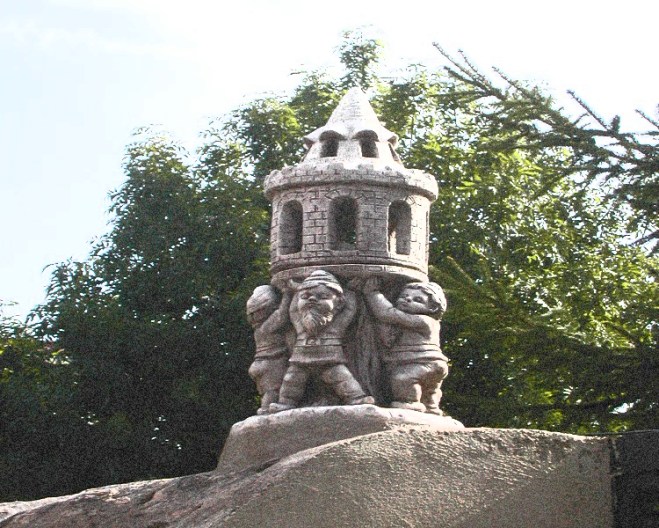
(Yes, it’s Edinburgh Castle, but it was the only Scottish photo with a castle I could lay my hands on today)

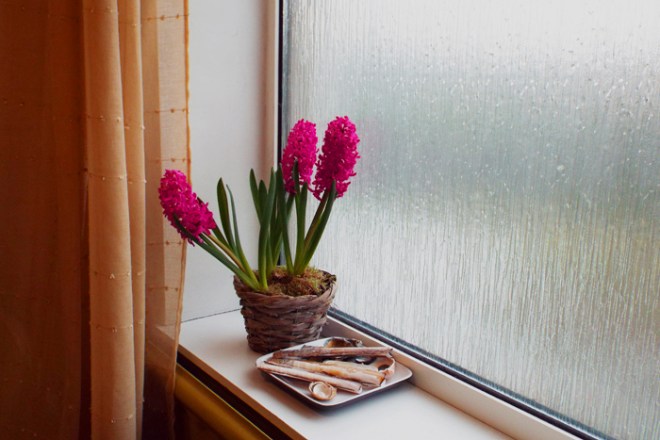
On hyacinths opening

dscf1717

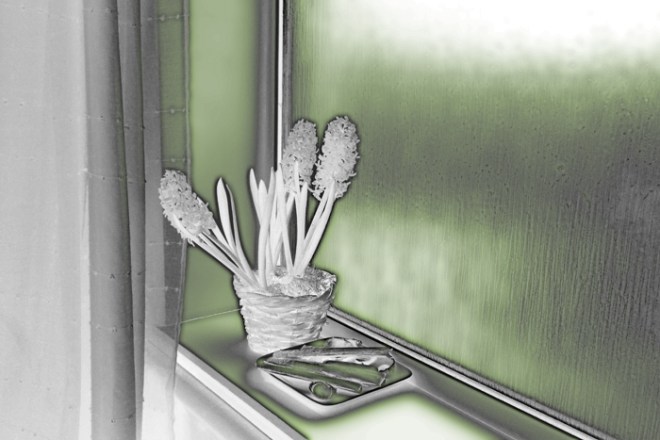
‘Red’

it said

on the plastic label

and I wondered as I set

the basket on the table

what kind of red?

And so I pondered.


The red of sunsets,

of robins’ breasts,

of anger

or traffic lights,

of jelly tongue twisters

or sunrises that, warning

shepherds or sailors,

in the morning

are simply red.


Scarlet,

hue of pomp and circumstance,

or flagrant

adultery,

of shame

or fame;

a colour with a dual nature,

Is scarlet.


Blood

speaks for itself

of injury or death;

of class (though maybe then it’s blue)

of ancestry,

(it may

be used in heraldry),

of diverse things like

fox hunting and the final brush

(though not the coats)

and geraniums,

does blood.


Crimson:

royal, yet

colour of shame.

Cheeks, stained,

may be aristocratic

but derided.

It can be literary

contrasted with white.

The very word

echoes with jewels

and depths

and night,

or gorgeous knights

caparisoned

in crimson.


Ruby

states gems outright

but lips too,

ready to be kissed,

and apples or plums

ripe

for the picking,

the eating,

the stealing.

It hints of larceny,

deception

and desire,

does ruby.


Vermilion

is just a foreign way

to say

red

and can have shades

of ruby

crimson, scarlet

or any other red

unless it’s in a paint tray.

Every meaning we assign

to each of those we attach, too,

to vermilion.


For a week

I watered the basket

judiciously

while the buds stayed tight

and green;

no red to be seen,

then the sun must

have reached within

and told

the petals to unfold.

They were not red at all

but deep, deep, deepest pink,

beautiful and scented

but not

(most definitely not)

red.

dscf1717

Walking in the footsteps of the ‘greats’.

p1110271_resized

Last weekend I finally managed to watch Sally Wainwright’s ‘To Walk Invisible’ which I had saved on iPlayer and which was about to be withdrawn even from there. I had put off watching, thinking I knew the story backwards, forwards and upside down and would be bored by two hours of it. However, from the first few moments I was absolutely hooked and really on edge at the exciting parts, even when I knew what would happen. It was brilliantly scripted, produced and acted. It also made me think of my own history.

The reason I am so familiar with the Brontë story is that I went to Casterton Boarding School for Girls which is the school (albeit in different buildings) Charlotte and Emily attended, together with their sisters Maria and Elizabeth who died of typhoid and whose graves are in the churchyard at Casterton.

To say the Brontë sisters and their works were shoved down our throats is the understatement of the decade, never mind the year.

You can see a brief history of the school if you Google the Wikipedia entry. It’s in a village of the same name on the edge of the Lake District, just outside Kirby Lonsdale. The sisters attended the school at Cowan Bridge in a building that is still there. Later, the clergy daughters’ school merged with a school for servants (housekeepers?) at Lowood, and together the schools moved into new buildings in the village of Casterton. (The three villages are not far apart.) Recently, the school merged with Sedbergh – a boys’ school – and so far as I can tell from my own visits and from those of friends/former classmates, the school we attended effectively no longer exists.

I am in touch with all my class with the sad exception of four who died (suicide, cancer, car crash and heart attack) so I have just over 30 ‘old girls’ to keep in touch with. It’s a bit like having 30 sisters who unfortunately don’t live in the same town. Because it was a boarding school, we were very much thrown into each others’ company, evenings and weekends, during term time, without any input from siblings or parents. There were house mistresses and matrons, and prefects, but we relied on each other. I was there from the age of 9 to 17. Think about it…There were in fact a few ‘day’ girls: the vicar’s daughters, and the doctor’s daughter spring to mind. But they were the exception.

We slept in dormitories, changing dorm from time to time. The largest I was ever in had 16 beds, and the smallest, 3. By the time we reached sixth form status we had 2-bed cubicles but these were separated by low walls and we could still talk to everyone. When we visited (as a class) for the millennium Founder’s Day celebrations we found that most girls were in 2 bed rooms and that a cluster of separated rooms was still known as a dorm.

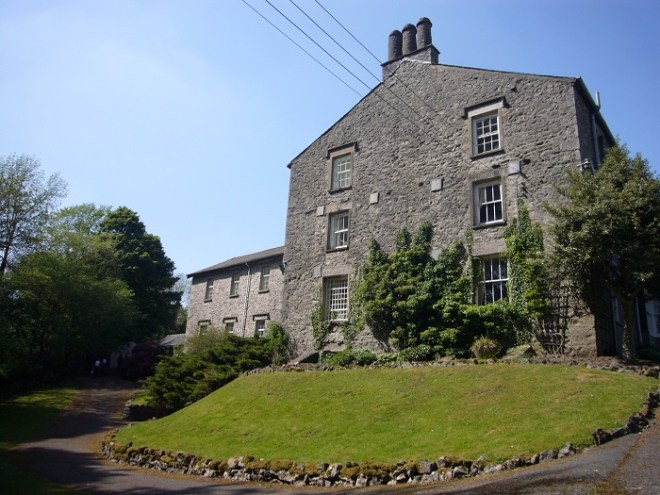
We were divided into houses. The junior department was in a building called Brontë House and the houses within it were Lowood and Cowan – fierce rivals. The photograph at the head of this post is of Brontë House a few years ago before it was sold off for conversion to flats.

I was 9, as I said, and didn’t really understand all the fuss about the famous writers or the school’s history. We were taught to be proud of the connection and shown the graves. The senior school had portraits lining the walls of the main corridor and when we went there for assemblies etc. some portraits were specially singled out. There was the ‘founder’, William Carus Wilson, who was, we were told, the template for Mr Brocklehurst, and Miss Beale, who was very pretty (and very Victorian) during her time at Casterton and was the presumed model for Miss Temple. She later left and became the first headmistress of Cheltenham Ladies’ College. The school song, in those days, was ‘Jerusalem’ and not the many-versed history that is sung today (I have no idea whether that has survived the merger but I wouldn’t weep for it).

We were taken to the senior school when I was nearly 11 to watch Wuthering Heights – it was in episodes so clearly was on television (there was a projector with a big screen in the hall) but I have not been able to trace it. It might have been a repeat of an earlier series. Or perhaps BBC showed a film in weekly parts? I had no idea what was going on but developed a deep and abiding dislike not only of Heathcliff but of all the characters and indeed of the entire story. I honestly think we were exposed to it too young…

We read it of course, which simply served to increase my dislike. We also read Jane Eyre and at the time I liked it. I was a little older, I think.

Our route to school (and back at the end of term) was by train over the Pennines so we had a close relationship with the moors and fells where the sisters grew up and wrote. The same fells surrounded the school and we went on enforced walks at weekends and runs during the week. I was never sure whether to blame William Carus Wilson, the fictional Mr Brocklehurst, Charlotte, or Jane Eyre. I didn’t feel I could ascribe hockey or lacrosse to any of them but the games fields were in full view of the fells so there was still a feeling of connection with the history and the fiction.

There were occasional parallels between our universe and that of the sisters. I vividly recall a flu epidemic when we were all just bundled into the first available bed as they filled dorm after dorm and designated them as sick bays, so that denizens of different houses (the senior houses were called after ex-headmistresses) were all mixed in together. It was impossible not to think of Jane’s typhoid epidemic, which of course was based on Charlotte’s real experience.

We were encouraged to see ourselves as potential wives and mothers, preferably of good Christian men with whom we could spread the gospel and perform charitable works. If we were intelligent we could try for university but once graduated, there would be the same expectations.

There were, in my day, 250 girls in the school aged between 8 and 18, and there were 50 special places for the daughters of clergymen, with much lower fees than the norm. I was one of these recipients of a ‘clergy place’ and we were very aware of our status, and of the fact that our fathers got to know each other (and the vicar, who was the school chaplain) over the years. We were, we were told, the spiritual ‘descendants’ of Charlotte, Emily, Maria and Elizabeth. Anne was never mentioned; of course, she never attended the school. Branwell was never mentioned or if he was it was in hushed tones and I think we possibly conflated him with Heathcliff.

My home experiences in the school holidays involved living in a country parsonage rather like the one at Haworth though we had a washing machine – and an Aga. It was something else that made the Brontës’ life seem very close and personal.

I gradually read not only Wuthering Heights and Jane Eyre but also The Professor, Agnes Grey and The Tenant of Wildfell Hall. I think I like Anne’s style best of the three writers although I can see the literary merit in all of them. They were all surprisingly feminist for their time, especially since they were living in a country parsonage with very little contact with the wider world. Their characters were feminists of a kind, though I was amused when my daughter, reading Jane Eyre for GCSE, threw it down and declared that Jane was a wimp, always just reacting to events and never making things happen.

I have, of course, visited Haworth. A close friend lives near there. I have also visited the house on Dominica that was the original for the house where Mrs Rochester was supposed to have grown up in Jean Rhys’ Wide Sargasso Sea. I am familiar with all the countryside that provided the locations for the more recent TV series.

I feel as though perhaps I ‘own’ Jane Eyre (or perhaps it owns me?) in a way that doesn’t occur to me with other books. It is by no means my favourite ‘classic’ – I would struggle to choose between Austen’s entire oeuvre and some of Trollope’s Barchester novels for that, and might even come down on Trollope’s side, with Ayala’s Angel in top place – not Barchester but wonderful. However, Charlotte ‘speaks’ to me, as a pupil at Casterton, as a student of literature, and as a writer. I don’t necessarily answer.

Snow

OLYMPUS DIGITAL CAMERA

Small flakes spiralling

Cold on damp melting

The world greying

Houses shiver under wet roofs

Trees drink in great gulps

Cars slow then spring ahead

Lights sparkle or quaver

Sound quavers too

Then stills


Sharp flakes needling

Ice on ice driving

The world hurting

Houses flinch beneath metal skies

Trees sway at the assault

Cars spin then skid awry

Lights dance or flicker

Sound flickers too

Then stills


Huge flakes smothering

White on black swirling

The world narrowing.

Houses cower behind closed doors

Trees shrivel into deep roots

Cars loom then disappear

Lights fail or waver

Sound wavers too

Then stills


White drifts glistening

Quartz on silver shimmering

The world shining

Houses crouch inside warmed walls

Trees display jewelled arms

Cars slide then come to rest

Lights pale and are muted

Sound is muted too

Then stills


(The tree is at the bottom of our garden but I took this picture a few winters ago)

The Crown. My New Book Is Out!

OLYMPUS DIGITAL CAMERA

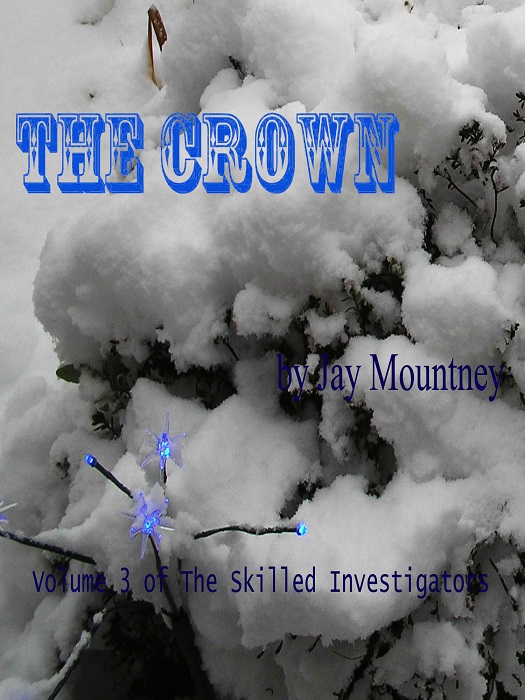
The latest volume in my fantasy detective saga, The Skilled Investigators, is live on both Amazon and Smashwords! I proudly present to you: Book 3, The Crown.

For once I had no formatting problems whatsoever, though I did initially forget to organise an ISBN with Smashwords. This only means I had no problems once I uploaded to the sites – my editors and others know all about the angst I underwent whilst perfecting the document prior to uploading!

In Book 1, The Scroll, Genef fought to achieve her dream of training to be an Investigator with the Guild. A serial killer came literally to her door and she was instrumental in solving the case. In the course of the story Genef was gifted with the Skill of Knowing Touch. When she started her training the Guild gifted her with Teaching Taste. The king was so pleased with her work that he assigned her to trace some stolen royal jewellery so Book 2, The Market, saw her sailing to The Spice Islands with her brother, Fel. They had to deal with murder and enslavement but Genef found most of the jewels. A crown, however, had been sold on to traders from The Ice Country. After she received the next Skill, Inner Hearing, Genef was instructed to follow the trail of the crown and retrieve it.

The Crown sees Genef and her mentor Rath travelling to The Ice Country, where the land is always frozen. Scratch accompanies her, hoping to find other dragons in the snow-covered north; he has no contact with his family or indeed his species. Genef is settling into her role as an Investigator and now has Rath at her side, as well. Together they face more slavery problems, some unpleasant deaths, kidnapping and deceptions, bitter cold and Scratch’s growing independence. Can they find the crown and return it to Lonis? Will Scratch stay with Genef ’till the stars fade’ as he promised, or will he join northern dragons in the snowy wilderness? And will Rath find a way to court Fel on their return? Genef hopes so – she loves her brother and thinks Rath would make an excellent partner for him. This is chilly (and occasionally chilling) adventure for a perfect midwinter read.

The story will continue later in 2017, in The Lantern, which is currently being written.

Here are the links to the book:

https://www.amazon.co.uk/dp/B01N4MBOG3

https://www.smashwords.com/books/view/695351

The book is also available on amazon.com with a very long URL so presumably the non-UK site links back to the UK one. Other self-publishers will no doubt know!

The first person to comment on each of my sites – i.e. WordPress, Facebook and my Dreamwidth and LiveJournal blogs can claim a free copy of The Crown in the form of a coupon for free download of the Smashwords edition (which includes a mobi version so is suitable for Kindles as well as other e-readers). I should perhaps point out to WordPress and Facebook friends that my blogs (I’m moth2fic on both sites) are friends-locked but I welcome new friends.

15 favourites (and another 15)

OLYMPUS DIGITAL CAMERA

Fellow writer Sheenah Himes posted a list of authors. She said:

The Rules: Don’t take too long to think about it. Fifteen authors that you will always auto-buy
List the first 15 you can recall in no more than 15 minutes. Tag at least 5 friends, including me, because I’m interested in seeing what authors my friends enjoy and I always like to add to my TBR !!
By the way any one that sees this please feel free to join in on it!! I want to see as many authors as I can under this!!

I don’t auto-buy anything, even bread or milk, but I do look out for particular authors. I didn’t spend much time on this and I will have left out important names – yours might well be one of them! But some are absent either because so far I’ve only read one work/series and my mental jury is still out, or I’ve liked most of their stuff and then come across something they wrote that I found really dire and that has made me wary. Or, in one sad case (Ruth Sims) because the writer died so I know there’ll be no more. For the same reason my second list doesn’t include writers like Tolkien or Pratchett, or any of the ‘classics’. The names are not in any kind of order, either alphabetical or favoured! Just instant response.

I needed two different lists… (and it still only took 15 minutes)

1. m/m romance including detective/fantasy/contemporary

Rhys Ford

J.C. Charles

Harper Fox

Heidi Cullinan

Alex Beecroft

Charlie Cochet

Chris Quinton

Alexandr Voinov

Jaime Reese

Jordan Castillo Price

Keira Andrews

Tamara Allen

Joanna Chambers

Angela Benedetti

Sarah Granger

2. longer, less genre-specific (though some have m/m elements) novels including detective/fantasy/contemporary

Alyx J. Shaw

Anel Viz

Tanya Huff

Seanan McGuire

Naomi Novik

Ben Aaronovitch

Deborah Harkness

Tracy Chevalier

Sharon Penman

Stephen King

Neil Gaiman

Lindsey Davis

Kate Elliott

Phil Rickman

Ian Rankin

Consider yourself tagged, because, like Sheenah, I love to see what other people read and enjoy.

The picture is the story tree outside Marple library, in Cheshire, UK.

New year reviews, resolutions and wishes.

113-new-year

HAPPY NEW YEAR to you all!


Reviewing 2016 and resolving for 2017.

My favourite books of the year.

We’ll start with non-fiction:

A Slip of the Keyboard/Terry Pratchett – autobiography mixed with articles and speeches about writing.

The Establishment (And how they get away with it)/Owen Jones – a look at modern Britain and the problems in our politics, media, etc.

An anthropologist on Mars/Oliver Sacks – case studies of patients with interesting conditions such as visual problems and autism.

Thinking in Pictures/Temple Grandin – autobiography by the famous autistic writer/speaker/designer of animal handling facilities

The Road to Little Dribbling/Bill Bryson – more humour from the American who see Britain through fresh eyes.

Then fiction:

Gryphons/Alyx Jae Shaw – sprawling sci-fi with romance, coming of age, excitement, and social commentary (see more details at https://jaymountney.wordpress.com/2016/04/13/gryphons-a-review/)

Return on Investment/Risk Return/Aleksandr Voinov – really gripping novel and sequel set in the world of banking; I suppose it might be seen as an m/m romance but it’s so much more.

The Second Footman/Jasper Barry – fascinating story of a young bisexual man who seeks revenge for family disasters in nineteenth century France.

Have you seen her?/Karen Rose – I will try anything by Rose – formulaic thrillers with an undercurrent of romance, yes, but they invariable grip me.

I will also read anything by Kate Elliott (sci fi/fantasy) and Lindsey Davis (history/historical thrillers) but have not come across anything new recently (which is not to say there isn’t anything).

Series.

Closed series:

Temeraire/Naomi Novik. Dragons in the Napoleonic Wars.

Gay Amish Romance/Keira Andrews. Detailed and intriguing look at the US sect.

Nightrunners/Lynn Flewelling. Fantasy series with m/m elf/human partners as spies.

Fall of the Gaslit empire/Rod Duncan. Steam-punk politics and mystery for a woman who passes herself off as her (non-existent) brother to get work as a private investigator.

The Magpie Lord/KJ Charles. Witches, magic and mysteries plus m/m romance in an alternate regency England.

Open series (so I’m looking forward to more):

Rivers of London/Ben Aaronovitch. Magic and policing with a diverse cast set mostly in modern London.

October Daye/Seanan McGuire. Urban fantasy with a parallel fairyland accessed from San Francisco.

Captain Lacey Regency Mysteries/Ashley Gardner and Jennifer Ashley. Captain Lacey turns private investigator on his return from the Napoleonic wars with injuries that preclude further military service.

Dowser Series/Meghan Ciana Doidge. Fun magic and mystery in modern US.

Merrily Watkins series/Phil Rickman. A woman vicar in the Welsh Border country (English side) is persuaded to take on a second role as diocesan exorcist. Great mysteries, a scattering of supernatural hints, and some wonderful characters to ‘invest’ in. I don’t like the author’s one-off novels nearly as much and perhaps that’s why – I like following Merrily and her family and friends.

Seraphina/Rachel Hartman – fantasy, and a new ‘take’ on dragons.

What I’m currently reading: (and yes, I usually have more than one book ‘on the go’)

The Folklore of Discworld/Terry Pratchett and Jacqueline Simpson. A really good look at folklore in both our world and Terry’s Discworld, and how ideas spread, mutate, etc. (Paperback in the lounge.)

Pwning tomorrow – an anthology of short fiction from the Electronic Frontier. Like most anthologies the contents are mixed but there are some excellent stories building on current IT trends to posit a chilling future. The EFF want their book widely shared and you are encouraged to donate and download at: https://supporters.eff.org/donate/pwning-tomorrow (On my Kindle so available to take out.)

The Secret History of Fantasy ed Peter S Beagle. Another mixed collection with some gems and some interesting commentary by Beagle and Le Guin. It contains one of my all-time favourite stories by Gaiman: a new twist on Snow White. (Paperback upstairs for bedroom or bathroom reading.)

Monks and wine/Desmond Seward. Engrossing account of how, where, when and why monks contributed to the history of wine in Europe and elsewhere. (Hardback upstairs for bedroom or bathroom reading.)

Well now – non-fiction of all kinds and then huge helpings of fantasy, dragons, murder, and romance. Yes, that about sums up my reading tastes. I read 118 books in 2016, two of which were re-reads. That’s over two a week and I also read novel length fanfiction so I suppose it’s quite a lot!

My favourite films/shows/DVDs of the year:

2016 doesn’t seem to have been the year of the cinema for me and although I’ve watched quite a lot of films on DVD the only one that stands out is:

Pride. A fantastic (and true) story of how some LGBT people from London campaigned alongside the Welsh miners during the miners’ strike.

2016 seems to have been a desert in terms of my theatre going, too. though we have booked for The Curious Incident of the Dog in the Night Time at the Salford Lowry theatre later this month. (At least partly because we know one of the cast and there’s a party after the first night…)

I’ve been catching up on series:

Game of Thrones Season 4. Season 5 was in my Christmas presents so that’s sorted – and I’m not bothered by spoilers because I have read and love all the books so far and just wish he’d get the story finished. For anyone who doesn’t know it – politics, murder and mayhem in an alternate universe that is loosely based on the Wars of the Roses with added magic and monsters.

Lewis Season 8. Season 9 (the final one) was also among my gifts. Again, for the unaware, murder mysteries set in Oxford.

The West Wing Seasons 6 and 7. I had never watched the final seasons though I’ve owned them for years. This was a fascinating way to access American politics and their electoral process through a fictional but very real series and it truly helped me (a Brit) to set the US election in some kind of context.

Ripper Street Season 3. Victorian policing in the aftermath of Jack the Ripper. I loved the series and the acting but it has become very dark. Season 3 ended quite satisfactorily for me and I think I will give later seasons a miss.

I’m hoping to try Yuri on Ice (Japanese anime m/m romance) and Westworld (cowboys and robots series based on the film, which I liked) – both highly recommended by friends. I really wish there would be more Spiral (Parisian cop show), and am hoping for another season of The Bridge (Swedish/Danish cops this time).

Actors I would watch in anything:

Aidan Turner though I can’t say I particularly liked And then there were none (January 2016)

Johnny Depp

Ben Whishaw

Sean Bean

Richard Armitage

David Tenant

James Nesbitt

Lenora Crichlow

Helen Mirren

Judy Dench

Allison Janney

Billie Piper

Maggie Smith

Music

My classical favourites are unchanged: Mendelssohn and Bruch violin concertos followed closely by Rodrigo Concierto De Aranjuez. I’m always surprised by my choice because I would have said the piano is my favourite instrument, but there we are.

Current favourites in non-classical (i.e. things I play a lot) include Cohen’s Hallelujah, Jagger’s Streets of Berlin and Hozier’s Take Me To The Church. All musically interesting, angsty and hard to pin down.

My ongoing fandoms: (Why yes, I am a still, and probably for ever, a keen consumer and producer of fanworks.)

These are the ones I will always read in and sometimes write in:

Harry Potter – various pairings or none but I usually prefer it when the characters have left school.

Lewis – and my writing is a crossover with Harry Potter. I don’t usually read anything under 1000 words, but I do follow all the challenges, secret santas, etc. even when I don’t contribute.

The Hobbit/LotR – I can get lost in long Hobbit fanfic for days but my own writing tends more to the LotR end of the story.

I’ve read all the Professionals Big Bang fics this year and will still read novel length works but tend not to bother with anything under 1000 words. I haven’t written anything recently.

Stargate Atlantis. I have downloaded all the longer stories in the secret santa and am looking forward to luxuriating. I really ought to finish my own WIP…

Bandom – there’s a dearth of long AU fics – the kind I adore – since the bands started to disintegrate. I have never written in the fandom but some of my all-time favourite reading is there.

Hawaii 5.0 I love the longer fics but have lost interest in the show – too much stress on family problems and not enough on the tight team ensemble/casework that attracted me in the first place. I’ve written the guys into a spoof crossover but I find writing American characters difficult.

Star Trek. I like most of the characters and enjoy the sci fi component. I don’t write it myself because the combination of mostly US cast plus technical detail looks hard to manage.

My most popular works according to AO3 are still

The Paths of the Living (LotR and my first/only threesome/incest story)

First (Rome, and perhaps the story I’m most proud of.)

The Crying Game (Grimm, written for a challenge and unlikely to be followed – I wrote a ‘first time romance’ for them, including a case to solve, and that, says my brain, is that.)

I continue to be a bit of a fandom magpie. Working for AO3 as a staffer brings me into contact with a lot of fandoms I would not usually consider and I will try anything once! That and icon making (which I find relaxing) are my other main contributions to being a fan. I didn’t manage any conventions this year but did have meet-ups with fannish friends from various places – Portugal, Germany, England, and Finland (although she lives in UK and I saw her in Portugal). There was to be a meeting with a US friend who was visiting UK but when we saw the rail prices and timetables we gave up. One sad note was the loss of a Pros artist friend in Japan, in January 2016. It wasn’t just the rich and famous who disappeared from our lives.

Altogether a satisfying year in terms of reading, watching and listening, and I hope 2017 will be as interesting and full of mostly excellent surprises.

Resolutions.

I’ve decided that quality is better than quantity – and more likely to be achieved. So I thought long and hard about what I didn’t do in 2016 and what I want out of 2017. I ignored the ongoing things that we all promise ourselves every year like healthy eating or tidying the shelves. Here are my three resolutions, which I am calling the 3 Ps.

1. Publish, publish, publish. There are two novels and a novella languishing on my hard drive which are doing nobody any good at all. Last year I managed one novel, some poems on WordPress, some flash fics on WordPress and Dreamwidth and some fanfic on AO3. Must do better!

2. Post, post, post. I can hardly believe how few posts I managed in 2016. I must try harder, prepare stuff in advance, cross post to various social media, and regard it all as marketing myself as well as my work. I have very little idea of why it doesn’t happen but I am determined to make more effort!

3. Photograph (and photoshop). I love making e-cards, icons, banners, online jigsaws and my own book covers. I find it really relaxing and have the quite costly tools to do it properly. However, somehow it gets crowded out of my life and I don’t want that to happen!

I suppose I had better look back at this at the end of the year!

Pet Peeves of an Author

horizontal

Louise Lyons posted https://louiselyonsauthor.com/2016/12/28/pet-peeves-of-an-author/ and tagged any of her writer friends to join in. I’d been considering posting about some of this for a while, so here goes! And go and read Louise’s post first!

As Louise said, time to write is a pet peeve. Although I’m retired and therefore theoretically as free as air, real life will insist on intruding. And somewhere in the back of my brain is a kind of demon that says that unless I’m earning as much as JK Rowling I really don’t have the right to stick to the writing and let real life go hang. I allow myself to get involved with family, friends, voluntary work, and neighbours – all part of the richness of life that then underpins writing, of course, but a writer does need time to get it all down!

I don’t mind the editing part. I have some wonderful beta readers/editors who keep me grounded, organised and thankful for their existence. It’s fascinating, sometimes, to read what you think you wrote and then find out from your editors that no, actually, you missed/inserted/twisted this, that or the other. My main editor could almost be cited as a co-author. If I leave the editing long enough I can treat my work as if it was written by someone else and am often surprised by the contents although with my detective stories I don’t usually forget who ‘dunnit’. However, a minor peeve is that minor characters will insist on getting into the wrong place at the wrong time and have to be very firmly dealt with to get everything back on track.

I do have a pet peeve concerning the typo gremlins that live in my computer or in cyberspace and invade while my back is turned/a paragraph is edited/the work flies to and fro between me and my editors. We catch most of them – the typos, not the gremlins – but I would love to banish them completely! Their favourite ways to trick/upset me are to leave extra spaces between words, miss out punctuation marks that I know I inserted, and mess about with hyphens.

My major hate/peeve is formatting. Self publishing has a number of things going for it but formatting isn’t one of them, and no, I have no intention of paying someone else to do that part for me. Well, unless I get to the JKR stage, I suppose, but that’s not likely. And even then, I’d want to control the process so I’d need to check everything myself. The Smashwords Style Guide is a haven of common sense and clear explanations. But what works for Smashwords doesn’t work for Amazon and I have recently been tearing my hair out over their rules.

A final peeve is pricing. I simply can’t work out what to charge for novels or novellas. Everything I try seems to end up with the wrong marketing position – too expensive (so browsers pass by), too cheap (so people think it’s probably not worth reading) or too free, at which point there are lots of downloads which never translate into purchases. I know as a reader that I avoid expensive e-books. Print paperbacks should be dearer than e-books. After all, e-books don’t come with all the in-between stuff like printing, storage, shipping, shelving, etc. And yes, editing comes with a cost for books published by mainstream publishers, but not for writers like myself who are self-published. Or at least, not at such a high cost. And yet do we need to factor it in? I’ve read a lot of blogs and articles on this subject but am no nearer any decisions.

So – five things that exercise my brain at the expense of writing time!! Pet peeves indeed!

I’d love some of my writer friends to join us – consider yourselves tagged!

Last Christmas

heart_png680

Last Christmas…

I remember it as clearly as yesterday, and you’re lying when you say it all passed in an alcoholic blur because of your new job and celebrating and so on. We were living together so it would have been a bit hard to fool me that much. Most of the time you were sober and a bit morose about having to move, to leave, even though you were pleased with the new status and even more with the new pay package.

I gave you my heart…

…right after the office party, on the way to the station. You were grumbling about having to pretend we weren’t together and I suggested we should stop pretending, let the world know, get married (it’s legal now, after all) and let the office busybodies have their nine days’ wonder, shock and salacious gossip. I said I would come to London with you, find a job somewhere, somehow, so that we could be together. We stopped under one of those huge streetlights on the station approach and you kissed me right there in public. Well, OK, there weren’t many public around and the ones there were were wrapped up in their own thoughts and destinations. But you kissed me without looking over your shoulder and I remember the sleet glistening on your hair under the light, the fiery coldness of your lips and the way my heart sang. Then you held my hand till we had to leave loose and run helter-skelter for the last train, laughing.

Neither of us had had that much to drink. We never did at those office things, too scared, I suppose, of giving ourselves away. So instead I gave my heart away and when we got home we fucked, or rather made love, till almost dawn.

The very next day …

It was Christmas Eve and we went into the village to buy a tree. We thought they might be cheaper, with less than twenty-four hours to go. We found a really nice little tree outside the supermarket, with a huge ‘reduced’ sign on it and we were just going to go in when Anna, that new girl from the typing pool, came past. We hadn’t known she lived in the same suburban village as us; she’d left the party early and of course we normally travelled in by car so we wouldn’t have run across her. She looked surprised then asked if we were together, with one of those smirking, knowing looks that some people seem to find appropriate. I was just saying yes, proud and dizzily happy when you said no, we were just flatmates. I felt the bottom drop out of my world.

We didn’t even decorate the tree and it just stood there all dark and bare till I threw it out on New Year’s Eve, tired of the needles dropping on the carpet, dry and spiked like my thoughts.

You left on the Sunday night and you tossed me your keys without a care in the world.

This year…

I was surprised to see you, pleased for you to hear about the promotion and the return up north, but not impressed that you seemed to think I’d just have been waiting all year, like some kind of doll you can throw into a box and take out again when it suits you. You were never that great a ‘catch’ despite the inflated salary. I could always have found someone else but we were good together or at least I thought we were. You didn’t. obviously.

… someone special.

He’s already asked me privately and he’s arranged this romantic public proposal under the mistletoe at his mum’s house. They know, too, so there won’t be any outcry, just lots of people pleased for us. He’s really dependable, and not bad-looking. I’m going to be happy.

But sometimes, very privately, I just wish it was last Christmas all over again.


(I wrote this a few years ago to a prompt from a writing group. I’ve tweaked it slightly to bring it up to date. It’s a kind of homage – and maybe we all wish it could be last year and 2016 could be re-run with edits?)