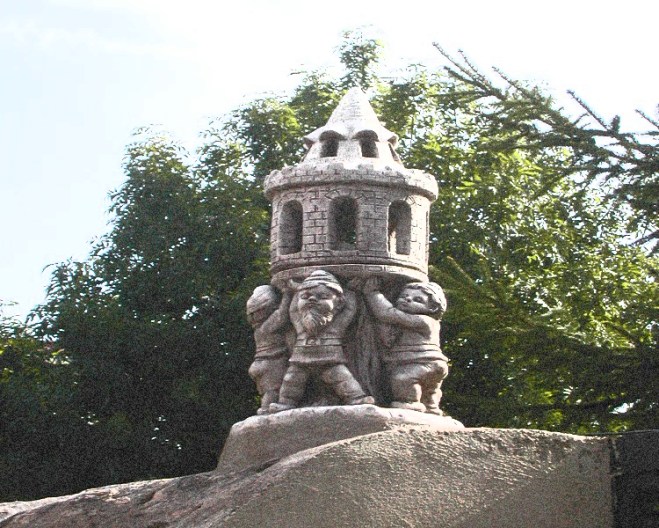
The House (a sci fi ficlet)

They came up between the floorboards at first, a little like smoke, or perhaps mist because nobody seemed to suspect fire. Tendrils crept into the various rooms, up the stairs and down into the root cellar.

They made things strange. Not uncomfortable, exactly, or not that anyone could articulate. There was an atmosphere of oddness, of unrightness. A glass that had been polished and put away would reappear on the table, smeared, with a yellowish sediment in the bottom. A bed that had been neatly made would be tumbled and creased, the pillow tossed on the floor. A towel in the bathroom would be wringing wet when nobody had used the basin or shower since the previous day. Everything could be ascribed to poor memory, to human error. But everything added up. Nobody was harmed, but nobody was happy and eventually they left. They sold it, of course, but the next residents, and the ones after that had the same experiences. Ridding the house of humans took a few years but they could afford to wait.

Next, they turned their attention to the small things. The bugs that lived in the cracks, once there were no humans to clean the place, found their cracks filled with unpleasant textures and smells. The mice under the kitchen sink had a nest damp from drips even though the taps were no longer working. The birds that built homes in the roof space had a feeling that predators were constantly overhead. They all left, not at once, but one by one, reluctantly but in the end with relief.

Then the moss on the roof failed to thrive. The lichen that tried to establish itself on the front step found the atmosphere polluted despite the lack of anything within miles that could affect it. The creeper on the back wall rotted.

At last they had the house to themselves. It was a beautiful house, built from aged silvery grey wood with large airy window frames. It was the perfect home and it had taken a while to get it exactly the way they wanted and it had taken a lot of work but at last it was finished, and they settled down. Anyone passing, though very few ever passed, might have heard, soft on the evening air, a sigh of contentment.

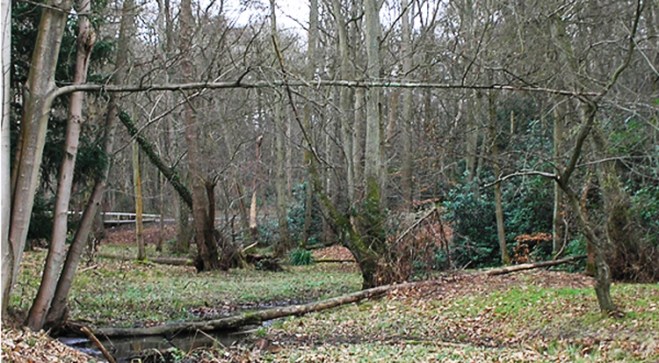
(The picture is not mine. It’s a slightly photoshopped version of one I found on Pixabay by Wyosunshine. The information for the photograph said it was free for even commercial use. It’s very similar to the one used for a prompt that inspired this ficlet. Given a lack of wooden houses anywhere near either of my homes, I felt obliged to go looking and make sure there was no copyright violation. One or two of you might have seen the ficlet a while ago on my personal journal.If so, ignore!)

Debunking myths about writing

120-debunking-myths

Debunking ten common myths about writers and writing.

#1. Writing can be done any old time and happens in the gaps between other more important commitments.

This is a myth most usually believed by family and close friends. Sometimes the belief spills over and affects the writer themselves. It is by no means true. Writing, and particularly editing or drafting a second version, requires concentration. It’s perfectly possible to write short sections in ten minute bursts, and then string them together. But the mere act of stringing them together satisfactorily takes a lot more than ten minutes, and ten minute writing sessions are not very satisfying to the average writer. I know I need aat least an hour to get into a story or chapter. This is at odds with the other demands on my tattention. I’m responsible for various household needs such as shopping and cooking; these not only take time but are at the mercy of other people’s agendas such as when the shops are open and when the family want or need to eat. The same constraints would apply to any other household necessities that members of any family commit to supplying. Even a solitary writer has to eat, sleep and supply the needs of themselves and perhaps their pets.

Besides the actual act of typing or writing the words, there is thinking time. This is essential. Some writers plot in advance and other simply see where the characters want to take them, but whichever kind of writer you are there is a necessity to think either of the way your story is going, or the way it has gone, if only to check mentally for inconsistencies and plotholes. Some people produce a story in a linear fashion, going from A to Z via the other letters in the right order; others write sections as they occur to them then fit them together and write linking material to fill the gaps. Both methods are valid and both require time and thought.

Thinking can take place alongside other activities – for example, in the shower, in bed before falling asleep, or whilst doing some mind-numbing task such as ironing. It doesn’t go well with anything that needs concentration like stirring a risotto or supervising a child’s homework. So writing and its handmaid, thinking, need time, quality time, and it’s all to easy to let this be squeezed out. I suppose if you’re JKR or James Patterson, you can plead that you’re working, but most writers don’t earn so much that they feel able to make this plea. However, they should not allow other people to encroach on their writing time, even if the writing is mainly for their own pleasure. Nor should they go along with the myth and allow their writing time to be elbowed out of the day.

#2. Writing is not work, just a hobby that sometimes results in payment.

Whether it’s for private enjoyment or close friends or a wide audience, and whether or not it’s to be published for payment, writing is hard work. (So are some hobbies but that does not invalidate the general argument.)

Some writers find that plots come easily. Others have characters spring up fully formed in their heads. Yet others find that language flows, provided they have more than ten minutes (see #1 above) to devote to it. But all of them will need to edit what they write, to check it for style, for whether it says what they intended, to make sure the characters have the correct names (especially minor ones who appear chapters apart) and are wearing consistent clothing. It’s no good having character A in a shirt that matches his eyes and then throwing his soiled white shirt in the laundry basket at the end of the day. Similarly, it’s not helpful to have characters go upstairs if you’ve located them in a bungalow in Chapter 1. Reading through what you’ve written is important to help avoid repetitive vocabulary. Readers get irritated if A looks soulfully at B more than once. (Actually I get irritated the first time but that’s just personal preference.) And even if all these things are sorted, the writer still has to physically get the words down on screen or paper. Fingers can get tired, too, and backs can suffer. So can eyes. Nobody suggests that a secretary doesn’t work, so a writer works at least as hard just getting their words down.

Once the initial draft is written there’s editing. Yes, you can employ an editor, or your publishers might wish one on you. Whichever, they’d really prefer it if you’d done a bit of editing yourself before offering up your draft. Before seeking another pair of eyes it’s as well to make sure your story flows, and that there aren’t too many typos. If you’re self publishing you need to know something about formatting, whether you do it yourself or pay someone else. You need to know about copyright, about marketing (at a minimum, how to tag your work, write a blurb, etc), about taxation (if you ever get royalties), about the royalty system, about the way publishing in general works, whichever route you take. If you were talking about any other craft, the same kinds of things would apply. The person who knits for a hobby only needs to buy wool, needles and patterns; the person who hopes to sell their knitted garments needs to know all about wool and its attributes, current prices, sizing, labelling, etc. and has to know how to package, present and market their work. Children who kick a ball around are hobby footballers, and remain so even when they grow up and just join in a friendly neighbourhood game; professional players have a whole host of other things to learn and worry about. It’s the same with writing so for anyone who wants to publish, writing is not a hobby even if it started that way.

#3. Writing could be done by anyone who wanted to give the time to it.

Well, no. You only have to glance at the stuff school students produce to know that some people are creative and others just aren’t. I’m not talking about ability with words, grammar, etc, but the ability to bring characters alive, to make locations seem real, to get readers to suspend disbelief at the inevitable artificiality of plot or the way an event is recounted (because real life just doesn’t behave like story but we forget that both when we’re reading, and when we’re living). Writers have a gift of being able to share their worlds, fictional or non-fictional, with their readers. Not everyone can do this, and for those who can, there’s a long apprenticeship that starts in early childhood. Most writers, in almost any genre you care to name, including non-fiction, will have spent most of their lives reading and researching – not always formally but in some depth. They will be fired by enthusiasm for their chosen subject matter to the extent that they actually feel a need to write, to impart the stuff in their heads to other people. Never mind merely wanting to give time to it – they will feel impelled. Some writing courses (and online sites) purport to help wannabe writers generate plots. Most writers I know have so many plot bunnies the problem is finding time to feed them all. Of course, there’s always the age-old maxim that there only so many basic plots (usually presented as seven, nine or eleven – magic numbers) and everything else is just variation on a theme. You can deconstruct any story to prove this theory, but it’s the variation that counts in the end, and the ability to think up that variation and build it into a satisfying novel, poem, thesis, etc. that matters. I don’t think ‘anyone’ could do this any more than I think ‘anyone’ could be a chef or a violinist, a nurse or a teacher. We all have special skills, talents and passions. Those of a writer include an ability with narrative that is outside the grasp of just ‘anyone’. This applies to the writing of anything from a recipe to a novel.

#4. Writers are always in the market for materials or, “I’ve got an interesting story for you. You’ll like this one. You could write it.”

No thank you. Sometimes we write starting from prompts, which are not usually detailed. They could be the outline suggested by a magazine competition, the idea put forward within a writing group, or perhaps a headline seen in the news. All these can send the mind off in unforeseen directions. This is just writers grabbing materials from the environment, much as they might grab their observations of a place to help them describe a fictional location.

Most writers do not want to write someone else’s story. They don’t feel the same passion for it, you see, because it isn’t theirs. Obviously some journalists and documentary writers will develop their work from stories they have been told by others, but they will have given them their own spin and unique viewpoint. There are a few writers who ‘ghost write’ for the famous, either by producing so-called autobiographies or by putting e.g. well known recipes into print or even writing sequels that come under an umbrella series by a well known author. Often, their contribution is not acknowledged. They may be paid well, but fame escapes them. They’re probably the only writers who might respond favourably to the offer that headed this section, and even then, they’d want to know what the rate of pay was going to be.

#5. Writers should write what they know, and many readers believe writers know, from personal experience, what they write.

The idea of only writing what you know is so silly it doesn’t really deserve any rebuttal. If people only wrote from their own experience we would have no historical novels, no sci fi, no fantasy, nothing from an animal’s pov, no crime stories except those written by police or criminals, no women in books by men or men in books by women. However, the advice works if it is interpreted as ‘do your research’. All reasonably good writers do indeed do their research and this takes time, hard work and a basic knowledge of where to find the needed information.

Sometimes writers choose to present things in first person, using the voice of the character to get an idea across. In any case, characters are going to articulate their beliefs at some point or they will remain unreal and two-dimensional. You know those warnings you get on some TV programmes or DVDs where the channel or film company disclaims responsibility for the opinions expressed? This should, perhaps, be stated at the front of every book, as clearly as the copyright claim. Then readers could be shown how ridiculous it is to accuse writers of the very things their characters are intended to get across as undesirable. If I want, for example, to write a novel that discusses racism, I am going to have to have characters who make racist comments. It should be obvious that I don’t agree with them. But some readers ignore the obvious.

#6. Since word processors you don’t even have to know grammar to get published – just look at all those badly edited self published books.

Simply untrue, or rather, untrue if you want to write and sell more than one book. Spelling and grammar checkers don’t always know what they’re doing. It’s a bit like calculators. Unless you’ve been taught basic arithmetic, you won’t be able to tell when the machine is not working properly or when you’ve failed to ask it the right questions. So, as with calculations, to write you do need a basic grasp of grammar and a reasonably wide vocabulary (and the ability to use a dictionary and a thesaurus). It’s no good relying on an editor. They might disagree with you, especially if you are writing in e.g. Brit English and they are American (or vice versa). They might fail to spot less obvious errors. (You’ll almost certainly fail, because you read what you think you wrote.) Your editor might well read what they expected you to have written and even professional proof readers can fall foul of the cultural differences I just mentioned. The computer spelling and grammar checker is less likely to make these mistakes (though it won’t always spot things like the misuse of homonyms) but it will sometimes misunderstand your intended meaning and you need to have the confidence to ignore it. It will sometimes give you choices and you need to know which to accept. There are definitely self-published books with poor grammar. There are also mainstream published books with typos, plotholes and inconsistencies in e.g. names. One thing is common to both – with the advent of the word processor, all editing has been left more and more in the hands of the writer, who has an absolute need and duty to know something about grammar.

#7. If you’re a writer, why aren’t you rich and famous?

Unless you are J.K.Rowling or James Patterson, you probably won’t get rich from writing. Tolkien didn’t. Some people make a good living, usually by writing dozens of books every year and having virtually no life other than writing and its associated activities. Even then, a lot of their profit gets ploughed back into writing, by attending conferences, book signings, etc. and doing research. Even the most prestigious mainstream publishers no longer give writers expenses for that kind of thing – it has to come out of royalties. Royalties are low with mainstream publishers but there again, they do all the things like paying cover artists, formatters, etc. Self publishing royalties are higher and if you do some of the ‘other’ work yourself, you get to keep more of the profit, but sales are by no means guaranteed. Then, either way, there’s tax… I suspect readers think writers for the big mainstream publishing houses live in a lost world of long lazy expense account luncheons, and paid-for holidays in the sun to research their next title. Not nowadays, and for very few even in some glorious past.

They also seem to think anyone claiming to be a writer should be able to achieve this golden state of affairs simply by being good enough. Unfortunately, leaving aside the matter of royalties and and the lack of other financial support, it is not enough to be a good writer. You have to be a lucky writer, too. Someone who worked for one of the big publishers once told me that yes, there has to be a modicum of talent but after that, the manuscript (and note that I’m now talking about the days before emailed submissions, when there were in fact fewer books written altogether) has to land in the right intray when the submissions editor is in the right mood, has an opening for a work of that particular genre, length, etc. and has time to read it. We all know the stories about how books like Watership Down were rejected time and time again – nothing whatsoever to do with their quality.

#8. Everyone has a book in them

I seriously doubt it. There are people whose lives are so dull that we wouldn’t want to read about anything they wrote; people whose only ‘hobby’ is watching sport on TV, who have no family dramas, who are comfortable in their jobs, their finances and their relationships. Some of them might have rich imaginations and then, certainly, they might write a book, but if they haven’t, then they will have nothing to write about. There are other people whose lives are so chaotic that they can barely make sense of them themselves, let alone tell others about their experiences. They might be able to express some of what they know or believe to a writer who can incorporate it into a story, an article or an academic thesis, but that’s not the same thing as having a book in them. Then there are people who are passionate about something, driven and organised. But their way of dealing with their subject matter is in action, political, business, local community, personal, charity, etc. Or in music or art. They do not have ‘a book’ in them; they may have a painting, a sculpture or a symphony or they may have a parliamentary maiden speech.

#9. Genre fiction and non-fiction is not as important or as high quality as literary fiction or academic non-fiction.

This opinion seems to have been firmly embedded in our culture, no doubt given a helping hand by reviewers in the weightier papers and magazines, and by sundry academics. It is pandered to by booksellers, on and offline, who want to put things on tidy shelves and label them often with profit in mind. They want to target the right demographic. This trend entirely loses sight of the fact that many of our classics started as genre fiction.

Dickens, for example, wrote romance and mystery for the serial magazine market. Yes, his, and many other ‘classic’ books are well written with many-layered plots and delightful characters. So are some of today’s ‘genre’ novels which are dismissed out of hand but have so much to offer. Tolkien made it out of the fantasy ghetto, perhaps because of his academic background, but although I adore Lord of the Rings there are other equally good fantasy writers who are still behind the barriers – Tad Williams, to name only one. Alan Hollinghurst’s books escape the m/m romance genre probably because the author is a respected reviewer (and maybe because he doesn’t always have happy endings). Forster escaped, too, possibly by being dead, but Maurice is hardly ever mentioned in discussions of Forster’s work. There are other m/m romance writers who deserve similar attention. It is fashionable to praise Ian Rankin’s Inspector Rebus novels whilst still putting them firmly in the crime genre whereas Wilkie Collins’ The Moonstone is considered to be the first English detective story but at the same time is regarded as ‘literature’. H.G.Wells and George Orwell crashed through the sci-fi barrier but only, perhaps, by dying. There are too many other examples to list here.

Non-fiction suffers similarly. A really good cookery book is as useful, and as research-based, as a lot of academic papers, but is dismissed as mere ‘lifestyle’ or ‘hobby’ fodder. There are brilliant popular books that analyse history or finance or art, but unless they emanate from university research they are too often ignored.

Obviously many readers find these books for themselves, enjoy them, recommend them, etc. And some of the authors may as a result find some fame and fortune. But not, apparently, the accolade of the serious critic. And that’s something that has trickled down to the general public who in turn regard anything other than the ‘classics’ or the latest prize list litfic as ‘mere’ light entertainment.

#10. Writers are either unsociable or full of themselves (sometimes both)

The prevailing images are: the standard stereotype of the starving artist in a garret; the shy writer tucked away in their converted garden shed; the eccentric and absent minded cat owner with a creaking typewriter and few friends.

The reality is people with families of one kind or another, large friendship groups, and a well-developed social life. How else would they observe human nature so closely and find material for characters, locations and plots? And although some might initially scribble their thoughts down in notebooks, transfer to a state of the art computer screen is an inevitable part of the process requiring an electricity supply, internet and a familiarity with technology.

So writers are not unsociable. But are they arrogant or boastful? They do have to ‘blow their own trumpets’ if they are to make any sales at all. Even the big publishing houses offer very little in the way of marketing and advertising. But selling the product of a lot of hard work is no different from the florist’s sign outside the shop or the bakery buying ad time on TV. After all, if they didn’t tell you about their books, how would you know? You’d be left with nothing to read but the classics, and good as they are, these don’t meet our need for new and exciting ways of looking at the world.

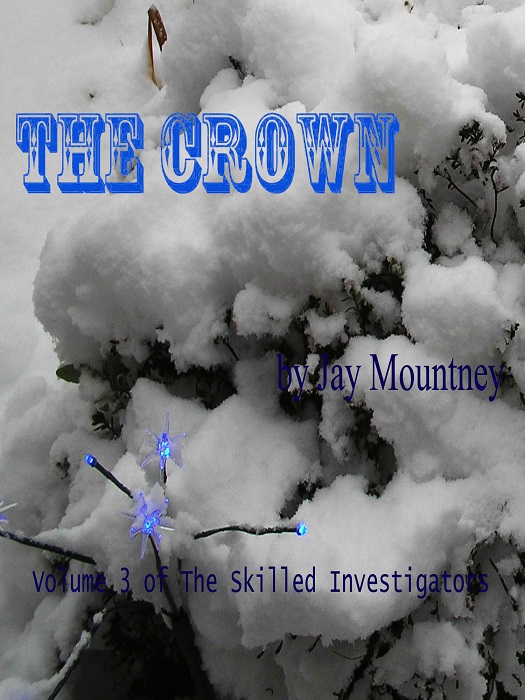
The Crown. My New Book Is Out!

OLYMPUS DIGITAL CAMERA

The latest volume in my fantasy detective saga, The Skilled Investigators, is live on both Amazon and Smashwords! I proudly present to you: Book 3, The Crown.

For once I had no formatting problems whatsoever, though I did initially forget to organise an ISBN with Smashwords. This only means I had no problems once I uploaded to the sites – my editors and others know all about the angst I underwent whilst perfecting the document prior to uploading!

In Book 1, The Scroll, Genef fought to achieve her dream of training to be an Investigator with the Guild. A serial killer came literally to her door and she was instrumental in solving the case. In the course of the story Genef was gifted with the Skill of Knowing Touch. When she started her training the Guild gifted her with Teaching Taste. The king was so pleased with her work that he assigned her to trace some stolen royal jewellery so Book 2, The Market, saw her sailing to The Spice Islands with her brother, Fel. They had to deal with murder and enslavement but Genef found most of the jewels. A crown, however, had been sold on to traders from The Ice Country. After she received the next Skill, Inner Hearing, Genef was instructed to follow the trail of the crown and retrieve it.

The Crown sees Genef and her mentor Rath travelling to The Ice Country, where the land is always frozen. Scratch accompanies her, hoping to find other dragons in the snow-covered north; he has no contact with his family or indeed his species. Genef is settling into her role as an Investigator and now has Rath at her side, as well. Together they face more slavery problems, some unpleasant deaths, kidnapping and deceptions, bitter cold and Scratch’s growing independence. Can they find the crown and return it to Lonis? Will Scratch stay with Genef ’till the stars fade’ as he promised, or will he join northern dragons in the snowy wilderness? And will Rath find a way to court Fel on their return? Genef hopes so – she loves her brother and thinks Rath would make an excellent partner for him. This is chilly (and occasionally chilling) adventure for a perfect midwinter read.

The story will continue later in 2017, in The Lantern, which is currently being written.

Here are the links to the book:

https://www.amazon.co.uk/dp/B01N4MBOG3

https://www.smashwords.com/books/view/695351

The book is also available on amazon.com with a very long URL so presumably the non-UK site links back to the UK one. Other self-publishers will no doubt know!

The first person to comment on each of my sites – i.e. WordPress, Facebook and my Dreamwidth and LiveJournal blogs can claim a free copy of The Crown in the form of a coupon for free download of the Smashwords edition (which includes a mobi version so is suitable for Kindles as well as other e-readers). I should perhaps point out to WordPress and Facebook friends that my blogs (I’m moth2fic on both sites) are friends-locked but I welcome new friends.

Pet Peeves of an Author

horizontal

Louise Lyons posted https://louiselyonsauthor.com/2016/12/28/pet-peeves-of-an-author/ and tagged any of her writer friends to join in. I’d been considering posting about some of this for a while, so here goes! And go and read Louise’s post first!

As Louise said, time to write is a pet peeve. Although I’m retired and therefore theoretically as free as air, real life will insist on intruding. And somewhere in the back of my brain is a kind of demon that says that unless I’m earning as much as JK Rowling I really don’t have the right to stick to the writing and let real life go hang. I allow myself to get involved with family, friends, voluntary work, and neighbours – all part of the richness of life that then underpins writing, of course, but a writer does need time to get it all down!

I don’t mind the editing part. I have some wonderful beta readers/editors who keep me grounded, organised and thankful for their existence. It’s fascinating, sometimes, to read what you think you wrote and then find out from your editors that no, actually, you missed/inserted/twisted this, that or the other. My main editor could almost be cited as a co-author. If I leave the editing long enough I can treat my work as if it was written by someone else and am often surprised by the contents although with my detective stories I don’t usually forget who ‘dunnit’. However, a minor peeve is that minor characters will insist on getting into the wrong place at the wrong time and have to be very firmly dealt with to get everything back on track.

I do have a pet peeve concerning the typo gremlins that live in my computer or in cyberspace and invade while my back is turned/a paragraph is edited/the work flies to and fro between me and my editors. We catch most of them – the typos, not the gremlins – but I would love to banish them completely! Their favourite ways to trick/upset me are to leave extra spaces between words, miss out punctuation marks that I know I inserted, and mess about with hyphens.

My major hate/peeve is formatting. Self publishing has a number of things going for it but formatting isn’t one of them, and no, I have no intention of paying someone else to do that part for me. Well, unless I get to the JKR stage, I suppose, but that’s not likely. And even then, I’d want to control the process so I’d need to check everything myself. The Smashwords Style Guide is a haven of common sense and clear explanations. But what works for Smashwords doesn’t work for Amazon and I have recently been tearing my hair out over their rules.

A final peeve is pricing. I simply can’t work out what to charge for novels or novellas. Everything I try seems to end up with the wrong marketing position – too expensive (so browsers pass by), too cheap (so people think it’s probably not worth reading) or too free, at which point there are lots of downloads which never translate into purchases. I know as a reader that I avoid expensive e-books. Print paperbacks should be dearer than e-books. After all, e-books don’t come with all the in-between stuff like printing, storage, shipping, shelving, etc. And yes, editing comes with a cost for books published by mainstream publishers, but not for writers like myself who are self-published. Or at least, not at such a high cost. And yet do we need to factor it in? I’ve read a lot of blogs and articles on this subject but am no nearer any decisions.

So – five things that exercise my brain at the expense of writing time!! Pet peeves indeed!

I’d love some of my writer friends to join us – consider yourselves tagged!

Last Christmas

heart_png680

Last Christmas…

I remember it as clearly as yesterday, and you’re lying when you say it all passed in an alcoholic blur because of your new job and celebrating and so on. We were living together so it would have been a bit hard to fool me that much. Most of the time you were sober and a bit morose about having to move, to leave, even though you were pleased with the new status and even more with the new pay package.

I gave you my heart…

…right after the office party, on the way to the station. You were grumbling about having to pretend we weren’t together and I suggested we should stop pretending, let the world know, get married (it’s legal now, after all) and let the office busybodies have their nine days’ wonder, shock and salacious gossip. I said I would come to London with you, find a job somewhere, somehow, so that we could be together. We stopped under one of those huge streetlights on the station approach and you kissed me right there in public. Well, OK, there weren’t many public around and the ones there were were wrapped up in their own thoughts and destinations. But you kissed me without looking over your shoulder and I remember the sleet glistening on your hair under the light, the fiery coldness of your lips and the way my heart sang. Then you held my hand till we had to leave loose and run helter-skelter for the last train, laughing.

Neither of us had had that much to drink. We never did at those office things, too scared, I suppose, of giving ourselves away. So instead I gave my heart away and when we got home we fucked, or rather made love, till almost dawn.

The very next day …

It was Christmas Eve and we went into the village to buy a tree. We thought they might be cheaper, with less than twenty-four hours to go. We found a really nice little tree outside the supermarket, with a huge ‘reduced’ sign on it and we were just going to go in when Anna, that new girl from the typing pool, came past. We hadn’t known she lived in the same suburban village as us; she’d left the party early and of course we normally travelled in by car so we wouldn’t have run across her. She looked surprised then asked if we were together, with one of those smirking, knowing looks that some people seem to find appropriate. I was just saying yes, proud and dizzily happy when you said no, we were just flatmates. I felt the bottom drop out of my world.

We didn’t even decorate the tree and it just stood there all dark and bare till I threw it out on New Year’s Eve, tired of the needles dropping on the carpet, dry and spiked like my thoughts.

You left on the Sunday night and you tossed me your keys without a care in the world.

This year…

I was surprised to see you, pleased for you to hear about the promotion and the return up north, but not impressed that you seemed to think I’d just have been waiting all year, like some kind of doll you can throw into a box and take out again when it suits you. You were never that great a ‘catch’ despite the inflated salary. I could always have found someone else but we were good together or at least I thought we were. You didn’t. obviously.

… someone special.

He’s already asked me privately and he’s arranged this romantic public proposal under the mistletoe at his mum’s house. They know, too, so there won’t be any outcry, just lots of people pleased for us. He’s really dependable, and not bad-looking. I’m going to be happy.

But sometimes, very privately, I just wish it was last Christmas all over again.


(I wrote this a few years ago to a prompt from a writing group. I’ve tweaked it slightly to bring it up to date. It’s a kind of homage – and maybe we all wish it could be last year and 2016 could be re-run with edits?)

Another question to consider.

OLYMPUS DIGITAL CAMERA

Just one question and answer this time.

Sequels: Have you ever written a sequel to a story you wrote, and if so, why, and if not, how do you feel about sequels?

Well now. Sequel queen. That would be me.

If I like a story I don’t really want it to stop. This applies to my own work just as much as to stuff I read. If characters and a world come to life they do as we do and carry on with their lives, so there I am, watching and listening. Sequels are just the recounting of what I see and hear. I can turn away for a while, but the stories will carry on and be waiting for me. Sometimes they (or rather the muse narrator/s) hammer on the door. Some short stories are just an account of an event – beginning, middle and end – and I can polish that, present it to readers and close the door. Still, the world behind the door goes on and I can re-enter it any time.

I have to say I love sequels to stories I have enjoyed and happily buy trilogies or even longer series by favourite authors.

My original work includes sequels.

My fantasy detective novel The Scroll was published last year and has just been joined by a sequel, The Market. Then a further sequel, The Crown, is written and awaiting some tweaking, amendments, and a final proofread. The Shore (book 4) is in note form and is swirling round my brain. There will be six novels in the series eventually.

My fae saga has sequels – and a kind of concurrent story that can be read alongside the second book. The first book is ready to format.

I have another m/m fantasy novel that isn’t really finished yet because there is a lot of rewriting to do but there is also a sequel in the pipeline. The Virgin and the Unicorn will be followed by another story in the same ‘verse but I haven’t got time to feed the bunny at the moment (or the unicorn, or whatever).

As most of you know, I also write fanfiction and often think in terms of sequels when challenge-fests or prompt-fests are presented to me. When I’m reading fanfic, just as with original work, I’m always pleased when an admired author writes a sequel.

So sequels? A resounding ‘yes’!

More reflections on writing

OLYMPUS DIGITAL CAMERA


Titles: Are they the bane of your existence, or the easiest part of the fic? Also, if you do chaptered fic, do you give each chapter a title, or not?

I don’t always find them easy. Usually, by the time I’ve finished a story some theme or focus will become clear and will suggest a title to me. Of course, I then have to decide whether it will make sense to my readers, and check that it doesn’t clash with another story in the same genre (or fandom if it’s a fanfic). Lots of people write stories with the same title – and of course there’s no ownership or copyright in titles – but we try not to overlap in the same sandpit if only because it makes each book less visible to possible readers or purchasers.

For original fic there’s a further issue. If I’m writing a series, I need to make sure the titles link the books together as well as being easily remembered. So I try to use the same format – it’s no good calling book 1 The Scroll and book 2 The one where they go abroad. Again, the titles usually suggest themselves towards the end of the first draft and sometimes earlier.

For fanfic, I didn’t, for ages, title chapters in a long work. In fact, after some formatting problems with a long fanfic ‘novel’ I backed away from chapters altogether. However, recently I posted a collection of drabbles which I called Monsterfest (because it was in response to prompts in a comm duiring October) and I used chapter titles to enable people to find the monster they wanted. It worked OK. I prefer, as a reader, to have chapter titles as it makes searching easier if you come back after a long pause. So I try to treat my readers as I would like to be treated.

For orginal fic I also use chapter titles, not just so that readers can search easily, but to give them a flavour of what the chapter might concern. Formatting chapter titles to create a live chapter section for Amazon or Smashwords is horrendous. Just saying.


Where do you get the most inspiration (also, at least in the fandom world, known as plot bunnies) for your stories?

I suppose from my subconscious though obviously that must be influenced by outside factors. I have always told myself stories in my head, whether about the characters in a book or film I liked or about original characters of my own. Sometimes these develop into fully grown ‘bunnies’ and have to be written because one of the main characters insists.

We all, whether we admit it or not, get inspiration from other things we have read or heard. Sometimes it might be unconscious and sometimes you might be aware that you are heavily influenced by e.g. a Chaucer storyline or a Shakespeare scene. If the inspiration is a current writer, I always cite. If it’s a writer who is out of copyright then I feel it is only polite to at least mention them to my readers in the summary or notes.

One example is my self published novella, The Lord of Shalott.

https://www.smashwords.com/books/view/533349

The first section is based on Tennyson’s poem and inspired by Loreena McKennit’s ballad. I am happy to tell people that and send them to the sources.

Another example is my SGA fanfic …Till A’ The Seas Gang Dry… (On Archive Of Our Own). The title and the general theme of the story are from Robert Burns’ poem which I quote at the end – full lyrics because it’s out of copyright, of course.


When you have ideas, do you sit down and start writing right away, or do you write them down for future use?

It depends how busy I am. Once I start writing something I keep on to the end, sometimes forgetting to cook dinner, go shopping, get dressed or whatever else I ‘should’ be doing. So if I am already in the middle of something any new ‘bunnies’ have to wait their turn. I do make a brief note of them but in such cryptic terms that even I am sometimes hard pressed to recall what I wanted to write. If the story idea is a sequel to something I am already writing or have written then obviously it has to be filed and approached at the appropriate time.


Do you ever get ideas from other people’s stories or art in the same genre or fandom?

I have never consciously been inspired by other people’s stories or art, but my favourites must influence my thinking. The only exception is when I have been doing prompts for a challenge with other writers. But that’s more a case of everybody responding to the same prompt though obviously discussion plays a part.

My new novel is published

needs resize for publishing

‘The Market’, the second volume in my fantasy detective series ‘The Skilled Investigators’ has now gone ‘live’ on Smashwords and Amazon.

My heroine, an elf called Genef, started her training as an investigator in the first volume, ‘The Scroll’. Her ambition to be a detective became entangled in a very personal case involving a serial killer. She was assisted by her brother, Fel, and a young dragon, Scratch, who was accidentally imprinted on her at his hatching.

After a successful conclusion and the gifting to Genef of two ‘skills’, one from one of the killer’s victims and one from the guild of investigators as she was accepted, Genef was given an assignment that would take her overseas in search of some stolen royal jewels.

Fel and Scratch accompany her in this second story. What should be a straightforward investigation into theft and a retrieval of the goods suddenly turns darker with murder and kidnapping. Fel and Scratch are in danger and Genef is without help, her mentor having remained in Lonis. She solves the crimes but not all the jewels are found, leaving the way open for a third volume.

In fact, there are six volumes planned altogether in the series. ‘The Crown’ is written but needs some editing and minor rewrites before formatting.

When I published ‘The Scroll’ I created some free coupons on Smashwords to give to people who agreed to write reviews there. However, the reviews did not materialise and I have decided this time to keep the coupons for my betas and others who have in some way helped me.

Marketing ‘The Market’ is a conundrum. The book does stand alone but would probably be more appealing to anyone who had read ‘The Scroll’. I am telling you about it here and would love it if anyone reblogged this post. One or two writer friends have kindly offered publicity on their blogs in the form of reviews, interviews, etc.

A word of warning. If you have an e-reader that is not a Kindle, use Smashwords if you’re going to buy! They have various formats, including mobi which can be uploaded to a Kindle, whereas Amazon only deliver to Kindle or the Kindle app.

Here are the pages to visit:

Amazon:

Smashwords:

https://www.smashwords.com/books/view/618455

More musings about writing.

dragon5

More questions and answers.

Genre: do you prefer certain genres of fic when you’re writing? What kind do you tend to write most?

I write mostly fantasy. (This works for fanfic, too. I have written a few ‘real world’ fics in one or two fandoms but even in cop buddy fandoms I’ve managed to drag in werewolves or dragons or switch everybody back into the middle ages.)

My original work is all, at the moment, in the fantasy genre. I have some plot bunnies that aren’t – for example a novel based around my mother’s wartime experiences – but whether they’ll ever get written is another matter. Oh, except that I also write poetry, and non fiction in the form of travelogues, but I don’t think I’ll widen the scope of this meme to include those.

Have you ever attempted an “adaptation” fic of a favorite book or movie but set in a different fandom or setting?

I suppose this would apply to an original fic that followed the plotline of source material that was well known in much the same way that West Side Story follows Romeo and Juliet or the current BBC Sherlock reboots Conan Doyle’s hero.

I might use a general style or ‘world’ such as accepting the usual ‘facts’ about Arthurian legend, but not the plot. Even when I wrote The Lord of Shalott I veered very sharply from Tennyson’s poem. However, I tweaked the story of Snow White for Silkskin and the Forest People and deliberately tried to keep to the traditional plot points and ending, at least partly to highlight the differences in my story. I did once write a semi-spoof cop buddy fanfic based on The Hobbit and The Lord of the Rings – a group of us were deliberately writing in the style of a book and the others had to guess which.

These are novellas. For novels, I don’t lack for plots of my own (although I accept the theory that there are only nine or ten in the world altogether) – I only lack time – so I don’t go looking for other ideas. However, I know lots of writers do and I enjoy reading the results.

Do you prefer canon or fanon when you write? Has writing fanfic for a fandom changed the way you see some or even all of the original source material?

The question is almost meaningless for original writing because there is no canon and no fanon. Although I suppose there is the issue of whether to stick to the main traditions when writing in, for example, Arthurian legend, or about dragons.

When I write fanfic I use canon where appropriate. Certainly for things like the essential character traits of the main characters, their looks, and their ‘relationship’ in terms of things like boss/employee or partners, etc. I enjoy exploring the characters and seeing how I think they might react in another story, or with different characters I bring in.

Of course, when writing an alternative universe it is only possible to take canon so far. I really enjoy putting canon characters in a totally different situation and seeing how they would behave. I’ve done this since I was a small child and played with the characters from my books and stories in my head. I remember a sort of strip cartoon but in book form, about a mouse called Mary Mouse. You have no idea where Mary Mouse got to or what she did in my mind!

And no, I don’t think writing fanfic has ever changed my perception of the source material. Nor has writing within the broad category of legends. Why should it? Canon is canon – open to interpretation and commentary but not open to being changed. I will have various interpretations from the start – all of them inspiring different kinds of story but none of them changing my basic view of the original.

The only caveat I have here is that when I wrote The Lord of Shalott I inevitably spent a great deal of time with Tennyson’s poem. I realised that I had always taken a general atmosphere from it, some kind of dreamy but sad romance with lush details. As I studied it more closely it began to irritate me in many ways. Not the story or the characters, just the construction of the poem and some of the language the poet used. So, litcrit of the source material but I still enjoyed the original story! I meanderd through various mediaeval versions too.
Ratings: how high are you comfortable with going? Have you ever written higher? If you’re comfortable with NC-17, have you ever been shocked by finding that the story you’re writing is gen rated instead? How explicit are your original works? If some of them are explicit, are you ever shocked to find yourself writing something general, with no sex or violence?

I don’t set out to write violence or erotica. These arise within the story, depending on where the characters take me and how much they want me to disclose in the course of the plot. I am personally perfectly happy to read explicit descriptions provided they are well written, and am happy to write them myself if I think the story demands them.

I currently have four books self published. Three of them are in the adult only section on both Smashwords and Amazon. They are fairly ‘tame’ by a lot of standards but are still explicit enough to be restricted on the shelves. I think that’s correct – parents and teachers can judge what their children are ready to read when they are quite young. Once they are old enough to realise that they don’t have to tell the truth when asked their age online and have the means to make their own purchases, then I have no problem with them accessing restricted material. I would only add that being Brit I tend to think of 16 as the cut-off age for independence whereas American sites go for 18 which I see as odd. In UK (and in some states) people can marry at 16 – and yet they can’t read about explicit sex?? And if they can marry at 16 there must be some kind of exploration of the issues, at least in theory, in the playground or in lessons, well before that. (I would not like pre-pubertal readers to access ‘adult’ material because they might well misunderstand and be upset by it.)

My novel, on the other hand, is mainstream or general.

The same applies to my fanfiction. Some of it contains explicit sex and some has no sex or violence at all.

I do think that the blurbs or summaries for books and stories should let the reader know roughly what they’re about to read (or reject) but beyond that I think it’s a case of ‘reader beware’.

So yes, I write sex. I tend not to write kinks much, but that’s partly for fear of getting them wrong. And so far as the sex is concerned I tend to focus on the emotions rather than the mechanics but I won’t usually fade to black or leave anyone at the bedroom door.

As a rule, the overall story is my main interest and I don’t try to insert sex scenes artificially. On the other hand, in some work I find them the natural order of things. One beta/first reader wanted me to remove some sex from a book that is not yet finished to make it more YA in nature, which she assumed it was intended to be. It wasn’t and I didn’t and won’t.

Anyway, to recap, I have two adult novellas and an adult book of short stories out there. I’m proud of them. I also have a mainstream novel which whilst it doesn’t ignore sexual relationships has no explicit sex scenes. This wasn’t a conscious decision on my part, it was just the way the story developed. And since it has, I’m quite pleased that the book – and in the end the series – will be accessible easily to older teenagers.

I have also written books for children and although they aren’t yet published they’re in the pipeline; obviously sex and violence don’t feature. There’s a sense in which the very existence of children assumes their parents had sex, but this is not mentioned.

So I will move from totally general/suitable for young children to totally explicit/restricted to an adult audience and then back again without even thinking about it.

Warnings: What do you feel it most important to warn for, and what’s the strangest thing you’ve warned for?

Mostly, I just let my fanfiction readers know that they might encounter almost anything so if they’re easily triggered they should stay away. I do try to let people know what kind of work they’re approaching. I think it’s more important to say whether something is a drabble or an epic, and whether it’s finished, whether it’s part of a series, than any actual content.

Original fic is a bit different. Books don’t usually come with warnings, other than the ones with explicit sex being relegated to the ‘adult’ section and ones with a lot of cartoon kittens being shelved in the children’s area. But I do think it’s only fair to warn readers that this is e.g. fantasy, sci fi, crime, comedy, tragedy, etc. Beyond that, they can read the blurb, see if they know anything else you’ve written, skim the first few pages (or even the end) and take responsibility for reading.

And as with fanfic, they can always turn away if they’re not happy with the contents.

Summaries: Do you like them or hate them? How do you come up with them, if you use them?

I think that for both fanfic and original fic summaries are a way of telling the reader roughly what to expect. As a reader, I really dislike starting to read something and finding it is a different genre or style of work from what I had been looking for. This doesn’t mean I don’t want to read it, just that perhaps I don’t want to read it on that particular day or at that particular moment. I would not read a hilarious spoof on the way to a funeral. I won’t read horror stories just before going to bed. I prefer not to read something that requires intense concentration when I’m likely to have to put the story down any minute (e.g. in the dentist’s waiting room). So I think authors should be fair to readers and I try to be. I know some people don’t like warnings or summaries at all and they are welcome to disregard them but I think they need to remember that probably 90% of readers prefer them.

I hate writing them. Distilling the essence of a story into a paragraph is hard even though Amazon tells us it’s the best way to market. I can summarise the outline of the plot but that won’t give you the atmosphere. I can suggest the atmosphere and leave the plot hazy. I mustn’t give away spoilers if I want the reader to suffer or be curious with the characters.

I agonise over summaries and usually end up asking my beta/editor to come up with something. The very worst are drabbles though I only write those for fun on my personal journal. How can you summarise a drabble in fewer words than the drabble itself?


What kind of genres do you like? What do you think about explicit works? What do you expect from a summary? I’d really like to hear your views.

And if anyone knows how to force WordPress to accept edits on line or paragraph breaks, please please please let me know.