Fifty Shades of Outrage

50 shades of sand

I bought 50 Shades of Grey because I really need to read it.

We get fairly frequent plagiarism reports to an online fic archive I do voluntary work for. Fortunately, as yet, no formal breach of copyright claims. I was beginning to feel guilty at having to go to colleagues who had read it to get their judgement on whether the reported work was plagiarised or not so when I saw it for sale in a second hand book shop for £1 I knew it was telling me it was time I read it. So I wrote ongoing reveiws for my personal blog and have put them together here for you.

In deference to family wishes, I re-covered the book and the result is the picture at the start of this post.

Initial reaction:

OMG. Stereotypes. Characters, even the main ones, with no reality whatsoever. And yet – weird stereotypes – they sound and act alternately older and younger than their ascribed ages. The heroine is a complete airhead and I can’t imagine how she got accepted to read English literature or how she reached her finals, let alone passing them. Then there’s the over-description of clothes and furniture until you’re expecting a product placement slipped in any minute.

Plus, it’s a long book – even a trilogy – all in present tense and first person. So no, it isn’t an ‘easy read’.

My views by p509:

I happily read BDSM fics. Let me get that quite clear from the start. I am not personally attracted to any BDSM kinks but when they’re part of an adult consensual relationship they can be hot or even romantic to read about. However, I do not happily read dubious consent. And this, to me, falls into that category.

Anastasia is 21. She has never had a boyfriend. She is a virgin. She has never masturbated. So obviously she has never had an orgasm.

Christian is late 20s – about 26 or 27, I think. He is an entrepreneur who is now a multi-millionaire, he was seduced as a young teenager by a friend of his mother’s and was a sub for years. He is now only able to relate to women as a dom. I can see that people do switch but this seems extreme and is not explained.

Anastasia falls in love with Christian at first sight. Christian falls in lust with Anastasia at first sight. (Tired plot device and pretty unrealistic.) He is very suave and glamorous. He seduces her (vanilla sex) and his mother, who almost walks in on them, is delighted because she thought he was gay because he is never seen with women. This first sexual experience results in multiple orgasms for Anastasia.

Christian presents Anastasia with a detailed contract to persuade her to become his sub. He has shown her his ‘red room of pain’. He has rather vaguely promised never to hang her from the ceiling because he once hurt someone (the ropes were too tight).

Anastasia has to look up some of the things in the contract on wikipedia. Her deal breaker is that she won’t agree to eat prescribed food all the time even when she isn’t actually with him. The only way she will accept the computer he gives her is as an ‘indefinite loan’. She refuses a new car because her old one was a gift from her father – this annoys Christian who has her old car sold and leaves her with the new one.

She also realises that he is threatening to end the relationship (what relationship?) if she won’t submit. He says he will teach her to explore her inner needs. She is very dubious but doesn’t want to lose him.

Anastasia’s room mate Kate is dating Christian’s adopted brother Elliot. Kate is fairly experienced and could probably give Anastasia some impartial advice but Anastasia has already signed a contract not to talk about Christian and his kinks to anyone. Presumably because of the multi millionaire business angle.

I don’t see this relationship heading for consensual BDSM – I see it as coercive and creepy manipulation by a very disturbed man. I see Anastasia as stupid or at least extremely naive.

My views by p 609:

I’m about three quarters of the way through.

I can’t read it in long doses – I get too bored and too angry. Read on at your peril.

This guy Christian is seriously fucked up. He was abused by a drug fuelled prostitute, his birth mother, rescued by a posh intellectual family where he never felt fully accepted, was seduced into a BDSM relationship at 15 by a friend of his adoptive mother and has come out the other side accidentally earning millions with his business idea. Now he is pulling our heroine into his world with all the manipulative tools at his disposal. He is impossibly handsome and charming, too, his only physical flaw being the cigarette burn scars on his manly chest.

Meanwhile, she still hates almost every aspect of BDSM but is ready to sign a contract setting out their hard and soft limits, because she loves him so much (love at first sight, you understand). She keeps, for some reason, wearning her room mate’s clothes so we have little idea what her own tastes are, apart from wearing ‘sandles’ and yes, I know I shouldn’t sneer at typos but it’s hard not to in this case. All we know about her literary tastes is that she loves Thomas Hardy and keeps re-reading Tess. Christian bought her a first edition but she’s selling that and giving the money to children in Darfur because she knows he’s into charity work there. Literature is important because she wants a career in publishing.

They keep almost having email sex which is irritating rather than hot.

Her mother and her ex-stepfather adore him. He manipulates them too. But then his parents and his sister adore Anastasia. His brother and her room mate, Kate are now together (hello, clunky plot device) and I think are a bit more dubious about Ana and Christian and their relationship. Maybe.

I am struggling at the moment with three questions, two rather explicit, so skim if you’re easily offended.

How did he manage to flick her clitoris with his riding crop while she was standing? I have often had problems with what I call the choreography in fics, including my own. This one is defeating me.

Is it just me, or is an explicit account of how he removes her tampon squickish rather than hot?

Who let him take her up in his glider for the first time, and strap on a parachute backpack, without any kind of safety demo? I know we all get bored with these on airlines, but really…

My final reactions:

OK. I finished it, and I have to write this while I’m still feeling a lot of righteous indignation and the entire thing doesn’t get overlaid and buried by other reading.

The ending was not quite what I expected. Anastasia realises that Christian is a ‘fucked-up son of a bitch’, tells him so, and they part. Which is not the way most romance novels end (and yes, this is supposed, according to the blurb, to be a romance) but of course there had to be a cliff hanger because we now know that like Twilight, the vampire series that spawned this writing, there are two more volumes in the trilogy.

Looking at the book as a whole, I can say in its favour that it’s grammatical, well-structured and clever in the way it references Twilight but is totally transformative. I ought to say here that I got part way through the first Twilight novel and gave up, but then I wasn’t reviewing it and it didn’t make me particularly angry, just bored.

Fifty Shades is also full of stereotypical characters who meet, interact and part according to stereotypical events which are either tired tropes or examples of deus ex machina gone wild.

Also, unlike Twilight, which is essentially a fantasy set in a world of vampires and werewolves where it is legitimate to explore different relationship issues and even tolerate things that go against ‘our’ norm, Fifty Shades is set in the real modern world with real modern protagonists – stereotypes, yes, but stereotypes because they are based on real modern people. It’s heavily sold and hyped as ‘romantic’ which means at least some readers will think it is something to emulate.

Now we come to the overall plot and why I feel so angry.

The book sells itself as a romance. It is marketed, quite heavily, to young women with very limited experience of the world, women who are looking for romance of one kind or another, with men, with other women, with either or both, and with some kind of happy-ever-after (or at least for the next six months) ending in mind. This book is not what they need.

They may even be looking, after a little experience, for a glimpse of the world of BDSM. Again, this book is not what they need.

This is a book that sells within its pages the idea that manipulation is glamorous and ‘cool’, that in order to keep your significant other you should agree to anything they ask, however much you dislike it, that people who have been abused as children are entitled to abuse others (especially if they are handsome and rich) and that it is somehow less than romantic to realise that someone is a ‘fucked-up son of a bitch’ and walk away – you will then inevitably and rightly cry yourself to sleep over what you have lost.

This is not romance, which might not last but is at least all hearts and kittens for the duration, and nor is it BDSM, which is consensual and caring, practised by people who know what they are doing and why they are doing it from the beginning or at least are exploring it together. It isn’t even porn, as some reviewers have called it. The explicit bits are too tame – or maybe those of us who read fanfiction are inured to explicit sexual description?

What it is, is a very ugly view of relationships. I can only begin to imagine its effect on readers who read very little and who are quite likely to model their desires on what they see as glamorous. And then there’s the effect on the people they in turn meet – the boys and girls who want a genuine relationship and can’t provide the twisted variety portrayed by Christian and yearned for by Anastasia.

I have always condemned censorship. I grew up in the climate of debate about censorship, fuelled by the case of Lady Chatterley’s lover. As a law student, I was involved in many debates on the subject and read widely around it ranging from novels like Fahrenheit 451 to academic papers. I would not deny EL James her right to imagine this story, to write it, and to share it with others. That would be censorship and I might disapprove of the book but would defend, fiercely, her right to write it.

What I most certainly would take issue with is the cynical way in which the publishers have taken up this book that should, I would suggest, have had a limited audience, and sold it to all and sundry, making it quite clear that they are telling the world it is romantic and titillating in equal amounts. And then the film makers take it and make it accessible to even more people. They have made the author very rich, but only as a side effect of making themselves even richer.

If this had been a self-published or indie-published e-book it would have had to take its place on the adults-only shelves or sites as erotica, and whilst we all know that it’s easy to click to say you are over 18, at least the shelving provides a warning that this is not standard teenage fare. As a print book it can be advertised to everyone with impunity and even showcased in shop windows. This is one result of the Lady Chatterley decision but that was intended to address explicit sexual material, not abuse.

Something else, perhaps trivial, about the film, makes me even more annoyed. I recently came across the music Spem in Alium by Thomas Tallis. I heard it on Classic fm and gathered that it was requested by Terry Pratchett for his funeral. I loved the music and went looking for it online. I then discovered that it featured in the film Fifty Shades of Grey. The following day I read the passage in the book where Christian abuses Anastasia to the strains of the piece. In print, it didn’t affect my feelings for the music, but knowing it is part of the film makes me feel something lovely has been hijacked to accompany something distasteful.

I did begin to wonder, at one point, whether EL James was playing games with the reader, whether she was actually trying to portray Christian as someone to avoid, section under the mental health acts or report to the police as a possible psychopath. But her treatment of Anastasia and the way the ‘heroine’ regrets her rejection of Christian at the end disabused me of that notion. And of course there are two more volumes to come. (And no, I won’t be reading them.)

Almost everyone I have spoken to has claimed not to have read the book. I do know someone who has – the daughter of one of my neighbours. She is young, not particularly well educated or intelligent and lurches from one failed relationship to another for a variety of reasons. I just hope looking for a clone of Christian Grey is not going to be added to the list.

A major problem with the fact that more widely-read readers are avoiding the book is that it does not get properly reviewed or addressed. There are sniggers from those who have heard about the porn angle, attempts to be tolerant from those who know it purports to describe BDSM (with no apparent realisation that people who practise BDSM are horrified by the book) and a general ‘sniffiness’ from those who assume it’s just another blockbuster romance.

In fact, I think people should be reading this book and reviewing it – in newspapers, magazines, TV programmes, schools, and anywhere else they can think of. They should be shouting about how it devalues romance, glorifies dysfunctional relationships and is dangerously bad for the mental health of younger readers. Even that it gives BDSM an unnecessarily and unwarranted bad press. (BDSM people presumably feel that to make any kind of public issue of it would sound too defensive and could be counterproductive.)

We would not give teenagers a book such as Mein Kampf without at least some warnings and debate. We should not be letting Fifty Shades of Grey slide under the radar of informed discussion and peddle its nastiness to our young people.

And now I’m off to read some other reviews one or two people on my personal blog have linked for me. I carefully didn’t read them until I’d finished both book and review because I wanted my reactions to be completely my own.

Some history books

OLYMPUS DIGITAL CAMERA

I like history books. I prefer to read them in print because I like to be able to move to and fro with ease, looking at maps, family trees, glossaries, and that kind of thing. Pictures, too, in one of these. In fact of these ten books only one was an e-book. It was the one that irritated me!


I am not so fond of historical novels. I like my history served up in a fairly scholarly fashion. But I have included three novels which appealed to me because they taught me a lot about things I was only peripherally aware of before I started. I suppose what I should say is that I don’t much like mainstream historical novels set in periods or places I’m really familiar with. Crime stories are usually OK but they have to be very good at both the crime element and the period. I enjoy fantasy, too, the kind that looks sideways at our history and refreshes it.


Anyway, some reviews! of books I have read during the last year. If you follow my personal journal you can skip this post as I posted the reviews there too!


Because we travel through Spain frequently we became interested in Spanish history and found a review of The Spanish Holocaust by Paul Preston. This was a superb account of the Spanish Civil War in the 1930s, its causes, build up, aftermath, personalities, etc. If I have a criticism it is that since it was written largely for the English reader rather than the Spanish one there could have been more effort to deal with the unfamiliar naming system. I frequently lost track of who was who, partly because Preston flitted between first, second and third names of the main characters, expecting his audience to keep up. It certainly deepened our understanding of a country we are beginning to get to know, and sent us post haste to Modern Spain by Raymon Carr which dealt with the Spain of the nineteenth and very early twentieth century, thus giving us more background for the Preston account. His attitude to names was as cavalier as Preston’s but I felt more forgiving because his background is Spanish so he might not know, so to speak, just how confusing Spanish names can be. So now we had looked at Spain from post-Napoleon till the death of Franco and were still fascinated. To understand Franco and his cronies better we felt the need to read Morocco. From Empire to Independence by C.R.Pennell. Franco’s movement grew from his army experiences in Morocco and we realised we knew horribly little about Morocco other than what we’d read in La Prisonnière by Malika Oufkir. We’d read that the previous year so I’m not reviewing it here but I’d recommend it. Pennell’s book on Morocco was fascinating, and added to my knowledge of the western fringes of the Roman Empire as well as the growth of the current kingdom. However, it was the hardest of the three to read. It had very few stories about individuals other than the various rulers and this made it harder to empathise with the people who lived through the events described. I found it rather distancing. Of the three books, I’d recommend the Preston one first, and then the reader could research whatever else appealed to their wish to know more. Preston brings into the daylight the appalling mid twentieth century suffering of the Spanish which we tend to forget since they were not combatants in the second world war.


I then had two books recommended to me. A friend told me about Caravaggio: A Life Sacred and Profane by Andrew Graham-Dixon and my brother-in-law told me about a book by the daughter of a friend of his, Fallen Order by Karen Liebreich. They covered a similar period of history – mediaeval Rome, so I bought both and didn’t regret either. Liebreich looks at the way the Piarist order of priests and monks fell from grace in both a sacred and secular fashion by nurturing or at least protecting paedophiles in their midst. The book is very detailed about the Rome and the church of the time of Galileo and Caravaggio, and has messages for today, with our current abuse scandals. Fascinating and informative. Then the book about Caravaggio was an incredible journey through mediaeval art and its major sponsors, the church and various churchmen. I read it in paperback and just about coped with flicking to and fro to look at details in the illustrations, but if you can get a hardback copy from your local library I’d recommend that. By the time I got to the end I felt as if I’d attended a history of art course and was much better informed. I already knew something about the period and had of course seen a lot of the art, but the author brought it all vividly to life, including the stories behind the paintings and the lives and crimes of the painters. Anyone at all interested in art or history should at least read that one, and I’d recommend the Fallen Order to anyone wanting details of mediaeval church practices and their relevance to us today.


My family reads a lot of books about finance, an interesting topic since it concerns us all so intimately and since so much of the ground covered serves to explain various protests, bank collapses, and so on. A recent book I borrowed was This Time is Different (Eight Centuries of Financial Folly) by Reinhard and Rogoff . It was an interesting read, spanning various financial plots, disasters and manipulations since the so-called dark ages. The basic premise of the books was that this time is not different and we do not learn from our mistakes.


A book that had a huge time span to cover was The Rise and Fall of the Third Chimpanzee by Jared Diamond which is the only one in this review post that is on my Kindle and yes, I got annoyed with it. In fact I almost didn’t finish it. Diamond takes us through evolution to the present state of humanity. He has a lot of theories which he presents with a great deal of arrogance. His wikipedia page says he ‘is arguably best known for authoring a number of popular-science books combining topics from diverse fields other than those he has formally studied.’ That about sums it up. I got annoyed with various aspects of his explanations on evolution and consulted my biologist daughter who said she thought (charitably) that the book was simply out of date. For example, he is convinced that Neanderthals died out completely whereas we now know they interbred with the newcomers who became modern homo sapiens. I was doubtful about some of his more rigid theorising about the spread of language, something I know a little about, as opposed to biology where I had to take what he said more or less on trust. I also consulted an Australian friend about a chapter dealing with Australian Aborigines and their lifestyle, postulating a lack of easily domesticated crops and animals leading to the hunter-gatherer way of life, and she was dubious about some of the theories put forward. In the last section of the book he deals with genocide, mass extinctions and the possibilities for the future of humanity and presents his opinions as facts, leaving me irritated and inclined to argue even with things he said that I agreed with.


And now for three novels, wildly different and all well worth reading.

Pompeii by Robert Harris uses the story of a small group of people to show us how the Roman population reacted to the eruption of the volcano. It is a fascinating book, going into great detail about the way the water system worked and what was known about flow, contaminants, etc. and about the research and observation done by the Plinys, father and son. The romance that drove the plot was always secondary to the volcano itself and was never overwhelming, unlike the mountain’s outpourings! Memoirs of a Geisha byArthur Golden gives us a detailed picture of the Japanese way of life that included geishas in the first half of the nineteenth century. In some ways it shows us how alien the culture that went to war with the west could be at times, and in other ways it gives us a domestic tapestry that leaves us feeling some kind of cross-cultural empathy with the geishas who struggled for emancipation. It’s an absorbing story, told from the point of view of one person and purporting to be written by her and merely transcribed and translated by the author. She is, of course, fictional, but at times the reader believes in her whole heartedly. Rangatira by Paula Morris was a gift from a friend in New Zealand. It is based on the true story of a Maori who went to London with some of his fellow citizens at the end of the nineteenth century and had very mixed experiences in England. The events unfold as reminiscences. He is having his portrait painted towards the end of his life and talks to the painter about everything that happened both in New Zealand and on his travels. So he, like us, is looking back at a different time and a different culture, both that of the Maoris and that of the British. Today, I suppose, he would simply get on a plane and then be back home again almost before he’d arrived.


I know it’s the current ‘fashion’ to show the thumbnails of the covers of books when reviewing but I decided not to – I thought it was something that would work for a few books but not for ten – eleven including Oufkir’s story which I’d read the previous year. If you’re interested in any of the books they’re available on Amazon and I can happily answer questions.


A Minor Inconvenience by Sarah Granger – a review

aminorinconvenience

I don’t often post anything other than the most cursory reviews, and when I do it’s because I think the book is really worthwhile.

First of all, I should say that the author is a friend – an online friend because I have never met her – but that this review is completely honest. If I hadn’t loved the book I simply wouldn’t have reviewed it at all.

Secondly, I have been meaning to post this for ages and it kept slipping to the bottom of my ‘to-do’ pile, for which I am truly sorry. However, I hope a review now, some time after initial publication, might send a few more readers to Sarah’s work.

This is an m/m historical romance in the style of Georgette Heyer. I imagine Heyer, whose own work contained minor characters who today might have been openly written as gay, would have enjoyed and approved of this story.

The historical research is immaculate but is presented with a light touch. The events take place during the Napoleonic wars, when Hugh has returned to London from the Peninsula with a severe leg wound that makes him unable to do very much other than squire his mother and sister to social gatherings. His brother dismisses the injury (which is permanent) as the minor inconvenience of the title, but for Hugh, it is earth shattering, both in the constant nagging pain and in the expectations of loneliness that arise from his disability.

He meets Theo, a serving officer, and together they fight spies in Westminster, Hugh’s problems, and the social mores that could keep them apart.

Like Heyer, Granger uses a superficially light story to give us plenty of glimpses of more important issues. The book is a romance, but it is also about attitudes to disability, especially disability resulting from service in the armed forces, attitudes to homosexuality and attitudes to social and family expectations which affect the young of both genders.

Again, like Heyer, the author creates memorable minor characters, especially Hugh’s friend Emily, and subsidiary plotlines such as the one concerning Hugh’s mother and sister. These additions to the main storyline give us a delightful and thought provoking look at the Regency period amongst the aristocracy.

Some reviewers have drawn comparisons with Austen’s work, but this book is in an altogether frothier and lighter vein, with a liberal helping of spying to hold the reader’s interest. It is not primarily social commentary although there is plenty of social commentary tucked into the corners of the romance and adventure.

I loved the heroes and was thoroughly immersed in their problems. I loved Hugh’s family life, and I loved the blossoming romance. By the time I had finished I felt that the characters were my friends and I wished them all well in their lives.

I don’t want to say any more about the plot. I get tired of reading reviews that are long and detailed and act as substitutes for the actual books. If you enjoy Regency romances you will enjoy this. Go and read it!

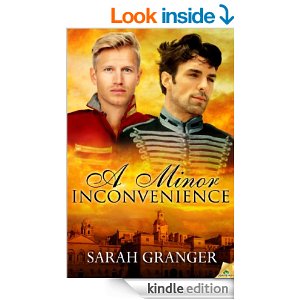
(I’ve used the Amazon photo of the cover for this post but I bought the book from Samhain Publishing.)

Roll up! Roll up! Get your sci-fi here!

51KvMefOX-L._BO2,204,203,200_PIsitb-sticker-v3-big,TopRight,0,-55_SX278_SY278_PIkin4,BottomRight,1,22_AA300_SH20_OU01_

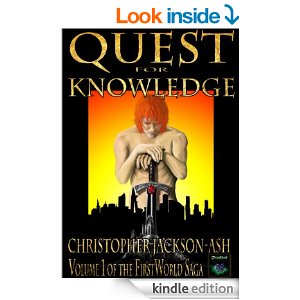
Get a free e-copy of Quest for Knowledge – Volume 1 of the FirstWorld Saga by Christopher Jackson-Ash by downloading it from Amazon before 5th February.

You should also get – though I’m not sure if this only applies to UK customers – the chance to buy other popular sci fi Kindle books for 99p each instead of their normal price.

I’ve been an intrigued ‘first reader’ of Christopher’s series and can assure you that there is plenty of heroic fantasy to please lovers of the genre in this story of Simon and his sword. I won’t go into detail – you can read the Amazon blurb – but this is the start of an epic tale of swords, sorcery, the multiverse and an Australian student who is catapulted into the middle of it all.

As it’s free, you lose nothing by giving it a chance, and you might end up liking the concepts and the writing enough to follow the rest of the volumes to come. At least two more are ready and waiting to be published, and I know a fourth is in the pipeline. There is also a website with extra tales and information: http://firstworld.info/

Enjoy!

The plot’s fine but the sub plot thickens

lichen

I hope you recall my post about the editing of Harlan Coben’s book. I found another of his in a local charity shop and grabbed it. It turned out to be a much earlier one, and although it was very good it was easy to tell just how much he has matured as a writer.

The title of this second read is Drop Shot.

It was a competent crime story with believable characters and an interesting plot. There were a couple of places (in a whole novel) where I would have edited the tense usage, but it wasn’t anywhere near as bad as the later book. I can only assume that as authors become more and more famous publishers leave them more and more to their own devices, which isn’t really very sensible, because if Coben was confused about tense use in the first place, the mere process of becoming a best-selling author wasn’t in itself going to sort him out.

I’m not sure whether they hold back on editing out of deference to someone who is making them a lot of money (far more than he is making for himself) or whether they just think they are paying him enough to find a proof reader/copy editor privately.

The fact that there were very few ‘errors’ in construction goes some way towards justifying my theory that he isn’t actually using tense changes for effect. (If he was, I can’t imagine what the intended effect might have been, in either book.)

I will definitely read more by this author, but I am confused by editing policy!! And annoyed that people point the finger at self-published books with the comment that they’re all so badly edited. Not true, and even when they are, they’re no worse than what comes out of the big publishing houses.

Does anyone have any similar stories to tell?

A boring thriller

New Image

The second book I read whilst away and felt impelled to discuss on my return was Death Comes To Pemberley by P.D.James.

Great, I thought – a murder story written by a revered exponent of the genre and based on an Austen classic that is one of my favourites. Fan Fiction, of course, except that because it’s ‘official’ and she gets paid for it we don’t call it that. Dear me, no!!

The story was quite interesting – enough to keep me reading to the ending and solution. But the writing was another matter. The English, unlike that of the last author I reviewed, was impeccable, and the editors had even managed to exclude any typos. But the general presentation of the story left a lot to be desired. The prose was ponderous – heavy and repetitive. I’m not sure whether James was trying to sound nineteenth century, but Austen’s work, whilst written in a style that would be considered almost odd, and perhaps flowery today, is always witty and sparkling, littered with humorous asides and references to social matters. This never sparkled for a moment. The other aspect that I disliked was a propensity for the characters to expound to each other on matters that they should not have needed to mention. It was as if James had taken in the idea of ‘show, don’t tell’ in a very half-hearted manner and had simply moved over-long exposition from narrative to dialogue. It was irritating and disappointing.

I loved the Adam Dalgleish mysteries as shown on TV but when I tried the books I found them less than satisfactory – very long-drawn-out, with occasional plot holes and less than sympathetic characters. But it’s ages since I read them so I can’t remember whether they shared the faults of this volume.

Perhaps it didn’t help that I had just read a fanfic based around the same Austen novel. It was a fusion story, which for those of you who aren’t familiar with fanfic is a story where characters from a fandom replace the characters in a film or novel. We get to explore the way different people might have dealt with the plot, how far plot affects character and behaviour, etc. This particular story followed the events of Pride and Prejudice quite closely but tweaked some of the minor outcomes in accordance with the characters they had chosen to use e.g. Collins was much more sympathetic). I won’t give details of the fic here because whilst Pride and Prejudice is clearly out of copyright, the other fandom isn’t and I would hate the authors (it was a team of two) to suffer any harassment even though I firmly believe the work is transformative and therefore perfectly legal. It was beautifully written, in bright prose that carried the reader along just as Austen does, and there was all the social commentary, humour and romance we could have hoped for. The alterations to the plot were intriguing in themselves, and the only flaw I could find in the entire thing was the authors’ knowledge of English geography, which was quite evidently non-existent.

The main thing is, I have preserved my copy of the fanfic and will look forward to re-reading it, just as I re-read Austen. The fact that it was free is neither here nor there – I would happily have paid for it. My copy of the James book was paid for, and I will never look at it again. It’s a Kindle version so I can’t even give it to a charity shop.

The experience blurred the lines drawn around fanfic even more than I had previously imagined.

Two queries occur to me. Am I, as a writer, too prone to read with a mental red pen in my hand and if so what do I do about it? And how do authors gain the respect of what seems like the entire publishing world when their writing really leaves a lot to be desired? Apart from both being writers in the general crime genre, James and Coben (see my last post) have very little in common, and their flaws are dissimilar. But they do make me wonder about publishers – and about readers.

I wouldn’t recommend the book I discuss here but I would welcome further ideas on the issues I’ve raised.

What do we expect from editors?

New Image

First of all, sorry for the hiatus! I was seriously stuck whilst in Portugal – as well as internet limited by how much I could afford to load on my dongle, I had laptop problems. My laptop had a hissy fit at the heat (38-45C) and the dust/ash caused by the forest fires (and yes, we were in the middle of the affected area). I’m now back in UK and just recovering from the trauma of buying a new laptop – more about that in another post.

Because I was internet deprived and laptop deprived I couldn’t write so I did a lot of reading, and quite a bit of pondering on what I’d read. I want to share a couple of in depth reviews/commentaries with you because they raise issues that affect the craft of the writer.

The first writer I want to discuss is Harlan Coben. I have only read one book – The Woods – so bear with me if it is out of line with the rest of his work.

Now, the book I read deserves much of the praise Coben garners. It has an intriguing plot, an excellent introduction to the mystery, great characters (even the minor ones), well-written dialogue, fascinating insights into states of mind including those of criminals, prosecutors and parents. And I was truly hooked on the story. I can see why he wins awards and I will definitely be looking for more of his work.

But – and this is where the discussion point comes in – who edited it and where did they learn about grammar (or not)?? And who lets Coben get away with murdering his native/adopted tongue?

From the beginning the book is simply packed with tense shifts, sometimes within the same sentence, lack of agreement between subject and verb, jarring continuity errors… I hate it when tenses are misused and it says something for the story content that I carried on reading anyway and just felt forced to share my feelings with others.

Am I really a dinosaur for preferring English to be correctly written? Do the editors at Orion simply not care because they know they will make money anyway? Do readers in general really not notice faults like this? Any writer can make occasional mistakes, some of them typos and some of them out of ignorance. But this is constant! Coben probably doesn’t realise what he’s doing but surely an editor’s job is to work to polish material? Isn’t that one of the arguments for buying ‘published’ writers in the sense of those published by the big/known publishing houses? Whilst I’ve come across a few self-published books that share some of Coben’s problems this is actually the worst example of badly edited language I’ve come across outside school English essays.

Note that I’m by no means giving the writer a bad review. I can recommend the book in spite of its flaws. Your thoughts would be welcome!

Publicity for FirstWorld – a fantasy.

Logo
This is an unusual post for me as it is totally concerned with someone else’s work. Despite the tag, it’s publicity rather than a review.

I gained some friends through an online writing group and have since met most of them personally; when one of them gets work published I’m delighted. In this case, the route to publication has been self-publishing, which as you know, is my own preferred course of action. But Chris has been braver than me and has become his own publisher, selling from his websites as well as through Amazon. His websites went live this month and I said I would help to publicise them.

The author website, http://www.ChristopherJackson-Ash.com gives you the links to the others, but check it out anyway; it has a lot more than links and is an introduction to the author.

I was privileged to be a ‘first reader’ of his FirstWord saga, though I still haven’t reached the end of the story. It’s a long epic in the high fantasy genre, centred on themes of the multiverse, time travel, and a universal hero. (And of course there’s a sentient sword.) There are also fascinating allusions to the works of fantasy writers like Tolkien and Moorcock. If you enjoy this kind of novel or series of novels – and I’m sure that there will be some among you who are fans of Terry Brooks and similar fantasy authors – give this a try. The website dedicated to the series is hosted by Kris the Bard, the narrator of the books at http://www.FirstWorld.info and the first volume, available there for download, is currently free so you have nothing to lose!

Then there’s something completely different, a website devoted to stories for children. http://www.TrickyTristan.com At the moment there’s one story to read online (with a sequel promised) and one to download free. There are two others for a small price and the website has a secure checkout.

The picture at the top of this post isn’t, for once, one of mine. It’s a logo for the FirstWorld series and was created by the very talented artist Chris has retained to illustrate his work.

I wish him all the best with this venture and hope some of you will be interested enough to visit the websites and start reading!

Young Adult Fiction – some thoughts.

56. Young Adult Fiction

I recently bought and read a book called The Prince of Mist by Carlos Ruiz Zafón. I had previously read The Shadow of the Wind by the same author and had enjoyed it immensely. This book advertised itself as ‘young adult’, which was quite a change of genre, but as I’m interested in books for younger readers I thought I’d try it. It’s a kind of thriller and a kind of ghost story, but I found it very disappointing. Neither the location nor the characters were sufficiently developed to enable me to get thoroughly into the book and the parts that some reviewers thought scary seemed overdone and ridiculous to me. However, it did leave me with some questions about young adult books in general that I want to discuss.

First of all, the genre is somewhat nebulous. Some authors and publishers seem to mean ‘teenage’ by the term – perhaps trying to lure teenage readers by calling them young adults. Some seem to mean they want to target readers between the ages of fifteen and twenty-five, and specialise in ‘coming of age’ stories. Yet others seem to apply the term to anything that is ‘lighter’ reading, stories that are shorter or less complex than what are presumably ‘fully adult’ books. Zafón says he wrote the kind of story he would have liked to read as a teenager but hoped it would appeal to all ages. I find all this confusing. The only conclusion I can tentatively come to is that publishers regard the term as a marketing tool.

Secondly, even if the target audience is young, I am not at all convinced that the readers deserve some of the stories handed out to them. Personally, I was reading ‘fully adult’ books at quite a young age, particularly the classics, and was perfectly capable of coping with quite complex plots, language and structure. I also had sufficient general knowledge to handle references to well known historical, geographical or scientific facts, etc.  However, younger readers do not always have the experience to empathise with older characters and might prefer  heroes, heroines, and even villains to reflect their own lives and emotions. This would be true, I suppose, of films and shows, too, so a middle aged detective (for example Poirot, or Morse) might appeal to fewer young readers or viewers, though I admit I enjoyed Poirot when I was a teenager. The main protagonists in Zafón’s story were teenagers, which actually made them less interesting to even the youngest of adult readers, particularly because the average adult would know quite well that most teenagers would be physically incapable of the heroic feats they were portrayed as engaging in. (A group of teenagers must confront a ghostly monster and try to defeat it.) I suspect most teenagers would know that, too. I accept that a lighter kind of novel is probably better without too many sub-plots or a cast of hundreds, and that a short novel can do without an overabundance of descriptive detail or philosophical meanderings, but I do think that plenty of people, both teen and adult, want light reading that still respects their intelligence. And I do think that teenage heroic figures need to be realistic, even within a fantasy or paranormal tale.

Thirdly, I was annoyed, in The Prince of Mist, and in some other YA books, by the over-simplification of the language. It is not necessary to avoid complex sentences or ‘difficult’ vocabulary even with older primary age students so they certainly shouldn’t be dismissed from YA novels. I am not sure whether Zafón or his translator was at fault but I found the results irritating and staccato. I have, however, found the same level of simple sentences in some books directed at an adult audience (including the Swedish Wallander detective series), so maybe it’s just a style I dislike. If a series of books are actually intended for people whose reading skills are limited, I suppose some publishers might advertise them as YA to avoid stigmatising readers. But that leaves other young readers short-changed. And I’m pretty certain the Zafón book was never intended for this category.

So these were some of my thoughts: I did, as a teenager, want stories with comparatively fast-paced action, but when I read Les Miserables (I was about twelve) I just skimmed the philosophical asides and carried on with the story. Zafón’s story had such fast-paced action I was unable to suspend disbelief. The only time I have ever needed a dictionary by my side (for fiction) was when I read (as an adult) Eco’s The Name of the Rose, and that was because I didn’t know, and wanted to know, some of the mediaeval architectural terms used. I think we cheat young readers if we don’t give them the chance to come across unusual words. There are stories, such as retellings of fairy tales, that demand spare language and simple sentences, but modern thrillers, in my opinion, do not.

I then began to wonder whether my own fantasy detective series is a YA series and whether I should, when I eventually publish, market it as such. It deals with coming of age, with starting a career and learning new skills, and with the beginnings of romance. In that sense, it’s about young people and likely to appeal to them.  The individual novels aren’t long epics – they average about seventy thousand words. They aren’t particularly complex, because each deals with one specific crime or series of crimes. There is, admittedly, a teenage dragon. But should I be concerned about what age group I am writing for? I started writing the series for myself, not for anyone else. And should I worry about the language?  It isn’t especially difficult but I haven’t tried to keep it simple. Something I have tried to do is to keep sex out of the stories, other than by implication, because I am not personally fond of finding explicit sex in what starts out as a lightweight detective novel. That’s really where the series differs a lot from some of my other work. It’s the only way in which I think I have leaned towards a YA series, apart from the subject matter.

I have enjoyed some YA books enormously. Others leave me less than impressed. This, I think, has been true ever since I was a teenager myself. What I don’t know is whether I should be using the term to describe what I have written – for marketing purposes – or whether I should simply ignore the entire issue. I certainly would not like to think my books were directed solely at teenagers, though I am fairly sure they would appeal to older teens and younger adult readers.

I’d love to have your views on the subject and I know some of you have written in the YA field. Can we define it? Should we? And is it a minefield or is it somewhere stories can find a comfortable home?

Meanwhile, to anyone who loved The Shadow of the Wind for its convoluted plot, detailed locations, three dimensional characters and beautiful language, be warned – The Prince of Mist is probably not for you!!

January

50. January 13

I tend to hibernate in January. It’s partly the weather, which has been cold and miserable, and partly a kind of post-Christmas inertia which hits me every year. My blog has suffered along with everything else.

I have, however, started writing again. I’ve written the first three chapters of the third volume in my fantasy detective series. Genef, trainee investigator, along with her mentor, Rath, and her teenage dragon friend, Scratch, have travelled to The Ice Country to track down a crown that was stolen from their queen and that they believe might have been traded to a collector in this cold and forbidding place. They have just learned that they must go further inland, battling snow, ice and criminals. I’m enjoying the story. I know the rough outline, of course; some plotting is essential to any kind of mystery.  But the details are always a surprise and a pleasure to discover. I got tired of editing and formatting and decided I deserved some writing time.

I have been to the cinema twice. This is unusual for me because I tend to wait until films are available on DVD. We have a DVD projector and a reasonably big screen and most things are fine on that.

We decided to see Skyfall at the cinema to get the full benefit of the special effects and I have to say it was worth it. The film is excellent. It is quite different from most of the Bond films and doesn’t really fit the series well. I think it is better than the others, especially the more recent ones, particularly because it does not rely on gadgets, and the villain is not a stereotype. Daniel Craig brings a grittiness and realism to the Bond role that I think the other actors never matched.

Then we went to see The Hobbit – again. This time we saw the 3D version and it was truly spectacular. I absolutely loved it. In 3D the fight scenes were much easier to follow, which was good.  I was also surprised at how much more detail I noticed second time around. It’s a film that repays a second look!

I spent some time – almost a week – reading the final volume of Robert Jordan’s Wheel of Time. After fourteen volumes (fifteen if you count the prequel, written a long time after the first books) that came out over twenty years, I was glad to reach a conclusion but sad in some ways to say goodbye to an old friend. Jordan, of course, died before the cycle was complete and the last books were written by Brad Sanderson, relying on extensive notes and plans. I know the story is Jordan’s but I think Sanderson is probably a better writer. He managed to keep my interest through a very long ‘last battle’ with lots of military detail, and that’s something very few writers could do. The ending was satisfactory but in some ways I was sorry to reach it. However, I would never read the series again. Now that I know the fates and futures of the main group of characters the earlier books would lose their appeal. That’s odd, because the same is not true of, for example, The Lord of the Rings, which bears frequent re-reading. I wonder what makes the difference? Jordan attempted to create a myth but I think ultimately failed in that respect.

I then turned to Pratchett’s Snuff, which was funny, serious and glorious, and to David Crystal’s The Fight for English, the subtitle of which is How the Pundits Ate, Shot and Left, a book which made me think very carefully about the way our language has developed over the centuries, and thus brings me back to my own writing.

January is almost over and perhaps I will manage to blog more often once Spring is on the way.