Psycops Briefs – a review.

108-psycop-briefs-review

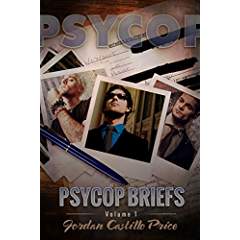
As a long-time subscriber to Jordan Castillo Price’s newsletter I was asked to review her new publication in return for a review copy. A bonus (from a writer’s point of view) is that she is doing her own research into how the number of reviews affects sales in the early days of a book’s life.

Psycops Briefs is a delightful addition to the Psycops series. At first I was dubious and thought it couldn’t stand alone, but am now persuaded it would actually act as a good introduction to the lives of Victor and Jacob, luring the reader into their world and getting them to buy the main novels.

Victor is a medium who works for the police and his lover is also a policeman. The chronicles of their experiences include m/m romance, straightforward policing, supernatural effects, some philosophising, and quite a lot of humour. Their world is like ours except that psychic abilities are recognised and employed. Although the characters live and work in Chicago, they seem, like the characters in all the best books, to be people the reader has actually met and liked. I feel quite sure that if I were ever to cross the Atlantic and visit their city I would expect, confidently, to see them at work and to visit them in their lovely converted home.

The short stories in this collection are not a sequel to the novels but are concurrent – glimpses of the lives of our ‘heroes’ outside the main narrative. There is a lot of variety. The point of view is sometimes Vic’s and sometimes Jacob’s. The stories are in turn sweet, mysterious, gruesome and gripping. Some are very brief and some are chaptered novellas. Few of them are mysteries in the sense that the main novels are, but they explore those other mysteries of character and motivation and give us more insight into the personalities and backgrounds of all the people involved.

I have loved the whole series from the start. The characters, including the minor characters, are so rounded, and the details are engrossing, whether we are reading about the ghosts Vic encounters, the meals the men eat, the trials of home decoration or the things their friend Crash stocks in his ‘magic’ shop. The writing is beautiful – the kind of writing that seems so effortless you absolutely know a great deal of work has gone into it. It is elegant, sophisticated, grammatical, well-structured, and well edited, and the plots draw you in from the first page. Not by any means always the case for the genres these books fall into! This applies to the shorts in Psycops Briefs as well as the longer novellas and novels. Moreover, Price always sets the scene carefully, making sure her readers are not worried or distracted by trying to think about who minor characters might be, or exactly what Vic’s abilities encompass.

There are particular favourites of mine in this collection: Stroke Of Midnight is the perfect New Year’s Eve story, the novella Everyone’s Afraid of Clowns is exciting enough for Halloween reading and also thought provoking at any time, and the final novella, Witness, gives a lot of information about both our heroes in a ‘show-don’t-tell’ fashion that could be used in a writing master class.

In short, I admire the whole series immensely and this is a very worthy addition. I see it is named Psycops Briefs I and I really hope this means there is at least another volume to come. Buy it if you already know Vic and Jacob. Buy it if you don’t, but would like to meet them. Buy it and enjoy!

Highly recommended.

AMAZON: http://amzn.to/2dLNZyv
BARNES&NOBLE: http://www.barnesandnoble.com/w/psycop-briefs-jordan-castillo-price/1124749167
ITUNES: https://itunes.apple.com/us/book/id1161581878
KOBO: https://store.kobobooks.com/en-us/ebook/psycop-briefs-volume-1
PAPERBACK: http://amzn.to/2e0k6ud

And in other news, yes, I’ve been MIA – internet problems in Portugal caused a total breakdown of even my erratic posting habits. I’m back in UK and will try to do better!

Feeding Frustration – a very short story


OLYMPUS DIGITAL CAMERA

It was really extremely annoying.

He had been studying the new layout all day. Previously, when food had been loaded onto the platform it had been the work of moments to climb the pole and demolish the pile of goodies. Then, for some bizarre reason, they had greased the pole.

It had taken a few days to work out a route. There was a rope strung across the area diagonally. Sometimes it hosted an array of damp cloth and he found it hard to negotiate but usually he could simply skim along, leap to the feeding platform and indulge. He thought they might move the rope so that even a prodigious leap would not take him to the platform, but really, why should they?

He was sure the changes, like the greased pole, and the occasional cloth hangings could not be directed at him. The food was still put out regularly and even though some birds came to peck and play there was always plenty left. He knew he didn’t frighten the birds, much; they knew he was not a predator so it was a case of live and let live.

And now, today, there were new hazards.

The rope was still there. There were no damp cloths. But there were strange translucent plastic shapes with the rope running through them. When he tried to navigate one it skittered and whirled so that he was decanted to the ground. He tried again. Same result. A starling was, he thought, laughing at him.

The platform was full of delicious snacks and besides, he was hungry. He chittered angrily and felt that the snap and click from the stone hole near the feeder was perhaps the last straw. He had a vague idea that the food providers were laughing at him, too, and somehow recording his despair.

I was a guest on Alex’s blog

FB montage

I had an offer of a guest spot on her blog from Alex Beecroft whose books I recently reviewed. The two events were not connected – we are ‘friends’ on our livejournal blogs and the review had been planned for some time.

Anyway, to see what I said, go to: http://alexbeecroft.com/2016/06/introducing-jay-mountney/

It’s one of those ‘posh’ sites that turns a WordPress page into a proper website and I can’t see a way to share the post or show her lovely blog, but please go visit her!!

As I can’t show her header pic I’ve used my Facebook header.

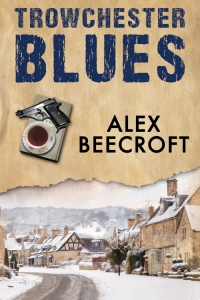
Trowchester Blues by Alex Beecroft – a review

TrowchesterBlues_Series_0

I just finished the third book in Alex Beecroft’s Trowchester trilogy so thought I’d review them all at once. The books are modern m/m romance and are linked by the location, the fictional town of Trowchester which becomes very real to the reader over the course of the stories. The main characters of one book reappear as minor players in the others which is satisfying because we get to know that lives continue after each volume ends. Alex creates very three dimensional characters, with real lives, real problems and real adventures. I found myself caring very much what happened to them all.


In the first book, Trowchester Blues, Michael, who has anger management problems, has left the Metropolitan police in difficult circumstances and comes to his father’s house in Trowchester. He meets Finn, a man with a delightful bookshop and a shady past. Finn’s past catches up with him and his rescue needs Michael’s skills. We meet some of the cast of the later books through the book group Finn runs on a Friday evening and through the restaurant run by another member. This is a delightful story of two people from very different backgrounds meeting  and making it past their differences to find happiness. The bookshop itself is almost a character and is gorgeous.


Blue Eyed Stranger introduces another member of the book group, Billy, who is a Morris dancer and a musician. He also suffers from severe depression, a condition explored in the story. He meets Martin, a half-Sudanese teacher whose passion is Viking re-enactment, when their acts clash at a fair. Martin has his own problems, not least with his job where the head finds a possibly gay black teacher who tends to diverge from the narrow curriculum difficult to accept, and there are obstacles to be overcome before Martin and Billy can get together. Martin eventually moves to Trowchester where the book ends with strong indications of a happy future for both men. Along the way, the reader learns a lot about Morris dancing, Vikings and early music.


Blue Steel Chain brings us the story of James, an archaeologist who is curator of Trowchester Museum and a member of the book group. He is in the process of a difficult separation from his musician partner when he becomes involved with Aidan, who is trying to escape a seriously abusive relationship. Aidan is asexual; he falls in love with James but would prefer to avoid sex. The story explores this aspect of Aidan and affirms people who fall into this category, showing how they can have satisfactory and loving relationships. It is also perhaps the most exciting book of the trilogy because Aidan’s abuser turns out to be worse than anyone thought and James has to rescue Aidan twice. The first time, he does this with the help of Finn and Michael but the second time he is on his own. However, the gentle archaeologist finds himself victorious.


Altogether, the entwined stories of this group of people give us a rich exploration of a number of characters, problems, and hobbies or careers with realistic adventures to draw and maintain the reader’s interest. Plus an in-depth knowledge of Trowchester and a wish that it wasn’t fictional!


The books are published separately and as a collection by Riptide Publishing.

http://riptidepublishing.com//titles/collections/trowchester-blues-collection


Recommended – and they are better read as a trilogy! Alex has just been told that Blue Steel Chain is an All Romance Ebook bestseller – but if you haven’t read the first ones, start at the beginning! You won’t regret it!

Another question to consider.

OLYMPUS DIGITAL CAMERA

Just one question and answer this time.

Sequels: Have you ever written a sequel to a story you wrote, and if so, why, and if not, how do you feel about sequels?

Well now. Sequel queen. That would be me.

If I like a story I don’t really want it to stop. This applies to my own work just as much as to stuff I read. If characters and a world come to life they do as we do and carry on with their lives, so there I am, watching and listening. Sequels are just the recounting of what I see and hear. I can turn away for a while, but the stories will carry on and be waiting for me. Sometimes they (or rather the muse narrator/s) hammer on the door. Some short stories are just an account of an event – beginning, middle and end – and I can polish that, present it to readers and close the door. Still, the world behind the door goes on and I can re-enter it any time.

I have to say I love sequels to stories I have enjoyed and happily buy trilogies or even longer series by favourite authors.

My original work includes sequels.

My fantasy detective novel The Scroll was published last year and has just been joined by a sequel, The Market. Then a further sequel, The Crown, is written and awaiting some tweaking, amendments, and a final proofread. The Shore (book 4) is in note form and is swirling round my brain. There will be six novels in the series eventually.

My fae saga has sequels – and a kind of concurrent story that can be read alongside the second book. The first book is ready to format.

I have another m/m fantasy novel that isn’t really finished yet because there is a lot of rewriting to do but there is also a sequel in the pipeline. The Virgin and the Unicorn will be followed by another story in the same ‘verse but I haven’t got time to feed the bunny at the moment (or the unicorn, or whatever).

As most of you know, I also write fanfiction and often think in terms of sequels when challenge-fests or prompt-fests are presented to me. When I’m reading fanfic, just as with original work, I’m always pleased when an admired author writes a sequel.

So sequels? A resounding ‘yes’!

Gryphons: a review

51Je1sbAXeL._AA240_QL65_

I was lucky enough to read the first draft of this book and loved it then. I bought the ‘polished’ and extended version when it came out. The author, who has published with various Indie publishers, couldn’t find a home for this so published it on Lulu. As a result, the print version is quite expensive for a paperback but is worth every penny. I promised a review, and must state straight away that although I know the author online, I have paid full price for the paperback book and the review is completely impartial. However, I would recommend the e-book version for anyone who is either poor or not sure!

Gryphons is a difficult novel to categorise. It has moments of almost unbearable poignancy, a lot of humour, quite a bit of violence and some gripping plot arcs. I found myself skimming ahead to check whether some of the characters to whom I’d given my heart survived to the end. It was no good relying on the first version – the author changed quite a lot and I couldn’t be sure.

Some reviewers have called it a young adult book and some refer to it as a story of coming of age. It has those elements and much of the narrative is seen through the eyes of Dahlia, a teenager. This gives it a freshness that lets the reader look at the world from the perspective of one who is a native but not yet prepared to accept everything she is told.

On the other hand, it’s a story about a rock band, albeit one on another planet, formed in the aftermath of war: a story of love, friendship, prejudice, betrayal, loyalty and, above all, survival.

And on the third hand, it’s pure sci-fi, set on a brilliantly realised world and given the clever ‘frame’ of a visit from people (mostly musicians) from Earth for a festival.

The world of Sferkkaa is still suffering the ravages of invasion and brutal alien occupation. Somehow or other they have picked up radio signals that introduced them to Earth music and the idea of rock bands has taken off like wildfire, giving excitement and the cult of celebrities to a population that needs better housing, more food, and perhaps books but can’t get them any time soon. The focus of the book is on the most famous band, The Mortified Gryphons.

The five band members were all fighters with the resistance. They are typical, perhaps stereotypical celebrities but they are also world-weary ex-military. In the course of the story they meet and befriend teenagers, including a young musician, a visitor from Earth and a schoolgirl. They also experience sickness, worry, terror, love and hope. They compose, practise, play and listen: music fills the story. And despite the fact that they are rich, there is no more food for them to buy than there is for the rest of the population.

One of the parting shots of the defeated invaders was to distribute a poison that killed most of the women from babies to grandmothers. So all families, even non-combatant ones, have known loss. The few women and girls who survived are treated with great respect, unless, like Dahli, they manage to break the law. Once it is realised that children grown in vats suffer all kinds of problems there are scientific efforts to enable men to carry babies. However, carrying a baby to term places huge stresses on the males who choose to do it, and is not something to be undertaken lightly.

There are all kinds of interactions between Earth people and Sferkkaans that call into question our notions of what is alien. There are also other ‘aliens’, imported from yet other planets, giving rise to complex questions of prejudice and what it means to be ‘human’.

This is a long story (700 pages in the paperback version) with unforgettable people and a beautifully detailed world. The tapestry of Sferkkaa is woven slowly and seamlessly until by the end the reader feels they have visited the planet and know its landscapes, its cities, its flora and fauna and its various climates. The philosophical questions that underpin the story are deftly placed in the course of events, with the actions and reactions of the characters speaking louder than any argument. The characters are intensely real and the reader is invited to share their physical and mental suffering, hoping against hope that things will turn out well for at least some of them. Nothing, in this respect, can be taken for granted but the ending is satisfying, and we can leave Sferkkaa with hope for the future.

Altogether, this is science fiction at its best, showing us an alien world with a story line that helps us to set our own behaviour in context, with a focus on fascinating individuals against a backdrop of technical change and another planet. It is beautifully written. In a book this length I would expect some editing flaws and typos, but they are very few and far between; I have seen more in books edited and published by the big publishing houses. The style is assured, the plot structure is excellent and the descriptions of everything from scenery to emotions are amazing, engaging the reader in an intense experience of a year in the life of another world.

Go and buy it. Go and tell your friends about it. You won’t regret it!

More reflections on writing

OLYMPUS DIGITAL CAMERA


Titles: Are they the bane of your existence, or the easiest part of the fic? Also, if you do chaptered fic, do you give each chapter a title, or not?

I don’t always find them easy. Usually, by the time I’ve finished a story some theme or focus will become clear and will suggest a title to me. Of course, I then have to decide whether it will make sense to my readers, and check that it doesn’t clash with another story in the same genre (or fandom if it’s a fanfic). Lots of people write stories with the same title – and of course there’s no ownership or copyright in titles – but we try not to overlap in the same sandpit if only because it makes each book less visible to possible readers or purchasers.

For original fic there’s a further issue. If I’m writing a series, I need to make sure the titles link the books together as well as being easily remembered. So I try to use the same format – it’s no good calling book 1 The Scroll and book 2 The one where they go abroad. Again, the titles usually suggest themselves towards the end of the first draft and sometimes earlier.

For fanfic, I didn’t, for ages, title chapters in a long work. In fact, after some formatting problems with a long fanfic ‘novel’ I backed away from chapters altogether. However, recently I posted a collection of drabbles which I called Monsterfest (because it was in response to prompts in a comm duiring October) and I used chapter titles to enable people to find the monster they wanted. It worked OK. I prefer, as a reader, to have chapter titles as it makes searching easier if you come back after a long pause. So I try to treat my readers as I would like to be treated.

For orginal fic I also use chapter titles, not just so that readers can search easily, but to give them a flavour of what the chapter might concern. Formatting chapter titles to create a live chapter section for Amazon or Smashwords is horrendous. Just saying.


Where do you get the most inspiration (also, at least in the fandom world, known as plot bunnies) for your stories?

I suppose from my subconscious though obviously that must be influenced by outside factors. I have always told myself stories in my head, whether about the characters in a book or film I liked or about original characters of my own. Sometimes these develop into fully grown ‘bunnies’ and have to be written because one of the main characters insists.

We all, whether we admit it or not, get inspiration from other things we have read or heard. Sometimes it might be unconscious and sometimes you might be aware that you are heavily influenced by e.g. a Chaucer storyline or a Shakespeare scene. If the inspiration is a current writer, I always cite. If it’s a writer who is out of copyright then I feel it is only polite to at least mention them to my readers in the summary or notes.

One example is my self published novella, The Lord of Shalott.

https://www.smashwords.com/books/view/533349

The first section is based on Tennyson’s poem and inspired by Loreena McKennit’s ballad. I am happy to tell people that and send them to the sources.

Another example is my SGA fanfic …Till A’ The Seas Gang Dry… (On Archive Of Our Own). The title and the general theme of the story are from Robert Burns’ poem which I quote at the end – full lyrics because it’s out of copyright, of course.


When you have ideas, do you sit down and start writing right away, or do you write them down for future use?

It depends how busy I am. Once I start writing something I keep on to the end, sometimes forgetting to cook dinner, go shopping, get dressed or whatever else I ‘should’ be doing. So if I am already in the middle of something any new ‘bunnies’ have to wait their turn. I do make a brief note of them but in such cryptic terms that even I am sometimes hard pressed to recall what I wanted to write. If the story idea is a sequel to something I am already writing or have written then obviously it has to be filed and approached at the appropriate time.


Do you ever get ideas from other people’s stories or art in the same genre or fandom?

I have never consciously been inspired by other people’s stories or art, but my favourites must influence my thinking. The only exception is when I have been doing prompts for a challenge with other writers. But that’s more a case of everybody responding to the same prompt though obviously discussion plays a part.

My new novel is published

needs resize for publishing

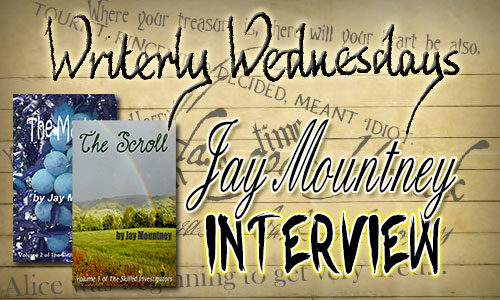
‘The Market’, the second volume in my fantasy detective series ‘The Skilled Investigators’ has now gone ‘live’ on Smashwords and Amazon.

My heroine, an elf called Genef, started her training as an investigator in the first volume, ‘The Scroll’. Her ambition to be a detective became entangled in a very personal case involving a serial killer. She was assisted by her brother, Fel, and a young dragon, Scratch, who was accidentally imprinted on her at his hatching.

After a successful conclusion and the gifting to Genef of two ‘skills’, one from one of the killer’s victims and one from the guild of investigators as she was accepted, Genef was given an assignment that would take her overseas in search of some stolen royal jewels.

Fel and Scratch accompany her in this second story. What should be a straightforward investigation into theft and a retrieval of the goods suddenly turns darker with murder and kidnapping. Fel and Scratch are in danger and Genef is without help, her mentor having remained in Lonis. She solves the crimes but not all the jewels are found, leaving the way open for a third volume.

In fact, there are six volumes planned altogether in the series. ‘The Crown’ is written but needs some editing and minor rewrites before formatting.

When I published ‘The Scroll’ I created some free coupons on Smashwords to give to people who agreed to write reviews there. However, the reviews did not materialise and I have decided this time to keep the coupons for my betas and others who have in some way helped me.

Marketing ‘The Market’ is a conundrum. The book does stand alone but would probably be more appealing to anyone who had read ‘The Scroll’. I am telling you about it here and would love it if anyone reblogged this post. One or two writer friends have kindly offered publicity on their blogs in the form of reviews, interviews, etc.

A word of warning. If you have an e-reader that is not a Kindle, use Smashwords if you’re going to buy! They have various formats, including mobi which can be uploaded to a Kindle, whereas Amazon only deliver to Kindle or the Kindle app.

Here are the pages to visit:

Amazon:

Smashwords:

https://www.smashwords.com/books/view/618455

Thoughts at sea

DSCN3614 - Copy - Copy

Sometimes


When we are out at sea

There are islands,

Rough, ragged, jagged rocks

Ready to lure ships

To be holed and torn.


Captain and navigator

Steer a clever course

Between, around, and past

Leaving the siren stones

Behind, folorn.


And sometimes


There are islands in the air,

Cloud countries

That change and drift and loom,

Now tinged with sunset golds.

Now white, now grey.


Passengers hold cameras high,

Hoping to catch

The beauty of the skies,

Imprison it to watch later

On a less spectacular day.


And then


There are ideas that form,

Skimming over the waves,

Dipping into the foam,

Breathtaking in their immensity,

New born and still blind.


I watch them unfolding,

Children of the vast sea,

Space ships of the ocean

Inexorably building green island

Gardens in my mind.