The Name of the Rose: book, film and TV series

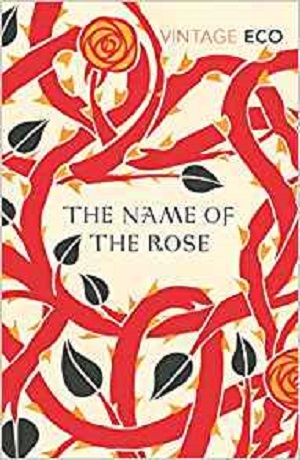
The Name of the Rose by Umberto Eco. (This month’s in depth review.)

Quite a long time ago, probably round about 1983 when the book was first published in English, I read Umberto Eco’s novel avidly. I then, equally avidly, watched the Sean Connery film (1986) but not until it aired on TV. Recently, I watched the BBC programme of the eight part TV series made by a German/Italian collaboration. I lost my copy of the book in our Portuguese fire but felt a need to re-read and bought the Kindle version which I read concurrently with the TV series. I felt impelled to explore my reactions and thought I’d share them with you.

I loved the original book, because of the insights it gave into the mediaeval mind. Of course, Eco could be wrong, but it seemed to me that he had done all possible research, kept his own mind open, and got as close as a modern writer could.

It was the first (and so far last) time I have ever read a book with a dictionary to hand. I kept stumbling over vocabulary that I soon realised was part of Catholic, monastic and mediaeval usage. I am not altogether familiar with either Catholicism or monasteries and I was amused to note that on re-reading I had exactly the same problem with words like balneary (a monastic ‘bathroom’) and narthex (a porch in a monastery church) as well as Roman measures such as a sextary, used in the Italian monastery. (This last was hard to find in any online dictionary.) I had clearly had no need for the words in the intervening time and my mind had buried them. I suppose I could have ignored them but kept thinking I might need to know to make sense of clues in the mystery.

I also found my reading slowed by the amount of Latin. My Latin, originally studied till I was 18 then maintained to some extent during a law degree, is decidedly rusty. I can still cope with things like Fabula Petro Cuniculo or Winnie Ille Pu and with inscriptions on ruins but not with mediaeval debate, especially because mediaeval Latin is not quite the same as the Roman version. Perhaps if I didn’t have some grasp of Latin I would have been more able to skim over those bits!

I liked, from the start, the way a murder mystery was woven into a story about a kind of mediaeval Sherlock Holmes, so that we got crime, seeking solutions, solutions, and the entire world surrounding them in all its richness and strangeness. I like Eco’s writing and have read a few of his books and articles, but as I said recently to a friend, he does meander. However, I suppose his byways take us into unexpected corners, illuminating aspects of mediaeval life. I must say sometimes I just wish he’d get on with the story. It certainly builds to a satisfying if horrific climax, one tempered by the knowledge that Adso of Melk, the narrator, was still alive and indeed penning his tale at a great age.

I think the book stayed in my memory because of the depictions of monastic life which I found fascinating, and which helped explain ruins like Fountains Abbey when I visited them. The only thing that jarred with what I do know of mediaeval times was the size of the library. Books were precious in those days before printing, and very few monasteries or colleges had more than a shelf or two. The monastery here prides itself on its extensive library, but even so, it seemed a little too extensive to me. In a way, that takes the story into an alternative universe and gives it a kind of fantasy quality which for some readers (like me) actually enhances the overall effect. Similarly, the treasury seemed to have more than its fair share of relics for a small and comparatively unknown community.

Then I watched the film. I enjoy Connery’s acting and I thought the entire film was well done, but I have to say I thought it was too short to do real justice to Eco’s narrative. In just over two hours there was only time to create the chilling atmosphere in the monastery and show William’s erudition and sleuthing skills, not to ponder at length on the ecclesiastical debates that underpin the story. Still, I thought the acting and direction were excellent and that the film would serve as a good introduction to both the period and the book. I have rewatched it once but found myself distracted by other activities (I remember I was getting a meal ready) and with no pressing need to concentrate. I did put down my work and focus on the exciting ending all over again.

So after all that, I was thrilled to know that there was an eight hour series planned. Surely this would give sufficient time to explore the issues? Well, it did, but the series is, as one or two reviewers have already said, ‘messy’. The monks all look alike, the buildings, other than the library, are not well explained, and there are other flaws. The village girl who is brought to the monastery for one of the monks, with whom Adso falls in love, is shown as a feral woman living in the woods, and Adso meets her there, not in the monastery kitchen.

I gradually realised that this gave us the opportunity to have Adso actually speak aloud some of his thoughts which are interesting but obviously unspoken in the book. For instance, he tells her about the way to find out if someone is in love, by holding their wrist and noting the speed of the pulse if a certain name is mentioned. In the book he merely fears William or another monk will try this on him, Adso, using the name of the village girl.

There is another woman in the series who is not well explained. She appears to be living as an outlaw and is trying to put arrows through the pope’s military escort of Bernard Gui. She is injured in the process. Long after her first appearance we are led to think she might be one of the heretics some of whom were burnt by the inquisitors including Gui, or perhaps the daughter of one, and eventually this turns out to be the case. It’s possible the directors thought her presence would help to underline the importance of her father’s papers, which play a part in the story, but in the book, the heretics and their families are introduced in a more orderly fashion.

I was finding the series confusing. My husband, who, like me, had read the book and seen the film, reacted similarly. So that was when I bought the Kindle version of the book and started to re-read.

It was quite hard to keep pace with the series but avoid spoilers. I don’t mean spoilers in the sense of the murders, and the ending, but of details. A book is, of course, quite different in structure from a TV series (something recently brought home to many viewers and readers by Game of Thrones). As I said earlier, I had the same vocabulary problems. I also had instances of a kind of double-take where I couldn’t work out whether Eco was repeating himself (unlikely) or whether the TV adaptation was out of sequence (like Adso’s conversation with the girl).Much of the dialogue in the book is reproduced faithfully in the series, but not always in the exact place in the story.

The series is a joint German/Italian production and the cast are drawn from all over Europe. The acting is not, in ,y opinion, as stellar as that in the film. The young monk Adso (Damian Hardung) is brilliant as is Salvatore (Stefano Fresi). John Turturro as William of Baskerville is good, but lacks (for me) Connery’s commanding presence. Rupert Everett as Bernard is, I thought, disappointing. It doesn’t help that Turturro and Everett have similar dark, compelling features which, encased by a monk’s habit, make them hard to differentiate straight away. (Husband said to look at the hats or cowls, but I could never get past the eyes.) This is not to denigrate Everett’s acting; I simply thought the director missed opportunities to develop the character.

I reached the three quarters way point in the book, just about keeping pace with the half way point in the series, when BBC decided to give its weekly slot to a sports fixture (admirable, I’m sure, but it could no doubt have been differently organised) so I knew I would have to wait a fortnight for the next episode and so slow down in my reading of the text if I wanted to keep pace. I shrugged mentally and carried on to the end. I already knew the basic story after all, and it might be easier not to be reading and viewing concurrently; it was beginning to be a bit like watching a French film with subtitles that bear little relation to what is actually being said. (For the information of those of you who don’t watch films with subtitles or only ones where you don’t also know the language, this is a horribly/amusingly regular thing.)

Then BBC found yet another sports fixture for a Friday night. Surely they know these things in advance? Leaving viewers hanging for a fortnight when almost the entire cast are dressed in brown habits and are almost interchangeable is not the best of ideas. My husband had been away and missed a couple of episodes. He gave up trying to work out which…

The finale was just as exciting as in the book and the film, though not quite as believable. The very end, an epilogue with Adso and Baskerville, was beautifully done.

Eco shows us how the priests and monks, guardians of knowledge at the time, debated and argued. He explores their sometimes twisted logic, and their passionate beliefs in whatever they were saying. He writes a great deal about heresy, both factual and fictional (but true in the minds of the pope’s supporters).

Three big idea seem to underpin the story. The first is the division between the religious and the secular (in this case the pope in Avignon and the emperor in Rome). The second is the debate about poverty and riches, possession of worldly things, and the uses to which they should be put. The third is the anger with which people confront anyone who disagrees with them, accusing them of heresy and regarding them as deserving of death. These are, in fact, very modern problems and as such appeal to the twenty first century reader and viewer. We have the separation of church and state, the arguments for and against varying degrees of socialism (and the condition of the poorest in society) and the increasing tendency for politicians and their supporters, even in the ostensibly liberal ‘west’ to accuse their opponents of all kinds of treachery and crime. This all ties in well with a book that is basically about heresy.

William of Baskerville, the ‘hero’ of the book, is a man both of his time and with a modern way of thought, applying real, not false logic to puzzles and mysteries, unpacking for Adso and therefore for the reader, not only the immediate concerns but also the means of considering them properly. William tells us that the devil can be found in the arrogance of the spirit, an interesting concept. He also suggests that freeing ourselves of fear of the devil might be true wisdom.

The murders are, in the end, solved, and we learn (from Adso) the later fate of some of the other characters. Adso himself is an interesting character; in the story he is merely an assistant to William, but as a narrator he is brought to life not only for the duration of the events depicted but over a long life in his monastery at Melk.

Some of the other monks provide contrasting opinions on heresy and I was reminded of today’s fake news and conspiracy theories. This was particularly highlighted by the abbot’s long speech to Adso (in the book) about the jewels in his ring, a symbol of his office, and their symbolism, which differs from one group’s viewpoint to another. Adso’s dream (which he regards as a vision) is based on the Coena Cypriani, or the Feast of Cyprian, a book that uses mockery and laughter to combat prejudice. In some ways Adso’s dream interpretation mirrors the confusion in which he finds himself. In others, it foreshadows the importance of a hidden book to the mystery’s solution.

The text, of course, describes the fire’s effect on the entire monastery, not just the library. This makes for a less spectacular finale but one that perhaps stays longer with the reader. The film ignores this – as I said, it’s too short. The series touches on it, but barely.

Eco could not have foreseen events of today but in some ways his depiction of the fire that destroys the library has relevance for the recent fire in the roof of Notre Dame in Paris, both in the damage that occurred and in the arguments generated about general responsibility for historic buildings, and about religious donations.

A word about the title: I was unsure about its meaning and checked with Wikipedia. Apparently Eco had arguments with his publisher and wanted a neutral title that would give nothing away but would reflect mediaeval thought. Wikipedia says: In the Postscript to the Name of the Rose, Eco claims to have chosen the title “because the rose is a symbolic figure so rich in meanings that by now it hardly has any meaning left”. I would, in fact, recommend looking at the Wikipedia article, not because it’s the fount of all wisdom but because it begins to answer some questions and points the way to explore further. At the end of the series, Adso attempts an explanation, telling us that texts are important. A rose withers and dies but the word that describes it remains.

At the heart of everything is the book, which is fitting because it symbolises both all the books in the library in that mediaeval monastery, a library that once described will never be forgotten, and the hidden book at the centre of the mystery. In some ways the library foreshadows and informs aspects of Terry Pratchett’s library in the Unseen University and the Hogwarts library in the Harry Potter series. It also, of course, reflects things like the Reading Room at the British Museum, and the wealth of information to be found online (again, using Wikipedia or various search engines as starting points).

The book certainly has meaning for the modern reader and it is not essential to know much about monasteries, mediaeval history, etc. to enjoy it simply as a complex murder mystery. The author explains everything necessary at length (sometimes at great length) and the story has plenty of relevance to us today. The film and the TV series, however, don’t do as much explaining, and the viewer would probably get more from them by reading the text, before, during, or after.

Altogether, I enjoyed the entire experience. I would recommend this ‘immersion’ but perhaps think carefully before embarking on it about the sequence to be followed. Book, series, film. Book, film, series. Film, book, series. I’m not sure and I think the answer would vary depending on the reader or viewer’s familiarity with mediaeval monasticism, and would differ for different people. At any rate, think hard before you dive in!

It’s certainly an experience that makes you think, wrapped up in brilliant writing and brilliant film production. I don’t think I can recommend it all highly enough.
Book – five stars plus
Film – four stars
Series – four stars
And yet – the series and the film both added immeasurably to the book if only as illustrations. And they caused me to re-read the book, which had to be a good thing!

December Reviews

Not to be confused with my top picks of the year!

Films and TV

The excellent:

Vienna Blood***** Reviewed in more depth last month when I pleaded with people to watch it and persuade BBC to make more.
The Nightmare before Christmas***** (re-watch) I adore Tim Burton.
Elizabeth is Missing (Glenda Jackson)***** Glenda’s acting is superb but so is the work of whoever conceived and wrote the script – a woman’s descent into dementia.
Miss Peregrine’s Home for Peculiar Children***** I already said I adore Tim Burton. I think he makes all his films specially for me.
Game of Thrones Season 8***** I managed to avoid spoilers till my DVD (pre-ordered) arrived… Now I just hope Martin gets on with the final book!!

The good:

War of the Worlds**** I kept trying to spot landmarks in Weybridge because my in-laws live near there… I liked all the period detail and the Wells references.
The Sinner Season 2**** Run of the mill American thriller. Quite good but I wasn’t keen on the main actor.
The Name of the Rose (TV series)**** Look out for an in depth review later this month
David Attenborough and the Giant Dinosaur**** Fascinating. I think it was a re-watch.

And the mediocre:

Beauty and the Beast (2017)*** I kept falling asleep. Gorgeous lush sets and costumes but otherwise ordinary and I didn’t find any of the songs memorable.

Books

The excellent:

Submerge by Eleanor Musgrove***** An undercover cop gets involved with the members of an LGBT club. Superb minor characters (and I read a Christmas short about two of them).
HE’S BEHIND YOU by Clare London (Rainbow)***** Pantomime mayhem in the village hall and a budding romance or two.
The Christmas Deal by Keira Andrews***** Fake boyfriends to lovers with a Christmas focus. Heartwarming and beautifully written.
The Taitaja by silverr***** Original work on AO3. FF story set in a fantasy world. https://archiveofourown.org/works/12197871
Angels Sing by Eli Easton***** Jamie and Stanton produce a school Christmas performance, save a bookshop, raise Mia and fall in love. Delightful.
The Remaking of Corbin Wale by Roan Parrish***** Corbin and Alex bond over baking. A magical Chanukah story of love and acceptance.
Shutter Angel by Dawn Sister*****Wonderful story in which a churchwarden finds love unexpectedly.
A Box of Wishes by Jackie Keswick***** A cat helps along romance between a cop and a cafe owner with a magical box.
Shooting Star by Kaje Harper***** Plenty of excitement (and romance) when a doctor is accidentally drawn into the affairs of an undercover cop.

The good:

The Vine Witch by Luanne G. Smith****It’s witches who make the wine in France (and the beer in Germany) so wonderful. An exciting (and romantic) story about a witch who returns from a curse to find a new owner of ‘her’ vineyard.
A Christmas Chance by Louisa Masters**** Paul and Jacob in Paris. I got the impression I should have read other books in the series first.
Yours for the Holiday by DJ Jamison**** It can be difficult when you fall for your best friend’s little brother who is now all grown up. Especially when you’re spending Christmas at their family cabin.

The readable:

The Greenway by Jane Adams*** A thriller set in Norfolk. Interesting but I didn’t feel a need for any more about either the police or the victims.
Crossroads (Book 1) by Riley Hart*** Neighbours fall in love even though one thought he was straight.

This was a wonderful month, with nothing poor or dire!

Then there were numerous short stories, mostly offered free via advent calendars on social media or via author newsletters. I won’t give you the entire list – they were all individually worth reading but at times I felt as if I was drowning in sugar and the tales tended to blur. Of course, I offered one myself… I’ll just list the seriously good reads which were either by authors I already know or tempted me to explore their works and add to my tbr list.

How a ghost cat saves Christmas by Terry Poole***** I loved the ghost cat and his interactions with his humans.
The Choice by Barbara Elsborg*****A paranormal romance with twists and turns.
A Very English Christmas by Keira Andrews***** Isaac and David from the author’s Amish trilogy (which I love) spend their first Christmas in what they call the English community.
The Doll Maker by Hannah Henry***** An intriguing story about a dollmaker whose dolls are more than they seem.
Merry and Bright by Joanna Chambers***** Three stories with a Christmas theme in one volume.

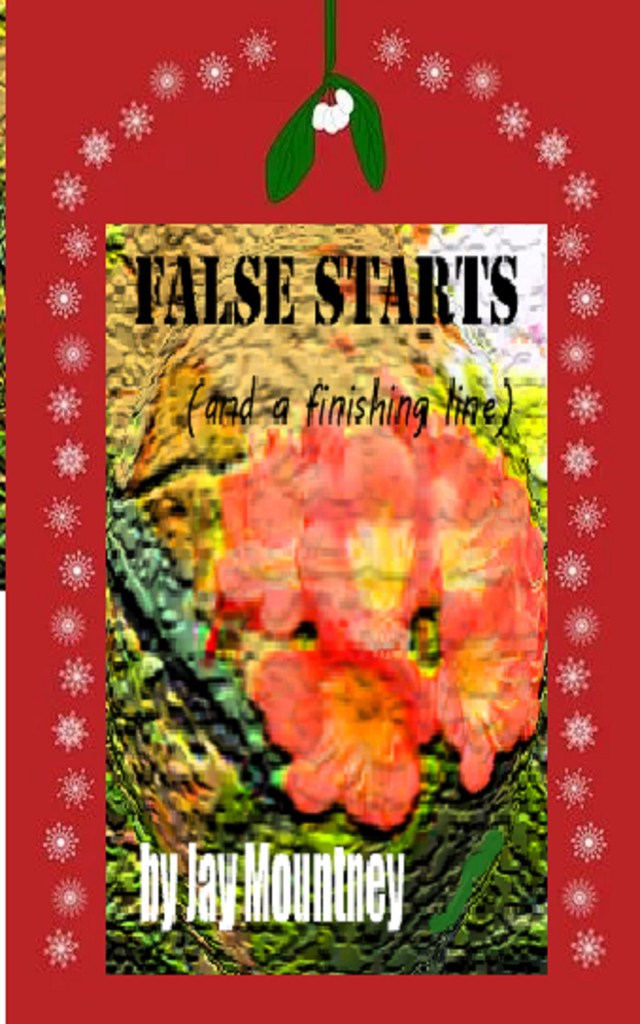
In case you missed it, my ff Christmas story False Starts is still free on Smashwords: https://www.smashwords.com/books/view/997047 I meant to put it on Amazon this week and start charging but there are some formatting problems so I’ll leave it alone for a week or two!

Fanfic

I can’t resist mentioning Sloth’s Christmas Miscellany by Small_Hobbit**** https://archiveofourown.org/works/21672616 A mixed bag of short pieces, all quite delightful. No single entry is quite worth five stars but the whole collection is wonderful and when the latest offering arrives in my inbox it makes my day!

I’ve been steadily making my way through the SGA Secret Santa collection and haven’t finished yet.
Everything he needs by respoftw***** was written for me and is superb https://archiveofourown.org/bookmarks/426121294
(I gifted someone else with: Why it would never have worked (a tongue in cheek take on the sex pollen trope) in case you’re interested. https://archiveofourown.org/works/21759241)

Last but not by any means least I did the beta for my daughter’s Supernatural challenge and absolutely loved her story which is a mediaeval AU with Dean as a dragon and Sam as a warrior. It isn’t even my fandom, but I adore dragons and her writing has always been excellent!
Dragonwilde by Fledhyris***** https://archiveofourown.org/works/21685843

HAPPY NEW YEAR – and the best of 2019

I’ve been reflecting on the year in my viewing and reading so of course I had to make a list. I chose three in each category and for most categories the choice was extremely difficult. I was strict with myself about no re-reads or re-watches. Most of these have been mentioned in the course of my monthly reviews but one or two are December discoveries.

VIEWING

Films: I didn’t go to the cinema in 2019. These were all watched on the TV screen.

I, Daniel Blake (scathing indictment of UK social security system)
Fantastic Beasts (magical creatures in the Harry Potter universe but earlier than the main story)
Miss Peregrine’s Home for Peculiar Children (a Tim Burton fantasy adventure with gifted children living outside time)

TV general series: They had to be series I’d finished watching.

Desperate Romantics (a fictional account of the lives of the pre-Raphaelite painters)
Carnival Row (fae refugees from war find problems in a steampunk London AU)
Game of Thrones (sex, violence and dragons – I adore the books, too)

TV crime/police/thriller series: Again series I’d finished watching although with all these we’re hoping for more seasons.

The Crimson Rivers (French detectives; every case seems to involve the supernatural but turns out to be mundane)
Spiral (French detectives and lawyers in Paris; each season has a focus on a serious modern problem e.g. sex trafficking)
Line of Duty (UK series with ongoing high level corruption underlying each season’s highlighted crime)

Documentaries: There were some good single programme documentaries but I prefer series with more opportunity to immerse myself in whatever it is.

Wild China (the main focus was animals and plants in the various regions but there was plenty about the people and their homes too)
Treasures of the Indus (following the river route and showing both the history and the present day)
Great Railway Journeys: Australia (Michael Portillo doing one of his inimitable travelogues with railways linking the programmes)

READING
No re-reads and each author could only appear once in the entire list. If you know I enjoyed your book – gave it five stars, even – and it isn’t in the list, all I can say is that the competition was intense!

Books – stand-alones

General

Tallowwood by NR Walker (Detective novel set in Australia. MM romance plus gory crime plus focus on Native Australian issues.)
Rising Tide by Susan Roebuck (MF romance set in Portugal when a young woman in a fishing village finds love with a visitor from America while they solve a mystery)
The Heights by Amy Aislin (MM romance in which a child is kidnapped and discovers his real background as an adult)

Twisted Fairy Tales

The Cracked Slipper by Stephanie Alexander (What happened to Cinderella and the prince after the wedding)
The Wolf and the Pear by Alex Jane (A terrorised village, a wicked witch and a werewolf who falls in love with a village boy)
Cutie and the Beast by EJ Russell (Beauty and the Beast retold for an mm audience)

Sci Fi, Fantasy and Paranormal I love this genre but despite some wide reading only found one story worthy of inclusion in my end of year list.

Vlarian Oath by MistressKat (An ff romance set in space. Available free on AO3 where it was published as part of a mixed fanfic/original challenge)

Books – series: (a good series is a chance to get to know a world and its inhabitants in depth – I may well have started each of these before 2019 but have read more during the course of the year)

General series

The Power of Zero and Two Divided by Zero by Jackie Keswick (I’m looking forward to the rest of this series with its focus on a young man rescued from a life sleeping rough and trained to combat crime via computer. MM)
Resonance, Resistance and Renaissance by Lilian Francis (Delightful slices of village life interspersed with mm romance)
Choosing Home, Returning Home and Staying Home by Alexa Milne (mm romance set in the Scottish Highlands)

Fantasy and paranormal series:

Psycops by Jordan Castillo Price (Victor can see and talk to ghosts; this helps in his detective career with Jacob, his partner in both work and love)
How to Howl at the Moon by Eli Easton – plus sequels. (The people of Mad Creek are a mixed bunch: some are dog shifters. Romance, both mm and mf, and some crime.)
Apple Boy by Isobel Starling (first in a series of fantasy adventures with some excellent world building – looking forward to more!)

Sci fi series: Another of my favourite genres but I only found one series for this list.

Machineries of Empire by Yoon Ha Lee (a trilogy set in the far future with space opera, interplanetary politics and gender fluidity at its core)

Detective series:

Cambridge Fellows by Charlie Cochrane (Cambridge dons as amateur sleuths. Wonderful period detail. Mild mm romance)
Pinx Videos by Marshall Thornton (set in LA at the height of the Aids epidemic. Funny, exciting, and poignant by turn. No romance – yet)
Bitter Legacy and Object of Desire by Dal McClean (exciting thrillers with mm romance set in present day London )

Short stories:

The Holly Groweth Green by Amy Rae Durreson (wonderful paranormal Christmas mm romance)
He’s Behind You by Clare London (Pantomime mayhem in the village hall plus a helping of mm romance)
Taitaja by silverr (ff fantasy story published on AO3 alongside the writer’s other work which is worth checking, especially her poetry)

Non fiction:

Harry Potter: A History of Magic – various authors (the book of the British Library exhibition)
The Broken Circle by Enjeela Ahmadi Miller (engrossing story of a family’s escape from Afghanistan)
Because Internet by Gretchen McCulloch (looks at the changes in language brought about by social media)

Fanfic: available on AO3

Buen Camino, Bodie by Sharon Ray (a story in the Professionals fandom that charts a pilgrimage Bodie makes after Ray’s death)
In the forests of the night by greenapricot (a story in the Lewis fandom that uses Northumbrian legend for a satisfying Halloween read)
Dragonwilde by Fledhyrys ( an AU story in the Supernatural fandom. Dean is a dragon and Sam is a mediaeval warrior – the author is my daughter and this is not one of my fandoms but I fell in love with the story anyway!)

I will return to my normal monthly reviews in a day or two!

I don’t often say anything about my life…

…my tastes in books, music, etc. yes. Daily events and feelings? Not so much. It takes me a while to be convinced anyone might be interested, and by the time I’ve decided they might, life has usually moved on. However, a group I’m active in on Dreamwidth gave an interesting prompt and for once I felt inspired. Feel free to grab the idea and run with it – either for your own life or for some kind of ongoing action in my story. (And yes, it’s all real, very real, too real.)

Prompt: Write Your Life! No, really! Write the opening segment of a TV show based on your life right now. It can be a comedy, a drama, a dramedy, reality TV, horror, whatever fits your circumstances. You can keep it drabble-sized, write a pitch for your show, or maybe do an arty title card. You can write yourself, an original character, or drop fandom characters into your life. However you approach this, the important thing is to have fun with it!

From Sunshine to Shadow.
(An ongoing soap opera.)

When the story begins the heroine has an idyllic lifestyle with two homes, one in UK and one in Portugal. Much of her treasured antique furniture is en route for the Portuguese house though some is still in storage. The UK house, now sparsely furnished but habitable, needs work before it can be sold.

A wildfire destroys the Portuguese house and most of her personal belongings including all her books, CDs, DVDs, inherited heirlooms and gifts received for birthdays, Christmases, anniversaries, etc. for her entire life. There is survivor guilt because she was not there and so many of her friends were. Some of them lost their houses, too.

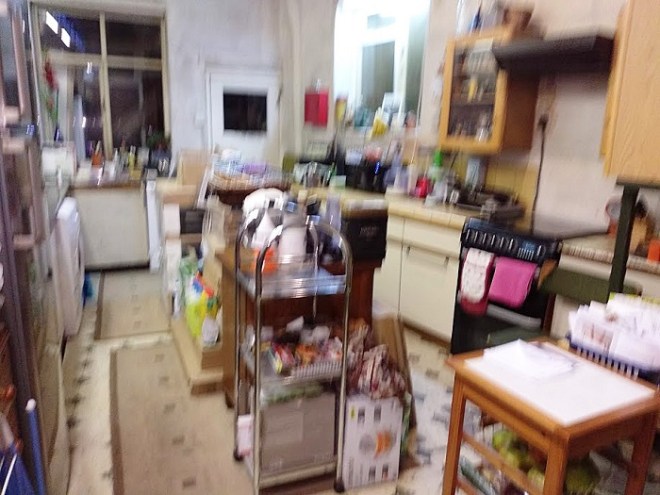
The stored furniture returns and fills the UK house with extra ‘stuff’ which needs culling, and far too many boxes which can’t be unpacked because there is no access to anywhere to put the contents. A sideboard arrives and is filled, then other arrivals mean the sideboard is no longer accessible. The contents might just as well have gone up in smoke. The planned IKEA kitchen (and appliances) for Portugal now form a massive ‘island’ in the centre of the UK kitchen. (See the illustration…)

The heroine now feels like a rat in a maze – or in a scrapyard full of junk. (Just as weeds are flowers in the wrong place, junk is belongings in the wrong place…). There is no room to celebrate the holidays or anniversaries or entertain friends. Christmas dinner can’t easily be cooked because of the navigational hazards. She is considering a chicken with minimal trimmings. There is no space anywhere for a tree. Cards could theoretically be strung from the beams in the lounge but boxes prevent these being reached. She has come to the conclusion that any gifts or desires are just asking for future disaster and has deleted her wish list. Anything that might replace lost items is just seen as adding insult to injury; replacements create flashbacks, and besides, the items could turn up in the boxes. Who knows?

The scrap heap (or whatever you want to call it) has built up over the two years since the fire, as the heroine’s husband has gradually brought things ‘home’. The only silver lining is that the insurance company paid out in full. This underlines the truth of the saying that money can’t buy happiness.

Meanwhile, there is ongoing drama related to a possible poltergeist in the seventeenth century UK house. Suspicions have been around for years but recently, whatever is going on has expanded. Missing in action so far: a wooden letter opener, a charging cable for a Kindle (fortunately she has two), one of a favourite pair of earrings, two Christmas cards for relatives abroad (not yet addressed so nobody posted them) and, perhaps more worryingly, a very heavy sharp cooking knife. The vacuum cleaner hose was blocked by a small plastic dinosaur that nobody remembers ever having seen.

On another faintly paranormal note, the heroine has become aware that appointments with both her hairdresser and her dentist are always, but always, accompanied by appalling weather. No other appointments or arrangements are ever affected – the weather varies as it usually does in UK.

From the sublime to the more-than-ridiculous. Will she ever find out what’s in the boxes? Will she ever be able to use the kitchen safely again? Who (or what) has the knife? Can we predict the weather next Monday? Follow this slowly unfolding drama to find out.

My writing: an update

I feel really strange.

I finished both the series that have consumed my brain and my time for the last fifteen years. Living Fae’s final volume, On the Edge, is in the last stages of formatting and might even be published about the same time as this post. The Skilled Investigators has reached a conclusion although my betas might ask me to expand bits. They usually do. I’m one of those authors whose word count goes up after editing…

On second thoughts, I’m going to hold back on publishing On the Edge. It isn’t a Christmas story and could get overwhelmed in the general riot at this time of year, and I’ll be publishing my Christmas offering so that friends not signed up to this blog can get it on Smashwords or Amazon.

Harlequin (Living Fae) and Genef (The Skilled Investigators) have lived in my head since their inception. I got to regard them as perfectly real and as good friends. Now I’ve told their stories and don’t quite know what to do with myself. I have a suspicion I might be lonely.

That’s not totally true. There’s another novel that has been languishing on my hard drive… it needs some care and attention but basically, it’s written. And it could possibly be the start of another series.

I haven’t only been writing the two series, of course. I’ve managed quite a few short stories, and a fair amount of fan fiction. I have also written poetry, reviews, and meta about writing. All in the last quarter of 2019.

I posted a poem recently (poems always get more reactions on WordPress than anything else I say) and I also posted (on AO3) a story for a Secret Santa exchange. My giftee liked it so that’s a plus and so did the mods! I can’t link anyone to it or say anything else until the author reveal which I believe is on Christmas Day. I published The Road, and the collection Beating Hearts, I wrote about typos and about reading mm romance, and I edited and amended a short story that I gave you for free (Hallowe’en Changes). Then I got another short story ready to post for you for Christmas (watch this space). So I suppose I’ve been busy.

All the same, Harlequin and Genef are going to leave a huge hole in my life. There is a vacancy in my brain for at least one more character to move in. How do I advertise for new tenants?

Two detailed reviews and a plea.

I started watching Vienna Blood, a series of three 90 minute films by BBC, not sure what to expect. (I gave it 5 stars.)

At first, I was doubtful about the concept. But the sets and the acting won me over and I watched all three. By the end, I was totally hooked.

That’s where the plea in the title of this post comes in. BBC are waiting till they see what kind of reception the series gets before they commission a second series… And I need more! So please, please, if you have access to BBC iPlayer, download and watch, or pretend to watch! All three films are available for 11 months.

Think Sherlock Holmes (the original, not the modern Sherlock), think The Third Man, think Freud, think foreshadowing of serious antisemitism in Austria. Put all that into criminal investigations that can be quite leisurely because of the 90 minute format. Add the fact that the stories, from the Liebermann novels by Frank Tallis, are adapted for television by Steve Thompson, the screenwriter responsible for Sherlock (the modern one).

The cases are fascinating, with a wonderful period flavour, Vienna is lovingly portrayed, and the chemistry between the two detectives, Oskar (police) and Max (neurologist) is intense and full of both angst and humour. We also get intriguing details about the family and love life of both men, and about the police force and the hospital where Max works.

The programmes give the viewer plenty of crime (some of it very gruesome), plenty of banter, plenty of romance. It also leaves this viewer quite desperate to know what happens next in the lives of this pair of detectives, as well, of course, as what cases they will find themselves investigating next. Why BBC felt it should only show it on a Monday rather than at the weekend for higher viewing figures, I can’t imagine. They clearly spent a lot on the production, and everyone concerned deserves a second season. I believe there are more books, but even if those are exhausted, I think Max and Oskar would be a satisfying addition to our ongoing detective genre.

And now for something completely different…

The Greater Freedom by Alya Mooro (I gave this 3 stars)

This is one of those worthy books. By about half way through you know pretty well what the author has to say and just wish they would hurry up saying it. Mooro has written a book that delves into various aspects of modern feminism. She admits that many of the problems she identifies are shared by women world-wide. She then goes on to make a ‘special’ case for the suffering of Arab women. I wasn’t altogether convinced by her arguments about this but can see what she’s getting at. (She ignores, for example, the experience of Afghan women.)

I would have liked more statistics and more in-text references to her sources. I am not sure that the polls she conducted via Instagram are anything other than anecdotal. I should also perhaps say that whilst I do have numerous Muslim friends, I don’t know many Arabs. I had Arab students in the past but don’t think they would be able to speak for today’s Arab women.

Mooro does mention the restrictions imposed on women in Saudi Arabia (and elsewhere) but seems to be saying that most restrictions are cultural and are self-imposed as a result of social censure. This is interesting, but again, not perhaps deeply enough researched and is something many writers have already discussed.

However, I was actually shocked by the amount of freedom she enjoyed as a teenager. Far, far more than I experienced as a British teenager (in a UK Christian household) in the fifties, and quite a lot more than my daughter had in Britain in the eighties. It’s possible that today’s teenagers all have the kind of social life Mooro describes herself and her friends as having in both London and Cairo but I honestly think their behaviour/lifestyle is limited to those capital cities and perhaps to the liberal middle classes to which the author so obviously belongs.

I got bored. I skimmed, towards the end. I don’t think the writer gives us any completely new insights, and I didn’t altogether agree with all her conclusions. However, for someone who knows very little about the lives of Muslim women (and men for that matter) this might be quite an interesting read and an ‘easy’ introduction to the issues.

November Reviews

Films and TV

Dublin Murders*****
I really enjoyed this, with the flawed detectives (well acted), the Dublin background and the story which reached a satisfactory ending but still left it open to the viewer to accept a paranormal explanation for some aspects of the events. One review I saw criticised the fact that the lead detective should not/would not have been involved because of his previous history but his eagerness to take the case and deceive his superiors was explored in great detail. I was disappointed to learn that much of the location filming was actually in or around Belfast…

Spiral Season 7*****
What can I say? My all-time favourite cop show. Season 7 didn’t disappoint. I love the ensemble cast, the views of lesser known parts of Paris, and the interesting exploration of the French police, judiciary and legal system.

Carnival Row Season 1*****
Gorgeous show. Fae and steampunk meet in an AU Victorian London. There’s a gripping plot with lots of nods to current issues such as immigration and racism, fabulous special effects, and, amazingly, Orlando Bloom can act. But then he was one of the people involved in making the film so perhaps he was better directed than usual? I really hope Season 2 doesn’t take for ever to arrive. I watched this on Amazon Prime, and sort of spread it out because I didn’t want it to end.

Wild China*****
Lovely series with a focus on wildlife but plenty of information about the various Chinese regions. Eye candy, yes, but intelligent eye candy that educates as well as entertaining.

Great Australian Railway Journeys*****
Michael Portillo, being his usual flamboyant self, introduces the viewer to Australia and links the various places and aspects of life via train journeys. He has done the same in UK and parts of Europe. If you liked those programmes you’d like these. And it’s a great way to learn more about Australia; I think even a lot of Australians would enjoy it, not just for the scenic rides but for the interesting interviews with Australians.

House of the Year (Grand Designs) ****
I mostly agreed with the judges, with one exception, the eventual winner. I found that house boring! I much preferred the ones that were completely eco-friendly or that merged into their surroundings.

The Accident****
Brit drama set in South Wales, where a combination of company greed, local council desperation and kids behaving recklessly lead to loss of life and an interesting (and grim) court case. Some excellent acting.

Cold Call****
Another Brit drama, where the wronged victim inches gradually into crime to retrieve her money. Good acting. And chilling information about how scams can work.

Gold Digger****
Yet another Brit drama, this time looking at an older woman who finds a young boyfriend to the shock and horror of her family. Good acting and interesting character development. However, it was quite slow, and I accidentally missed an episode but didn’t notice or find myself at all confused!

Goldstone***
An Australian film about a Native Australian detective. Some good acting and photography, and it was interesting to see David Wenham as a baddie. However, I gather it was a spin off from a series aired about ten years ago. I didn’t see that and I kept feeling I was missing fairly vital information. The immediate plot was fine, but there were mysterious references to the detective’s past, and his private life.

Books

The excellent and the highly recommended:

The Name of the Rose by Umberto Eco*****
A re-read, to go with the TV series. I will post a longer critique when the series is finished.

Rhapsody for Piano and Ghost by Z.A. Maxfield*****
A pianist finds himself falling for his used-to-be step brother. However, although this is a contemporary mm romance the most interesting characters are the ghosts who help the plot along and have an mm romantic (and possibly tragic) past themselves.

Skin After Skin by Jordan Castillo Price*****
This is a novel in the Psycops series. I’ve read all the rest but hadn’t come across the story of Crash, who is a minor character in the other novels. The book explores his past and gives the reader another view of Jacob and Victor, the main protagonists in the main series.

Tallowwood by NR Walker *****
A really thrilling detective mm novel where a Sydney detective is thrown together with an Indigenous Australian cop in a small town. Beautiful writing, too. I am now looking for other books by this author and have so far bought one. More will follow, I think.

A Litter of Bones by JD Kirk*****
A new series set in the Scottish Highlands. It’s a police thriller with lots of excitement as well as an interesting location. I might follow this detective.

Twice Shy by Sally Malcolm****
Pleasant contemporary mm romance in which teacher meets single dad. One of the protagonists has believable children which is always a plus.

Five Bloody Hearts by Joy Ellis****
The first volume in a new police procedural set in the north east fens. A gripping story and an interesting lead detective.

The Arrangement by Alex Jane****
A really heartwarming story in which friends push Gabriel and Nathaniel together. It loses a star because of poor proof reading.

The Replacement Husband by Eliot Grayson****
I really enjoyed the arranged marriage between Owen and Arthur, but found the world building less than stellar. I do think that if the main character is ‘Goddess Blessed’ and this affects their life and their future, the reader might be given an explanation.

The readable:

Silver Scars by Posy Roberts.***
A nice mm romance between two people with physical injuries and PTSD. However, although it was novel length, I found the writing rather repetitive and ‘padded’, and might have enjoyed it better if it hadn’t been written in present tense.

Bring Them Home by DS Butler***
This is another new police procedural set in Lincolnshire. The story was gripping enough but there was too much focus on procedure and the team seemed somewhat disjointed. I don’t think I’ll follow the series.

Survivor by TM Smith***
I enjoyed this story but thought it had poor structure. The author never seemed to make up their mind whether they were writing a thriller or an mm romance. Yes, you can cross genres to great effect, but there needs to be a main focus and that was missing here.

The Greater Freedom by Alya Mooro***

A book about feminism written from the perspective of an Arab woman. I’ll look at it in greater depth in a later post.

And the poor:

Dragonslayer by Resa Nelson**
I read the whole story and found it interesting and gripping enough, but won’t be following this series about Astrid, a smith, and her lover DiStephan in this AU mediaeval world. There were a lot of plot holes and I didn’t think the world building was adequate.

I can see you by Michael Leese**
How on earth can someone write a boring serial killer/spy story? This author managed it. I think the main problem was the way the story was structured so that the reader had too much knowledge before the protagonists did.

Short stories

The recommended:

Vlarian Oath by MistressKat***** https://archiveofourown.org/works/21288197
I reviewed this in an earlier post. Gorgeous sci fi with an ff romance at its heart. An original story written for a story challenge that spanned original work and fanfic.

Trolling for Cupcakes by JL Merrow****
Short sweet ff ‘take’ on the tale of Three Billy Goats Gruff. Too short to get five stars. (I don’t mean that really short stories can’t get five stars, but that this one was too short for me.)

The readable:

A World Apart by Mel Gough***
Ben, a cop meets Donnie when the latter is wrongly arrested. Quite a nice story but for my taste there was too much focus on injury and medical care.

And the forgettable:

Cops, Cakes and Coffee by Sara York**
Fortunately short story. Drake is a cop and Adam is a baker, hence the title. It’s PWP (plot what plot in case you don’t know the genre) and has too much sex for too little reason.

Fanfiction

I read more Professionals Big Bang fic but there was nothing further I’d recommend to readers who are not already part of the fandom.

I also read more contributions to the Lewis FrightFest Challenge. I’d like to recommend:
In the forests of the night by greenapricot***** It isn’t actually frightening at all but is a lovely look at legends about shapeshifters and is set in Northumberland. https://archiveofourown.org/works/21281798

In other fandoms:

The Monster Next Door by Brumeier***** https://archiveofourown.org/works/21245204
This is a great short story written for a Halloween MonsterFest. I now want the author to write the story from the point of view of the cat…
It’s ostensibly a crossover between SGA and Labyrinth but takes off in a direction all its own.

I also found some beautiful poetry by silverr, based on folk tales, legends and art:
Wild of Branch and Root***** https://archiveofourown.org/works/14570421
The Black House***** https://archiveofourown.org/works/1088288

A ‘mememe’ meme grabbed from a friend.

You can probably learn a lot about someone from their tastes in books, art, music, films, etc.

My favourite author/book

I have to go with Lord of the Rings. I have read it multiple times and I still return to it. I wouldn’t say Tolkien is the best author I’ve read. (I don’t, for instance, enjoy the style of The Silmarillion.) But the book is fabulous. The films try hard and I enjoyed them but they pale in comparison. If I had to pick an author I’d probably choose Georgette Heyer – shades of Austen plus subtext with lots of humour as well.

The Book I’m reading.

Culpeper’s Herbal. It’s a re-read. I lost my copy in the Portuguese fire and have repurchased, this time a copy with modern updates/annotations. I’ve used the book for reference when writing my fae saga and I love all the ways it sends my mind down lots of untrodden pathways. I was interested to note that JKR in an interview said she had three copies. Other than that I’m reading this week’s New Statesman, and enjoying the short stories in the Rainbow Advent Calendar.

The book I wish I’d written

I think Stephen King’s Dark Tower Series. Whenever I read King I feel as if I’ve attended a writing master class, and I really liked the series plus the way it merged genres: adventure, romance, urban legends, quasi-sci fi, horror. Every word counts and the style, especially in the later volumes (he wrote it over a long period) is flawless.

The book I couldn’t finish.

I usually plough through to the end (with some skimming), especially if a book is popular, to see what the fuss is about. I tend to abandon badly written romance and crime. I think I’ll have to mention The Silmarillion – see my first answer! I got totally bogged down and bored. Same with Don Quixote and The Great Gatsby.

The book I’m ashamed I haven’t read

Not actually ashamed since it was a deliberate choice, but I haven’t read Ulysses. I’ve seen excerpts and that was enough. I definitely avoid anything that might be ‘stream of consciousness’ even though I gather it is currently fashionable again.

My favourite play

Torn between Midsummer Night’s Dream and Vivat Regina.

My favourite film

Torn again. The Third Man or The Fifth Element? If I had to pick for a Desert Island I’d have to toss a coin.

The box set I’m hooked on

Game of Thrones. I wasn’t able to watch it as it aired but I am up to date on the books. My copy of Season 8 (the final one) arrived this morning and I have so far been able to avoid spoilers – since the book series is not yet complete I have no idea who wins the game or whether winter simply draws play to a close. Why it took about six months for the DVDs to be available I have no idea.

My favourite TV series

Spiral, or Engrenages to give it its correct French title. Long running French cop show with all kinds of extra delights involving lawyers, French culture, and a look at modern policing issues. Before that, I might have said Spooks, for the same reasons. But I think I’m enjoying the French series more, partly because the actors, who are superb, are unfamiliar to me so I’m both hooked and fascinated.

My favourite piece of music

When I remember to vote in Classic FM’s annual lovefest, I always choose Bruch’s violin concerto. The first time I heard it I was on my way to work and stopped the car (and was late) in order to hear the end and then find out what it was.

The last movie that made me cry

Probably I, Daniel Blake.

The lyric I wish I’d written

More Like the Movies – Dr Hook

The poem/song that saved me

Not sure I ever needed saving… but I’ve always felt an affinity with Robert Frost’s short poem In Neglect:

They leave us so to the way we took,
As two in whom them were proved mistaken,
That we sit sometimes in the wayside nook,
With michievous, vagrant, seraphic look,
And try if we cannot feel forsaken.

He’s one of my favourite poets anyway.

The music that cheers me up.

It depends on my mood. If I really need to laugh, Flanders and Swan, or The Wurzels. Or Captain Beaky, though I lost my CD in Portugal and it’s no longer available. If I want to feel optimistic, perhaps any Chopin other than the Études which have some rather sombre pieces. His other work takes me to happy places – a visit to his house (now a gorgeous museum) in Poland, and learning to play some of the waltzes.

If I could own one painting, it would be

Hmm. I love all sorts of paintings in art galleries. Not so much in my own house which is ‘difficult’ with lots of oak beams and uneven nooks and crannies. Perhaps a fairy painting by Brian Froud or Amy Brown. It would have to be small if I was going to hang it anywhere. Other than those, I like the female pre-Raphaelites a lot.

The place I feel happiest.

My mood tends to depend on the company I’m in rather than the location. This is a hard question. Maybe in our garden in summer, especially at twilight, with that indigo sky, bats, and stars.

My guiltiest cultural pleasure

Buying too many e-books. I’m usually over-budget and nobody knows but me because they’re all hidden on my Kindle.

I’m having a fantasy dinner party. I’ll invite these artists and authors.

I only enjoy small dinner parties with people I already know and like so this is another hard one. And authors or artists whose work I like are not necessarily people I’d get on with or want to cook for. I’m going to go with people I do actually know: Fiona Glass (writer), Kat Soini (poet), Stevie Carroll (writer), Beth Richardson (artist), Bruce McGregor (actor). I think they’d get on well and the conversation would be stimulating.

…and I’ll put on this music

The Best of Queen, The Best of The Rolling Stones, and The Best of Sting.

The play/film that I’m looking forward to

I haven’t watched Peterloo yet but it’s on my Amazon Prime watchlist. Since I live on the outskirts of Manchester it’s something I’m really interested in.

The play/film I walked out of

I’ve never walked out of a theatre or cinema unless I’ve had to catch a last bus or train. I can switch off films on TV or my laptop and frequently do. The last one was Master and Commander. I was looking forward to it because I’d enjoyed some of the books, but I couldn’t be bothered with all the sea scenes.

A fantasy writer’s lament

(shutterstock – public domain – fractal art/poly dragon – photoshopped)

There’ s a dragon sitting in my head,
not breathing fire unless I refuse
to give him a role in my latest work
or choose
to pretend he’s not in my head at all but just
a figment, imaginèd.

In shadow behind the dragon
a silvery unicorn prances,
slipping in and out of mist,
taking his chances
I’ll add him to the story,
wild and moon-kissed

Hunting (both dragon and unicorn),
seeking friendship, not conquest,
fae creatures try
to convince me they’re wonderful and strange,
not just like every other sentient being
under the sky.

(Magical families and travels
or fantasy love and crime
don’t differ from the mundane kind;
they’re merely more exotic
to observe,
and in my mind.)

They make incessant noise in my head,
these uninvited guests of mine,
chattering day and night.
Sometimes I’d like some peace and quiet,
all for myself, and so…
I write.