Writing fanfiction

Today I was reading my copy of Writing, a magazine about writing and publishing I subscribe to. It’s a very UK-centred magazine which has quite a few useful articles and links. It has an online presence at https://www.writers-online.co.uk/ and is worth checking out even if you live elsewhere in the world.

Anyway, in one of the letters a subscriber who was generally in favour of fanfiction said they admitted it was ‘a lazy way to write’, saying that fan fic writers had the characters ready made for them and didn’t need to work hard to develop them.

I wanted to write back but I knew my thoughts would probably be too long for a letter to a magazine so I thought I’d explore them here. As you know, I read and write fanfiction – I sometimes jokingly call it my ‘other’ hobby – and I would take issue with the letter writer!

So the characters from films and TV shows (and from books, too) are ready made and therefore easy to write about? Would the letter writer say the same about historical figures? Characters such as Emperor Claudius, Napoleon, Henry VIII, the Borgia Popes, Jesus, are all ‘ready made’ in the same way but serious writers gain praise for their new explorations of these characters. It is perhaps harder, in some ways, to write something new and original about a character who has existed in history or on the screen. The fanfic writer (or the writer of tie-in novels for that matter) must be very observant and pay great attention to detail. The ‘voice’ of the character has to come across to readers who already have well-developed expectations and will pounce on errors. Dialogue needs to sound likely, and must not contain any errors e.g. Americanisms for Brit characters or vice versa. If the show is set in a particular era it is necessary to check small details such as finance (were Euros in use?), types of communication (computers? mobile phones?) and even things like the types of sweets or snacks available. Readers who are fans of the original will notice anachronisms.

The settings of TV shows and films are also ready made. This doesn’t mean the fanfic writer needn’t do any homework. The online information about the setting needs to be meticulously researched, and the good writer will look at all kinds of resources, not only the original screen works, to check that the backgrounds for their fics are acceptable. This involves just as much work as for an original novel, which might well be set in the author’s own home town and be less taxing. Besides, a new story about the same characters needs some new locations and these will also need research. I once ordered tourist publicity for a town in America to enable me to place my story accurately – I think the tourist board decided I was a likely visitor and ‘spammed’ me with invitations to book hotels or tours for ages. Wikipedia is my first stop, but its information needs to be independently checked; it isn’t always either correct or adequate.

There are also, of course, the minor characters who people the fics. Whilst many shows have a supporting or ensemble cast that can be utilised, there will always be a need for extras, for instance shopkeepers or villains, or simply new characters who form part of the plot, who will be invented by the writer but will need to fit seamlessly into the world the main characters already inhabit. This can be harder work than inventing a new group of characters from scratch.

For many excellent fanfic writers there is great pleasure in transposing characters from their original setting or period into another and asking how they would have behaved under very different circumstances. Some of the best stories I have read have put, for example, modern detectives (e.g. The Professionals) into Regency London, or a world of space ships or the film industry. The reader gets pleasure from the exploration of the essence of the character in what is known as an AU (alternative universe), whether it is fantasy, or merely historical or just different. In these cases the characters need close study that is far from lazy, and of course the alternative settings need research, too. There are also ‘crossovers’ where, for example, the heroes of a TV series (e.g. Supernatural) appear in a totally different setting such as Harry Potter’s Hogwarts, and have magic to contend with. Writers of crossovers have two sets of fans to satisfy!

Books can be harder to deal with in this way simply because the plot is often more thoroughly ‘closed’ at the end, though there are often minor characters whose stories have not been told to the complete satisfaction of readers, and of course the characters can also be placed in different settings. There are also series which allow for extra stories. Sometimes writers will ignore the ending of a novel; again, to take Harry Potter as an example, people write stories with the label EWE meaning Epilogue? What Epilogue? and take the characters beyond the book in all kinds of different directions, ignoring JKR’s vision of their later lives.

Of course there are fics written in a lazy fashion but then I have read many published original stories that are dull, derivative or otherwise badly written. The best fanfic avoids these problems; the worst is not much worse than the drivel some publishers offer. One reason for this is the instant feedback given to fanfic. If I write original fic and publish or self-publish it, I am unlikely to hear from readers for some time unless or until I gain fans on my website.  The day I post fanfic on an archive I get feedback, some of it detailed, and not necessarily always friendly. There is room for discussion and indeed heated debate. Most sensible fanfic writers use beta readers who will save them from really bad mistakes in characterisation, plot, etc. as well as from mechanical problems with spellings and typos. But even the best beta group can’t guarantee there will be no problems at all. This keeps fanfic writers on their toes.

Some fanfic writers ‘file off the serial numbers’ and publish their work as original fiction. It is usually impossible to tell when this has been done unless one has read the fanfic version. This suggests that fanfic has more in common with original fic than the letter writer thinks.

I strongly suspect the letter writer has only read or written fics that fall into what some of us call the ‘episode’ category, in which an episode of a TV show is rewritten from another point of view, or with extra scenes inserted. This type of fanfic, which fills in the gaps we all notice in our favourite shows, is only one kind of fanfic. Some of it – and only some – can be so closely based on the original as to give the impression  – and only the impression – of lazy writing. But there is plenty of fanfic out there that goes on to expand the original show or the original characters way beyond anything the producers intended. And even the ‘episode’ fic requires keen observation and a lot of imagination.

I write both fanfic and original fic. They are different in the sense that they are largely for different audiences and are posted or uploaded in different places, and in that only original work can hope for financial reward. They are also different in that they are in response to different stimuli. They both require hard work from the writer. The skills needed for both bleed into each other – work on plot, characterisation, locations, and language use.   I think, on balance, fanfic is slightly harder work if it is to satisfy its audience, because it is more difficult to write convincingly in someone else’s universe than in one’s own. It has certainly never struck me as in any way a ‘lazy’ activity.

I know some of you read fan fiction. What do you think?

My first book on Smashwords!

I did it!

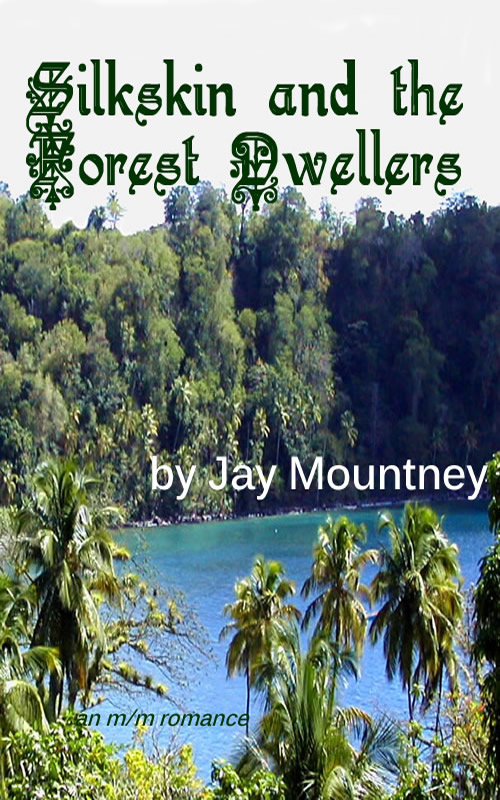
My story, Silkskin and the Forest Dwellers is available on Smashwords. It’s free at the moment – a marketing ploy that I’m assured works – so if you want to read it go to https://www.smashwords.com/books/view/170617 and find your preferred download format. For those of you who don’t have e-readers it’s available in  a .pdf version.

To refresh your memories, it’s an alternative fairy tale. The story most of us know as Snow White is transferred to a fantasy version of mediaeval Africa and the young princess is replaced by an adult prince. It got good reviews when I originally posted it in a LiveJournal writing challenge which is why I decided to use it for my first Smashwords venture.

Bear in mind that it’s an m/m romance and is therefore classed as ‘adults only’ so if your filter is on you might not find it, though the URL should take you straight there. (Perhaps this is where I point out that the story isn’t by any means ‘erotica’ – there are maybe two explicit paragraphs in almost 18,000 words.)

Obviously you’re more than welcome to download it just out of curiosity, but if you read it and like it, could I beg you to leave a brief review comment on the Smashwords site?

I still have some formatting worries, though I have no ‘autovetter’ errors so there is nothing dire. Smashwords put all books into a queue for manual vetting before sending them to other online bookstores so there might be advice on its way. However, there are two points I’d like your advice on:

1. I can’t get the copyright/licence notes onto a different page from the title. Smashwords issues dire warnings about using too many spaces via the enter key and I’m not sure how else to get it to a separate page under their formatting system. (And yes, I’ve tried page breaks.) If anyone has first hand knowledge I’d be interested to hear.

2. The squiggles between the sections have defeated me. I followed all the advice and used the same style for each one then some of them drifted to the wrong part of the ‘line’ in the published version. I won’t use centred squiggles again, and I won’t edit until I’m absolutely sure what I’m doing. What do you think? Are four spaces (the maximum recommended by Smashwords) adequate to delineate sections without squiggles, asterisks, etc? Would * or # at the beginning of the line (with a linespace before and after) be a good compromise? Any advice?

Here’s a piece of advice that didn’t occur to me until I was actually uploading my book. I went through all the rigmarole and ‘published’ then had to unpublish very rapidly because the author on the book and the author in the blurb weren’t the same… I’d approached Smashwords through my reader/purchaser route and that was the name they used in the blurb. I looked at the FAQs and found I needed to have a separate account in order to use a pen name, so I had to invite myself, and use a different email address. It’s a small point but just one of those things that make a difference and that need to be sorted out in advance!

Once Smashwords are happy with the book and are distributing it I will probably change the price from ‘free’ to ‘something’ – I haven’t made up my mind what, yet. At that point I will also upload to Amazon Kindle with the same price. So if you’re interested, download soon!

Why fantasy?

Why Fantasy?

I have, from a very early age, found myself drawn to ‘genre’ fiction. Even within the ‘classics’ I prefer to find elements of fantasy or crime or at the very least, romance. For example, Midsummer Night’s Dream and The Tempest are my favourites of Shakespeare’s plays.

I like the way that this kind of fiction enables us to explore the human condition without any heavy preaching or moralising and lets us approach otherwise taboo subjects without placing them in recognisable places or communities. Genre fiction at its best shines a spotlight on issues like race, sex, class, insanity, bullying, religion, political power and other issues whilst superficially telling an exciting tale about alien planets, fantasy creatures, the solving of crime, the sweetness (or tragedy) of romance or the fascination of history. It is well placed to alter perceptions and change attitudes. As an adult I am unlikely to be swayed by it and hope that I have already opened my eyes to many of the messages contained in fiction, but as a teenager I found myself able to question many things I had been taught because the books I read posed questions. I found, and still find this valuable.

When I read what is sometimes known as mainstream fiction or even litfic, I often find myself admiring the execution but bored by the content. In fiction, I want excitement, stories that have me reading till late at night to find out what happens, or tales that set fire to my imagination. I do not particularly want to read about ordinary people living ordinary lives, however well described. In short, I require fiction to provide a kind of escapism, not from anything but to unknown worlds in my head. This applies to films as well as books.

There is a school of thought that tells writers to write what they know. Taken literally that advice would effectively rid the world of all speculative fiction and a great deal of crime/thriller fiction. It would also do away with books told from the point of view of animals, such as Watership Down, and would mean authors could only write about their own gender in stories set in their own home towns. So it cannot be taken literally, though I have known a friend given this advice very firmly on a recent writing course. (She was writing a crime story with a male hero.) However, it does help to be familiar with any genre – or location – before embarking on writing in it, and that means reading a great deal, and analysing what is read.

This is where reading genre fiction diverges sharply, for me, from reading mainstream fiction. Instead of being bored by the content I am enthralled, but instead of admiring the execution (almost a ‘given’ with mainstream fiction) I find myself being extremely critical and judging what I read by a host of criteria. I am far more likely to find a book completely wonderful or totally dire and I could go on at length on what I find good and bad in different genres.

So when I came to wanting to write myself, I naturally wanted to write in one of my favourite genres.

Sci-fi is out. I tried a couple of short stories and failed miserably. My science education was simply not good enough and whilst research can substitute for poor early learning the research would be huge and not particularly interesting, for me, in itself. To have to understand physics in order to write convincingly about space travel would not appeal to me. I can allow myself to write fanfic in sci-fi fandoms, utilising other people’s research to underpin stories with no intent to publish, to entertain myself and my friends. But original sci-fi: no.

Crime is a possibility but again, a lot of research is needed. Police and other agencies need to be presented convincingly and the research needed would again be vast and uninteresting. I have to admit that cop shows are another fanfic favourite, for writing as well as reading, and again I let the originals provide adequate background for procedural aspects.

The same thing applies to historical fiction. Although good writers can sometimes keep me reading and loving their work, I can only admire their meticulous research and could never emulate them. I read non-fiction history as well as fiction but I skip from era to era and never get sufficiently invested in any particular period to know it in depth.

I am not sufficiently interested in ordinary romance, set in modern times, to write it although I love Jane Austen and other romantic ‘classics’. I tend to get bored at quite an early point in the relationship and could not see myself with the enthusiasm to write a whole novel. I mostly dislike horror and am not usually too keen on supernatural beings such as vampires who interact with humans.

Fantasy is a different matter. I am wholly engaged in the fantasy worlds I read about, and in the ones that then spring to my own mind. I continue to live in the worlds I have read about and I want to share my worlds with other people. It is perhaps strange to say that the research needed never seems like work. Make no mistake, fantasy needs research. Names, physical characteristics of people, animals and plants, weather systems, planets, architectural styles – they all have to be written in such a way that readers will suspend disbelief and that means a lot of underlying work. It is no good having daffodils in a tropical jungle or winged animals that are too heavy to fly. Those are obvious errors but they exemplify the way the writer needs to build a fantasy world adequately and with credible detail. This is where I do write what I know. I use settings I know well, repopulate them with my own creations, tweak the flowers and animals, and make subtle alterations to the road systems and the houses. In a sense, whenever I am out and about, or travelling, I am observing and doing ‘field’ research.

Once I have a ‘world’, I can use it to tell a story that appeals to me. I enjoy romance and crime, and to some extent I tend to put both those into my stories. I have an elf detective, a fae family with assorted love dramas, a prince solving a mystery surrounding unicorns, and shorter tales that involve murder, theft, and betrayal. A constantly recurring theme in my writing is culture clash – between countries, between classes, between species, between the adherents of beliefs. It’s something I have researched and dealt with on a professional basis in my career and I suppose it is close to my heart – at any rate, I seem to write about it, even when I am ostensibly writing about elves or unicorns.

Within all speculative fiction there is the possibility of asking ‘what if?’  What would happen if societies did or did not behave in certain ways? Not just individuals, but nations, religions, whole swathes of people. How would these people react if something different was dropped into their midst? That possibility is what sparks my imagination and then the characters come along to show me how the answers would play out in individual lives.

Fantasy enables me to ask and answer questions about social issues. It also enables me to build worlds that fascinate me and people them with characters who interest me. It satisfies deep needs and at the same time is fun. This is true both for what I read and for what I write.

How do you feel about fantasy? Do you enjoy it? Does it make a difference to your opinions about anything? And how about genre fiction in general? What are your thoughts?

The naming of casts (or characters).

How do you choose names for your characters and your locations?

If you’re going to set your story in contemporary London (or any other city) half the problem (the geographical bit) is solved and then you can pick names from a telephone directory, mixing and matching so that Agnes Black and Colin Drake become Agnes Drake and Colin Black. As I’ve mentioned elsewhere you need to note the spelling of names because there are some that have various options (Stephen/Steven) and some that appear to have various options but are actually gender specific (Leslie/Lesley) and you are almost bound to get them wrong occasionally in your text; that’s the law of the great god Typo. Plus, it’s no good using a location like e.g. Chertsey if you don’t know it’s south of London and on the Thames. But generally, contemporary fiction doesn’t give rise to too many problems although you might want to check that your subconscious doesn’t come up with a name that in fact belongs to someone famous in fact or fiction (been there, done that and had to do a quick find/replace…).

If you have more exotic locations in mind you need to check the spellings and geography even more carefully but there are all sorts of helpful sites from Google Earth to Wikipedia to help you and there are lists of appropriate names (plus English transcriptions) for boys and girls in almost any language you might imagine and a few you didn’t know existed. Most of them give you the meanings as well.

Then there’s fantasy.

You need to take care that you haven’t stolen names from other fantasy writers who have no doubt burnt a lot of midnight oil coming up with new and interesting names. You need to make copious notes about the names you choose, giving them some sort of history, noting the preferred spelling, considering the pronunciation… But all that is after you’ve chosen the names in the first place. Although some fantasy writers use a few names that sound as if they’re from ‘our’ world, most of do a lot of inventing.

It’s important that invented names should sound likely and not stupid. Rumpelstiltskin might succeed in a fairy tale but not in the average heroic quest tale. It depends, of course, on the type of fantasy. Modern urban fantasies or tales of vampires or shape shifters can use ordinary contemporary names. Vampires can indeed be called Edward or Hal. But what about aliens or supernaturals? They are not going to have been saddled with John or Mary, however convenient you think it might be. Nor can you chicken out and say you’ll call them that because their ‘real’ names are so difficult to pronounce or because you’ve decided to use the terrestrial equivalent. Your readers have already decided to suspend disbelief and imagine they are listening comfortably to an alien language so why should pronunciation be difficult? Nor is it helpful (to you) to use long phrases like ‘Born Under The Winter Moon’ because they take too long to type and you are going to be typing them regularly.

You really do have to work at it. It’s possible to create really strange names like G’narrr or  m’Lln but you’ll have typo trouble, I can assure you, and you still have to take care that they don’t sound too unlikely given the rest of your characters and location names. (This is a warning, not a prohibition.) If you’re writing about terrestrial supernaturals e.g. fae, you can use the names of less common flora and fauna. If your plot takes you to other planets you can still do that but make sure the names are seriously uncommon or add a few lines linking the name to a plant or whatever on the alien world.

Another possibility is to take ordinary names and alter them slightly. Annie becomes Anee, Mark becomes Maark or Tarc, and Virginia turns into Lergynia. Keep notes! Be careful that your subtle alterations don’t catapult the name into a realm with other meanings. Annie cannot become Anneal or Aneal; Mark shouldn’t turn into Bark or Lark;  Virginia would sound dreadful as Laryngia.

If you choose to alter names that are regional here, make sure all your characters have names with similar origins so that you don’t end up with too much of a mixture, unless you intend to go into great detail as to how your world has come to have a melting pot of people from different cultures.  I read one fantasy series where people who sounded vaguely Scottish lived just across the border from (and spoke the same language as) those with names that conjured visions of the Middle East; there was no explanation and it all jarred.

The same thing applies to other-worldly places or just wildly fictional ones. If you’re setting things on Earth you need to take care with local languages and usage. I have cringed at stories set in places like e.g.‘Altonhambury’ or ‘Byburghthorpe’, combinations that sound (and are) unreal. I’m pretty sure non-native writers make similar errors in stories set in e.g. India or China. If in doubt, use the slight alteration method for places, too. Make certain you haven’t inadvertently included geographical markers in your place names. For example, a tor is a hill in Brit English so a town on a plain with a name containing ‘tor’ might be fine for your invented world but will throw your terrestrial readers. You can, of course, steal a name you like and place it in entirely foreign geographical surroundings but be careful – check its history and meaning first.

Check that you’ve used a variety of initials. If all your characters have names beginning with G the reader will get confused and annoyed. It’s such an easy error to fall into and yet if you keep notes it’s easy to avoid.

It goes without saying that your minor characters need names that are as well thought out as the major ones; that slaves should have quite different names from a master-race; that your characters should have surnames or clan names from the start, even if you end up never using them.

The more research you do the more real your characters will appear in the final text.

I use a variety of methods. My fae characters have a mixture of names, mostly drawn from natural objects like plants or animals, but sometimes borrowed from humans in a somewhat random fashion. My fantasy people have names that are reminiscent of Earth ones but are altered slightly. Even then, I came up with Brianna (or Briana) only to find the name exists here. It’s pretty, and it’s uncommon, so I left it, but someone is bound to complain. For stories set in solidly terrestrial cultures (even fairy tale ones) I’ve done research.

It’s no good sticking pins in an alphabet or letting the computer invent things. Naming needs thought. I’m reminded of Eliot’s poem (and the musical lyric): The naming of cats is a difficult matter; it isn’t just one of your holiday games. As for cats, so for characters…

How do you do it?

“Helpful advice”…

…that doesn’t work for me.

I’ll begin with the sites/challenges that are suppose to kick-start you into writing and then keep you going until the novel or whatever is finished. NaNoWriMo is the most famous but someone urged me to try April Fools when I found it hard to get going again after a hospital experience.

I have to say that April Fools did the trick and having ‘publicly’ committed myself to a goal, I couldn’t face not attempting it. You set your own wordcount for this one and I set 15000 words for April, the minimum needed for a fanfic challenge I’d signed up to. I made the 15000 in eight days, though the story told me it wanted over 20000 words to tell itself properly, thank you. So in a very real way, I’m grateful, both to April Fools and to the friend who sent me there.

However, I think that once actually started, I would have reached my goal faster if I hadn’t got sidetracked into talking to other writers and navigating an almost impenetrable site. I spend quite enough time chatting online as it is and this was a downside of April Fools. Some of the chat was interesting but probably displacement activity. Some of it was inane to say the least and made me wonder whether the people concerned really were writers; I suspect they were teenagers trying to spread their wings for the first time. I imagine NaNoWriMo is similar – I have watched online friends talking about it and have not been tempted to join in. I definitely need the kick-start element but could do without the rest of the package.

I have been hearing about a site called Write or Die, which apparently starts deleting your words if you don’t work hard enough. Another gives you kittens (fluffy pics) if you reach your goals.

These are not what I need. Does anyone know anything different?

Then there are friends who have been raving about various programs designed specifically for writers, sometimes by writers. Scrivener is highly praised. So is yWriter. But when I looked at them I couldn’t think how to use them. After learning all about their multiple components the writer is encouraged to amass vast quantities of notes, and create storyboards, etc. and write all sorts of snippets that can eventually be sewn together into a patchwork quilt/whole work. It sounds to me as if the amount of time spent would be better spent writing.

I don’t work that way. I know writers who do and these programs would no doubt be wonderful for them. I write in a sequence that will eventually, with amendments, be the finished work. I think and write from A to Z and whilst scenes from the middle of a work might swirl in my brain I never commit them to keyboard, even in note form, before their proper time. I have a page of notes to which I add when research dictates, and to which I can refer. I use RoughDraft because I can have all my notes, chapters, etc. open as tabs for swift reference, there is a notepad for temporary needs down the  right hand side of each page, and the spell checker doesn’t try to be nannyish about grammar. I can’t see any reason to change but…

There is a drawback to RoughDraft. It produces documents in .rtf format and my betas seem to prefer Word. So I convert everything and then their comments and typo-finds come back in Word and I convert again. By the time we’ve finished there are glitches galore, caused by the constant re-formatting. Highlighting causes a particular problem but so to some extent does spacing.

Any suggestions?

I hate Word. I hate the way it tries to force writing into its own modes, shoves bullet points and suchlike down my throat, attempts to Americanise dates, and gets in a state about margins etc. I hate the way it’s snarky about grammar when it obviously hasn’t a clue that writers learn the rules and then know when they can ignore them. I’m perfectly aware when I use ‘fractions’ of sentences. I do it for effect. And the Word grammar checker is sometimes really, really wrong. However, Word does spot one of my biggest failings, extra spaces between words. But if they’re at the ends of lines, by the time all the conversions have happened, the spaces creep back.

I tried OpenOffice and prefer it to Word but very few people seem to have it or like it. My main use for it is to download things I want from the internet, such as fanfiction, then converting them to .pdf ready for conversion via Calibre, for my Kindle.

I’m clearly not the kind of writer envisaged by the wordcount challenges or the writing programs. I just don’t function the way they expect.
And yet I still need a helping hand from time to time… or a kick!

My fanfic challenge is now finished – or at least ready for beta – at 28,696 words written over 14 days. Now I need to get on with either some original fic rewrites or some more research into self publishing.

The Addle-brained Dictionary

First, a brief apology for the long gap between posts. Some of you know I’ve been in hospital. I’m on the road to recovery and had this post in reserve for an occasion when I wasn’t up to writing anything long. Enjoy!

THE ADDLEBRAINED DICTIONARY  compiled by Jay Mountney

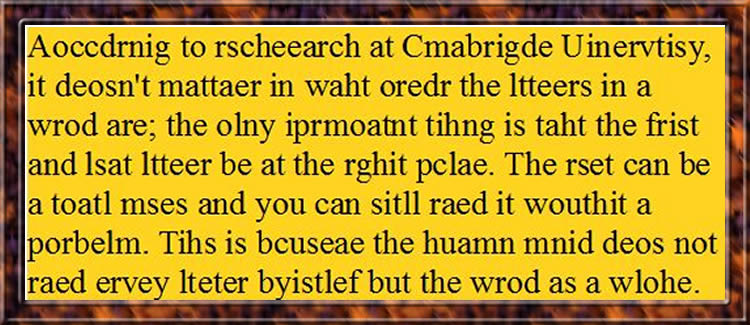
It has often been noted that people using the internet make many typos. More, it is thought, than typists using typewriters. The reasons for this are many and varied but it is also known that some of the typos are made frequently by a lot of people and have become accepted words in their own right. Others have quirky and fascinating meanings which the keyboard users didn’t quite intend. Some have been collected here, with their new meanings. Notice that some of the words appear to be normal dictionary fodder, but are used in strange and beautiful ways, quite unconnected with their original meanings. In some cases examples are given of the usage of words where this is thought necessary or appropriate. There are, to date, no entries for U, X and Z. It is possible that words beginning with X and Z are sufficiently rare to cause the writer to pause and think. The lack of a list for U is inexplicable. There was, it must be admitted, a dearth of entries for M, even more inexplicable than for U; but during the compilation of this list three turned up, or sneaked in… The author/compiler has a deeply held belief that words have a life of their own.

Note that the words in this dictionary have almost all been genuinely used in the ways outlined below online or in writing by the compiler, friends, colleagues and writers (or students) whose work the compiler has been reading: e.g. the first word appeared in a story the compiler was reading and was quite clearly meant to be read as ‘absentia’. One word has merely been heard. Another appears in stone. The compiler takes no responsibility for the truth of the definitions but suggests the reader searches his/her heart to reach a rational conclusion. The compiler goes through life reading meanings that are not there into things that are. For example, notices warning ‘heavy plant crossing’ invariably suggest Triffids and there is always a faint worry on behalf of an ‘alarmed door’. So typos lead down delightful primrose paths into a maze of confusion. Anyone is welcome to join in!

A

abscentia… this is the form to use if someone is being judged ‘in absentia’ and their absence really stinks of foul play or evil intent.

adaptions…adaptations that are carried out very quickly wiht little or no attention to detail.

adn…a form of ‘and’ used when the speaker/writer is at their wits’ end. “I have a lot to do: wash the dishes, cook the tea, make the beds and feed the cat. Adn then the phone rings.”

annoyued… a cross between annoyed and fatigued, used when the speaker/writer is ‘fed up to the back teeth’ with something. “I am annoyued with that cat; it keeps scratching the sofa even though I have bought it a variety of scratching posts.”

anopther… literally ‘another’ but said between pursed lips as in: “You mean there’s anopther set of papers for me to deal with? I thought it was home time!”

B

badk… extremely bad; possibly even ‘f..king’ bad. “That is a really badk cat. It has eaten my dinner.”

bedf… the kind of bed you sink into with an ‘umph’ of relief after a really hard day. “I’m so tired; I really need my bedf!

bear insurance… presumably intended to refer to basic insurance (e.g. the legal minimum requirement for cars). It probably insures the driver against basic predations by bears, or perhaps insures teddy bears for long distance travel.

bereak… a break that seems to happen in slow motion. “I knew the plate was going to bereak when it hit the floor; I tried to catch it but I was too slow.”

Boogoe Babies… a variant of a toddler group music and dance activity more often called Boogie Babies. The Boogoe’ form is used by grandparents who are desperate for their offspring to take their toddlers away to annoyue someone else. (see ‘annoyue’)”My daughter is taking my grandson to Boogoe Babies this afternoon; such a great idea and so good for him!”

bootle… a very long thin bottle. Nothing to do with the UK place of the same name.

BVSH HOVSE… this is shown in block capitals herebecause it is the way the name appears, carved in stone, above the BBC centre, Bush House. It would be kind to suggest it is easier to carve a V than a U but the presence of a perfectly executed O and two examples of S suggest this is not the case. Possibly an attempt to look very erudite and somehow ‘Latin’ but as it is not Latin it just succeeds in confusing the reader. May be connected with unpronounceable and frequently misunderstood regional accents within Britian.

C

cacoon… this is like the cocoon of a moth or butterfly but is constructed from sheets, blankets and any clothes that happened to be lying around. It surrounds a child who does not want to wake up. Especially if they are late for school.

calanders… calendars somehow crossed with cullenders so that the days and dates slip through the holes, leaving the user bewildered about where the time has gone. Possibly connected with vague recollections of the town of Callander in Scotland.

catchin (catchin up)… the shortened spelling is used with the preposition to imply speed in the attempt to catch up – there is no time for a ‘g’.

celebrat… this is what the average teenager does at a birthday party.

childlren… very slippery childlren e.g. in a soapy bathtub

Christams… the origin of this is obscure but may have some connection with Australian Christmas biscuits.

cirriculum… the part of the curriculum concerned with cirrus clouds.

cofotable… applied to a state of comfort reached by curling up as small as possible in a cosy armchair.

commentns… a lot of comments, usually made online by posts or replies, where people are all aware that others in the group are nodding agreement as they read.

compiation… a very brief compilation of only two or three items, often brought together as a kind of apology or expiation.

consolide… employers sometimes attempt to consolide jobs or work structures by packing staff and tasks so densely that the original aims cannot be met in the resulting crush and collision. They should, of course, consolidate instead.

crokscrew … a very curly corkscrew which doesn’t quite work. The compiler’s family bought one recently and it was too short for most real corks though it might have worked with plastic ones.

D

dicionary… a short dictionary that lacks a lot of the elements usually found in normal dictionaries. In other words, a dicionary like this one.

dleighted… A slightly posh, slightly effete, Brit expression. “Dleighted to meet you; how’d’ye do?”

doctro/docotr… a doctor in a hurry who is so anxious to see the next patient that he/she ignores the last few words of the one currently in the surgery.

dowqnloaded… sometimes there is a bug in the computer and a download fails or partially fails. This is known as dowqnloading. The ‘q’ is silent.

draging… dragging really slowly and causing anger/rage in the process.

dwon… it means down but is used when downward movement is somewhat erratic as when someone falls dwonstairs.

E

exceptipons… used for exceptions that are day/date related. “Parking costs £1 per hour or part thereof on most days. The exceptipons are Bank Holidays and some saint’s days.”

extremelt… extremely hot and runny. “The pudding had an extremelt chocolate sauce.”

F

feeback… Writers hope for feeback on their work, feeback that will lead to more sales, e.g. good reviews. Some writers actually pay reviewers and this practice is known as double feeback.

firdge… a fridge with a lot of sludge and mould in those little hard-to-clean places at the back.

flat… in UK this can mean horizontal and/or even but can also mean an apartment. Foreigners have been known (to the compiler) to search the ‘flat racing results’ in the newspapers for accommodation, with little success and great discouragement. Natives find it hard to explain through their uncontrollable laughter.

fo … a variant of ‘of’ used with the word ‘course’ as in ‘fo course’. This is usually said in a way that implies the speaker has slight contempt for the audience. “Fo course it is!! You should know that, Stoopid!!”

fond…. means found when used with something the writer or speaker is actually fond of and has found or rediscovered. “I fond the teddy bear under the bed!” or “I fond another typo.”

fould… foul with extra wrinkles. “The bulldog was in a fould temper.”

frim… a lightweight firm that produces trashy items or provides trivial services.

frineds… fine friends, as opposed to fiends, who are the kind of friends in the saying, ‘With fiends like these, who needs enemies?”

G

gald… glad – so gald you are in a whirl.

gogeous… a variant of ‘gorgeous’, when the speaker or writer is taking a deep breath on account of the extreme ‘gogeousness’ of the person or thing observed.

gril… a girl, the sort who asks a lot of questions.

H

heersefl… herself, at leisure, stretched out, perhaps beside a pool. “She went to the spa to pamper heersefl in the jacuzzi.”

hooping… hoping but displaying extreme anxiety with alternating hope and despair.

I

i… a lower case version of the personal pronoun. Used when the writer/speaker has low self esteem, either in general or in this particular instance. In extreme cases the pronoun disappears. “We went to IKEA but i couldn’t find anything i liked and we wasted a whole afternoon because couldn’t make my mind up.”

icob… a variant of icon, used in the context of screen icons for social networking sites. The makers of these icons sometimes get frustrated and wish they could ‘cob’ (Brit slang) or throw away the one they are working on. Hence ‘icob’.

indivbidual… used for individual portions of very special desserts.

ineficient… so inefficient that the person in question can’t even spell.

interrupt… sometimes incorrectly used in place of ‘interpret’, leading to confusion that no interpreting will put right. “He interrupted her actions to mean she was happy with the arrangements.”

intyernet… someone else’s internet. “Your intyernet skills are lacking.”

ititnerary…. a pornographic journey plan

J

juat…. used in place of ‘just’ to express surprise. “Juat a moment!! What’s going on?”

K

kitcehn… this is the kind of kitchen found in a flat sought by a foreign (or dyslexic) student. It is usually small, poky, and fitted with second-hand appliances of dubious safety. The compiler has known foreign students attempt to amend the spelling to something that to them seems more likely and was once informed that a student was now the proud owner/tenant of two rooms and a chicken.

L

lackedf… used when the thing that was lacking was f…ing essential

lastest… this appears in two wholly different contexts. It is an extreme form of ‘last’, as in: “She bought the very lastest one in the shop,” and is also occasionally preferred to the past tense of ‘to last’ as in: “Old fashioned washing machines lastest and lastest and lastest, not like modern ones that wear out in a couple of years.”

leasst… an extreme form of ‘least’.

legivtivacy… this has so far never been spotted in print (or online) but has been heard in a TV interview with a politician whose first language was not English. Assumed to mean ‘legitimacy’.

liips… lips that have been enhanced with botox injections.

lunnch… a long, lingering lunch, of the kind once enjoyed by bankers but now more usually the preserve of retired ‘ladies who lunnch’.

M

mew… as in ‘here are some mew typos’. Contrary to popular belief this has nothing to do with cats. The ‘mews’ in question are the stables or falconry buildings connected with aristocratic property and nowadays converted into new (or mew) bijou residences for aristocratic descendants who can’t afford servants (or falcons) but can afford, and want, a nice city pad.

moeny…so little money that someone feels forced to complain about it; usually connected with low wages or high prices.

mopes… a contraction of ‘my hopes’, usually rather vain hopes . It’s the unlikelihood of these mopes ever being realised which makes the writer miserable.

N

nieghbours.. very close neighbours, the sort you can hear through the party wall when they are shouting at the TV or each other. An alternative spelling is niegghbours, used when most of what you can hear is giggles. (Or, just possibly, a print rendering of Australian/Cockney neighbours.)

npw… a variant of ‘now’, spoken or written in a peremptory fashion with a hint of capital letters and pursed lips.

O

occassion… a very special occasion with a lot of sparkling wine and/or champagne.

P

paaassing… sometimes time paaasses so slowly that the only way to describe it is to add a few ‘a’s.

perforted… perforated with very small pinpricks.

phschological… first seen in the sentence:As a phschological study it was a disaster. Clearly the word has much in common with ‘scatalogical’ and saying it aloud suggests s..t hitting fans.

plain… occasionally seen in phrases such as ‘a higher plain of existence’ which immediately suggests high Russian steppes or the highlands of Central Africa.

possilbe… possible but improbable.

priacy… the privacy of pirates who prefer to do their darker deeds out of the public eye.

proative… creatively proactive.

psh… posh but very small. “I bought a very psh handbag last week; it doesn’t have room for my glasses.” For American readers, a handbag is a purse. Brit readers – don’t go there – you would never put glasses in a Brit purse and I have no idea what a Brit purse is in American.

Q

quicklcky…very fast and rather jerky.

quitely… quite quietly.

R

ray… a tray. This is connected with the children’s song Twinkle. twinkle, little star. In a playground version the star is said to be shining like a tea-tray, presumably a metal one. Seen recently in the sentence ‘I need a perforted baking ray for my halogen cooker’ . (see ‘perforted’.)

remebering… remembering in a rather fuzzy fashion.

reside… used instead of ‘preside’ in the phrase ‘reside over the proceedings’ where the proceedings are presumably to take place where the person who will preside lives/resides.

restrauant… a restaurant frequented by young people playing truant from school or college, or by adults playing truant from their jobs.

roat… used instead of ‘roast’ when the ingredients remain inexplicably raw. “We had roat parsnips with our Christams dinner but the turkey was well cooked. (see ‘Christams’.)

role.. sometimes confused with ‘roll’. Examples: “He’s on a role and he’s acting like an idiot” and “There is very little foil left on the role – a small piece will have to act the part of a big one.”

royalities…this is the word that authors use when the mismatch beween the royalties they had expected and the reality becomes apparent.

S

Sanatas… musical Santas who sing Jingle Bells instead of saying, ‘Ho! Ho! Ho!’

scenary…rather watery scenery.

si-fi… a form of sci-fi in which the underlying science is incorrect or plain silly.

somehwere… a variant of ‘somewhere’ used in circumstances such as: ‘I know I had it somehwere

but I can’t find it!’ and possibly in ideas such as: ‘Somehwere over the rainbow.’

sontacted… contacted by a method involving sound, especially Skype.

stream… occasionally used in place of ‘steam’ as in: I usually stream the vegetables but today I roated them. (See ‘roat’.) N.B. still connected with moisture.

swtiched… when young girls were expected to sew samplers and spent most of the time pricking their fingers with the needles, it was said that they ‘swtiched’ industriously.

T

tact… sometimes used in the phrase ‘in tact’ as in: He checked the injured man to see if everything was in tact.’ This use denotes extreme (and possibly unnecessary) tact on the part of the person doing the checking.

teh… a common variant of ‘the’. Prolonged internet usage will probably add this form to the major dictionaries.

thank… may be used in place of ‘think’ as in: ‘I thank that’s normal’. Probably denotes thankfulness on the part of the speaker or writer for the truth/normality of their thought.

thrid… a variant of ‘third’. Tends to give the mental impression of a grid, a graph or perhaps a pie chart. May also be used by employers who want to reduce their workforce by a ‘thrid’.

too… a variant of ‘to’ as in: I wonder what they are up too. Suggests a longing to know.

tpape… older people, familiar with cassette and video recorders, will recognise this as a type of tape, one previously used for recording but now unwanted and available for re-use.

Tudsday… an extra day of the week, coming between Tuesday and Wednesday . Experienced by people who don’t know what day of the week it is; it is probably Tudsday.

U

V

vein… a variant of ‘vain’ e.g. His mopes were in vein. (See ‘mopes’.) If this is used observers should be aware that the speaker/writer/character may be suicidal.

viewibgs… a variant of ‘viewings’ used when the person who has to view e.g. a new apartment, has a bad cold and doesn’t want to miss the appointment and of course doesn’t care about infecting the agent who is showing them round. It could, of course, be the agent who has the cold and a desperate desire not to miss commission.

vistim… a distant victim, such as the victim of internet scams.

W

Wander… sometimes used as a variant of the name ‘Wanda’; this spelling implies that the bearer of the name is somewhat flighty.

waht…a variant of ‘what’, only used in a question, usually with an implication of disbelief. “Waht did you say?” Always emphasised or printed in italics.

workds/worrkds…wicked words. The alternative spelling with a double ‘r’ is the Scots variation.

wrold… the world, meaning the planet itself, which is, of course, very old.

wya… the way, but maybe not the most direct way. “I’ll show you the wya home but I hope you don’t mind if we just go to A,B and C first.”

X

Y

yoursefl… yourself when you are in a flat spin.

Z

Have you any to add? Have you any further definitions? I’d love to hear from you!

Erotica or not?

I started to write this post some time ago but now find myself talking about a very current topic. I am horrified at Paypal’s attempts to censor what Smashwords should publish. Self publishing has always been the last resort of those whose work was rejected for any reason by official publishers and to prevent any publication of legal material seems like a step on the road to fascism. I also believe it is a first step in an attempt by the financial institutions to control people who self-publish. They’ve started with what they see as a soft target – a sub-genre of erotica. If they succeed they can go on to other things they disapprove of…

I neither read nor write the type of erotica they are talking about but have no problem with people who do. It’s their choice, and I am glad for them when companies like Smashwords facilitate that choice.  On the other hand, I have to say that the loose wording of the ‘ban’, would, over the centuries, have prevented the publication of parts of the bible and many myths and legends. We would all be poorer as a result.

And all writers, particularly those who write either ‘thrillers’ or historical fiction might well find themselves including rape or under-age sex in their work. Anyone who wrote about ancient Egyptian royalty would have a hard time avoiding incest. Are those books to be at risk too?

For a good explanation of the issues involved in censorship I would refer you to Neil Gaiman’s blog: http://journal.neilgaiman.com/2008/12/why-defend-freedom-of-icky-speech.html

For ongoing discussion of the financial implications you could start by following: http://maxkeiser1.blogspot.com/

But what do I think about erotica in general? Not rape, bestiality or incest, but explicit sex.

I have a confession to make. I love romance novels, whether they are subdivided into supernatural, historical, crime, modern or whatever. I am quite happy to read about explicit sex, m/f or m/m. But, I find the mechanics of sex, as portrayed in so many bestsellers as well as erotic writing, really, really boring.

I have been thinking about this and have come to a few conclusions. These only hold good for me but I wonder if any of you share similar feelings.

*I don’t like the old-fashioned convention of leaving lovers at the bedroom door and fading to black. I think (and have always thought) that cheats the reader and is a bit like the habit of using euphemisms for e.g. death. If the story will benefit from following the characters through the door, then modern writers have almost a duty to take that step. I understand why older writers didn’t and how prudish censorship created a yawing gulf between mainstream writing and porn with no gradations between. I would personally censor violence and war long before I would censor sex. But sex censorship no longer applies in books intended for adult readers. (Provided they aren’t self-published and paid for by Paypal, of course.)

*I like to use my imagination. I like to have to work for some of the emotions a book can inspire. And yes, the physical reactions. Books can make us laugh, cry, breathe differently, feel hot or cold, etc. They can also give a type of sexual reaction, felt as a result of intense empathy with a character. The greatest writers have always been aware of this.

These two points would seem to be opposites, but there is a difference between following a couple into the bedroom and a blow-by-blow account of the sexual encounter. If a story has the explicit sex as its main focus and goes into great detail without any plot or character development it has to be extraordinarily good writing to avoid being labelled as pornographic. But sometimes some writers want to use that detail to achieve their effects and if they do so within a fully developed story I see no reason to call that porn. However, I also see no reason, personally, to read it. It doesn’t offend me but it doesn’t interest me.

*In almost every case, where a piece of writing has had an erotic effect, for me, that has been achieved by a focus on feelings, reactions, emotions, not physical description. If a story drags me into sharing the character’s desire, rather than their physical reactions, that’s when I find the work ‘sexy’.

*Most adults, and probably 99% of adults who read romance, have some kind of sexual experience of their own to inform their reading, even if it’s only masturbation and dreams. That experience might be heterosexual or homosexual, mature or experimental, regular or rare, successful or otherwise, but the fact remains that they have something to base their thoughts on. They can relate to the characters at a fundamental level. They can also visualise the encounter unless the sex is so kinky that details are essential. And even then it is probably only the sex toys and suchlike that need fleeting explanation. (I read a story that described a glass dildo in detail and found that quite acceptable as its purchase added to the story.)

*There are only so many permutations of what is sometimes termed tab A into slot B and the foreplay that gets them there. What makes each encounter special is the emotional content. I don’t necessarily mean emotional in the romantic sense. The emotions might be a struggle for dominance, a feeling of regret, a desire to replace the ‘other’ with a fantasy figure, all sorts of things. It’s the psychological ‘hook’ that captures my interest, and that, I suspect, of many readers. The mechanics are well-known and hold no real interest in themselves.

*To be of interest a sex scene needs to further the plot or add to character development. Without one of those it seems (to me) to be self indulgence on the part of the writer. I usually skim to reach more plot…

*Surely (I can hear people saying) some readers deliberately seek detailed descriptions of sex as a ‘turn on’. Not just in porn, which tends to have little or no plot and two dimensional characters, but in ‘hot’ stories – the ‘bonkbusters’ of the paperback world or the ‘steamy romances’ of e-publishing. Certainly authors seem to vie with each other to provide more and more explicit description. But I think this is publisher-led. I know one or two authors who have been told by (mainly US) publishers that their work is not explicit enough. But many ‘best sellers’ on those publishers’ sites are there through other merits – great plots, great characters, great general description and style. I’m not sure why publishers assume the sex description is what sells the book instead of the description of desire. Is it because until fairly recently they wouldn’t have dared publish it other than under a brown wrapper in a back room and now the very ‘daring’ nature of their publications leads them into strange and unsubstantiated beliefs?

*My own view is that anyone who needs two dimensional porn, whether as text or on film, as a turn-on must be somehow lacking in imagination or experience and the porn acts as a kind of manual. I have no objection to it, nor do I think it is at all likely to lead to abuses such as rape; quite the contrary because it probably provides an outlet for inarticulated feelings. But I don’t think most of us need it. Watching it or reading it for fun is another matter but surely nobody would call it romantic.

*Similarly, I have no objection to erotica in general and think that in small doses it can add spice and beauty to life. But I don’t think its place is at the heart of every romance story. Michael Angelo’s David is erotic but while I admire it and think it adds something to the world, I wouldn’t necessarily want a replica on my mantelpiece. In some respects erotica has or can have the same effect, for me, as overblown descriptions and ‘purple’ prose. I find truly erotic stories or scenes have not usually been written deliberately as such. I recently watched the film Bent, based on Martin Sherman’s play. There is a scene in a concentration camp where the hero and a fellow inmate bring each other to orgasm purely by the power of words and imagination, while standing at attention and not touching. Whilst the overall story is a tragedy (brilliantly executed) the sex scene was both moving and erotic.

So…

I want to write about romance and therefore about sex because to ignore the sex is to be unrealistic. But I don’t want to be bullied into too many explicit sex scenes by publishers. On the other hand, one of my beta readers thought I should have left the explicit sex out of a story (currently in its third draft) in order to make the book suitable for the YA market. They thought I was bowing to publisher demand whereas in fact I thought the story demanded the sex (and in fact that had been the first swirling image at the planning stage). Needless to say, I won’t be removing the scene and the YA market will have to do without this particular story. It wasn’t meant for them, anyway.

Having said that – how many of you know older teenagers who are unaware of sex? I can’t believe we really need to ‘protect’ them and find the prevailing attitude hypocritical. Plus – I’d much rather make sure that we don’t provide them with a diet of violence where guns become commonplace and death is somehow part of the entertainment. Besides, the age of consent differs widely from country to country and it would be perfectly normal for a Brit writer to have a couple (of either gender) who were sixteen or seventeen years old without there being any thought of underage sex although American publishers would throw up their hands in horror.

I want to write about sex in a way that doesn’t ignore the mechanics but assumes nobody needs a blueprint, and I want to concentrate on the psychological causes and effects.

Incidentally, when I do have to refer to the mechanics, I have no intention of using euphemisms for body parts. To me, that jumps off the page in much the same way as using too many synonyms for ‘said’ so unless it’s within dialogue and justified by the character using it, I don’t do it!

And I want the books I read to focus on thoughts, not to the exclusion of the flesh, but to the extent that lets me enter a character’s mind and be transported into another person’s feelings.

Am I the one who is being unrealistic? What are your thoughts on this?

Hard Writing

What do I find hardest to write? An author I admire, Seanan McGuire (who writes the October Daye series of urban fantasy),gave the following list in her blog:

1. Killing some characters.
2. Not killing some characters.
3. Justifying what moves a character from #1 to #2.
4. Those long stretches of plot between explosions.
5. Leaving out the science.
6. Trusting [her] instincts where the science is concerned.
7. Endings.
8. Writing sex.
9. Ending conversations.
10. Balancing the action with the reaction.

She also said, “The painful parts of a project are like ninjas, and they sneak up on you.” Of course, she  then ‘unpacked’ each difficult thing and suggested ways to bash them over the head/deal with all of them.

It made me think about my own difficulties and how I tackle them. I came up with my own list of ten, (in random order) .

1. Beginnings. Deciding which scene should be the beginning. Sometimes the scene that begins a story in the author’s head isn’t the first one the reader wants to read.

2. Submissions. Submitting anything to an agent, a publisher or a competition. I feel both sick panic and a sense of hopelessness. Anything that involves an element of luck has that effect on me, not just writing!

3. Fight scenes. Not individual fights but mass battles. I find them totally confusing, skim them when I’m reading and look away when they’re on film. The skimming and looking away are an effect of the confusion but also make sure it continues!

4. Dialogue. I hear/write it in my head but sometimes forget to put it on the page. Or I summarise it.

5. Explanations. Remembering to explain things to the reader, who should not be expected to be psychic.

6. Medical matters. Describing medical conditions – anything from wounds to disease – is hard for me and requires a lot of research.

7. Physical cause and effect in world building. Something that looks pretty in an invented world (e.g. two moons) might have physical implications I haven’t thought through.

8. Formatting. Keeping everything in the same format drives me insane. Fonts, sizes, chapter headings, etc. And checking I’ve used the same symbols to divide sections, used italics consistently, and single or double speech marks. Checking for extra or missing spaces between words. Getting things into the right spacing etc. This is the part of writing I really hate as well as finding it difficult.

9. Timelines. Keeping track of a timeline can be hard; sometimes I get carried away by the main story and forget what else is going on.

10. Names. I frequently have to check the names (and other things e.g. how many children they have) of minor characters.

How do I tackle them?

1. Beginnings. I rely on my betas to tell me where the story starts and try not to set the sequence in stone in my head before I have their feedback. Occasionally my initial idea is right. But often I personally like a slow start (in my reading, too) and most people seem to prefer exciting action to draw them in.

2. Submissions. One of my betas is preparing to act as my agent. She has already submitted a couple of things on my behalf. But if I go ahead with the self-publishing, the problem will be solved. (Submitting to agents to try to find one is as bad as submitting to publishers.)

3. Fight scenes. I have to take a deep breath and try to visualise them. Then I have to put the results to my betas and work through what they say until we’re all happy. Or reasonably happy. I have to remember not to use the coward’s ways out (flashbacks, recounting, abstract-style descriptions that are heavy in emotion but don’t enlighten the reader). I’ve been guilty of them all. I even at one point had my hero imprisoned below decks so that I could avoid a naval battle. My betas made me bring him out. It’s often the choreography of close physical interaction that defeats me. I can cope with it in situations with two individuals (whether it’s a duel or sex). But you see then I can use an artist’s ‘doll’ to simulate positions if my imaginatiopn fails me. I should maybe take up war gaming with models. But in fact I simply try to avoid battles in my stories altogether.

4. Dialogue. I’ve learnt to go through and check that there aren’t too many pages of uninterrupted narrative. If there are, I’ve missed out some dialogue… I can write it; I just forget.

5. Explanations. My betas need to tell me if they haven’t understood something. The chances are it’s my fault, not theirs.

6. Medical matters. As well as doing online research and bookmarking websites (like http://www.dplylemd.com/DPLyleMD/Home.html)I have bought some books in the ‘Howdunit’ series (Scene of the Crime by Annie Wingate and Cause of Death by Keith D. Wilson) that help. And of course there is extrapolation from my own experiences, both as a patient and as a carer/visitor. For simple things I check them out with my daughter – see next point

7. Physical cause and effect. I run through things with my daughter, who is a scientist. She saves me from mistakes arising from things like extra moons or odd weather in sci-fi/fantasy stories. I have too little scientific education in some subjects (physics, chemistry, geology) and whilst I understand her explanations I rarely have sufficient instinctive grasp of these matters to avoid errors in the first place.

8. Formatting. As I said, this is what I hate most, and find hardest. It would probably be enough to drive me to a publisher (and editor/proof reader/etc.) except that I want to make sure my work is the best it can be before submitting it to a publisher… So I rely on my beta/agent/guardian angel, who is fortunately good at these things. Even so, I try to sort things out to some extent before enlisting her help, and that’s hard enough!

9. Timelines. I create a rough timeline at the beginning and refer to it every time I am about to start writing. Then when I finish, I add to it if necessary. It doesn’t have to have details, just basic information to stop me writing anachronisms within a story.

10. Minor names etc. I also create a kind of glossary before I start and add to that as well as to the timeline as I go along. Sometimes details of minor characters arise during the writing process. I don’t refer to it at the start of each writing session but I am aware that is there for me to refer to. It is also there to use at the end, doing a find-and-replace on names, both invented fantasy ones and ordinary ones – it’s so easy to turn Ann into Anne or Steven into Stephen. As for whether Brianna, in one of my novels, has one ‘n’ or two, I have no idea and have to check!

Most of the above are easily dealt with in short stories. They are much, much harder in novels.

What do you find hard? What do you do about it? Any tips?

What I am writing

I suppose that in a blog about writing I ought to say just what I’m writing and the stage everything has reached. Then I can refer to it and you’ll know, or you can look back at this post. So here goes!

The order in which I deal with these is alphabetical by title.

(1) Angus (and other stories)

Angus has been published by Forbidden Fruit, an e-zine that is now defunct. I rewrote it for submission to one of the I Do Two anthologies but it didn’t suit the theme. I am thinking of putting it with some of my shorter non-fantasy pieces as an anthology on Smashwords.

(2) Answering Emily

This is a children’s story. It was originally written as letters to a friend’s grandchild who left notes for the fairies at the bottom of the garden. Nobody wants to publish as it is because it relies on coloured fonts, different fonts, etc. and would cost a lot to print. I have had favourable but negative responses from agents. Emily’s family are pushing me and we are currently saying that if the new Kindle colour version takes off, then it might be a self-publishing venture – but then I’ve been warned that Kindles are quite fragile and not child-friendly. Any comments? I suppose Kindle for PC would somewhere children could access it. Meanwhile, I have changed computers and no longer have the fonts I originally used. I have downloaded some new ones but there is quite a lot of reformatting to do. The work is thoroughly beta’ed and finished in other respects. Incidentally, it was the springboard for the Harlequin diaries.

(3) Evacuees

This only exists in planning form. It is a story based on my mother’s WW2 experiences as a teacher taking children to the countryside under evacuation plans. I have a lot of notes and also audio-tapes of her recollections. I have a plot roughed out. It will contain a heterosexual romance based loosely on my parents but will focus mainly on the wartime ‘adventures’.

(4) Executors

This is another in planning form only though I have tried out various chapters within a writing group. The story is based very loosely on my experiences as executor for the UK will of a non-UK citizen. It contains a bitter lesbian relationship between two of the lawyers involved – totally fictional and in no way based on the actual lawyers I dealt with.

(5) Harlequin’s Diaries (working title)

These started when the older brother of the fairy in Answering Emily demanded a book of his own. I ignored the demand but started a Live Journal muse account, interacting with others in extended role play and answering prompts. The whole thing just grew and grew. I was fortunate to find a beta/editor/co-writer/agent who helped to sort it out. So far, we have at least three volumes but there might be more material (especially the stories of Harlequin’s father’s present life) that doesn’t fit in these and will spill over into a fourth. And the ideas keep coming… My co-author (from vol 2 onwards and editor in chief on vol 1) has suggested we give the author’s name as Harlequin, avoiding concerns about human editors, co-authorship, etc.

Volume 1. Growing up Fae

This is ready for submission and is having a final proof read. We decided to submit it to a recommended publisher. If they don’t want it we will consider self publishing. This first volume starts with Harlequin’s childhood and finishes with the birth of his nephew. It covers his sexual adventures (he is bisexual) and his eventual established relationship with another (male) fairy. But it is not primarily a romance. It deals with fae culture, unicorns, travel, monsters, family problems, etc.

Volume 2. Life on the Edge

This is the sequel, following Harlequin and his family and friends through their adventures on and off Alderley Edge in Cheshire. It starts immediately after the first volume and finishes as various nieces and nephews are beginning to grow up. It is all written but is still in a muddle as some of the sections (especially the role play ones) were created out of sequence. Plus, some of them still need to be reorganised into narrative form.

Volume 3. Tales from Tara

This is not a sequel though it could be read as such. It is concurrent with the other books and recounts the adventures of Harlequin, and Yarrow, his lover, in the court at Tara (separately, not together). It also contains the adventures of some of the fae they met there. A great deal of it is written but there is still work in progress.

(6) Lords and Gentlemen

This is an anthology of m/m romance stories loosely based on legends and fairy tales. Most of them have been published to at least a limited readership but I think they go well together and as they are all mine and there is therefore no problem relating to prior publication I intend to use them as my first venture into self-publishing later this year. Apart from checking the font consistency across the five stories, they are ready to upload to Smashwords/Kindle.

i.The Lord of Shalott

What if the curse of the Lady of Shalott was that in fact ‘she’ was a man, a transvestite youth (not a curse in our day but certainly one then)? This has been ‘published’ on Live Journal to a literary community. It has now been removed from the archives and extensively re-edited so is ready to meet the world. Torquere Books didn’t want it because it’s the wrong length…

ii. Silkskin and the Forest people

I wrote this recently for a ‘fanfic’ challenge. It’s the story of Snow White, turned into an m/m romance and relocated in mediaeval Africa. It’s ‘published’ on Archive Of Our Own, but as fanfic in the fairytales fandom. It has been well received and as fairy tales have no copyright to worry about I think I would like it to reach a wider public.

iii. Jingling Geordie

I wrote this some years ago as a gift-fic for one of the organisers of a fanfic convention I sometimes attend. It is based on a local legend set in Tynemouth, Northumberland, the seaside resort where the convention was held that year. The legend deals with caves of treasure, hero explorers, magic and mystery. My version attempts to answer the mystery but in a supernatural way.

iv. Hare’s Children

This is a short story set in early mediaeval England which is in the form of a legend but is not in fact based on anything I have read or heard. It was published in the e-zine Gay Flash Fiction which has now closed and re-opened in a different format. The story has timed out and has been removed from the archives.

v. The Time thief

This is another short piece that was published in Gay Flash Fiction. It is a modern fairytale, in which a new lover is not quite what he seems.

(7) The Skilled Investigators

This is a fantasy detective series. (In fact it’s the series I wish someone else had written for me to read…so I had to write it myself.)It is set in a world where there are both elves and humans, and follows Genef, a young elf, as she tries to become an official investigator or detective. Helping her in her ‘cases’ are her gay brother (who provides some romance interest), a young dragon who imprinted on her accidentally when she was present at his hatching, and an older elf, her mentor in the guild. It is aimed at the upper end of the Young Adult market, and is a coming-of-age series. It is, however, suitable for anyone, from younger teens to adults who like fantasy. I read some advice that to write a sequel before a novel has been accepted for publication is brave but to write a third book is foolhardy. I must have taken this firmly on board as it is only now, as I consider self publishing, that I feel able to set volume three down on the screen! There will be six books in the series, based around the magical skills that Genef is gifted with each time she solves a case. The first book is ready. The second needs a final proof read. The third is in progress. The other three are planned but not written.

i. The Scroll

Genef has to fight to follow her ambitions, and in the process has to solve a murder that occurs at home but takes her on a journey to the capital, the court, and of course the guild of investigators. She gains the help of Fel, one of of her brothers, Scratch, a young dragon, and Rath, a guild mentor. This is ready to self-publish.

ii.The Market

Genef and Fel travel overseas to trace some royal jewels that are missing. There is murder to muddy the trail, Fel is kidnapped, and Genef has find the jewels as well as the murderer and get everyone home safely. I hope to have the final rewrites/proof reading done within the next few weeks.

iii. The Snow Queen

When Genef and Rath travel to the Ice Kingdom to find the last of the jewels, Scratch succumbs to the lure of the ice dragons and as well as her official task, Genef must try to rescue him (if he wants to be rescued) and solve a couple of murders that get in the way. I will almost certainly have this written at least in its first typed version by midsummer.

iv. Undercover

Genef and Rath go undercover to investigate some thefts and a murder. The trail leads across the border into the kingdom of men and the elves have to pass as human to fulfil their mission.

v. Caves

There is murder, mayhem and smuggling in the sea caves where Rath was born. He and Genef have to tread a fine line between officialdom and family matters.

vi. Home Run

Genef, fully qualified, goes back to her parents’ house to celebrate but there are dark mysteries in her home village. This is her first solo case, officially without Rath’s guidance, but he is still available to advise. Fel finally finds love, Scratch matures gracefully and Genef is all set for an illustrious career.

(8) The Virgin and the Unicorn

This is written but needs extensive editing after a lot of beta work. It concerns an arranged marriage between a young nobleman from one country and a prince from another. The story is perhaps more explicitly erotic than most of my writing. It explores themes of culture clash, arranged marriage, attitudes to same gender marriage, and the problems of compromise faced by any young couple. The setting is a fantasy one but there is little magic; however, there are unicorns. I think it could be ready to self publish later this year. I used a group on LiveJournal as betas and more than one person has asked for a sequel – mainly for more unicorns. We shall see.

So, quite a lot of unpublished work and nothing worrying in terms of finishing/plotting/etc. I told you, I think, that I have submission block rather than writer’s block. Self publishing should sort me out! And then I can justify to myself carrying on writing Genef’s third adventure and more of the Tales from Tara.

I write like…

I found an amusing site. http://iwl.me/

If you load a sample of your writing, a few paragraphjs rather than a single sentence, it tells you which famous author you can compare yourself with…

Of course, if you have a variety of styles for different genres, there might be problems. I uploaded some of my non-fiction writing.

It told me I write like Cory Doctorow.

Now, I’d heard of him, but I’d never read a single word. Research showed me he writes sci-fi so I bought a novella for my Kindle. And that he’s a founder member of EFF, fighting to protect the internet against things like SOPA, P~IPA and ACTA. Someone I could be proud to emulate, then. I did more research and ended up subscribing to his blog. All because of an idle moment internet surfing!!