Portugal: the October fires and an update on my life.

I thought it was probably time I updated readers here and on Facebook about the October fires in Portugal and our personal disaster.
Anyone who follows me on Dreamwidth or LiveJournal need not read the LiveJournal material – skip to the text below the link.
Rather than writing everything all over again I’m giving a link to my posts on LiveJournal. I left those unlocked so that people who don’t use social media could visit them. I locked the similar ones on DW because that’s where I chat with most of my close online friends and I didn’t want them to feel suddenly in the ‘public’ eye. There are three long posts, all uploaded on the same date.

https://moth2fic.livejournal.com/2017/11/17/

Since then, we’ve had the full insurance pay-out plus some compensation for the fruit trees, though that’s on hold until they see which (if any) have survived, in the spring. We are still bringing things home, or at least my husband is. There’s a limit to how much weight he can get in the van on each trip. He is taking stuff out for people there and acting as a one way courier is helping to pay for the travel, which, of course, insurance doesn’t cover!
I don’t go with him because he stays in an apartment which belongs to a friend who is in America. The apartment has bottled gas and running water but no light, and no adequate heating. Certainly no hot water unless he boils a kettle. However, for him, it’s a cheap and convenient option.

It’s been five months now, and I have been in a state of shock, and was unable, at first, to write. All thoughts led back to the disaster, which skewed everything and made normal writing impossible. It also impacted on my social interactions with people both online and offline. I was unable to stop talking about it and felt I should retreat rather than impose my emotions on others. Recently, things have improved and I have been able to start writing again. I have fewer nightmares and my sleep patterns are settling. Someone pointed out that because everything is still in a state of flux I have no real closure, so the disaster has remained and remains very current for me.

Our UK house is in chaos with boxes everywhere – our own, and deliveries for my husband’s next trip. We had, of course, replaced our furniture and now have to decide what to keep, what to move around, and what to dispose of. The boxes, as well as containing books and china, tend to have a liberal sprinkling of rat dirt, wasps nests and ash. Not pleasant! And most of the time I’m on my own. Not easy!

Needless to say, it’s more difficult than that for many of our friends in Portugal (a mixture of Portuguese, English, Dutch and Belgian). Internet and phone contact is still erratic and I can only guarantee contacting my husband on the days he goes into town to see the council or the estate agent. Some of our friends are rebuilding. Some are looking elsewhere. Some are trying to keep their businesses going while the area gets back on its feet. So I’m living through all that vicariously as well as through our own problems.

There are ‘trivial’ problems, too. We have had to employ someone to remove trees that are still standing from our land, though we are not allowed to remove olives. The electricity was, of course, cut off, and we are not being charged, but the electricity board refuses to believe that there are still live wires which are in fact making part of the ruin live. We need electricity, to filter the pool which was undamaged but filled with ash. We are thinking of solar panels. The banks – in Portugal and UK – are making a fuss about moving our insurance money from one country to another and we have to prove we are not money laundering. With no phone service everything needs a trip into town. The road to town and the longer road to the border were badly damaged and repaired too quickly so are now miles and miles of potholes.

I have just read a novel set in Portugal (and have reviewed it here, separately from my monthly reviews) that made me feel a lot of emotion connected with the countryside there. But as well as triggering some distress it made me acknowledge that it is still a lovely country and its people are worthy of admiration, not least for the way they have coped with the tragedy of last October.

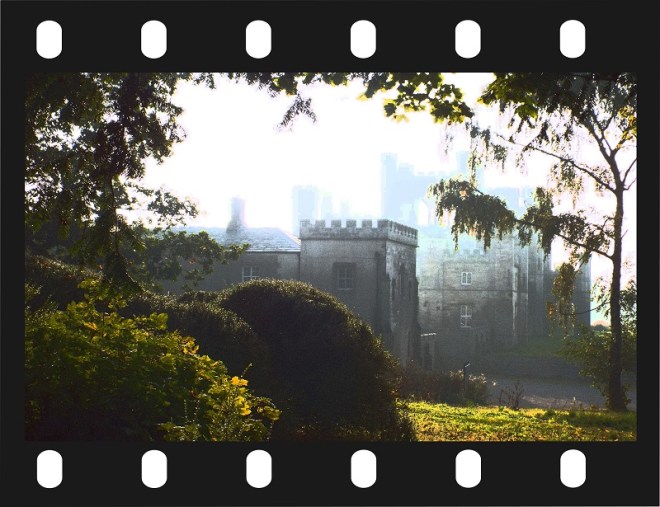
The photograph at the head of this is the view from what was our house. Now, we have a view and a ruin for sale.

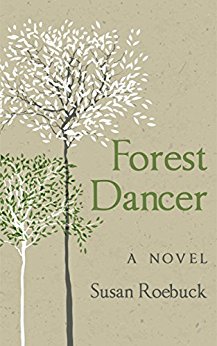
Forest Dancer: a review

I’ve just read an amazing book and wanted to share it with everybody.
Forest Dancer by Susan Roebuck is very special.

The story is set in Portugal where Flora, a ballerina with career problems, has inherited a cottage. This turns out to be inhabited by a woman who may or may not have been Flora’s father’s mistress and a child, Raquel, who may or may not be Flora’s half-sister. Raquel has leukaemia and Flora is tested to see if her stem cells will be a good match for a transfusion.

Flora is drawn into helping stage a cultural event in the village, which is at risk from fracking. Marco, a forest warden, helps to stage the show. Gil, a Portuguese TV star, comes to open the festa. Both men are interested in Flora. Gil is also interested in the standing stones by the forest lake and the legends and mysticism that surround them.

Raquel has leukaemia and Flora is tested to see if her stem cells will be a good match for a transfusion.

Lots and lots of interesting themes, including a very small mm sub-plot, and I couldn’t stop reading. I had to know what happened to the major characters (including the escaped budgerigar), and I even put my own writing on hold while I finished the book.

It’s extremely well written and brings the Portuguese countryside vividly to life. The author clearly knows and loves it. As well as the brilliant world building and fascinating sub plots, the basic romance is beautifully handled, always very realistically and with the lightest of touches. There is anxiety, not only about relationships but about the fate of the village, and Raquel’s health. There are amusing moments, too, sometimes poignant as when most of the villagers have their heads shaved to support Raquel, and when the children are rehearsing their dance under Flora’s direction.

I personally know Portugal well and was transported to the village where Flora was staying. However, I think anyone could enjoy this glimpse of the Portuguese countryside which includes an introduction to the language which Flora is practising. There is plenty to interest anyone who loves dance, nature, and stories that explore both culture and relationships.

Altogether a delightful novel and one that I hope will do really well for the author.

Films in my head

I was recently doing one of those memes for my personal (friends-locked) blog – one of those lists of questions that attempts to explore aspects of your life that you weren’t keeping secret but had never thought to share with anyone.

In the course of it, I mentioned that my fictional characters arrive in my head and talk to me.

It would appear, from the reactions of my friends list (a lot of whom are writers) that there are two kinds of people. One sort give a relieved sigh and say something like ‘yes, me too’ or ‘thank goodness it’s not just me’ and the other sort are fascinated but bewildered.

I thought I’d go into more detail here to see what other have to say.
Whenever I write, my characters spring fully formed into my head, just as if they were people I’d met and talked to. But like those people, it takes time to get to know them and I have to question them to get details. I also ‘overhear’ them talking to each other and sometimes they are quite critical of the way their story is progressing. I usually let them take over. Obviously there are limits. If I’m writing a detective story I have to start with some idea of what the crime was, how it was committed and how the investigation proceeded. I don’t always know who the villain was.

The voices and images in my head are quite clear. I know, if I think about it, that they have to be aspects of my subconscious, but at the moment of hearing and seeing them, they seem quite real, like actual friends. I am never tempted to blur fiction and reality and know perfectly well that they are ‘just’ characters, but they are often loud, and very assertive. They tell me all kinds of things that don’t necessarily pertain to the current story, and often have strong political opinions. I remember reading advice from Diana Wynne Jones that a writer should interrogate their characters to find out all kinds of things about them, such as their favourite socks, to build up a mental picture that would make the character in the story more three dimensional. Well, there are all kinds of things I can and do ask them, but as for the socks, I just need to look.

I can see them in motion, too, and when they tell me how a specific scene plays out, I can watch it like a film rolling in my mind’s eye. I also retain detailed images of all kinds of places I have visited and can play with these mentally to provide settings for my stories.

I was very surprised as I grew up to learn that not everyone has that kind of visual imagination and that some people, including very imaginative creators in all spheres, think largely in words, not pictures.

I think I would get quite distressed if my internal films disappeared. This is, incidentally, also the way I think about everything, from a planned shopping trip or meal to a conversation I need to have with e.g. family or friends or, at one time, lesson plans for teaching.

All this results in something I have mentioned previously. My stories are planned in my head, and the ‘notes’ are in my head ready to be referred to so any writing is a kind of copy-typing though of course I edit too. For example, I won’t let my characters use too much repetition, or tell each other things they should already know. I also encourage my betas to tell me when things that are obvious to my characters (and to me) need clarification for my readers.
When I have finished a book, the characters take a back seat, but they don’t disappear (apart, of course, for the ones like the murder victims). They allow the characters for the next work I am embarking on to take centre stage. Usually. There are one or two who feel they should comment on everything I do which is interesting but can be distracting.

Getting to know my characters is part of the pleasure of writing. It can feel as though I have a lot of friends. Well, I do have a lot of friends, but most of them have their own schedules and can’t always be contacted at times of my choosing. My fictional friends can.

The Visitor

Here – have a poem. A cat lives a few doors away from us but visits us frequently. Recently, it snowed. And yes, that’s my house but the photo was taken last time it snowed heavily, not this.

The first day
of heavy snow
there were no prints and the cat
had clearly voted with his paws to stay
at home, warm.
The second day
I heard a tap at the door,
faint, as though gloved,
but I was doing something important
and did not respond.
There might have been more
taps but as I say,
I was busy that day.
The third day the garden was still full
of lumps of white,
car-shaped, pot-shaped, shrub-shaped.
A cat
might have ended as a cat-shaped lump
if he had sat on the doormat or a stump,
but I let him in.
He shook drops of snow
(probably caught from a gate or rail)
around
like a liquid cat-herine wheel
then pushed a damp determined
forehead against my hand
for stroking
or kneading.
When I looked
outside there was a line
of paw prints, from his house
to mine.

February reviews (2018)

The weather in UK (and, I think, most of northern and central Europe) is dreadful, so I suggest everybody curls up with a good book.

Films, Theatre and TV

Hamilton*****
I booked for this ages ago and went to London to see it with friends. Fabulous! The style – a kind of rap against a background of melody – echoes Sondheim’s Into the Woods but where that twists fairytale Hamilton twists history. Except that it doesn’t, really. It tells the actual story of the US Founding Fathers but shows the men and women in a different and more personal light, and the diversity casting (plus the songs of King George III) make us focus on both issues of immigration and of independence (and Brexit). All the cast were magnificent and I can’t really pick out anyone as special. The dancing was amazing, and the staging was intriguing and impressive. Five stars plus, and if you’re going to see it, enjoy! If you haven’t already booked, you’re too late, in UK, anyway. It’s deservedly sold out.

Spiral*****
The double bill season finale was wonderful, as always. I adore this French cop show which is not just a police procedural (although there is always an involved case that takes all season to solve) but a look at policing, lawyers, politicics, personal relationships, etc. It’s an ensemble cast but I have to admit I was on pins in case they decided to write out either Laure (Caroline Proust) or Gilou (Thierry Godard). After all, it’s the kind of show (like Spooks which I also adored) in which nobody is safe – in the previous season we lost Pierre (Gregory Fitoussi) – admittedly to the demands of Hollywood but the French chose to kill the character off. The underlying theme of this season was parenthood, and it ended with Laure literally running, finally unable to cope with her baby’s much desired survival. Superb.

The Book Thief****
Absolutely beautifully directed and acted. However, the book didn’t completely grab me and neither did the film. I think that for wartime dramas I prefer those based on fact (e.g. Schindler’s List) rather than fiction, however artfully presented.

Books

The excellent (all mm romance this month):

Two Feet Under by Charlie Cochrane. *****
The teacher and his policeman lover get involved in a murder uncovered at an archaeology dig in this third volume in The Lindenshaw Mysteries. Excellent as usual. I love the way this series is absolutely right about modern schools in UK so that I then trust the author about details for other things like policing and archaeology. I may have mentioned previously that I also love the dog. The writing is very assured with a flowing style and plenty of world building. I like the way the mm romance element is presented as normal, and is the background rather than the focus of the story. I feel as if I know the characters and am looking forward to the next volume in the series. Highly recommended but start with Book 1.

Lessons for Idle Tongues by Charlie Cochrane *****

This is in the Cambridge Fellows series. It’s hard to talk about this episode in the lives of the Cambridge dons turned amateur detective. The entire story hinges on whether or not there was a crime (or crimes) in the first place so anything further about the plot would be a spoiler. There is, however, a definite sub-plot involving the kidnap and eventual rescue of a wooden cat. You’ve probably gathered I’m very impressed by Charlie’s books. The same applies to this as to the Lindenshaw Mysteries: gentle mm romance underpinning interesting crime investigation and a cast of fascinating supporting characters. The writer transports the reader to pre-WWI Cambridge and London, and it is a wrench to return to the 21st century when the book is over. I have already bought a number of books in the series and am trying to make them last. Highly recommended, but again, start with Book 1

When First I Met My King by Harper Fox *****
This is Book 1 in the Arthur Trilogy and since I love Harper’s style lyrical, mystical and yet down to earth at the same time) and love Arthurian legend (well, yes, and have written some myself) I had to read it. It didn’t disappoint! The author twists the legend so that Lancelot’s story is set against a background of Northumberland, where the author lives and where I grew up. This makes it all even better, for me! Of course the details of the setting are exactly right, and the whole premise of the story so far, making young Arthur and young Lancelot tumble head over heels in love with each other, makes sense of some of the other legends. I have bought Book 2 and am already worrying about how Guinevere will interrupt the idyll. But I haven’t started it yet.

Agent Bayne by Jordan Castillo Price *****
This says it’s Book 9 in the Psycops series and I am fairly confused because I think I’ve read them all and there are more than 9. But maybe novellas don’t count? Vic (who sees and talks to ghosts which can be useful in a crime investigation) is now a federal agent like his lover, Jacob. The stories, which are all told from Vic’s point of view, are engaging – he is a very real character – and the crimes are interesting. This volume concentrates on Vic’s early days as a Fed, and promises to take the series in new directions. As for the Charlie Cochrane books, highly recommended but start at the beginning of the series.

Caught by JL Merrow *****
Played by JL Merrow *****

These are the first two books in the Shamwell series and probably need to be read in order. They are standalone mm romances, but the same characters do appear in a supporting role, so it helps to be aware of their story.
In Caught, Robert, a teacher trying to escape his past falls for Sean, a pest control agent. The story is sometimes poignant, sometimes funny, and always exciting as we hope they will sort out their misunderstandings and get together in the end. Well written and highly recommended.
In Played, Tristan, an actor spending the summer sorting out an inherited cottage in Shamwell, ends up involved with the local amateur dramatic society and with Con, the local handyman. Con is dyslexic and Tristan coaches him for a part in a play. The play within a story makes a delightful theme, especially because it is Midsummer Night’s Dream, which also contains a play within a play as well as giving plenty of opportunity for puns and other humour. Very well done and I enjoyed the story immensely, but I have to say I think the author is at her best when writing in first person (in Caught, and in the Plumber’s Mate series). Still, highly recommended.

The very good (two, only one of which is mm):

Dragon and Phoenix by Joanne Bertin ****

This is the sequel to The Last Dragonlord and I enjoyed the story. The dragons are lovely and the weredragons are well developed characters. The book deals with how the weredragon who thought he was the last dragonlord, along with his newly discovered soulmate and their other weredragon friends need to rescue a dragon and a phoenix who are being held captive to power the magic that supports a tyrannical regime in a foreign land. However, this book took me ages to read. It was a print book and was set in a type so small I had problems, even with my reading glasses. As I don’t, at the moment, need new glasses, this annoyed me intensely, especially since the blurbs for other books (from the same publisher) at the end were in perfectly readable type. I see the book is now available as an e-book and wish I had waited, but because it was first published in 1997 I suspected it wouldn’t be brought out in Kindle format. Also, the sequel, which I presume is the last in the series, is not in Kindle so I won’t risk buying it. I don’t think I could plough through another volume in that excruciatingly small type.

Christmas Wishes by RJ Scott ****
A writer, deliberately isolating himself in a remote cabin, finds a young father and baby on his doorstep after a car accident in a snowstorm. The common tropes are delightfully expanded into a story that is in some ways fluff but is quite engrossing. I was disappointed by the end and would have liked to follow the new family a little further into their planned life together. Recommended as a nice Christmas story (and yes, I do know it’s now March and I read this in February).

The reasonable:

Christmas Scavenger Hunt by Aly Hayden ***
Another Christmas story that got missed in December. This one was quite sweet and nicely written but too short to interest me deeply. It also struck me as being to some extent an excuse for the final explicit sex scene. Not particularly recommended but read it if you trip over it…

And the dire(Avoid):

Bakeries and Bones by Nic Roberts*
This longish short story presented itself as a free sequel to the Westford Bay B&B series of ‘cosy mysteries’. As a mystery, it lacked much in the way of mystery or investigation. The characters were uniformly silly about everything from relationships to murder. The author warned the reader that the characters lived in London so Brit English would be used. Well, they probably altered the spellings to Brit English but the speech patterns were ignored and the vocabulary was suspiciously American. Guess who won’t be buying any of the series!

The Tinner’s Corpse by Bernard Knight
I abandoned this after a few chapters. I usually enjoy mediaeval mysteries and was looking forward to it but I hated the style. Every time a new character was introduced the author stopped the story to tell us what they were wearing and what their hair and eyes were like. The whole thing could be used for a creative writing class session on Show Don’t Tell. I see the author has a number of these mysteries (centred on a coroner in Exeter) published and well reviewed. I won’t be reading any more.

Fanfiction.

Most of what I read this month required an in-depth knowledge of the original books or shows the fanfic was based on, so I won’t even review it. However, there are some exceptions.

As usual, Small_Hobbit provided entertainment, this time in the form of a gift fic for me. Mouselet and the Rather Fat Dragon *****, which you can find at http://archiveofourown.org/works/13682490 , has the animals in this Sherlock Holmes alternate universe putting on a play or tableau.
Mouselet is one of my favourite characters in this ‘universe’. She has her own series in The Ocelot Collection at http://archiveofourown.org/series/57591 and also contributes to the Marylebone Monthly Illustrated which is at http://archiveofourown.org/series/256591 This tongue-in-cheek publication also includes excellent short articles and stories by okapi who writes as Inky Quill, a porcupine. All the entries are short so go and enjoy them bit by bit!

I finally finished the stories so far available in the Seasons series by asparagusmama (another fandom friend). The series can be found at http://archiveofourown.org/series/16074 and although it is entirely based on the characters in Lewis (TV) I think it will stand alone as a series you can read without any real knowledge of the show. All you need is to know that Lewis and Hathaway are Oxford police officers. The rest is clarified in the stories which are gripping, and at times rather grim but with a lot of hope in the ending. If you like cop-buddies-turned-lovers with some genuine case stories thrown in, then go and enjoy!

I thought I would also warn you that not all fanfiction is worth spending time on. In the course of a plagiarism investigation for the archive I volunteer for I came across a story on a rival site: Name to forget, face to remember by kamikaze fox. I read to the end (or what purported to be the end because it left the reader up in the air) because it was in many ways a train wreck (or kamikaze mission?!) and I was fascinated. The story has a soldier in the WWI trenches killed and transported to Zootopia (an animated series with animal characters who walk and talk). I thought it sounded interesting and the concept was, but the execution was dire. The author claimed people had helped them edit but I’m not sure who missed the sentence about how ‘he grabbed his shit and wrapped it around the wound’… I wasn’t sure whether to laugh or cry. There were a lot of other typos but that was the one that stood out. The protagonist found himself reincarnated as a wolf and couldn’t get used to having paws instead of hands, resented having to steal clothes to be respectable, and found socialising with rabbits nerve-racking. There was no attempt to explore the psychology behind these conflicting thoughts. I was left assuming there was to be a sequel but will not be reading it. The plagiarised version, which we had, of course, to delete, was actually better written, though I didn’t get as far as the fight scene with the wound. It claimed to be a parody, but used far too much of the text of the original.

January Reviews 2018

I’m not sure what happened but it seems to be February already so here are my reviews for last month.

    TV and films

New Year Concert from Vienna ****
This is something to watch every New Year morning – always worthwhile though the programme varies quite a lot. There is an orchestra, obviously, plus ‘tours’ of various interesting buildings in Vienna, and ballet in other locations. The ballet, this year, wasn’t quite as exciting as it sometimes is but the entire concert was worth watching and listening to.

Secret Life of the Zoo*****
This has ended now. Baby tapirs are glorious – just saying!!

Spiral*****
The French cop show I adore. Only two more episodes to go then I’ll have to try to be patient till next year.

Game of Thrones season 6*****
I have season 7 so I won’t suffer from withdrawal symptoms. I’m up to date on the books but there are beginning to be events that have not been in the text version yet.

    Books

First, the very very good.

Jury of One by Charlie Cochrane *****
Second in the Lindenshaw Mysteries series. Adam is a teacher and his partner Robin is a cop. The crime that was the focus of this story involved Adam because of a stint of jury service he’d done quite a long time ago. I love the way this author builds a perfect world in a fictitious group of villages and small towns, and I love the deepening relationship between the main characters. Most of all, I love the dog. The mystery is nicely complex, and the writing seems effortless, usually a sign that a very great deal of effort has in fact gone into it! Highly recommended.

Lessons for Suspicious Minds by Charlie Cochrane *****
This is the eighth in the Cambridge Fellows series. The sense of the period is exquisitely developed, always with a light hand but amazing attention to detail. In this story Orlando and Jonty are asked to investigate a suspicious death that occurred at a house party in a stately home. And yes, you might have guessed I would thoroughly recommend Ms Cochrane’s books to anyone who likes very gentle mm romance with a heavy helping of crime and mystery. Highly recommended.

Christmas Collection by RJ Scott *****
The three stories in this collection are pure fluff for Christmas. but extremely well written, delicious fluff. We have a novella, a long short story and a very brief short story, all with very different characters whose mm romances come to fruition at the Christmas season. I thoroughly enjoyed these and will almost certainly re-read them at the same time next year. Highly recommended.

Divorce can be Deadly by Emma Jameson *****
Another crime story in a period setting (early WW2) and in this particular case another murder in a stately home. Quite a contrast to Charlie Cochrane’s books because the romance, while equally gentle, is male/female. However, the research is less accurate and the occasional American speech patterns or lack of understanding of British society are slightly irritating. This is the second in the series (Dr Benjamin Bones) and yes, I will buying the next despite my criticisms. The main characters are delightful and the mysteries, so far, are absorbing. Recommended.

The merely good.

Fire and Fury by Michael Wolff ****
I read an e-book version. It was fascinating, not so much because of any new information about Trump but because it clarified, for me, the roles of some of the White House team, and helped me attach names to the correct roles, too. Very often, American politics makes very little sense to a Brit reader because the job titles are so unfamiliar and of course we don’t usually know much about the people, either. The book was an ‘easy’ read and was not worth spending a great deal of time or money on, but overall I’m glad I read it. Some of the specific analysis of Trump was already well known, and some had to be taken with a pinch of salt. I think the parts that dealt with Bannon and his ongoing role in the campaign and the first year were perhaps the most interesting, and certainly helped to make sense of his recent split with Trump. If you’re interested in US politics, read it!

The Globe (Science of Discworld 2)/Pratchett, Cohen and Stewart****
I expected this to be as good as the first of the Science of Discworld series and was slightly disappointed. The main focus was on the development of language and culture. The interwoven Discworld story was as amusing as ever, but I think I prefer Cohen and Stewart when they are dealing with the ‘hard’ sciences.

The Rose and the Beast by Francesca Lia Block (Fairy Tales Retold) ****
Someone recommended this author knowing I also write fairy tales retold so I thought I’d see what their work entailed. The tales are the standard well known ones such as Cinderella, Snow White, etc. Some of them are given a modern setting, others are given some kind of twist. I thought the ideas were good and the writing style was good too, but somehow I never engaged with the characters. Others might, and I have no real criticisms to offer. It’s probably just a matter of my personal taste.

Call To Arms by various authors (series ed Julia Bozza)****
This is an anthology of mm stories set during WW2. A few were excellent, by some of my favourite mm writers such as Charlie Cochrane and Elin Gregory. Others were mediocre. None were poor.

The mediocre.

Salvage Trouble: Mission 1 by JS Morin ***
The blurb suggests that anyone who misses Firefly would enjoy this book. The plot, with the spaceship full of misfits who are carrying out a variety of semi-illegal missions, certainly echoes the show, and so does the use of some quirky humour. However, I didn’t completely fall for any of the characters and although this is book 1 of a series, I don’t think I’ll bother with the rest.

John Betjeman: The Illustrated Poems (illustrated by David Gentleman)***
Disappointing. I got this at a charity shop and was excited about my ‘find’. My last memory of my father, just before he died, was of a train journey during which we shared a copy of Betjeman’s Poems in a Church Porch. The train was taking me to boarding school and when I came home for my father’s funeral I found another clergyman had thrown away the slim book, telling my mother she wouldn’t want ‘that kind of rubbish’. At the time I was devastated but later forgot all about it until I saw this book. My tastes must have changed a lot, because I found most of the poems were a kind of high class doggerel. The forced rhyme schemes reminded me of some of Abba’s songs and whilst this is marginally acceptable for pop music it is somehow cringe-worthy in poetry by a writer who has a good reputation. The ideas were good; it was the execution that was lacking. I also recall arguing with my father about the works of Dylan Thomas and I still love those, so perhaps my tastes haven’t changed altogether; I probably remembered Betjeman with rose tinted spectacles because of the context in which I read the poems.

The bad.

Death at the Café by Alison Golden **
This was the first in a series and I won’t be reading any more. The heroine who solves the mystery is a young CoE clergyman. There is a gushing review by a real clergyman but I strongly suspect the review is fake. I was irritated by typos and Americanisms ( the story is set in London) and by the lack of research into the way in which the Church of England functions. As someone brought up in a vicarage and a CoE boarding school I know enough to find the errors in this writer’s work seriously annoying.

Killer Climate by Alannah Foley **
Another ‘first in series’. I will definitely be avoiding this one, too! An Australian surfer comes to UK to be in a TV show, all shot on location, and finds crimes at the sites. Very repetitive style, clumsy plotting and a lack of research about UK.

Sink by Perrin Briar **
I got to the end but I had to grit my teeth. Two guys in the Australian outback fall down a sinkhole and find an underground civilisation. The unlikeliness of almost all the plot was stunning. The characters were completely unattractive. The writing was flat and dull. I will not be following the sequels.

And the ugly/dire.

Book of Earth (Bradamante Saga #1) by Robin Brande. Abandoned.
A young woman is taught warrior skills in visions of herself as an adult. Nothing happens in real time and the ‘heroine’ didn’t interest me. This was another book from the Women in Fantasy ‘Bundle’ that I bought and am regretting. I suspect the editor who chose the books for the bundle does not share my tastes but has also not heard of things like info-dump as signs of poor writing.

Raining Men and Corpses by Anne R Tan. Abandoned.
This is classed as a ‘cosy mystery’. The heroine is a Chinese American graduate student and is neither appealing nor interesting. After a couple of chapters I just gave up. I didn’t even get as far as the mystery though I knew from the blurb who was going to die.

    Fanfiction

No recommendations this month. I have been reading odds and ends – ficlets and drabbles – nice but not very accessible unless you are already familiar with the fandoms.

Reviews for December 2017

Happy New Year (well, it’s still January).

    FILMS AND TV

As usual, I watched quite a lot over the holiday period.

First, the five star ones:

Flint Street Nativity***** This is my all-time favourite Christmas viewing. However often I watch it, it never fails to have me crying with laughter. My original copy went up in smoke in Portugal so a close friend bought me a new copy for Christmas.

Spiral (episodes 1 and 2 of season 6) ***** Waiting a whole week for more episodes reminds me of why I have previously waited and bought the DVD.

Secret Life of the Zoo***** – ongoing series on Channel 4 (including Christmas special). I hadn’t thought about it but the fun the keepers have giving the animals ‘presents’ let them observe family interactions.

Rango ***** Lovely animation with the main character voiced by Johnny Depp.

Dame Vera Lynn: Happy 100th Birthday.***** It was great watching her reactions, and also the reactions of viewers who were in the forces in the war and saw her at the time.

Timeshift: Bridging The Gap – How The Severn Bridge Was Built***** Fascinating. At the time the bridge was built I had relatives in that part of South Wales and was very aware of the whole project.

Then the four star, which were worth watching but not quite five star material.

League of Gentlemen**** (BBC – 3 episodes) I loved the original series and this was good too, with a lot of familiar characters. But like any show of its kind it was mixed. Some sections were brilliant and others were mediocre.

Dr Who Christmas Special **** The only thing we watch on Christmas Day (so dinner has to be timed to fit). I liked it, and am looking forward to the new Doctor, but am sad to say goodbye to Peter Capaldi.

Concorde: A Supersonic Story **** Interesting.

The Blue Planet **** (repeated on Yesterday). I enjoyed this but thought a great deal of it was eye candy – superior eye candy but still candy.

Jools Holland Hootenanny**** Well, it was reasonable watching for New Year’s Eve but I thought the offerings were very mixed.

Reindeer Family and Me.**** I was interested because I have Finnish (though not Sami) friends. Enjoyable.

And finally, the ‘also-ran’.

The Dirty Dozen (1967) *** I have probably seen this before and forgotten it. I found it very dated and was not altogether impressed by the acting.

    BOOKS

Some excellent five star reading this month.

Wyrd Sisters by Terry Pratchett ***** This was a re-read. I have no idea yet whether my Pratchett collection survived the fire (there are boxes in the intact garage) but a friend sent me this to comfort me and I loved it all over again. Pratchett is my comfort reading – incredibly funny and at the same time really serious about the human condition.

Truth Will Out by A.D.Garrett***** A forensic scientist and a police DCI investigate a serial killer. The book was excellent – great plot and superb character development. But then I was thinking there were sequels to come and found out this was in fact book 3. Since there were lots of spoiler-type references to the earlier books I’m not sure I will read them. However, I think I’d recommend the series.

Marriage can be murder by Emma Jameson ***** The plot and the characters were great – the ‘detective’ is a country doctor at the beginning of WW2 and the romance element is delightful. But there are flaws – a lot of Americanisms and cultural errors that show the author is not British. However, I’ll forgive them and will be reading the next in the series.

Bring Me the Dead by Becky Black ***** This is archaeology in space with wonderful world (or rather worlds) building, and lots of UST in the m/m romance which underpins but never overwhelms the plot. I loved it and am looking forward to reading the sequel.

Belle Starr by Belinda McBride *****This one was werewolves in space and I was relieved to find it really well written and exciting. Both themes appeal to me enormously but are not always well developed. Another one where a sequel will be more than welcome.

Then the four star one

Better Off Wed by Laura Durham**** A ‘cosy’ mystery with poisonings investigated by a wedding planner and her friends. It was a fun read, but almost too ‘light’ to be adequately gripping. I might read the rest of the series, but only if they are cheap.

And a mediocre read.

Shit happens so get over it by Summersdale Publishing*** This is a collection of ‘wise’ sayings collected by a publishing house which didn’t even attribute it to an editor. Some of the ‘advice’ was good, or amusing. My nine-year-old grandson thought the title was hilarious.

Finally, two books I would not recommend at all.

Swords against Darkness edited by Robert E.Howard ** I was really disappointed. Whilst swords’n’sorcery is not my ultimate favourite sci fi or fantasy sub genre I usually enjoy it. These stories were by well known authors but were, to my mind, tired and stale. The excitement of the editor perhaps reflected his own lack of reading outside his immediate ‘circle’.

A Woman’s Shed by Gill Heriz (photography by Nicolette Hallett)** As a coffee table book, to dip into, this worked and contained some interesting storage ideas, but the photography, whilst excellent, seemed chosen for effect rather than elucidation of the subject and text, and the premise of the book mystified me. Yes, women, as well as men, have sheds, but bringing together such disparate items as luxury studios and run-down garden storage seemed to be grasping at straws to build a book. As a side note, I couldn’t quite work out why every time the author used the word ‘garden’ she had to add ‘(yard)’ in case her American readers might be puzzled, and almost as often had to add ‘(caravan)’ each time she used ‘trailer’.

I also read a number of short stories from various Advent calendars. Whilst I enjoyed most of them I didn’t actually keep track and nothing really stands out, though I loved some glimpses into the worlds I already knew by favourite authors such as Charlie Cochrane and Elin Gregory.

    FANFICTION

This was Advent calendar territory, too, and I read a number of bits and pieces including some lovely ficlets by Small_Hobbit whose work I have mentioned previously.

The only long piece I read and enjoyed was:

Code Black by starboydjh ***** which you can find at http://archiveofourown.org/works/12396666 The story is RPF which is ‘real person fiction’ where real actors, musicians, celebrities etc. are inserted into stories as the main characters. The plots of these RPF stories are totally fictional but the reader can imagine the actor/whatever in the role which enables the writer to use both the looks and the public persona of their chosen ‘real person’ to underpin the story. In this one, a couple of YouTube presenters are used as the main characters in a story about a London hospital with a nod to the American show (called Code Black) about an American hospital. There is a mild m/m element to the plot but there is no explicit sex. I thoroughly enjoyed the detailed account of hospital work, and the slow build-up of the romance.

November reviews

Film and Television.

Maybe I should point out that I only review the things that are worth talking about. I watch a lot of news and documentaries, and some DVDs. I rarely watch drama series as they air.

Harry Potter: A History Of Magic**** was on BBC2 and was highly recommended (I watched it on iPlayer) but I was mildly disappointed. There was a lot of fascinating information about the history of magic in general but I did think we could have done with more shots of the artefacts and documents and fewer of JKR admiring them. The programme was made to coincide with the opening of the exhibition of the same name at the British Library. However, I’m not going to London… There’s a tie-in book with the same name but it’s expensive and I’m not sure, after seeing the programme, that it would necessarily be worth the money. I might look out for a ‘used and new’ copy. I was interested to hear that JKR has no fewer than four copies of Culpeper’s Complete Herbal and clearly refers to it often. I had a copy, also as a reference book for my fantasy work, but it has gone up in smoke in our recent disaster (the Portuguese fires for any reader who doesn’t know already). That’s something I must replace. An online version is not nearly as usable ven though it promises an interactive digital experience. (The thing is, I know I will want to use it as a reference book, not a single one way journey or for dipping into!) If the programme is still available on iPlayer, it’s worth watching.

Little Ashes***** This is a drama based on Salvador Dali’s memoirs, only shared in his final years, detailing his unconsummated love affair with the poet Lorca. Obviously, given the subject matter, it’s dark and tragic and the knowledge of Lorca’s death at the hands of Franco’s thugs hangs over the early part of the film, giving it a curiously sad quality even when the characters are enjoying themselves. The film is well structured and scripted, and quite beautifully shot. The acting is superb and I was amazed to realise that Robert Pattinson, the beloved of the Twilight fans, is a seriously good actor. His portrayal of Dali, a complex character if ever there was one, is brilliant. Beside him, the Spanish actor, Javier Beltrán, who plays Lorca was competent enough and very good looking but seemed almost wooden beside Pattinson, who shone. The only flaw in the film was the sound quality – something that seems more and more frequent in the last decade. Highly recommended viewing.

The Secret Life of the Zoo Season 4***** I love this series and was glad to see its return this autumn. I have only seen two episodes so far but will be sure to watch all the rest either as they are aired or on CatchUp (Channel 4 for UK viewers – no idea if it’s available elsewhere.)

Books

This was a bit of a non-fiction month, with a focus on two of the books recommended here plus various copies of New Scientist, Private Eye, National Geographic and recipe magazines.

First of all, the five star brigade, with only one work of complete fiction this time.

Wake Up Call by JL Merrow (Porthkennack)*****
This is part of the Porthkennack series where a number of authors get to play in the same fictional Cornish town and give us interesting and well written m/m romances.. I love Merrow’s style of writing which seems superficially casual but in fact is layered with a deep knowledge of regional micro-cultures, speech patterns and little known facts. Devan, a motor mechanic of mixed race, adopted then orphaned, is seeking his birth family, and in the process meets Kyle, a barrister diagnosed with narcolepsy and cataplexy. It’s a fascinating story with great minor characters too. Highly recommended.

The Science of Discworld by Terry Pratchett, Ian Stewart and Jack Cohen*****
The science chapters which alternate with a Discworld story ( a novella rather than a novel) are almost as fascinating as the discussions held by the wizards of Unseen University. I struggled with the astronomy sections – this is a subject well outside my comfort zone – but the evolution and paleontology parts were fine so I have to assume the science contributors know what they’re talking about when it comes to the cosmos, and I did learn something about the universe even if I might not remember it all or be able to recount what I read. The wizards, you see, have a project on the go, which involves creating a world and indeed a universe, and watching it develop. I will be requesting the later books in the same mini-series as future gifts. This one was a birthday present and I am truly grateful for it. Highly recommended.

Academia Obscura by Glen Wright*****
This is a book to dip into rather than read in a linear fashion. It’s a wonderfully funny and informative account of academic publishing. I subscribed to it on Unbound and am pleased with the book. Though I think I’ve said in the past that I am not going to use Unbound again – it’s anyone’s guess as to when you get your copy (or a copy you want to give someone else) and the touted access to the writer’s thoughts as they complete their work is not particularly interesting. This was the last of the books I’d subscribed to in a rush of enthusiasm. Worth reading and now available on Amazon at a reasonable price so it would make a good Christmas gift for any academics in your life.

Somehow, I bypassed any good-but-not-outstanding books this month and ended up with three three star ones:

Hex in the City edited by Kerrie Hughes (In the Fiction River series)***
This book was meant to be the cutting edge of urban fantasy, a theme that appeals to me. But the collection of stories was not brilliant. I have read much better examples elsewhere, even by some of the writers ‘showcased’ here (e.g. Seanan McGuire). There was nothing dire, but equally nothing special. I bought this as part of a Women in Fantasy story bundle and I hope the other books in the set are better than this one. The only story that has really stayed with me is Somebody Else’s Problem by Annie Bellet and I might look for this author again. Bellet introduces the idea of ‘a future/ alternate Detroit where magic is only somewhat legal and rats are used to sniff out the illegal magic.’ The only other story worth mentioning is The Scottish Play by Kristine Kathryn Rusch who helped edit the collection and gave us her own version of magic in theatreland. The proofreading (on all the contents) could have used some work. Worth reading if you find it at the library but not worth paying for.

Colorado Connection by Sara York(Colorado Heart 6)***
This story of a guy who lost his lover in Afghanistan and was recruited into some kind of black ops group on his return didn’t really appeal to me, partly because I don’t totally approve of black ops and therefore felt disinclined to empathise with the main characters – but also because I think a lot of the story would have made more sense if I’d read the earlier books in the series first. However, I won’t be reading them. The writing was competent and the characters were well developed. The criticism is personal and should not deter readers who might like the theme.

A Stranger in Skoria and A Slave in Skoria by John Tristan***
Two novellas that I have lumped together because they are quite short. I believe there’s a further story (at least) in the offing but I won’t be buying it. The idea of aliens and slaves fascinates me, but in this case the situation was just an excuse for some very explicit m/m sex writing with very little in the way of character development, and some rather banal world building. Technically, the writing was quite good but I found the overall effect disappointing.

…and one that scraped two stars by the skin of its teeth.

Wolves of the Northern Rift by Jon Messenger (Magic and Machinery 1)**
I certainly won’t be buying book 2! I really enjoy steampunk and looked forward to this, especially as it also featured werewolves. But although the writing was technically competent with reasonable grammar etc., the plot was clumsy, the world building was poor, and the further addition of demons did nothing to recommend the story to me. It was as if a computer had been asked to write something that included everything currently popular in the fantasy genre. Maybe that’s what actually happened here? Not recommended.

Fanfiction

Despite being fanfic, neither of this month’s recs are ‘slash’ (m/m) or het (f/m) love stories. They are what is known as ‘gen’ with no real romance elements whatsoever.

I finished reading the stories contributed to The Professionals Big Bang 2017. You can see the whole collection at http://archiveofourown.org/collections/Pros_Big_Bang_2017 if you’re a fan of the show but most of the fics are probably not very accessible to a wider readership. I do want to recommend Nice-Orno Ltd by Fiorenza_a***** which is at http://archiveofourown.org/collections/Pros_Big_Bang_2017/works/12457350
It’s fairly true to canon despite being tongue-in-cheek. It has a delighful humour to it and a great twist at the end that makes it a suitable story to amuse you at Christmas. And at just over 33,000 words it’s a satisfyingly long read.

I’ve also been wandering through the Stargate Atlantis reverse big bang, where the art is what inspires the story rather than the other way around. I’ve also been reading contributions to the annual Monsterfest at a LiveJournal/Dreamwidth writing community. I’m usually active in this, though not this year. However the upshot is that I must recommend the writings of one of my online friends. ‘Brumeier’ writes both fanfic and original fiction and her work appears in both the collections mentioned. I want you all to go and read the three stories already posted in After the Eclipse***** at http://archiveofourown.org/series/839529. There are only just over six thousand words altogether so it won’t take you long to enjoy this quirky small town fantasy. Think Pratchett meets Dr Who with a helping of Welcome to the Night Vale. Superb!

Piracy – or not?

140 piracy

I should start by saying I know a lot of you are going to disagree with this post. But please, read it and think about it.

I really really don’t understand the way piracy, theft and sharing are conflated and confused both by the ‘big’ publishers and the authors who feel shock/horror every time someone reads one of their books without buying it.

Yes, piracy is wrong, very wrong, if we mean the taking of content and reselling without giving the profits to the original writer/artist/publisher. Yes, anyone downloading from pirate sites is committing theft because they are depriving the original producers of profit. They are also aiding and abetting the crime of piracy. No arguments from me, there.

However, I do think that some of the mega media moguls must share a little of the blame; they have been so arrogant about release dates, pricing, etc. that people have, in a world where news spreads instantly, felt tempted to obtain the offered goods in whatever way seemed most convenient. For example, sometimes my fellow writers recommend a book that turns out not to be available on UK sites. I’m not condoning the illegal downloads, just pointing out that it’s sometimes understandable, more often in the case of films than of books or music, but people do tend to repeat behaviour that works for them.

Then there’s sharing.

Publishers would have us think (and have convinced some authors) that sharing is piracy/theft. Their argument seems to centre on the fact that whilst if you lend a paperback book you don’t have access to it while your friend reads it, if you send them a digital version you retain your own copy. (Although with the paperback you still retain ownership. The only occasion when theft enters the picture is when the reader does not return the printed book to the owner. )

Nobody mentions the fact that sharing is probably the very best advertising an author or any artist can get. When people were asked by Neil Gaiman, at a lecture in London, how they found their favourite authors, the vast majority said that they found them through loans from friends, second hand book shops, charity shops, and libraries. Nobody mentioned browsing either in shops or online. Nor, perhaps more surprisingly, did they mention recommendations from friends. Once found, a favourite author is one the reader will buy again and again and will recommend to their entire social circle.

None of the above ways of finding books gives any immediate profit to the author or publisher. Neither does it prevent a sale because the new reader would probably never have found the book in the first place. What it does do is to ensure that at least some of the new readers will become customers for further books by that author, and maybe for their own copy of the one they ‘borrowed’.

Traditionally, the fame of books has spread by recommendation, either by critics or by friends. I know I’m more likely to read something a friend lends me, if only because they’re going to ask me what I thought of it. Reading is a social activity as well as a solitary one. We share opinions on books, we buy them as gifts, we leave them in guest rooms, we compile lists of favourites and lists of things to avoid. We read bits out to each other, sometimes to the annoyance of all concerned. We listen to books read on the radio together. We form book clubs. When we read reviews we ask around to see if anyone we know has read the book concerned.

I have two Kindles. (This was almost accidental but there you are.) So if I buy an e-book I can read it and pass it across to my daughter or my husband or someone else in my family who might be interested and they read it too. I haven’t lost it. It’s still in my library ‘cloud’. And they haven’t gained it. They’re using my Kindle, after all. But this constrains me artificially. I used to share books with two or three friends. Now that most of my books are e-books I no longer do this. (Even with two Kindles I’m unlikely to let one out of the house.) But I am so tempted to share my favourites with them. And who knows? I might gain a new customer for that author.

Recently I subscribed to a book via Unbound. As well as the hardback version they sent me a download link. I don’t need two copies (although it’s a good book) and I am very tempted to give the download link to a friend. After all, I paid (quite highly) for it and I need a Christmas present for her.

I also have a ‘wishlist’ that includes a lot of books. My nearest and dearest can’t buy them for me because they know I would prefer the e-book versions (otherwise the wish list would have more bookcases at the top). I gather that things like Amazon tokens are not considered to be quite the same. And yes, some of the indie sites allow gifting, but not all of them do, and Amazon certainly doesn’t.

Television companies have dealt with the problem. They ‘lend’ us their programmes for a number of days or weeks, accessed via catch-up sites. Although Amazon has some kind of lending feature, many e-books don’t fall into its net, and I’m sure we don’t particularly want to force everyone in the world to have an Amazon account in order to borrow books. I would have thought it should be possible to provide lending copies, time limited, with books. Since that hasn’t happened, is anyone truly surprised that people share their books? I should perhaps add that it has happened, for libraries, but not for individuals unless you have close family members who share your account details.

I dislike my desire to share being compared with theft. It diminishes my relationship with books (and fellow readers) and is an aspect of e-books I thoroughly object to. When we can’t share, because of the nature of e-books, we lose something very important about reading and about our culture. And I am totally convinced that we, as writers, lose customers.

I also dislike, intensely, the criminalisation of an activity that has been the ‘norm’ in literate societies, one of the things that help culture to grow and solidify, and the way it has been compared, unfairly in my opinion, with the very real crimes of theft and piracy.

Snippets: to read/post or not to read/post?

snippets

I rarely read snippets. If I’m glancing at an unknown author’s work in a bookshop or online I might look at a few random paragraphs to see whether the grammar and style are to my taste. (For example, I personally don’t enjoy long books written in the present tense.) But snippets that appear in my inbox or on social media are something I avoid. I only see them if I already know the author and am following their work, so presumably these are writers whose style already appeals to me. So that reason for reading an extract vanishes. I also like books that have some kind of mystery, preferably though not necessarily crime, and some sort of developing relationship and that means I really really don’t want spoilers. Nor do I want to recognise a passage when I read a book for the first time. I like my first reading to be ‘fresh’!

So if I see a snippet or extract I move rapidly past, averting my eyes!!

But so many authors do put snippets out there and I’m wondering whether it’s a good marketing ploy or not. Just because I don’t like them doesn’t mean other readers won’t. Recently I actually chose an extract to put on a review blog a friend publishes. It took us ages to choose the sections she used. I don’t think the post garnered any sales at all but it might have made my name known. Here it is!

GROWING UP FAE – Extract from the novel by Jay Mountney

What do you think? Worth the effort or not?