Points of View (from a writer’s point of view).

58. Points of View
Should a writer switch the point of view of narrative, and if so when and how?

Of course, any story can be written from one point of view, maybe that of one character and maybe that of the author/narrator. If the character p.o.v. is used, the writing can be in first or second person though it is, for most readers, truly difficult to follow second person writing for any length of time and the technique is not often used. A narrator can use first person to tell a story in which they are an observer and not personally involved, and this type of narrator is not always the author. When the author uses an omnipotent authorial voice and tells the story in third person it can be easier to involve the reader in a number of different threads and the actions of a large cast, but the technique can also be distancing, and can lead the author into commentary on the storyline that does not stem from within the plot.

To avoid distancing and such problems many writers choose to write in third person but make it clear that the narrative is proceeding from the tight point of view of one of the characters. This works well until there is a necessity to show some part of the story that could not be witnessed by the character concerned. Methods of dealing with this include other characters recounting the events concerned either in person or by letter, but this can be irritating for the reader who wants to follow the story as it happens and not ‘after the event’ wherever possible.

And so we come to multiple points of view. Some readers don’t mind switches of p.o.v. and others find them hard to handle. My own view on this is that such a switch should always come at a natural break in the text, and should probably be shown in some way such as by a new chapter or part of a chapter and that there should be some kind of introduction of the new p.o.v. usually by the use of the character’s name in the first few sentences.

I was led to think more about this by my current project, the third volume of my fantasy detective series. Where crime and detection are concerned it can be important to allow a plot to develop in a linear fashion. My detective has assistants and at various points of the plot they are separated, sometimes for quite some time. At one point, they are completely out of touch. It would be clumsy to have them constantly reporting to each other and could make the flow of the story jerky, so I have chosen to use a different p.o.v. in different chapters, bearing in mind the warnings I gave in the last paragraph. Obviously when they meet again they can report but it doesn’t have to interrupt the narrative for long.

I now find myself progressing very slowly. I am constantly having to check who has done what, and also who knows, when they found out, and so on. Otherwise, subsequent actions and conversations wouldn’t make sense. I need to have multiple tabs open and move between them. This slows me down physically, of course, but even more so, it slows me down mentally and throws me out of my own story for a while each time I have to check. And of course, as the author, I know what happens but my characters don’t and I mustn’t let them see too much too soon.

I don’t think there’s an answer, though I admit to feeling, at the moment, as if I will never use multiple viewpoints again. (I’m only using two but it’s driving me mad.)

I know I’ve been ‘absent’ this month – I’ve been struggling with my novel! I’d be interested to hear whether other people have the same issues when they are writing, and also how switching viewpoint affects you as readers.

Meeting (a poem)

OLYMPUS DIGITAL CAMERA

Meeting.

Words skip across the internet
falling rowdily into emails,
excited and on edge
with the thrill of planning.

They tumble from mobiles
texted with trembling fingers
(on a train then on a bus)
with the joy of arrival.

A few gush (from the same mobiles)
identifying time and place,
worried and intense
with the concerns of finding.

Many bound across a table top
skirting drinks and food,
relaxed and confident
with the pleasure of the moment.

At last they sigh into the night air
slipping softly into departure,
glad, sad, remembering
until needed again.

Young Adult Fiction – some thoughts.

56. Young Adult Fiction

I recently bought and read a book called The Prince of Mist by Carlos Ruiz Zafón. I had previously read The Shadow of the Wind by the same author and had enjoyed it immensely. This book advertised itself as ‘young adult’, which was quite a change of genre, but as I’m interested in books for younger readers I thought I’d try it. It’s a kind of thriller and a kind of ghost story, but I found it very disappointing. Neither the location nor the characters were sufficiently developed to enable me to get thoroughly into the book and the parts that some reviewers thought scary seemed overdone and ridiculous to me. However, it did leave me with some questions about young adult books in general that I want to discuss.

First of all, the genre is somewhat nebulous. Some authors and publishers seem to mean ‘teenage’ by the term – perhaps trying to lure teenage readers by calling them young adults. Some seem to mean they want to target readers between the ages of fifteen and twenty-five, and specialise in ‘coming of age’ stories. Yet others seem to apply the term to anything that is ‘lighter’ reading, stories that are shorter or less complex than what are presumably ‘fully adult’ books. Zafón says he wrote the kind of story he would have liked to read as a teenager but hoped it would appeal to all ages. I find all this confusing. The only conclusion I can tentatively come to is that publishers regard the term as a marketing tool.

Secondly, even if the target audience is young, I am not at all convinced that the readers deserve some of the stories handed out to them. Personally, I was reading ‘fully adult’ books at quite a young age, particularly the classics, and was perfectly capable of coping with quite complex plots, language and structure. I also had sufficient general knowledge to handle references to well known historical, geographical or scientific facts, etc.  However, younger readers do not always have the experience to empathise with older characters and might prefer  heroes, heroines, and even villains to reflect their own lives and emotions. This would be true, I suppose, of films and shows, too, so a middle aged detective (for example Poirot, or Morse) might appeal to fewer young readers or viewers, though I admit I enjoyed Poirot when I was a teenager. The main protagonists in Zafón’s story were teenagers, which actually made them less interesting to even the youngest of adult readers, particularly because the average adult would know quite well that most teenagers would be physically incapable of the heroic feats they were portrayed as engaging in. (A group of teenagers must confront a ghostly monster and try to defeat it.) I suspect most teenagers would know that, too. I accept that a lighter kind of novel is probably better without too many sub-plots or a cast of hundreds, and that a short novel can do without an overabundance of descriptive detail or philosophical meanderings, but I do think that plenty of people, both teen and adult, want light reading that still respects their intelligence. And I do think that teenage heroic figures need to be realistic, even within a fantasy or paranormal tale.

Thirdly, I was annoyed, in The Prince of Mist, and in some other YA books, by the over-simplification of the language. It is not necessary to avoid complex sentences or ‘difficult’ vocabulary even with older primary age students so they certainly shouldn’t be dismissed from YA novels. I am not sure whether Zafón or his translator was at fault but I found the results irritating and staccato. I have, however, found the same level of simple sentences in some books directed at an adult audience (including the Swedish Wallander detective series), so maybe it’s just a style I dislike. If a series of books are actually intended for people whose reading skills are limited, I suppose some publishers might advertise them as YA to avoid stigmatising readers. But that leaves other young readers short-changed. And I’m pretty certain the Zafón book was never intended for this category.

So these were some of my thoughts: I did, as a teenager, want stories with comparatively fast-paced action, but when I read Les Miserables (I was about twelve) I just skimmed the philosophical asides and carried on with the story. Zafón’s story had such fast-paced action I was unable to suspend disbelief. The only time I have ever needed a dictionary by my side (for fiction) was when I read (as an adult) Eco’s The Name of the Rose, and that was because I didn’t know, and wanted to know, some of the mediaeval architectural terms used. I think we cheat young readers if we don’t give them the chance to come across unusual words. There are stories, such as retellings of fairy tales, that demand spare language and simple sentences, but modern thrillers, in my opinion, do not.

I then began to wonder whether my own fantasy detective series is a YA series and whether I should, when I eventually publish, market it as such. It deals with coming of age, with starting a career and learning new skills, and with the beginnings of romance. In that sense, it’s about young people and likely to appeal to them.  The individual novels aren’t long epics – they average about seventy thousand words. They aren’t particularly complex, because each deals with one specific crime or series of crimes. There is, admittedly, a teenage dragon. But should I be concerned about what age group I am writing for? I started writing the series for myself, not for anyone else. And should I worry about the language?  It isn’t especially difficult but I haven’t tried to keep it simple. Something I have tried to do is to keep sex out of the stories, other than by implication, because I am not personally fond of finding explicit sex in what starts out as a lightweight detective novel. That’s really where the series differs a lot from some of my other work. It’s the only way in which I think I have leaned towards a YA series, apart from the subject matter.

I have enjoyed some YA books enormously. Others leave me less than impressed. This, I think, has been true ever since I was a teenager myself. What I don’t know is whether I should be using the term to describe what I have written – for marketing purposes – or whether I should simply ignore the entire issue. I certainly would not like to think my books were directed solely at teenagers, though I am fairly sure they would appeal to older teens and younger adult readers.

I’d love to have your views on the subject and I know some of you have written in the YA field. Can we define it? Should we? And is it a minefield or is it somewhere stories can find a comfortable home?

Meanwhile, to anyone who loved The Shadow of the Wind for its convoluted plot, detailed locations, three dimensional characters and beautiful language, be warned – The Prince of Mist is probably not for you!!

Spring, and a good review.

55. Spring and a good review.

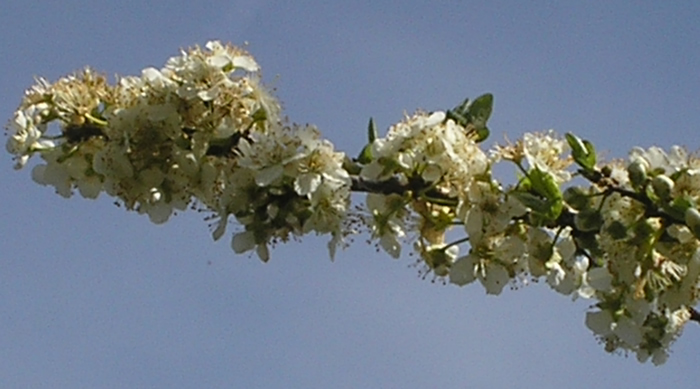
The illustration is a branch of our plum blossom in Portugal. Unfortunately we had heavy rain, which the bees hated, and I suspect there will be a poor fruit crop. But the blossom was pretty…

We’re back in UK and I’m enjoying being online again for much longer!

My mood has lightened considerably in the last few days. Spring would appear to have reached England and there are actually signs of green on a few trees. There is quite a bit of sunshine, too, no longer accompanied by freezing temperatures.

I was really thrilled to get good reviews of my novellas in the April issue of Wilde Oats, an online zine that specialises in gay short stories but also has, every time, a number of in-depth and thoughtful reviews. I have often bought books following their recommendations. If you’d like to see what Matt Brooks had to say about my writing, go to http://www.wildeoats.com/review_ThreeNovellasByJayMountney.html
After that, stay to explore the other reviews! For those of you who have Kindles, bear in mind that my novellas are now available from Amazon, too, in mobi format.

I have been struggling with my laptop recently. The cursor has a mind of its own and jumps around all over the place, worse in some applications (like email) than others. A few days ago it got so bad I could barely use the keyboard. I’m told this is a fairly common laptop problem and has something to do with the thumbpad. A build-up of static is one suggested cause… I’ve cleaned the thumbpad assiduously (and used a cloth intended for spectacles) and things are more or less back to normal – not perfect, but acceptable.  At least I will be able to write again, something that simply wasn’t possible last week!

So, I have no poetry, no news on my novels, and no real news at all. But I thought it was time I posted!

Writing conditions

OLYMPUS DIGITAL CAMERA

No apologies for iris two posts running. This group are comparatively privileged creatures; no snow to contend with! They’re by our water butt opposite the kitchen door of our Portuguese house.

We came out to Portugal at the beginning of the month and I knew that internet might be a problem. We have had huge rows with Portuguese Telecom, who have kept replacing our broadband with dial-up, failed (five times now) to replace faulty routers, taken money via direct debit when they know quite well we are not getting any service, then lied, lied, and lied about all of this. So I was prepared to be out of touch, and thought I’d get lots of writing done instead.

The plan didn’t work.

We had the biggest row yet with PT and cancelled the service altogether. Then we chose a mobile internet option but because we are here only intermittently we decided to have the pay-as-you-go version, reasoning that it would be cheaper over the whole year. It probably will, but only because I am being very strict with myself and allowing a maximum of an hour a day online. I log on, deal with email, download things to answer, bookmark things that look interesting for investigation back in UK, skim the main blogging sites I use and log off. Later, I log on to send emails I have composed offline, but so far I haven’t managed to spare the time to make blog posts. This is the first! It’s quite remarkable how much you can refrain from reading or exploring when there’s a clock ticking. But I admit to feeling partially disabled!

So why am I not writing? Well, I am, but it’s all going very slowly. It turns out that I am not a solitary writer. I need my online social life to galvanise me into thinking, let alone writing. I need to watch clips, look at art, listen to new music. I need to chat to people via GoogleTalk. These things, while they appear to take up time that should be spent writing, in fact seem to be necessary to my creative processes. I am not a particularly active social networker, or I didn’t think I was. I don’t use either Twitter or Facebook and have no intention of starting either; I prefer longer, more leisurely means of communication. I use WordPress, Dreamwidth and Livejournal. I read other people’s posts on Blogger, watch recommended things on YouTube and browse DeviantArt. I also discuss my writing with my betas and this takes some online time though if I use email it shouldn’t matter that I read and reply to their comments offline.

I am intrigued by the way that all these activities seem to spur me on to writing more. A lot of people advise writers to switch off entertainment and communication and bury themselves in peace. It doesn’t seem very productive for me. I know that in terms of reading or viewing I need to turn from one genre to another and can’t, for example, read two or three thrillers in a row, or watch a couple of documentaries back to back with any enjoyment. It would appear that my writing needs frequent periods of ‘not writing’ to happen in an orderly fashion so perhaps the same psychological needs for variety are at work.

Then, of course, there is the fact that I can’t use online sites for research the moment a query occurs to me. As I think I’ve said before, fantasy is not exempt from the need for research and I find myself leaving blanks for later infilling more and more often with notes like ‘insert information or description here’ or ‘look up possibilities for names’ and so on. This makes my writing feel jerky and less under my control.

Also, it is cold here. Not nearly as cold as UK and I feel faintly guilty grumbling, but although the temperatures are higher and there is no snow except on the high mountains we can see from our balcony, the outside temperature is closely matched by the inside one, other than in the main living room which usually has blaring TV. Conditions for writing are not adequately met. I can be quiet, warm or comfortable but not often all three at once and I find cold, noise and discomfort all distract me. So do the possibilities of going outside to photograph spring flowers including the iris that head this post.

I hadn’t realised just how many factors influence my writing. I don’t have a favourite chair or view, or any kind of mascot or special drink, clothes or snack. I don’t listen to music all the time. I can tune out some TV and some conversation. I thought I was fairly relaxed about where and when I wrote. Obviously not! In three weeks I have only managed about 3000 words. I can usually manage that in three days when I am ‘into’ a new story.

How do the other writers among my readers manage? Do you have to have every condition perfect? Are there absolutes without which you can’t write? It would be interesting to hear from you!

Iris

iris cropped

She came out
on the first day of sunshine
and stood proud
(in a carpet
of last year’s dried grass)
through a week of hail and rain
even braving snow
to show
her beauty.
By the time her sister
(who could have been a twin)
joined her, she was fading,
but still strong.
A bold spirit wrapped
in gold-shot purple silk,
she held the frost at bay.
When their much younger
sibling (or niece or daughter)
came peeping
blue and fresh behind their skirts
(small and impertinent as is the way
of the very young)
she was old,
paper-thin and ragged
but still challenging
the cold.

The Hobbit: a critique of the film.

52. The Hobbit

Beware. I am about to discuss a film and a book and I am doing so assuming you already know them. If you don’t, you should not continue reading this post.  This is a critique rather than a review. It is not intended to encourage people to read the book or watch the film if they have not done so already, but to discuss the film with people already familiar with it. I feel the need to say all this because recently I have been disappointed and annoyed to read ‘spoilers’ in a number of so-called reviews in various blogs.

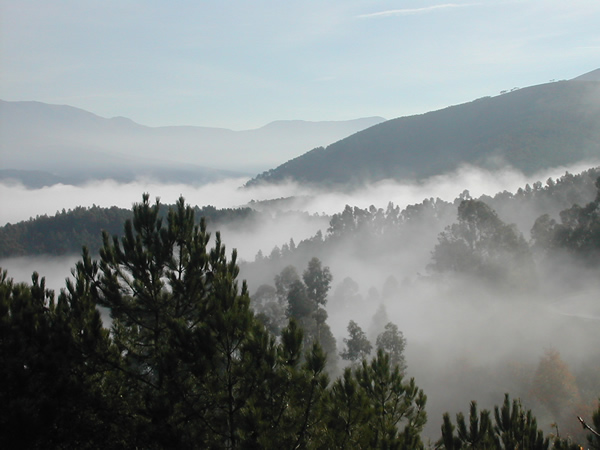
Incidentally, the misty mountains in the photograph are in Portugal, not Middle Earth, or even New Zealand, but I thought they fitted the subject!

It isn’t often that I go to the cinema. It’s even less often I see a film twice in one month, and I can’t remember paying cinema prices twice for any film before. But I saw The Hobbit in 2D and then felt a desperate need to see the 3D version so off we went. I loved it and have been quite surprised by the number of negative or lukewarm reviews. So I thought I would try to analyse just what it is that I love.

I know the book forwards, backwards and inside out, having read it countless times, to myself, to my daughter and with classes in school. I have seen it produced as a stage play, and have admired art in calendars and on various online sites. I love the book deeply. The film did not let me down. Peter Jackson has added immeasurably to my mental grasp of the world of The Hobbit and I am grateful to him, to the actors and to everyone involved.

Part of my love for the film stems from the way it expands the book. Most films  – even The Lord of the Rings – leave out aspects of the text. (I deeply regretted the lack of Tom Bombadil.) By choosing to make a trilogy out of The Hobbit, Jackson has given himself  space to explore all the byways of the story. It was a brave thing to do, given that The Hobbit is essentially a children’s book with a fairly straightforward plot. However, the original story leads eventually to The Lord of the Rings, and Jackson has taken material both from that book and from The Silmarillion, to flesh out the plotline and show just what the story is about.

I have said that The Hobbit is a children’s book but it can be read on more than one level. Bilbo the hobbit accompanies some dwarves on a quest and on the way gets to know himself and his world better. He also picks up a ring that has a meaning that will become clear in The Lord of the Rings. He returns to his beloved Shire much wiser, and eventually, as we know from The Lord of the Rings, he leaves the Shire and spends his later years with the elves in Rivendell before embarking for the West as all ringbearers are entitled to do. The children’s story ends with the return to the Shire and indeed Bilbo’s later memoirs will be called There And Back Again. This gives a satisfying structure to the tale for young readers or listeners, but the adults who are familiar with the later books have deeper knowledge of the events underlying the story.

Jackson tells us more about the history of the dwarves and the reasons for their quest. The dwarvish city under Erebor and the assault by Smaug are intended to win our sympathy for Thorin and his band of devoted followers. Their home was stolen from them, and nobody helped. It is the loss of home that drives them even more than the loss of gold, but of course their kingdom was built on the gold they mined so gold enters into the matter as well. To a great extent, for the dwarves, gold is a metaphor for everything they have lost. It was the gold  Smaug wanted and he clings to the mountain because it contains the gold he has stolen along with other precious things such as the Arkenstone. Despite protestations of alliance, other peoples such as the elves turned their backs on the dwarves, yet some of the wizards realise that Smaug must be defeated. He is not currently dangerous himself as he hasn’t been seen outside for years, but if, as they fear, evil is rising again, they cannot afford to have a wicked dragon commanding an important outpost. Even the elves are beginning to agree.

The dwarves are shown as straightforward and honest, ready to take on the world to regain their home, and the elves are shown as holding themselves slightly apart from that world, with possibly grave consequences. The wizards are shown to have divided opinions, based on differing interpretations of both history and current events.  This is a fully realised world with three dimensional characters and complex issues. There are other dwarves from kingdoms we never see, who have refused to back Thorin’s quest.  Child readers and viewers can skim over this layer of the story but it is important for adults and this is an adult film. The children’s book begins in the Shire but the adult story begins in Erebor, which I think adds to the film’s stature and emphasises the theme of the importance of home, which in the book is left to rest mainly on Bilbo’s feelings for the Shire.

The book has rich descriptions throughout, and the film depicts Bilbo’s hobbit hole in glorious detail. The hobbit hole alone deserves 3D! The party when Bilbo meets the dwarves is taken directly from the book, with the mischievous plate juggling song and the later yearning ballad about Erebor and loss. The early journey, too, is true to the book, even to the tiny things like the way Bilbo set out in a hurry, without even a pocket handkerchief. He is slightly dull when we meet him but he is also carefree and careless; the journey will change him in unimaginable ways. One of Tolkien’s strengths as a writer is the way he moves seamlessly from personal details to heroic scenarios and the film does this too.

The dwarves (whose alliterative names I could chant in my sleep) are a valiant and close-knit band, and their leader, Thorin, is shown to be both brave and wise. He is able to learn from his mistakes, he cares for his followers, and has the good of his people at heart. The dwarves and their quest are at the heart of the story but Bilbo, in some ways an outsider (like the reader or viewer) is the character through whose eyes the story is seen.

The film deviates from the book when we meet Radagast and begin to understand the evil that is threatening the woods. This is essential for the viewer who has not read the book, and for the adult who does not have a childlike acceptance of woods that are intrinsically malevolent. The changes that result in Mirkwood are, one assumes, something that will have more prominence in the second film. (The band will have to traverse Mirkwood to reach Erebor.) Meanwhile, we are being shown how evil is returning to Middle Earth. Children only need to know that Mirkwood is evil. Adults benefit from seeing the progression from greenwood to Mirkwood, and Radagast provides a focus for that. The spiders are much clearer in 3D and the rabbits who pull the chariot are delightful.

Rivendell stresses the reclusive nature of the elves and gives an opportunity to listen to a debate involving wizards. Again, we are looking behind the story of The Hobbit and seeing the wider picture that will eventually give us The Lord of the Rings.

A further deviation, this time at odds with the book and other sources, is the White Orc. This personality is never brought into any of Tolkien’s work and I can only assume it was felt necessary to give some kind of focus to the enmity of the orcs and goblins. In some respects the situation with the orcs and goblins reinforces the theme of home and loss, because the dwarves had originally had a colony in the mountains and had lost it to orc and goblin invaders. I found the White Orc to be the weakest point in the film, possibly because of the lack of a Tolkien source for his actions.

The mountains, with the stone giants, and the battle scenes in the goblin kingdom were very hard to follow in 2D and so was the final scene with the dwarves clinging to the fir trees. The 3D version was stunning and visually much easier to grasp.

One reviewer was concerned that the eagles could have taken the dwarves nearer to Erebor. Quite apart from the fact that this would have eliminated part of the plot, eagles do not usually make long journeys over plains and it was reasonable for these birds, who came in answer to an emergency, to stick to their home in the mountains. I am sure Tolkien knew this…

Obviously we will need to see the entire trilogy before making any final judgements on this work, but I am pleased with the way the first part has teased out the hidden themes of the book, linking it to The Lord of the Rings for viewers of all ages. I am also impressed with the 3D filming, ranging from birds that seem to hover in the auditorium to streaks of fire that startle, and the detail of places as homely as the hobbit hole and as awe inspiring as the goblin depths.

I think the film is bound to do well, simply because of the success of The Lord of the Rings, but I also think that perhaps its greatest appeal will always be to fans of the book and not to the general filmgoer. The film does stand alone, but it begs for a sequel, which of course we know is due out this year. I am looking forward to it!

What do you think?

A reaction to some writing advice.

51, writing advice

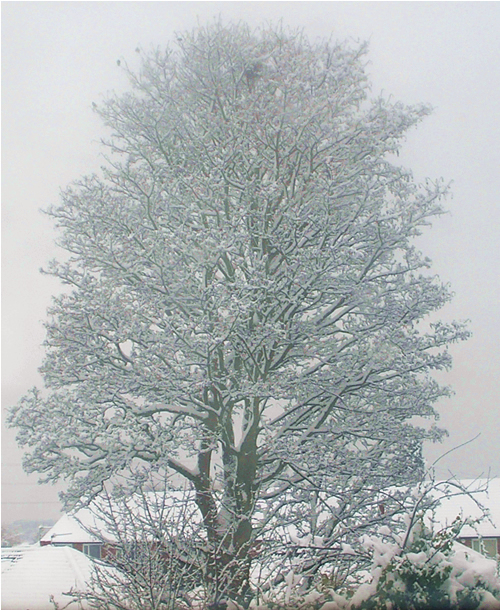
The photographs I choose to illustrate my posts are usually vaguely linked to the topic, even if only in my mind. This isn’t. It’s just the tree at the end of our garden in the current weather.

I have been musing about various pieces of advice I have seen, from authors who feel sufficiently confident about their own status to tell other writers what to do. I am quite sure they mean well and equally sure that the advice works for them. However, everybody writes differently, not only in terms of their style etc. but also in respect of the entire process of writing.

One frequent admonition is to cut your first draft drastically. One author went so far as to say to a friend of mine that if you didn’t cut a third of your first draft you couldn’t be editing properly.

I know at least two writers (one of them with many publications to his name, and very popular) who write first drafts that have gaping holes in them. There are fragile links that have scribbled notes such as ‘insert dialogue here’ or ‘maybe a sex scene’ or even ‘do some research’.  I can totally understand how this comes about. The writer wants, indeed needs, to get to the end of the basic story, and doesn’t want to stop to flesh out some scenes until that end has at least been reached a first time. It is then possible to go back and fill in the gaps, calmly, and bearing the ultimate ending in mind. But what would happen if these writers cut their first drafts by a third? Chaos, I should think.

I don’t leave gaps in my first draft, or only the occasional one where I need to research something like the correct spelling of a foreign place name. The story, which has usually been simmering in my head for some time, simply flows out onto the page or screen until I reach the ending, or an ending. (The ending might change.) On the way, I edit details. When starting a new chapter I always re-read the previous chapter; that puts my mind back into the flow of the story, and usually prevents plot or name errors. It also gives me the chance to spot minor problems such as overuse of a particular word, or some clumsy dialogue. So those get corrected at that stage. Then I hand everything over to a beta reader.

My beta readers (and I have used several) have one thing in common. They all, without fail, ask me to expand what I have written. They used to tell me to add more dialogue but I’ve got into better habits recently, and now the main complaint is that I need to include more explanation because readers aren’t psychic. If I cut that first draft by a third my betas would presumably be incoherent with rage!

I’m sure there are writers who ‘overwrite’ at first; they put in anything and everything that occurs to them and are particularly prone to inserting purple prose that pleases them but no-one else. Certainly for them the advice is good. But there are many of us who ‘underwrite’ and the advice is bewildering. I can almost guarantee that my initial draft will eventually be expanded by about a third…

Another piece of advice is to write what you know. This is so widespread as to be almost trite. It also bears some closer investigation. Obviously it can’t mean that you should always stick with your own surroundings, gender, experiences. If it did, we would have no genre fiction whatsoever. And yet one of my friends was told, on a writing course, that she should not attempt to write outside her own experience – as she was at the time writing a murder mystery, both she and I were somewhat shocked by the advice.

Surely the advice simply means that you should do adequate research and that you should try to build on your own experienced emotions when developing your characters. We can all write villains, and can ‘know’ them, too, by extrapolating from the fleeting thoughts we have had and taking them to extremes. I am, of course, talking about villains with some semblance of reality and not melodramatic stereotypes. And of course we should always make sure that we know what we are writing about, which is not the same as only writing what we know from our own experience.

Perhaps it’s because much of my writing is fantasy that I distrust the ‘write what you know’ adage. And perhaps those who give the advice confine their reading to modern novels set in modern surroundings?

Some of you are writers. How do you approach your first draft? What do you think of the advice I have treated with such contempt?  What advice have you come across that is truly worth following? Let me know!

January

50. January 13

I tend to hibernate in January. It’s partly the weather, which has been cold and miserable, and partly a kind of post-Christmas inertia which hits me every year. My blog has suffered along with everything else.

I have, however, started writing again. I’ve written the first three chapters of the third volume in my fantasy detective series. Genef, trainee investigator, along with her mentor, Rath, and her teenage dragon friend, Scratch, have travelled to The Ice Country to track down a crown that was stolen from their queen and that they believe might have been traded to a collector in this cold and forbidding place. They have just learned that they must go further inland, battling snow, ice and criminals. I’m enjoying the story. I know the rough outline, of course; some plotting is essential to any kind of mystery.  But the details are always a surprise and a pleasure to discover. I got tired of editing and formatting and decided I deserved some writing time.

I have been to the cinema twice. This is unusual for me because I tend to wait until films are available on DVD. We have a DVD projector and a reasonably big screen and most things are fine on that.

We decided to see Skyfall at the cinema to get the full benefit of the special effects and I have to say it was worth it. The film is excellent. It is quite different from most of the Bond films and doesn’t really fit the series well. I think it is better than the others, especially the more recent ones, particularly because it does not rely on gadgets, and the villain is not a stereotype. Daniel Craig brings a grittiness and realism to the Bond role that I think the other actors never matched.

Then we went to see The Hobbit – again. This time we saw the 3D version and it was truly spectacular. I absolutely loved it. In 3D the fight scenes were much easier to follow, which was good.  I was also surprised at how much more detail I noticed second time around. It’s a film that repays a second look!

I spent some time – almost a week – reading the final volume of Robert Jordan’s Wheel of Time. After fourteen volumes (fifteen if you count the prequel, written a long time after the first books) that came out over twenty years, I was glad to reach a conclusion but sad in some ways to say goodbye to an old friend. Jordan, of course, died before the cycle was complete and the last books were written by Brad Sanderson, relying on extensive notes and plans. I know the story is Jordan’s but I think Sanderson is probably a better writer. He managed to keep my interest through a very long ‘last battle’ with lots of military detail, and that’s something very few writers could do. The ending was satisfactory but in some ways I was sorry to reach it. However, I would never read the series again. Now that I know the fates and futures of the main group of characters the earlier books would lose their appeal. That’s odd, because the same is not true of, for example, The Lord of the Rings, which bears frequent re-reading. I wonder what makes the difference? Jordan attempted to create a myth but I think ultimately failed in that respect.

I then turned to Pratchett’s Snuff, which was funny, serious and glorious, and to David Crystal’s The Fight for English, the subtitle of which is How the Pundits Ate, Shot and Left, a book which made me think very carefully about the way our language has developed over the centuries, and thus brings me back to my own writing.

January is almost over and perhaps I will manage to blog more often once Spring is on the way.

Final reading and viewing for 2012

OLYMPUS DIGITAL CAMERA

Reading

 4Dec P The Water Horse by Julia Gregson** Well written and well researched but thoroughly grim and depressing. After the death of her mother, Catherine, a Welsh farmer’s daughter, leaves home, and her drover sweetheart, to join Florence Nightingale’s nurses in the Crimea. There is romance in Catherine’s future, but it is so overshadowed with the horrors of war and army hospitals that I was unable to read the book from start to finish without rests to read magazines and fanfic for light relief. I’m sure the war sections were very realistic but they were, of course, gruesome. I wanted to know what happened but was very glad to reach the end. Probably my least favourite book of the year.

14Dec E A Season for the Dead by David Hewson****. Gruesome but intelligent and absorbing crime story set in Rome. The murders involve senior churchmen and the city’s churches in the hunt for a serial killer. There is tension between the state police and the diplomatic immunity provided by the Vatican. The young policeman at the centre of the case is apparently to figure in a series and I might look out for more.

21Dec E My Secret Garden by Nancy Friday**. Ms Friday collected information about women’s sexual fantasies and wove them into a book interspersed with her own opinions on the subject. There is also an afterword by a psychiatrist. He and the author both claim that the book will allow women to admit to having sexual fantasies. I think this argument makes the entire project seem very old fashioned, and yet it’s possible that this was one of the works that led to some more liberal thought. The author does not claim to have a complete record of the subject; her collection is limited by the people who responded to her advertisements and talks. One criticism of the book is that it is a kind of porn and at first I was tempted to agree but then realised that if it was, it was very inefficient. I could certainly have done without so many long descriptions of fantasies, but mainly because they were boring. I think my major finding was that other people’s sexual fantasies are not a turn-on. Even if they are shared, there are bound to be details that change them and decrease their power. What was really interesting was the extent to which people indulge in fantasy, their motivations, and the stimuli for the different types of fantasy in the first place. An fascinating concept but I had to force myself to finish the book.

I have apparently read so little this month! That’s not the whole truth but I haven’t read many novels. I have been distracted by all the online ficlets that I mentioned in my post on novels and shorter writing. I ought perhaps to give particular mention to Josh Lanyon’s codas. Every other day he gave his blog followers a coda or short glimpse of Christmas for a pair of characters from one of his novels or novellas. It was a lovely idea, and the codas were very satisfying, linked to the main story and giving an extra ‘ending’. There has also been an Advent Calendar of fanfic recommendations on one of the communities I belong to on Live Journal, and to my surprise, almost half were stories I had not read before. As a result of all this, my usual reading habits suffered!

132 books in a year – about 11 per month, so around 3 a week. But I probably doubled that with fanfic reading, a lot of which is novel length.

Viewing

6Dec Magic Mike** The film was billed as a story of a young man shown the ‘ropes’ as a male stripper by an expert. I expected – well, I’m not sure, but probably sexy moves and perhaps some comedy. Something like The Full Monty. The dance routines were incredible, but the plot was quite dark, and the filming was dark, too, with a lot of the action taking place seen through windows, curtains, etc. and in sepia-style colours. I found a lot of the dialogue hard to follow – the southern American accents plus a lot of dialect and idiom didn’t come across well for an English viewer. Disappointing.

14Dec Snow White and the Huntsman*** Very beautiful and quite dark, as befits the underlying story. However, the main characters were insufficiently developed and there were minor plotholes in the retelling. I was faintly disappointed, having looked forward to this for some time.

19Dec The Hobbit***** For once, we went to the cinema. The computer graphics really do need ‘space’ and although we have a DVD projector we felt a need to see the film on a bigger screen and as soon as it came out. The only possible criticism is the slowness of the way the plot develops. Of course, Jackson made Lord of the Rings in three films from three long volumes, and has now decided to make three films from the comparatively short one volume book of The Hobbit so the pace was bound to be different. It was very well done, though at time he took liberties with the story for cinematic effect. He has chosen to insert things from The Silmarillion to explain things – it wouldn’t have worked in the book but perhaps it was needed for a film. Some of the family thought it improved in the second half; I was satisfied right from the opening scenes. The hobbit hole is perfect! We supported our local independent cinema and now need to see the film again in 3D!

20Dec Eyes Wide Open**** This story about two very religious Jewish men in Jerusalem who desire each other and question their sexuality is absorbing and ultimately (inevitably?) sad. The underlying themes of homophobia and the question of sin within a religious context are interestingly presented but I think the main fascination of the film was the detail about daily life in Jerusalem in an Orthodox neighbourhood. I have been to Jerusalem and recognised some aspects of it but found the glimpses ‘behind the scenes’ illuminating. It was also, for me, something new to watch a film (subtitled, of course) in Hebrew.

22Dec The Mystery of Edwin Drood**** A BBC period drama that adapts and completes the Dickens story. Extremely well acted. The switch from Dickens to BBC was seamless! One strange aspect of the film was that although most scenes were shot in apparently normal locations, and not a studio, there were no ‘extras’, no people around other than the cast.

23Dec Loving Miss Hatto***** An extremely well acted and filmed BBC drama scripted by Victoria Wood. It tells the true story of a classical music hoax and of the love story behind it. I didn’t intend to watch it but was hooked from the first scene.

24Dec The Snowman and the Snowdog*** Sweet but unmemorable ‘sequel’ to The Snowman. It lacked the novelty of the original and the soundtrack wasn’t anywhere near as exquisite. I have since watched a documentary about the way it was made, and that was intriguing.

24Dec In Bruges* I was talked into watching this (over two nights) on the understanding that it was a dark comedy with a good ending. Nothing could be further from the truth and it was not something I would have chosen to watch on Christmas Eve. Tense, violent, and sad. Extremely well acted but I don’t that makes up for the drawbacks.

25Dec Room on the Broom*** Another children’s film based on the story by the author of The Gruffalo. Beautifully produced but perhaps without quite the endearing quirkiness of The Gruffalo.

25Dec The Snowmen: The Doctor Who Christmas Special.**** I suspect a lot of future snowmen will have evil features so perhaps it’s a good job it was raining here over Christmas. The doctor gained a new companion who is a bit of a mystery. The episode was slightly unsatisfying as we have no way of solving the mystery until the new season starts, which isn’t immediately. Presumably it’s meant to hook the audience into watching the new season, though surely that can’t be necessary.

27Dec The Birds** I honestly thought I’d seen this Hitchcock ‘classic’ but it turns out I hadn’t – just clips – and of course I was familiar with the Daphne du Maurier story it’s based on. That made quite an impact when I first read it. I wasn’t impressed by the film – too glossy and unreal, too long-drawn-out, etc. The way actresses in films of that era kept their hair and make-up intact provokes giggles rather than admiration.

28Dec Restless*** A BBC spy drama – a three hour film shown over two nights. Much better than The Birds in terms of acting and direction but it had numerous plotholes and some huge continuity errors.

29Dec Men in Black III**** I still think the first film in the series was the best but the sequels are very enjoyable. Perhaps it’s the lack of novelty that makes them less, somehow. Once you’ve seen the underground offices full of aliens, you’ve seen them, after all. I love Will Smith, and I liked the way the plot linked itself to the original moon launch, way back in the month I got married – I could really relate to all those people watching on their televisions! And the villain was quite original. Not five star, but still very good.

30Dec Moon** A sci-fi film that BBC billed as Film of the Day. Very long-drawn-out story about workers on the moon discovering that they are clones. They didn’t exactly have to spend much on sets or cast. Boring!

Early December viewing was pretty sparse then things came thick and fast over Christmas! I won’t be watching any films on New Year’s Eve so that’s it for 2012.

This has been an interesting exercise but I think next year I will only review things that you need to know about, because they are either extremely good or extremely bad. I might add fanfic to the mix. I will also try to review in more depth though I will, I promise, avoid my pet hate – plot spoilers within a review. However I organise my reviews, there won’t be a monthly post.

Meanwhile, Happy New Year!