Fifty Shades of Outrage

50 shades of sand

I bought 50 Shades of Grey because I really need to read it.

We get fairly frequent plagiarism reports to an online fic archive I do voluntary work for. Fortunately, as yet, no formal breach of copyright claims. I was beginning to feel guilty at having to go to colleagues who had read it to get their judgement on whether the reported work was plagiarised or not so when I saw it for sale in a second hand book shop for £1 I knew it was telling me it was time I read it. So I wrote ongoing reveiws for my personal blog and have put them together here for you.

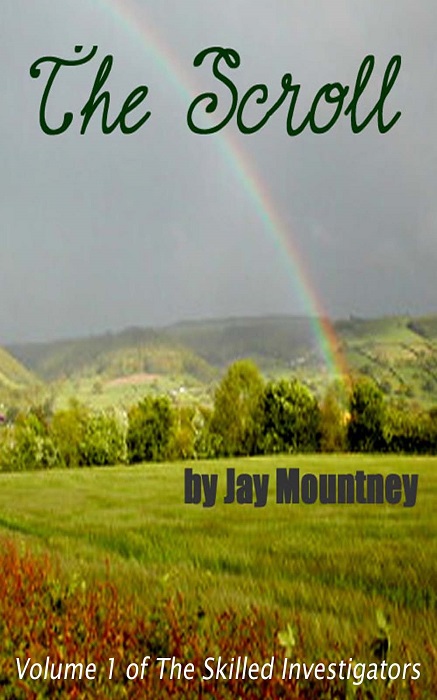
In deference to family wishes, I re-covered the book and the result is the picture at the start of this post.

Initial reaction:

OMG. Stereotypes. Characters, even the main ones, with no reality whatsoever. And yet – weird stereotypes – they sound and act alternately older and younger than their ascribed ages. The heroine is a complete airhead and I can’t imagine how she got accepted to read English literature or how she reached her finals, let alone passing them. Then there’s the over-description of clothes and furniture until you’re expecting a product placement slipped in any minute.

Plus, it’s a long book – even a trilogy – all in present tense and first person. So no, it isn’t an ‘easy read’.

My views by p509:

I happily read BDSM fics. Let me get that quite clear from the start. I am not personally attracted to any BDSM kinks but when they’re part of an adult consensual relationship they can be hot or even romantic to read about. However, I do not happily read dubious consent. And this, to me, falls into that category.

Anastasia is 21. She has never had a boyfriend. She is a virgin. She has never masturbated. So obviously she has never had an orgasm.

Christian is late 20s – about 26 or 27, I think. He is an entrepreneur who is now a multi-millionaire, he was seduced as a young teenager by a friend of his mother’s and was a sub for years. He is now only able to relate to women as a dom. I can see that people do switch but this seems extreme and is not explained.

Anastasia falls in love with Christian at first sight. Christian falls in lust with Anastasia at first sight. (Tired plot device and pretty unrealistic.) He is very suave and glamorous. He seduces her (vanilla sex) and his mother, who almost walks in on them, is delighted because she thought he was gay because he is never seen with women. This first sexual experience results in multiple orgasms for Anastasia.

Christian presents Anastasia with a detailed contract to persuade her to become his sub. He has shown her his ‘red room of pain’. He has rather vaguely promised never to hang her from the ceiling because he once hurt someone (the ropes were too tight).

Anastasia has to look up some of the things in the contract on wikipedia. Her deal breaker is that she won’t agree to eat prescribed food all the time even when she isn’t actually with him. The only way she will accept the computer he gives her is as an ‘indefinite loan’. She refuses a new car because her old one was a gift from her father – this annoys Christian who has her old car sold and leaves her with the new one.

She also realises that he is threatening to end the relationship (what relationship?) if she won’t submit. He says he will teach her to explore her inner needs. She is very dubious but doesn’t want to lose him.

Anastasia’s room mate Kate is dating Christian’s adopted brother Elliot. Kate is fairly experienced and could probably give Anastasia some impartial advice but Anastasia has already signed a contract not to talk about Christian and his kinks to anyone. Presumably because of the multi millionaire business angle.

I don’t see this relationship heading for consensual BDSM – I see it as coercive and creepy manipulation by a very disturbed man. I see Anastasia as stupid or at least extremely naive.

My views by p 609:

I’m about three quarters of the way through.

I can’t read it in long doses – I get too bored and too angry. Read on at your peril.

This guy Christian is seriously fucked up. He was abused by a drug fuelled prostitute, his birth mother, rescued by a posh intellectual family where he never felt fully accepted, was seduced into a BDSM relationship at 15 by a friend of his adoptive mother and has come out the other side accidentally earning millions with his business idea. Now he is pulling our heroine into his world with all the manipulative tools at his disposal. He is impossibly handsome and charming, too, his only physical flaw being the cigarette burn scars on his manly chest.

Meanwhile, she still hates almost every aspect of BDSM but is ready to sign a contract setting out their hard and soft limits, because she loves him so much (love at first sight, you understand). She keeps, for some reason, wearning her room mate’s clothes so we have little idea what her own tastes are, apart from wearing ‘sandles’ and yes, I know I shouldn’t sneer at typos but it’s hard not to in this case. All we know about her literary tastes is that she loves Thomas Hardy and keeps re-reading Tess. Christian bought her a first edition but she’s selling that and giving the money to children in Darfur because she knows he’s into charity work there. Literature is important because she wants a career in publishing.

They keep almost having email sex which is irritating rather than hot.

Her mother and her ex-stepfather adore him. He manipulates them too. But then his parents and his sister adore Anastasia. His brother and her room mate, Kate are now together (hello, clunky plot device) and I think are a bit more dubious about Ana and Christian and their relationship. Maybe.

I am struggling at the moment with three questions, two rather explicit, so skim if you’re easily offended.

How did he manage to flick her clitoris with his riding crop while she was standing? I have often had problems with what I call the choreography in fics, including my own. This one is defeating me.

Is it just me, or is an explicit account of how he removes her tampon squickish rather than hot?

Who let him take her up in his glider for the first time, and strap on a parachute backpack, without any kind of safety demo? I know we all get bored with these on airlines, but really…

My final reactions:

OK. I finished it, and I have to write this while I’m still feeling a lot of righteous indignation and the entire thing doesn’t get overlaid and buried by other reading.

The ending was not quite what I expected. Anastasia realises that Christian is a ‘fucked-up son of a bitch’, tells him so, and they part. Which is not the way most romance novels end (and yes, this is supposed, according to the blurb, to be a romance) but of course there had to be a cliff hanger because we now know that like Twilight, the vampire series that spawned this writing, there are two more volumes in the trilogy.

Looking at the book as a whole, I can say in its favour that it’s grammatical, well-structured and clever in the way it references Twilight but is totally transformative. I ought to say here that I got part way through the first Twilight novel and gave up, but then I wasn’t reviewing it and it didn’t make me particularly angry, just bored.

Fifty Shades is also full of stereotypical characters who meet, interact and part according to stereotypical events which are either tired tropes or examples of deus ex machina gone wild.

Also, unlike Twilight, which is essentially a fantasy set in a world of vampires and werewolves where it is legitimate to explore different relationship issues and even tolerate things that go against ‘our’ norm, Fifty Shades is set in the real modern world with real modern protagonists – stereotypes, yes, but stereotypes because they are based on real modern people. It’s heavily sold and hyped as ‘romantic’ which means at least some readers will think it is something to emulate.

Now we come to the overall plot and why I feel so angry.

The book sells itself as a romance. It is marketed, quite heavily, to young women with very limited experience of the world, women who are looking for romance of one kind or another, with men, with other women, with either or both, and with some kind of happy-ever-after (or at least for the next six months) ending in mind. This book is not what they need.

They may even be looking, after a little experience, for a glimpse of the world of BDSM. Again, this book is not what they need.

This is a book that sells within its pages the idea that manipulation is glamorous and ‘cool’, that in order to keep your significant other you should agree to anything they ask, however much you dislike it, that people who have been abused as children are entitled to abuse others (especially if they are handsome and rich) and that it is somehow less than romantic to realise that someone is a ‘fucked-up son of a bitch’ and walk away – you will then inevitably and rightly cry yourself to sleep over what you have lost.

This is not romance, which might not last but is at least all hearts and kittens for the duration, and nor is it BDSM, which is consensual and caring, practised by people who know what they are doing and why they are doing it from the beginning or at least are exploring it together. It isn’t even porn, as some reviewers have called it. The explicit bits are too tame – or maybe those of us who read fanfiction are inured to explicit sexual description?

What it is, is a very ugly view of relationships. I can only begin to imagine its effect on readers who read very little and who are quite likely to model their desires on what they see as glamorous. And then there’s the effect on the people they in turn meet – the boys and girls who want a genuine relationship and can’t provide the twisted variety portrayed by Christian and yearned for by Anastasia.

I have always condemned censorship. I grew up in the climate of debate about censorship, fuelled by the case of Lady Chatterley’s lover. As a law student, I was involved in many debates on the subject and read widely around it ranging from novels like Fahrenheit 451 to academic papers. I would not deny EL James her right to imagine this story, to write it, and to share it with others. That would be censorship and I might disapprove of the book but would defend, fiercely, her right to write it.

What I most certainly would take issue with is the cynical way in which the publishers have taken up this book that should, I would suggest, have had a limited audience, and sold it to all and sundry, making it quite clear that they are telling the world it is romantic and titillating in equal amounts. And then the film makers take it and make it accessible to even more people. They have made the author very rich, but only as a side effect of making themselves even richer.

If this had been a self-published or indie-published e-book it would have had to take its place on the adults-only shelves or sites as erotica, and whilst we all know that it’s easy to click to say you are over 18, at least the shelving provides a warning that this is not standard teenage fare. As a print book it can be advertised to everyone with impunity and even showcased in shop windows. This is one result of the Lady Chatterley decision but that was intended to address explicit sexual material, not abuse.

Something else, perhaps trivial, about the film, makes me even more annoyed. I recently came across the music Spem in Alium by Thomas Tallis. I heard it on Classic fm and gathered that it was requested by Terry Pratchett for his funeral. I loved the music and went looking for it online. I then discovered that it featured in the film Fifty Shades of Grey. The following day I read the passage in the book where Christian abuses Anastasia to the strains of the piece. In print, it didn’t affect my feelings for the music, but knowing it is part of the film makes me feel something lovely has been hijacked to accompany something distasteful.

I did begin to wonder, at one point, whether EL James was playing games with the reader, whether she was actually trying to portray Christian as someone to avoid, section under the mental health acts or report to the police as a possible psychopath. But her treatment of Anastasia and the way the ‘heroine’ regrets her rejection of Christian at the end disabused me of that notion. And of course there are two more volumes to come. (And no, I won’t be reading them.)

Almost everyone I have spoken to has claimed not to have read the book. I do know someone who has – the daughter of one of my neighbours. She is young, not particularly well educated or intelligent and lurches from one failed relationship to another for a variety of reasons. I just hope looking for a clone of Christian Grey is not going to be added to the list.

A major problem with the fact that more widely-read readers are avoiding the book is that it does not get properly reviewed or addressed. There are sniggers from those who have heard about the porn angle, attempts to be tolerant from those who know it purports to describe BDSM (with no apparent realisation that people who practise BDSM are horrified by the book) and a general ‘sniffiness’ from those who assume it’s just another blockbuster romance.

In fact, I think people should be reading this book and reviewing it – in newspapers, magazines, TV programmes, schools, and anywhere else they can think of. They should be shouting about how it devalues romance, glorifies dysfunctional relationships and is dangerously bad for the mental health of younger readers. Even that it gives BDSM an unnecessarily and unwarranted bad press. (BDSM people presumably feel that to make any kind of public issue of it would sound too defensive and could be counterproductive.)

We would not give teenagers a book such as Mein Kampf without at least some warnings and debate. We should not be letting Fifty Shades of Grey slide under the radar of informed discussion and peddle its nastiness to our young people.

And now I’m off to read some other reviews one or two people on my personal blog have linked for me. I carefully didn’t read them until I’d finished both book and review because I wanted my reactions to be completely my own.

Exploring writing

94 Aldea house 06

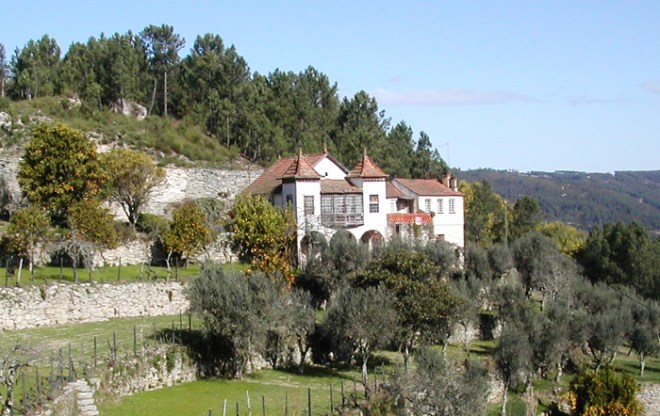
I have been missing in action for some time. I have also been missing on my personal blog so don’t take it to heart. I’ve simply had an incredibly busy year, with family holidays taking up an enormous amount of time and research into autism (my grandson is autistic) the rest. I’m back, with a resolution to do better. The picture at the top of this post is the house we are renovating in Portugal – the main reason for my absence.

And then I wondered what to start with. This is basically my ‘writing’ blog, so it had to be writing-related.

I recently came across a ‘meme’ in my personal blog which encouraged writers to answer 30 questions. exploring their writing. It was designed for the fanfiction writer and I think you were supposed to post an answer every day for a month. More and more, as I read other people’s replies, I realised that my answers would be totally different for my original writing and my fanfiction writing. This surprised and intrigued me and as I enjoy exploring my own and others’ creative process I have tweaked the meme so that my answers are in two parts.

1: How did you first get into writing fiction, and what was the first fiction you wrote? What do you think it was about the activity that pulled you in?

My very first effort at writing fiction was at the age of 5 when I wrote a play – a fairy story – which my mother scribed and produced with her Brownie pack for the entertainment of the village. I was not old enough for Brownies (there were no Rainbows then) but I was allowed to join in, as author. I think there is still a copy, probably in a box in Portugal, but all I can remember is that it concerned a fairy called Bluebell. I had imaginary friends who lived in the trees that lined our vicarage drive, so I must have extrapolated from that to a full-blown story. I believe the Brownies and the village enjoyed the tale.

But I’m not sure drama counts, or the numerous poems and plays I wrote from then on. I played with both drama and poetry on and off, sometimes for my own pleasure and sometimes (as an adult) for work – modelling writing for my classes. I didn’t really approach fiction (except in my head) until I got a word processor. Writing long texts in longhand never appealed. I think my first attempt was a ghost story based around a location and people I knew, and very vaguely inspired by a combination of a story about haunted ruins in Richmond, where my mother was living at the time, and other stories of monsters in TV shows. The story is still on my hard drive and might eventually be extensively edited and shared.

I loved the process of developing a plotline in my head, seeing it take shape and finding out where it would go. I loved meeting characters and found that characters I had created took on a life of their own and became very real to me. I loved researching the background for my story e,g, locations, history, travel, etc. As I said above, my early efforts were all in my head and had been ongoing all my life. The advent of the wordprocessor (and a touch typing course) into my life made a huge difference and my stories got more complex as a direct result. Then a PC, Windows, and my horizons expanded. I took an Arthurian legend story I’d written in response to my annoyance with the national curriculum approach to poetry, got it edited by a writer friend and started to play with the idea of publication, encouraged by my editor.

I ended up self-publishing for reasons that I have explored elsewhere and The Lord of Shalott, which predated some of my other stories but took longer to reach the public was my first ‘real’ work of fiction. (There were other shorter pieces that saw publication in online zines earlier but they were written later.) It’s fantasy, it references other writers (especially Tennyson) and it’s an m/m romance. My favourite topics (for reading) have always been fantasy (and sci-fi or speculative fiction), history, legend, and m/m romance. So it’s no surprise that those underpinned my first steps into the world of fiction writing.

For any new readers of this blog, the novella is available on

Amazon (UK)http://www.amazon.co.uk/Lord-Shalott-Jay-Mountney-ebook/dp/B00AD9OLC6

Amazon.com http://www.amazon.com/Lord-Shalott-Jay-Mountney-ebook/dp/B00AD9OLC6/ref=sr_1_1?s=digital-text&ie=UTF8&qid=1448649545&sr=1-1&keywords=The+Lord+of+Shalott+by+Jay+Mountney

or Smashwords https://www.smashwords.com/books/view/258487

shalott title final

As for the fanfiction part of my writing:

1: How did you first get into writing fanfic, and what was the first fandom you wrote for? What do you think it was about that fandom that pulled you in?

When my daughter told me about fanfiction in 2005 I was very excited. I had been ‘writing’ (or at least composing) fanfic in my head since I was quite young and had thought I was on my own, and perhaps slightly mad. Finding out that other people did this too was like coming home. She also took me to Connotations, a fanfic writer’s convention, the following year or possibly late that year. Meeting other fans and writers was a wonderful experience.

My earliest efforts (in my head) were (in order) as follows:

1. Age about 7 or 8. All new characters I met were at some point transported to the seventeenth century in what would now be called a crossover with Children of the New Forest. I think I might have managed the occasional Mary Sue, as well, and sometimes ventured further afield to join Swiss Family Robinsion.

2. Age about 9 or 10. Retelling/remixes of most of Georgette Heyer’s regency romances with a slash focus. My nine-year-old self must have picked up on the undeniably slashy subtext in Ms Heyer’s work. I had not, of course, heard of the term ‘slash’ and it probably wasn’t in use back then but Md Heyer’s cross-dressing characters must have inspired me.

3. Age about 16. A return to crossovers, this time with Lord of the Rings’ Middle Earth as the ‘base station’ where other characters from other novels met, sometimes involving the Lord of the Rings characters and sometimes just using their world. (The world as built by Tolkien and my imagination – the films were a long way in the future.)

This pattern of mental composition continued, adding new books to the mix from time to time. I rarely used films because the ones I saw didn’t inspire me and I didn’t watch much TV – we didn’t watch it at boarding school, my family didn’t have TV until I was 16 and then once I went to uni at 17 I was without again, which continued till my daughter was about 4 and I was in my thirties. Someone took pity on us and gave us an old black and white set…

When I found out about fanfic some kind of floodgate opened in my head. The first story I read was set in Arthurian legend, which has always been one of my favourite fictional ‘verses’. I had been very angry at being asked to teach The Lady of Shalott to nine year olds with an emphasis on grammar, vocabulary and structure, ignoring the fact that the content (and vocabulary) was probably mystifying for many of them. That’s the National Curriculum for you. Anyway, a story had formed in my head as a kind of counter-attack and when I realised there was actually an Arthurian fandom I wrote my story for my daughter as a thank-you for introducing me to fanfic. I have since played with the story and self-published it as original fiction (see above) because of course the legends, and even Tennyson, are out of copyright. I love all kinds of Arthurian legend books and films and have done all my life; it wasn’t a stretch to find myself writing in the fandom. I have no idea how the fandom originally pulled me in – at some point as a child I must have decided that Camelot was the epitome of romance in the mediaeval sense of the word.

At virtually the same time, and also in response to my new discovery of this wonderful world, I wrote a short piece in Stargate SG1 because by now I was enjoying TV shows and I have always loved both fantasy and sci-fi. I particularly liked SG1 because of the exploration of the characters rather than a focus on technical details or special effects. I’d loved a lot of sci-fi, starting with John Wyndham’s books (we now have a large and possibly valuable collection of sci-fi novels) and then TV series like Dr Who and Blake’s 7 and films like Dark Star and Silent Running. So far as writing was concerned, SG1 just happened to be current when I discovered fandom as something I could join in.

So all of a sudden I had this new place to play, meet friends, enjoy reading and art, and discuss, write, etc. Daughter helped me open and navigate a LiveJournal account and the fandom world was my oyster. I still feel a sense of awe, privilege and excitement. I have remained firmly multi-fandom and whilst I sometimes add fandoms to my reading and writing list I never abandon any. However, my two ‘first fanfics’ reflect my lifelong love of both fantasy and sci-fi.

If anyone wants to join in the 30 day meme, let me know and I can give you the list of questions.

My Novel Is Published!

scroll 2015 for blogs

Self-published, of course, but then you knew that.

(Takes a deep breath)

Now I need to market it and I’m telling you all about it here in the hope that some of you might decide either to buy it or to recommend it to someone you know who might.

The purchasing details are as follows:

https://www.smashwords.com/books/view/533349

http://www.amazon.co.uk/s/ref=nb_sb_noss?url=search-alias%3Daps&field-keywords=jay%20mountney

If anyone wants a free review copy, let me know by email or in a comment and I’ll send you a coupon for Smashwords. Obviously you’d then have to review it somewhere – maybe just on your journal – and explain that you had a free copy for that purpose. You wouldn’t have to be gushing about it – any publicity whatsoever is welcome. And obviously I’d have to email it to you to avoid giving everyone the freebie. I tried that with my last publication and it resulted in a lot of downloads and no sales.

(And yes, Chris, I know you have already done a great job for me! Many thanks!)

I am hopeless at marketing. Don’t tell me to get a Twitter Account or a Facebook one. You have to build up a following on those and I haven’t, so it’s too late. Besides, I gather from a lot of writer friends that the amount of work and time you have to put into those is out of all proportion to any sales they might generate. I would welcome any other advice!

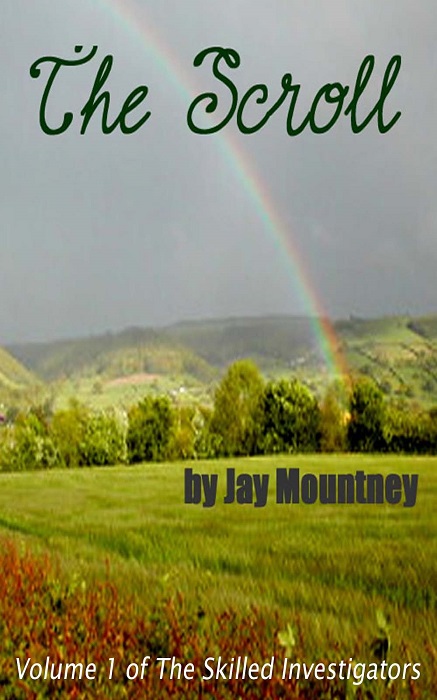
The story is the first in a series called The Skilled Investigators. The ‘heroine’ is a female elf who wants to be an investigator (detective in our terms) and has to solve a murder mystery before she can be accepted as a trainee. Her assistants/sidekicks are a teenage dragon who imprinted on her at hatching, and her brother. The brother is gay and provides the romance subplot for the series but there is no explicit sex.

Whilst it has some similarities to urban fantasy books it takes place in a different world so in that respect it has more in common with other fantasy genres. I deliberately set out to blend the two kinds.

It isn’t intended for the young adult market in particular – I was thinking more of the Tanya Huff/Seanan McGuire/Lynn Flewelling type of reader when I was writing – but it would be, I hope, attractive to older teens looking for coming-of-age stories, either to do with career choices and training, or to do with LGBT issues. As I said, there is no actual sex in the books but plenty of romance and angst. And whilst it is fantasy, there is very little magic.

However, what I really wanted was to merge fantasy and crime and dragons, and hope I’ve succeeded. Anyone who wants to read that kind of merger would, I hope, enjoy the story.

I have finished the sequel – it is just waiting for the dreaded formatting and will probably be published later in the year. The third book is at the ‘listen to your betas and do some amendments’ stage. The fourth consists of some messy notes and the fifth and sixth are just plot outlines. That’s it: the whole series.

The formatting has been a nightmare. Smashwords and Amazon have different views on how to present your manuscript, neither of them really get to grips with the latest version of Word, and it all took a lot of intense concentration interspersed with panic. But it seems to have worked.

I’d be really grateful if you could think of anyone who might enjoy the series and direct them here – or to one of the purchasing pages, though probably here as the offer of a free review copy extends to strangers.

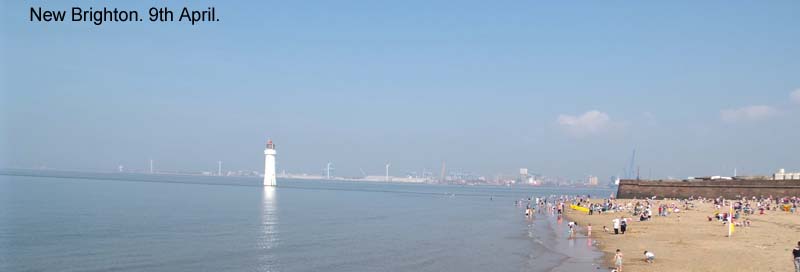
April on The Wirral

new brighton

Pale shards of semi-whiteness across the river mouth:

thin cranes and looming gantries of the docks.

Against them, a brighter whiteness,

a lighthouse layered in sharp focus on its rocks,

the causeway a line of dark in the murky sea,

gulls following in case scraps were left behind.

An unrenovated fort stands

(proud as the lighthouse), sand

beneath, the strip decreasing with the rising tide.

Children, crowded on the shrinking beach,

pull small dogs in and out of lapping waves

or scramble barefoot, risking a spiked ending to the day

on boulders that keep the invading sea at bay.

A small yacht motors calmly towards the open water,

heading for the mists,

a noisy boat pulls a smaller one

in looping spirals round

the lighthouse just for fun

and there are shrieks of fright

or glee

while shuffling figures watch

from a pontoon

moored by a buoy that guards the channel

in case a ferry should go astray.

Crowds, shops, cars

as far

as the eye can see.

A queue

to find a space and then

another queue

for toilets or a drink,

or sandwiches that by the time the queue has gone

have vanished too.

Shaking the sand off our feet

and clutching a picnic we steal away

further along the coast and round the headland.

Turning south we reach

a long flat beach,

the tide

by now almost to the horizon.

A few dogs chase each other or a thrown ball;

a car braves the boat ramp

driving in crazy rings

near the sea wall.

The crowds have stayed

near the shops and ice cream vans.

Here there is loneliness and space,

only a few miles away.

We eat, watching a huge stretch of

damp sand

spread out to a charcoal smudge of what might be

sea.

A horse thuds past,

cantering against the sky.

Could we ride, we wonder,

all the way out to Ireland

if we were foolish enough to try?


I don’t usually post two poems in a row but this was an immediate reaction to a lovely day out, and needed to be posted while the date was still appropriate. Dedicated to Flair, who showed me round The Wirral, and whose birthday is this week.

The End Of March

OLYMPUS DIGITAL CAMERA

March came in like a lion;

went out like one

as well, roaring.

(There had been

calm times in between.)

Pale petals

grabbed from trees before

the flowers were fully formed

mixed with the snow

that dissolved on the bare ground.

Bins scuttled down the road,

alive and rattling,

shedding rubbish as they went.

Washing landed

in a fishpond

for a second soak

(startling the inhabitants).

The prop that should have held

the clothesline firm

dug itself into the grass

to avoid being sent arcing

like a javelin

point first to a bitter end.

Hail drummed

on cars, paths, windows, roofs

and all around,

nestling like spilled sugar

in new foxglove leaves.

A fence waved, rippling

as if a mirage had taken hold

but it was only the wind

telling the world

that April was coming;

in its own, cold,

boisterous fashion

trumpeting Spring.

Some history books

OLYMPUS DIGITAL CAMERA

I like history books. I prefer to read them in print because I like to be able to move to and fro with ease, looking at maps, family trees, glossaries, and that kind of thing. Pictures, too, in one of these. In fact of these ten books only one was an e-book. It was the one that irritated me!


I am not so fond of historical novels. I like my history served up in a fairly scholarly fashion. But I have included three novels which appealed to me because they taught me a lot about things I was only peripherally aware of before I started. I suppose what I should say is that I don’t much like mainstream historical novels set in periods or places I’m really familiar with. Crime stories are usually OK but they have to be very good at both the crime element and the period. I enjoy fantasy, too, the kind that looks sideways at our history and refreshes it.


Anyway, some reviews! of books I have read during the last year. If you follow my personal journal you can skip this post as I posted the reviews there too!


Because we travel through Spain frequently we became interested in Spanish history and found a review of The Spanish Holocaust by Paul Preston. This was a superb account of the Spanish Civil War in the 1930s, its causes, build up, aftermath, personalities, etc. If I have a criticism it is that since it was written largely for the English reader rather than the Spanish one there could have been more effort to deal with the unfamiliar naming system. I frequently lost track of who was who, partly because Preston flitted between first, second and third names of the main characters, expecting his audience to keep up. It certainly deepened our understanding of a country we are beginning to get to know, and sent us post haste to Modern Spain by Raymon Carr which dealt with the Spain of the nineteenth and very early twentieth century, thus giving us more background for the Preston account. His attitude to names was as cavalier as Preston’s but I felt more forgiving because his background is Spanish so he might not know, so to speak, just how confusing Spanish names can be. So now we had looked at Spain from post-Napoleon till the death of Franco and were still fascinated. To understand Franco and his cronies better we felt the need to read Morocco. From Empire to Independence by C.R.Pennell. Franco’s movement grew from his army experiences in Morocco and we realised we knew horribly little about Morocco other than what we’d read in La Prisonnière by Malika Oufkir. We’d read that the previous year so I’m not reviewing it here but I’d recommend it. Pennell’s book on Morocco was fascinating, and added to my knowledge of the western fringes of the Roman Empire as well as the growth of the current kingdom. However, it was the hardest of the three to read. It had very few stories about individuals other than the various rulers and this made it harder to empathise with the people who lived through the events described. I found it rather distancing. Of the three books, I’d recommend the Preston one first, and then the reader could research whatever else appealed to their wish to know more. Preston brings into the daylight the appalling mid twentieth century suffering of the Spanish which we tend to forget since they were not combatants in the second world war.


I then had two books recommended to me. A friend told me about Caravaggio: A Life Sacred and Profane by Andrew Graham-Dixon and my brother-in-law told me about a book by the daughter of a friend of his, Fallen Order by Karen Liebreich. They covered a similar period of history – mediaeval Rome, so I bought both and didn’t regret either. Liebreich looks at the way the Piarist order of priests and monks fell from grace in both a sacred and secular fashion by nurturing or at least protecting paedophiles in their midst. The book is very detailed about the Rome and the church of the time of Galileo and Caravaggio, and has messages for today, with our current abuse scandals. Fascinating and informative. Then the book about Caravaggio was an incredible journey through mediaeval art and its major sponsors, the church and various churchmen. I read it in paperback and just about coped with flicking to and fro to look at details in the illustrations, but if you can get a hardback copy from your local library I’d recommend that. By the time I got to the end I felt as if I’d attended a history of art course and was much better informed. I already knew something about the period and had of course seen a lot of the art, but the author brought it all vividly to life, including the stories behind the paintings and the lives and crimes of the painters. Anyone at all interested in art or history should at least read that one, and I’d recommend the Fallen Order to anyone wanting details of mediaeval church practices and their relevance to us today.


My family reads a lot of books about finance, an interesting topic since it concerns us all so intimately and since so much of the ground covered serves to explain various protests, bank collapses, and so on. A recent book I borrowed was This Time is Different (Eight Centuries of Financial Folly) by Reinhard and Rogoff . It was an interesting read, spanning various financial plots, disasters and manipulations since the so-called dark ages. The basic premise of the books was that this time is not different and we do not learn from our mistakes.


A book that had a huge time span to cover was The Rise and Fall of the Third Chimpanzee by Jared Diamond which is the only one in this review post that is on my Kindle and yes, I got annoyed with it. In fact I almost didn’t finish it. Diamond takes us through evolution to the present state of humanity. He has a lot of theories which he presents with a great deal of arrogance. His wikipedia page says he ‘is arguably best known for authoring a number of popular-science books combining topics from diverse fields other than those he has formally studied.’ That about sums it up. I got annoyed with various aspects of his explanations on evolution and consulted my biologist daughter who said she thought (charitably) that the book was simply out of date. For example, he is convinced that Neanderthals died out completely whereas we now know they interbred with the newcomers who became modern homo sapiens. I was doubtful about some of his more rigid theorising about the spread of language, something I know a little about, as opposed to biology where I had to take what he said more or less on trust. I also consulted an Australian friend about a chapter dealing with Australian Aborigines and their lifestyle, postulating a lack of easily domesticated crops and animals leading to the hunter-gatherer way of life, and she was dubious about some of the theories put forward. In the last section of the book he deals with genocide, mass extinctions and the possibilities for the future of humanity and presents his opinions as facts, leaving me irritated and inclined to argue even with things he said that I agreed with.


And now for three novels, wildly different and all well worth reading.

Pompeii by Robert Harris uses the story of a small group of people to show us how the Roman population reacted to the eruption of the volcano. It is a fascinating book, going into great detail about the way the water system worked and what was known about flow, contaminants, etc. and about the research and observation done by the Plinys, father and son. The romance that drove the plot was always secondary to the volcano itself and was never overwhelming, unlike the mountain’s outpourings! Memoirs of a Geisha byArthur Golden gives us a detailed picture of the Japanese way of life that included geishas in the first half of the nineteenth century. In some ways it shows us how alien the culture that went to war with the west could be at times, and in other ways it gives us a domestic tapestry that leaves us feeling some kind of cross-cultural empathy with the geishas who struggled for emancipation. It’s an absorbing story, told from the point of view of one person and purporting to be written by her and merely transcribed and translated by the author. She is, of course, fictional, but at times the reader believes in her whole heartedly. Rangatira by Paula Morris was a gift from a friend in New Zealand. It is based on the true story of a Maori who went to London with some of his fellow citizens at the end of the nineteenth century and had very mixed experiences in England. The events unfold as reminiscences. He is having his portrait painted towards the end of his life and talks to the painter about everything that happened both in New Zealand and on his travels. So he, like us, is looking back at a different time and a different culture, both that of the Maoris and that of the British. Today, I suppose, he would simply get on a plane and then be back home again almost before he’d arrived.


I know it’s the current ‘fashion’ to show the thumbnails of the covers of books when reviewing but I decided not to – I thought it was something that would work for a few books but not for ten – eleven including Oufkir’s story which I’d read the previous year. If you’re interested in any of the books they’re available on Amazon and I can happily answer questions.


A day at the zoo

elephants resized

We took our grandson to the zoo at half term and I started writing an account of the day for my personal blog. Then I realised it had rhythms and hidden rhymes so I worked on it till I had a free-form poem.

It was a grey day

in February

and we paid a lot to get in.

They seemed to think it their due.

They were not there for our entertainment

but rather we

were there to contribute to postponing

their extinction

and after all

that’s the stated purpose of the zoo.


The elephants

were first. They stood stone still,

a faint greenness on their hides suggesting

moss had gathered

while they watched their waterfall.


The rhinos

regarded an English February

as beyond the pale.

They dozed in their dim house,

the baby disguised as what we thought at first

was his mother’s swollen knee

but his ear flickered slightly

giving the deception away.


The meerkats

had disappeared

(maybe underground?)

and we couldn’t find

the giraffe.


The monkeys

were truly glad to see us.

I think we

alleviated their boredom.

They scampered out to their

moated peninsula with glee.

Each time we left their house to see

they climbed back in

and when we returned

to the leaf shaded glass hall

out they went again.

A fine game

was had by all.


The zebra lay sleeping side by side

in a stripe of sunlight they had found

while next door to their compound

the bongo

gracefully camouflaged himself

in the shadow of his wooden hall

and pretended he wasn’t really there at all.


There were deer

(of various kinds)

too shy to give us more

than a fleeting glimpse,

A warty pig

(not to be confused with a warthog)

and a capybara

that seemed to be where

the map thought the meerkats might have been.


And still we couldn’t find the giraffe.

You’d think a long neck would help but no,

although

we saw some camels huddled

in a knobbly ring.

They circled,

doing (perhaps) an esoteric

camel dance.

The reason was something

not for us to know.


Only one tiger

was visible, pacing

with a look of impatience

while his mate and child

hid

somewhere safe and secret

until the keepers were due

to bring their meal.

The male, I’m quite sure, saw us as an alternative

if the keeper should chance

to be late that day at the zoo.


The cheetahs tried

to hide

(to cheat?)

on a roof in their enclosure

but

it was still winter so we

could see them through the bare trees

and they looked less than pleased.


The Asiatic lions,

however, were proudly on display,

the male roaring a huge sound

– far too big for his size –

to let us know we should stay away.


There were birds ignoring us:

storks, cranes, and I think

a flamingo

though

as I missed it I have no

idea whether it was pink.

There were also ducks,

some of which were strolling on the paths like us,

like the blackbirds and starlings joining in

a general search, human and avian,

for snacks (or crumbs).


Squirrels,

too,

had decided there might be rich pickings at the zoo.

They must have had the sense

to avoid the big cats.

Either that

or they were extremely fast.


The fruit bats

simply dreamed on their branches all day

though a few

swooped

and fought and slept again

pretending to be strange fruit

and by this ruse fool

their natural prey.


The chimpanzee

house was closed for maintenance,

whether of the house, inmates or both

the sign failed to say.


By the time we reached the butterfly house

that was closed too

because it was almost the end of our day

at the zoo.

There were signs

saying ‘aviary’ and ‘aquarium’

but by then

we were on the way

out.

They would have to wait

for another day.


We joined merging streams

flowing towards the gate.

There was tension in the air,

an anxiety not to be late,

locked on the wrong side

at some keeper’s whim.

What did the inmates make

of all these others in their bright coats

who came every day and invariably left

at teatime?


Then we were all spilling, tumbling into car parks,

chattering about what we hadn’t seen

and what we’d wanted to see.

(We still hadn’t found the giraffe.)

But whatever we had observed

it was time we dispersed

to our own family paddocks,

our own keepers

and our own tea.

Formatting: alternating boredom and terror.

80. formatting

So I’m on some kind of home straight with at least two novels. Beta work has been done, text amended to meet various concerns, proof reading done, by me and one of my ‘editors’, and now I have to format for self publishing. It’s one of my New Year’s Resolutions and we’re already in March.

The tedious bit is altering everything so that it has indented paragraphs (preferred for fiction) with no line spacing. Word happily indents previously unindented stuff but I can’t get it to remove all line spaces. Modern versions of Word won’t move between styles easily. The trouble is that for fanfic, especially for AO3, and for travel writing (currently for blogs but possibly for publication) I’m used to writing in block paragraphs. Same with any non-fictional writing I’ve ever done and that’s quite a lot. I tried training myself to use the other method and then had the reverse problem (fortunately on a short fanfic). From now on, I’ll remember to start off in the correct format but for stuff I’ve already written it’s a question of going through and manually altering it where necessary – which gives me yet another chance to spot typos but is boring in the extreme. And until I truly accepted the fact that I would need to do manual edits I was on the way to anger-management classes. Yes, I know there are ways of correcting the text in Word but they take as long as manual editing.

The frightening bit is the formatting for chapter headings and an index that will work for Smashwords and Amazon. Very technical and even one incorrect keystroke can throw the whole thing into disarray (at which point Smashwords/Amazon reject the book and you have to start again). Also, I was using an e-pub program to check, and a much published friend tells me that particular program has been ‘stealing’ work and breaching privacy so I’m going to have to think again. It was bad enough for my novellas; now I’m dealing with novels. Plus, the rules for Smashwords and Amazon aren’t quite the same so you have to do everything and check everything twice.

The other frightening bit is the covers (I design my own), the first ‘front’ pages with all the stuff like copyright info, dedications, etc. and the end pages with links to other works. Plus the afore mentioned index. Smashwords and Amazon keep changing the ‘rules’ so you can never relax. Covers have to work for e-books and also for advertising thumbnails so the sizing is crucial. It also annoys me that after all that hard work Amazon still makes the default first page on Kindle the first page of the story and you have to scroll back to see all the other stuff!!

I keep thinking of all I have to do and then going away and writing something else to cheer myself up. But I’ve chosen self publishing deliberately and must get my act together!! *g* I also need to re-read my own post of November 2012 – and I notice nobody leapt in to guide me through it all!

Grey

79. Grey

I’ve been away – physically away (and parted from the internet for a while) and mentally away since my return. The poem below probably sums it up. The picture is, of course, the Guggenheim in Bilbao, which we visited on a cold grey January day.

Grey

Cold grey

Not the crisp off-white chill of ice or snow

Not the warm grey of clouds of summer rain

A dull day


Grey

Grey thoughts

Not the frisson of grey approaching dusk

Not the warm grey sea of semi-dreaming

Dull thoughts


Grey

Grey life

No tinge of green, blue, gold, emergent spring

No warmth of summer or of autumn colours gleaming

Just grey


Grey

Grey skies

No other colour except beige dry grass

Nothing quickening the winter mind

A grey day

Two prompts recently filled

OLYMPUS DIGITAL CAMERA

At a recent writers’ group meeting (most of us were fanfic writers) we were given prompts to pick from a hat and a time limit for writing.

My first linked prompts were: ‘a historical personage’ and ‘coming out’. That, in fifteen minutes, produced the following:
Out

A ghost talking? I can see your disbelief. But we’re all ghosts now, those of us who were here two millennia before you. Yet to me it is yesterday and I need to tell someone about it. You’ll do.

The word in the forum was rumour built upon rumour until even the youngsters were scrawling their ideas on the walls; black, white and ochre graffiti. ‘Who the woman in the relationship?’ they scribbled. ‘Who the one shamed?’ Drawings asked questions as rudely as words; laughter came alike from merchant, soldier and slave. But no-one really knew the truth of it; it was all suspicion and turmoil, envy of those in high position, belief that leaders might or even should have feet of clay.

I could have told them. Throughout the campaigns, military and political, I remained silent and so did he. We never spoke of what we shared, even to each other, of the hot sweaty grappling that ended in heaven-sent release. The army was, in any case, a forgiving environment where what men did in tent or camp stayed there and did not follow them back to Rome. And yet it hurt, somehow, to pretend we were no more than friends or colleagues, hurt not to acknowledge the real, closer relationship.

We all knew events were spiralling out of control. We all knew secrecy could breed sourness on every side and that every public mask could hide a growing private bitterness. I knew in my heart that jealousy and a fear of power would eventually rot and spoil what we had together. But I had never thought that love could turn around as if from north to south, into hate.

I never intended to out myself or my lover. Then as I felt my life seeping away, the dagger thrusts hurting my heart more than my body, I could not help but say, with what I knew was a tone of injury beyond mere death, “Et tu, Brute?”


My second pair of prompts were: ‘Merlin (the show) or Arthurian legend’ and ‘threesome’. Another fifteen minutes gave me this.

Before

Before the fighting began, before their armies were drawn up behind steel lines, before it was too late… and yet perhaps it was always too late? Anyway, they drank together, trying to find some way back. Drink loosened their tongues and their moods. Drink fuelled a pissing contest, real and metaphorical. Whose piss arced furthest? They were too drunk to measure with any accuracy. Who was the bravest? Gawain might know but he wasn’t there. Who was the most daring? They took time in a confused fashion to tease apart the ideas of bravery in the face of immediate danger and daring in rushing to face danger that had not yet appeared. Who was the best lover? They could hardly ask Guinevere.

The last two questions merged. It seemed the answer could be had from anyone, male or female. They did not so much invite Mordred as hijack him and take him to one of their beds. It wasn’t clear whose bed it was but Guinevere, at any rate, was not in it.

Consensual but very drunken sex followed. If they fumbled and were less than brilliant in their loving, well, all were drunk and unobservant. They all swore a solemn oath on the grail they could not see never to tell Guinevere, or anyone else. Mordred pronounced, his judgement as weighty as that of Paris but less intelligently reached.

Next day they awoke together but fled apart, each thinking someone had played a cruel hoax when they had been in their cups. None of the three could ever recall anything of the night other than a faint feeling that their relationships were not quite as they used to be. Not that, in the end, it mattered.