My first book on Smashwords!

I did it!

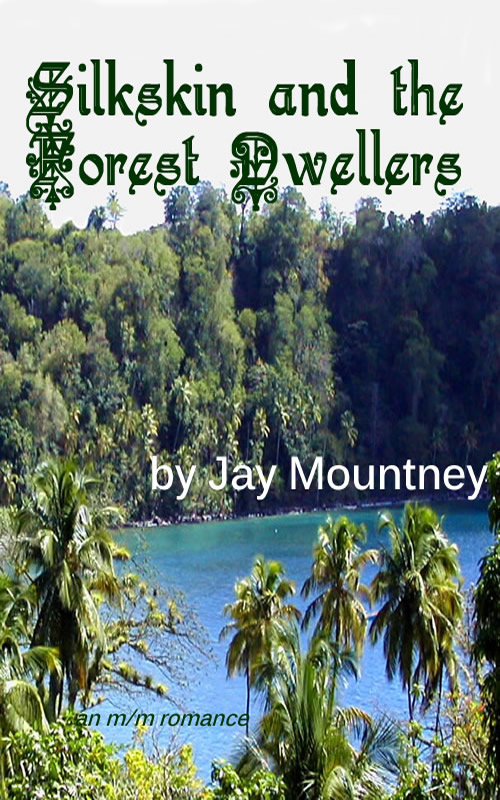
My story, Silkskin and the Forest Dwellers is available on Smashwords. It’s free at the moment – a marketing ploy that I’m assured works – so if you want to read it go to https://www.smashwords.com/books/view/170617 and find your preferred download format. For those of you who don’t have e-readers it’s available in  a .pdf version.

To refresh your memories, it’s an alternative fairy tale. The story most of us know as Snow White is transferred to a fantasy version of mediaeval Africa and the young princess is replaced by an adult prince. It got good reviews when I originally posted it in a LiveJournal writing challenge which is why I decided to use it for my first Smashwords venture.

Bear in mind that it’s an m/m romance and is therefore classed as ‘adults only’ so if your filter is on you might not find it, though the URL should take you straight there. (Perhaps this is where I point out that the story isn’t by any means ‘erotica’ – there are maybe two explicit paragraphs in almost 18,000 words.)

Obviously you’re more than welcome to download it just out of curiosity, but if you read it and like it, could I beg you to leave a brief review comment on the Smashwords site?

I still have some formatting worries, though I have no ‘autovetter’ errors so there is nothing dire. Smashwords put all books into a queue for manual vetting before sending them to other online bookstores so there might be advice on its way. However, there are two points I’d like your advice on:

1. I can’t get the copyright/licence notes onto a different page from the title. Smashwords issues dire warnings about using too many spaces via the enter key and I’m not sure how else to get it to a separate page under their formatting system. (And yes, I’ve tried page breaks.) If anyone has first hand knowledge I’d be interested to hear.

2. The squiggles between the sections have defeated me. I followed all the advice and used the same style for each one then some of them drifted to the wrong part of the ‘line’ in the published version. I won’t use centred squiggles again, and I won’t edit until I’m absolutely sure what I’m doing. What do you think? Are four spaces (the maximum recommended by Smashwords) adequate to delineate sections without squiggles, asterisks, etc? Would * or # at the beginning of the line (with a linespace before and after) be a good compromise? Any advice?

Here’s a piece of advice that didn’t occur to me until I was actually uploading my book. I went through all the rigmarole and ‘published’ then had to unpublish very rapidly because the author on the book and the author in the blurb weren’t the same… I’d approached Smashwords through my reader/purchaser route and that was the name they used in the blurb. I looked at the FAQs and found I needed to have a separate account in order to use a pen name, so I had to invite myself, and use a different email address. It’s a small point but just one of those things that make a difference and that need to be sorted out in advance!

Once Smashwords are happy with the book and are distributing it I will probably change the price from ‘free’ to ‘something’ – I haven’t made up my mind what, yet. At that point I will also upload to Amazon Kindle with the same price. So if you’re interested, download soon!

“One Short Story To Be Told”

Something different…

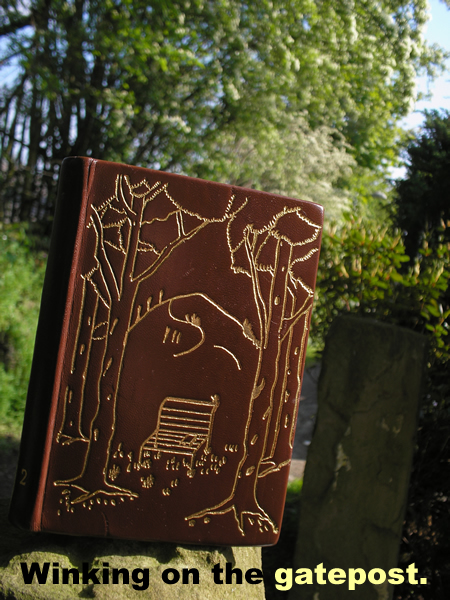
I was intrigued by the  brain child of Leyton Attens or Stanley Notte (one of those is a pen name or pseudonym, I think) and signed up to the system. ‘One Short Story to be Told’ provides a single copy of each story in the collection. This copy is passed around, via snail mail, preceded by awesome contracts and warnings. ‘Followers’ have to contact each other or Leyton to stand a chance of being the next recipient. There are five stories doing the rounds at the moment and they have travelled from their native Eire as far afield as California and Australia. I was lucky enough to get custody of Wink this month.

It’s fascinating to know you hold the only printed copy of a book. The book itself has a delightful cover, showing a peaceful scene with presumably the same book resting on a bench. If we could see the cover of the miniature book we would probably find a further picture of a book on a bench, and so on. Leyton encourages people to send photographic evidence of the story’s safe arrival and he then publishes the results in a blog. Readers then choose the next recipient and before posting the book, add their comments in the space left at the back of the volume.

The story itself is well written and interesting, quite good enough for inclusion in any anthology of modern short stories. It is raised out of the vast sea of competent stories by the ‘one copy’ concept. It’s a mainstream story, addressing family relationships, and might very easily sink in a large slushpile. Equally, normal self-publishing might fail to attract attention as there is no special genre to advertise. Instead, the author has chosen to make a small but unique mark on the publishing map with his quirky but delightful idea. The result is publicity for the stories themselves and also great enjoyment of the story of the stories.

I asked permission to publish a photograph of Wink here, and was told publication on blogs was actively encouraged.

If you’re interested in Wink and its fellow stories, or just in following their fortunes, here’s the place to find out more.
http://oneshortstorytobetold.com/

Book covers.

All the advice is to get professional help designing a book cover.

I am tempted to ignore the advice. I have seen so many awful professionally designed covers – covers that would put me off buying the book if I wasn’t already aware of its contents, covers that are hard to see at thumbnail size on distribution sites, covers that just don’t appeal to me. This applies to printed books and ebooks equally. And I know authors who have trouble with the art publishers insist on using.

I have spent quite a bit of time studying the requirements and thinking about designing my own covers. I love playing with images to make icons, banners, etc. and I have a huge stock of my own and my family’s photographs to choose from. I don’t even need to find anything on the copyright free sites. As you know if you follow this blog I enjoy manipulating photos – tweaking the brightness, re-sizing, adding text, etc. I’m usually pleased with the results.

So far as I can work out the main things are:
*make sure it can be read in thumbnail size
*make sure it says something about the content
*make sure it doesn’t have too much information; stick to title, author and perhaps genre
*make sure it’s the right size for upload

So how hard can it be?

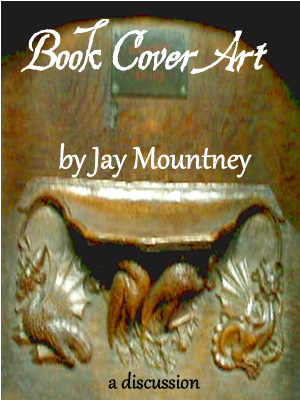
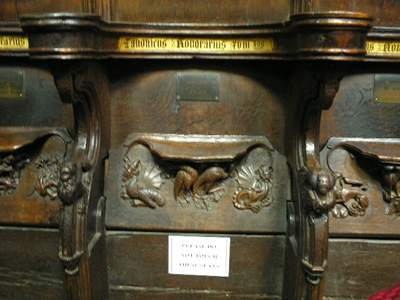
The picture I’ve used as a sample, to illustrate this post, was made from the photograph below (by me) of a misericord in Chester cathedral. You can see I’ve manipulated the sample quite a bit, before adding text. Both pictures have been re-sized to suit the demands of WordPress but the sample cover is proportionate for a Smashwords book cover. I didn’t actually spend long on this but would take more care with one for epublishing.

I have designed the covers for the first three titles I intend to upload. I’m quite pleased with them and I think they stand comparison with so-called professional ones. I can tweak them – they need to be different sizes for Smashwords and Amazon.

When I actually upload I’ll display them here and hope for comments. Meanwhile, is there anything I’m missing?

Formatting for fun…

I have been struggling with formatting, something that is essential if I’m to self-publish, and I promised to share my self-publishing researches with you, so here we go.

So many people tell you to make sure your book is carefully formatted but leave the mechanics unexplained. So many people, even possibly the same ones, complain about the poor formatting in self-published e-books. I knew I needed to get it all right and I knew I was starting virtually from scratch.  I also knew I needed to do it myself. I don’t want to pay anyone else and even more than that I don’t want to rely on anyone else. I need that element of control which I suspect lies at the heart of the way I have embraced the idea of self-publishing.

I have been reading and re-reading all the advice that is out here in cyberspace and believe me it is not easy or intuitive. Most of the advice bypasses the most basic information and assumes a familiarity with various aspects of word processing that I simply don’t/didn’t have. Once upon a time I did a course on desktop publishing but it resulted in pretty documents that would be no use whatsoever for uploading to an e-publisher like Smashwords or Amazon; it was directed, I think, at the production of privately printed leaflets, pamphlets and things like local magazines. I usually write in RoughDraft and use very few of the bells and whistles that even that comparatively simple software offers. So getting to grips with some of Word’s bells and whistles was the first learning curve. And Smashwords demands a Word doc with no extra hidden formatting. This is essential and they then put it into what they call a Meatgrinder to convert it to various formats – mobi, epub, etc.

I am fairly competent at using more than one word processor, more than one blogging platform, more than one email provider and basic photo manipulation. So I’m not totally technically illiterate but this was quite a lot to take in all at once.

First there was the conflicting advice: leave out the spaces between paragraphs; indent the first line of each paragraph; don’t use the space bar to create indents; etc. I couldn’t get my head round how to produce text that was acceptable and Word’s autoformatting made very little sense to me because I wasn’t writing in Word in the first place. I followed various instructions from various friends and then realised that my text – all my text – was probably riddled with the wrong formatting and I needed to start again. I was particularly worried by the fact that I normally type in block paragraphs. This is in part a hangover from non-fiction work-related documents and in part the convention used by most fanfiction, which is virtually the only fiction I have had ‘published’. My heart sank at the thought of all the work I was, I thought, going to have to do.

I then read and re-read the Smashwords Style Guide. (You can download it free at Smashwords.) At first most of it seemed like a foreign language and I started to panic. Then I experimented with a section of text that had all the features I needed to test: paragraphs, dialogue, and the problem of having been ‘touched’ by more than one word processor system, something that happens when you send things to and fro to betas, first readers, etc. ( I never use italics or any similar problematic formatting other than in titles or author’s notes so that wasn’t a worry.)

Things seemed to be working but I still didn’t quite trust myself or the results. So I consulted my daughter, who is extremely good at stuff like this. She doesn’t use Word; like me, if she wants more than .rtf she uses OpenOffice. But I had my laptop open with the Word document containing the experimental passages and she had the Smashwords Style Guide open on her PC. Together we went through it all, very slowly, and tried each piece of advice. And it worked! (Despite a great deal of interruption by my grandson who wanted to help…)

Even if you normally use Word it is worth following every recommended step because Word is especially adept at adding hidden formatting that it thinks you might like to your text – instead of leaping up with frantic paperclips, as it did in the past, it does it quietly behind the scenes. Then if you have sent your work to a friend to beta and they have viewed it in e.g. OpenOffice, the problems will have multiplied. So here’s what to do.

Basically, treat the Style Guide as a bible. Regard it with religious fervour and follow every step as a matter of faith, even when you don’t understand what it is telling you to do.  ‘Nuke’ your document by putting it into Word, then into Notepad (to remove  the formatting) then back into a fresh Word document. Smashwords call it the nuclear method and recommend it. They also recommend closing Word down and re-opening it to make absolutely sure you have a clean page.  Blitz all the autoformatting and autocorrection options by unchecking them – all Word’s bells and whistles must be removed.  Allow Word to set your document in ‘normal’ style – a style free of bells and whistles.  Turn on ‘show formatting’ so that you can check. Modify the normal style to include indents and single spacing, following the Style Guide instructions to the letter, and check that it has the font and size you want (which is not necessarily how your text appears on the screen). Then highlight your text and click on autoformat. Hey presto! Block paragraphs turn into beautifully presented text with indents and no extra line spaces. Magic!!

At this point, disbelief sets in. You worry that it only looks as if it has worked and that there are bound to be glitches, gremlins, even demons. So, ask Word to save your freshly formatted document as a filtered web page and load it to your conversion program. I use Calibre, which is a brilliant free program for converting documents for my Kindle. (I have Calibre tied to my e-reader format so the conversion was to Mobi but  you choose the conversion default on set-up.) Then click to open and Calibre (and presumably similar programs) will loaded the document to Kindle for PC  (a free download that lets you read Kindle books on your laptop or PC) or if you have chosen e-pub conversion Calibre opens a reader for that.

My document looked perfect!!! We decided that it was possible there might be occasional glitches – for example if a paragraph ended exactly at the end of a line it might, in the course of reformatting and conversion, flow straight into the  next paragraph but this was hardly  going to be earth shattering and certainly wouldn’t draw the sorts of criticisms we had heard and that my daughter herself had made of many e-books.

Then I realised I had to deal with the chapter headings, title page, etc. Again, the Style Guide takes you through it and you can choose heading styles based on the ‘normal’ style but with bigger fonts etc. and you can choose centred styles too. I have checked these out using the same method and they work so I should be all set. If you call your chapters ‘chapters’ and do what the Style Guide tells you, the Meatgrinder will automatically add chapter links and both epub and mobi will start each chapter on a new page.

My main disappointment at the moment is that I have to use the Smashwords/Amazon licence declaration. I would prefer to use one of the Creative Commons ones but haven’t yet worked out whether a) I can, technically (Creative Commons licences come as html) and b) I can, legally (because Smashwords presumably want to control what they see as piracy). I’ll leave that for another day. I’m still trying to work out how to make sure my title page is separated from the licence but gather it varies from format to format and can’t be controlled by the author.

Next time, I’ll talk about cover art. And then about pricing and payment issues.

Once I’ve sorted all this for one book it should be a fairly quick and painless process for each book/story. And it brings self-publication that much nearer.  If any of you want to know more, just ask!

Self Publishing

Once upon a time…

Self publishing was once regarded as only one step above vanity publishing, despite the fact that some self publishers went on to become famous and in the past (i.e. before the rise of modern publishing houses) almost all authors were either self published or published by private patrons.

Vanity publishing tends to cost a lot and leave the author with a number of volumes gathering dust in the garage. There is no ‘validation’ either by acceptance (they are only accepting the book because of payment) or by sales. The sad thing is that most authors conned by vanity publishers don’t suffer from vanity – they think they have found a genuine publisher for their work.

The advent of p.o.d. with sites such as lulu made it easier and more profitable for people to self publish, particularly in the non-fiction field, where the small size of the potential readership often stopped big publishing houses from taking on interesting books. Other writers used the internet to provide their work on websites organised on a pay-to-view basis. These changes involved only a tiny number of writers, fiction and non-fiction alike, but were the vanguard of the current trend. Both still have much to recommend them but do require quite a lot of initial financial outlay, even though this is usually recouped. The financial outlay is what tempts people to compare them with vanity publishing. The p.o.d. model is probably best suited to books which will sell to a local audience or a very specific one, e.g. within a sport or interest group. The website route requires marketing skills and enthusiasm. Some bookshops won’t stock books that have been self-published, but then some bookshops are going out of business. Websites can be tricky to bring to the attention of search engines.

Then came the e-reader, Amazon, and Smashwords. This has been a rapid and recent ‘revolution’ and like others, I was initially rather bemused by it. Now, I’ve been reading, and learning, and want to share my findings with you.

**********

By about 2005 it dawned on a number of authors, both newcomers wanting to break into publication, and published writers wanting more control over their work and more reward, that:

*the global recession plus the rise of e-publishing has made it less and less likely that a total newcomer will be chosen in the publication lottery and even established series have been axed to make way for more ‘sure things’ such as TV tie-ins,  ghosted autobiographies of celebrities and other ideas that will make money for the publishers.

*editing, in the old sense, has been curtailed; you only have to look at the number or typos in modern books to know that authors are expected to do their own spell checking

*marketing, in the old sense, has also been reduced; authors complain about having to pay their own expenses to get to interviews etc. and that books are not always available at book-signings

*huge advances are very rare and in any case are just that – an advance against possible future earnings, plus, they are paid all at once and therefore are taxed within that tax year, which can be a financial drawback

*e-publishers give even more parsimonious rewards than the big houses (advances are almost unheard of), though often the royalties are higher; they do even less work in terms of marketing and editing; many (though not all) of their editors are less able compared with those who work for the publishing giants; there are drawbacks in terms of copyright agreements, being tied in to contracts, etc.

*e-publishers, to give them their due, also produce very nice print versions, but at that point turn into regular publishing houses…

*Kindle and Smashwords provide a cheap, professional e-publishing service and a number of authors are taking advantage of this and making money selling their books; why give rights and control to a publisher if it isn’t necessary? (Note that we are not mentioning Apple with their greed for copyright control.)

**********

There have been a lot of blogs and articles about this and I have been following: http://jakonrath.blogspot.com/, http://tashasthinkings.blogspot.com/ (Tasha is a friend of mine), http://donovancreed.com/ and http://blog.smashwords.com/, plus reading articles recommended by them and by others. I am also watching with interest Josh Lanyon’s decision to take back his books as the various agreements time out, and self publish. For in depth analysis I would recommend starting with Konrath. His rather humorous style conceals a great deal of interesting comment.

**********

Some of the arguments in favour of self publishing are:

* the writer retains more control over the book – editing, format, copyright, cover, price, marketing ploys

*the rewards are potentially higher; Kindle let the author retain 70% of the cover price if the book is priced at $2.99 upwards, and 35% for books priced below that.

*the rewards are paid monthly (good for tax purposes) and authors don’t usually have to ‘chase’ Kindle – something not unknown with big publishers

*readers will often buy cheap e-books on a whim and as a result, sales figures can be higher than with a traditional publishing route; of course they won’t come back for more unless your book is worth reading

*it’s free; there is no charge for putting your book on the site although of course like any writer you have the cost of your time and your materials (such as your computer) and your research – there aren’t even the postage/printing costs associated with submitting to the big print publishers

**********

Of course, some of the arguments against self publishing are very much the same points (with my comments in italics):

*the writer is responsible for the editing, format, cover, etc; but if you write on a computer anyway, you’re half way there and if you have good betas/supportive friends  it gets even more manageable and the sites give a lot of help

*your book can get lost in among the drivel that is coming out in e-books; well, yes, but it can also sink like a stone in a conventional publishing format or with a professional e-publisher; there is a vast amount of drivel out there anyway

* people will regard your book as somehow less worthy if you are only charging $2.99 for it; this is an argument that can only be resolved by your bank manager depending on your sales and it depends, in the final analysis, on whether you’d rather be rich or famous (given that both may not be on offer)

*self publication does not give you the validation that acceptance by a professional publisher does; no, it doesn’t, but see the previous point about sales; also, I wouldn’t try to self publish anything without a lot of beta input  from people I trust, so the validation comes at that point, and publisher acceptance is more like winning the lottery

*it’s a lot of work and you wanted to be a writer, not a publisher; but it is almost as much work to get something ready to submit to a publisher and then there’s all the waiting and worry; also, while marketing is a pain, a publisher expects you to do a lot of your own publicity anyway

*it only works for people who have already built up a fanbase of loyal readers; according to admittedly anecdotal but numerically vast accounts in Writing’, a magazine I subscribe to, this is not true.

**********

Note that I am not suggesting for a moment that weighty academic books or highly illustrated volumes have any place in the self publishing world. I think the professional publishers are going to have to change their whole publishing model to be able to continue to bring us that kind of thing and meanwhile I wish any authors of those sorts of books well and hope they manage to attract publishers’ attention.

By the way, the magazine I mention also has a free (but limited) online presence: https://www.writers-online.co.uk/ It’s worth a look.

**********

My own personal reasons for even considering self publishing are as follows:

*my work tends to stray outside the tight genres beloved by publishers, making it less likely to get published

* I have a kind of submission phobia, based on the assumption that it is statistically improbable that my work will be considered and that therefore it is a lot of work and worry for nothing

*some friends/family want to see some of my work published

*if I was published/self published, I could legitimately call myself a writer and thus justify spending hours on my laptop and in a dreamworld

*it is easy to share or ‘publish’ my fanfiction; I think/hope my original fiction is as good if not better but it is harder to get it to an audience.

I have to admit that I am not particularly interested in fame or fortune except insofar as both or either would allow me justify the hours etc. Of course I would welcome fame, in terms of interested readers. If I didn’t want to share my work I wouldn’t spend so long on it. I might write a first draft (second if you count the draft in my head) and leave it at that. All the rewrites and edits are for other people and for the pleasure of sharing. (Incidentally, I put the same amount of work into fanfiction which brings no monetary reward.) I wouldn’t say no to money, either, but it isn’t why I write, and as I’m retired it isn’t even a pressing necessity. I have my finances worked out to allow me to spend time writing; it’s the family demands I would like to be able to counter with claims that I had to ‘work’.

**********

I know some of you have experiences to share and others have plans. Are there general points I haven’t covered? (I’ll leave the details to Konrath etc.) And what do the rest of you think?