Speaking English and spelling it.

DSCN9211 - Copy

I have been absent too long. First of all I was in Portugal and trying not to use my very expensive internet connection. Then I was frantically working on a fanfic novella for a ‘big bang’ challenge which is when writers and artists collaborate on longish works and of course the timing and to-ing and fro-ing is crucial to success. That’s finished now.

I have also been discussing language with my daughter, specifically the English language, because my grandson is being taught phonics, despite the fact that he can already read and spell. I admit that phonics has a place as part of a many-pronged approach to teaching reading and spelling, but think that it might well short-change some youngsters in later years if used in isolation, which is the current practice in UK primary schools.

We started looking at some of the words people have difficulty spelling and at some they have difficulty pronouncing. We looked up some of our own ‘problem’ words and I was relieved to find that ‘valet’ could be pronounced either to rhyme with ‘chalet’ or with ‘mallet’. My daughter felt vindicated when we found that eagles can live in a thing pronounced ‘eerie’ or ‘airy’ or ‘eye-rie’. It’s interesting, too, that if you have only ever seen a word in print and never heard it, phonics does not necessarily give you any clues as to how it sounds.

We found an article about changing spelling which highlighted the historical influences.

http://www.alternet.org/culture/8-pronunciation-errors-changed-modern-english

I am frequently annoyed by people who try to tell us about our language and then base everything they say on current practice (or what was current when they went to school) without admitting that languages live and grow. The following article would have annoyed me except that it was in a newspaper I can’t take seriously. I suspect the book it is talking about is not going to be on my wish list. But that’s about usage rather than pronunciation or spelling.

http://www.dailymail.co.uk/news/article-2619227/The-Pedants-Revolt-In-joyously-combative-series-SIMON-HEFFER-goes-war-sloppy-English-Be-warned-Youll-cheer-want-punch-him.html

Then we found the following:

http://www.tickld.com/x/90-of-people-cant-pronounce-this-whole-poem

I had come across something similar with a focus on words ending in ‘ough’ but I did find this to be a nice commentary on any attempt to force English into the mould of a phonetic language.

So – any words you have always wondered about?

Here’s a link to the dictionary page where we found the eyrie – you can type any word into the search box and then click on the ‘loudspeaker’ symbols to check the pronunciation.

http://www.oxforddictionaries.com/definition/english/eyrie

Have fun! (I can get lost in a dictionary for hours…)

A boring thriller

New Image

The second book I read whilst away and felt impelled to discuss on my return was Death Comes To Pemberley by P.D.James.

Great, I thought – a murder story written by a revered exponent of the genre and based on an Austen classic that is one of my favourites. Fan Fiction, of course, except that because it’s ‘official’ and she gets paid for it we don’t call it that. Dear me, no!!

The story was quite interesting – enough to keep me reading to the ending and solution. But the writing was another matter. The English, unlike that of the last author I reviewed, was impeccable, and the editors had even managed to exclude any typos. But the general presentation of the story left a lot to be desired. The prose was ponderous – heavy and repetitive. I’m not sure whether James was trying to sound nineteenth century, but Austen’s work, whilst written in a style that would be considered almost odd, and perhaps flowery today, is always witty and sparkling, littered with humorous asides and references to social matters. This never sparkled for a moment. The other aspect that I disliked was a propensity for the characters to expound to each other on matters that they should not have needed to mention. It was as if James had taken in the idea of ‘show, don’t tell’ in a very half-hearted manner and had simply moved over-long exposition from narrative to dialogue. It was irritating and disappointing.

I loved the Adam Dalgleish mysteries as shown on TV but when I tried the books I found them less than satisfactory – very long-drawn-out, with occasional plot holes and less than sympathetic characters. But it’s ages since I read them so I can’t remember whether they shared the faults of this volume.

Perhaps it didn’t help that I had just read a fanfic based around the same Austen novel. It was a fusion story, which for those of you who aren’t familiar with fanfic is a story where characters from a fandom replace the characters in a film or novel. We get to explore the way different people might have dealt with the plot, how far plot affects character and behaviour, etc. This particular story followed the events of Pride and Prejudice quite closely but tweaked some of the minor outcomes in accordance with the characters they had chosen to use e.g. Collins was much more sympathetic). I won’t give details of the fic here because whilst Pride and Prejudice is clearly out of copyright, the other fandom isn’t and I would hate the authors (it was a team of two) to suffer any harassment even though I firmly believe the work is transformative and therefore perfectly legal. It was beautifully written, in bright prose that carried the reader along just as Austen does, and there was all the social commentary, humour and romance we could have hoped for. The alterations to the plot were intriguing in themselves, and the only flaw I could find in the entire thing was the authors’ knowledge of English geography, which was quite evidently non-existent.

The main thing is, I have preserved my copy of the fanfic and will look forward to re-reading it, just as I re-read Austen. The fact that it was free is neither here nor there – I would happily have paid for it. My copy of the James book was paid for, and I will never look at it again. It’s a Kindle version so I can’t even give it to a charity shop.

The experience blurred the lines drawn around fanfic even more than I had previously imagined.

Two queries occur to me. Am I, as a writer, too prone to read with a mental red pen in my hand and if so what do I do about it? And how do authors gain the respect of what seems like the entire publishing world when their writing really leaves a lot to be desired? Apart from both being writers in the general crime genre, James and Coben (see my last post) have very little in common, and their flaws are dissimilar. But they do make me wonder about publishers – and about readers.

I wouldn’t recommend the book I discuss here but I would welcome further ideas on the issues I’ve raised.

What do we expect from editors?

New Image

First of all, sorry for the hiatus! I was seriously stuck whilst in Portugal – as well as internet limited by how much I could afford to load on my dongle, I had laptop problems. My laptop had a hissy fit at the heat (38-45C) and the dust/ash caused by the forest fires (and yes, we were in the middle of the affected area). I’m now back in UK and just recovering from the trauma of buying a new laptop – more about that in another post.

Because I was internet deprived and laptop deprived I couldn’t write so I did a lot of reading, and quite a bit of pondering on what I’d read. I want to share a couple of in depth reviews/commentaries with you because they raise issues that affect the craft of the writer.

The first writer I want to discuss is Harlan Coben. I have only read one book – The Woods – so bear with me if it is out of line with the rest of his work.

Now, the book I read deserves much of the praise Coben garners. It has an intriguing plot, an excellent introduction to the mystery, great characters (even the minor ones), well-written dialogue, fascinating insights into states of mind including those of criminals, prosecutors and parents. And I was truly hooked on the story. I can see why he wins awards and I will definitely be looking for more of his work.

But – and this is where the discussion point comes in – who edited it and where did they learn about grammar (or not)?? And who lets Coben get away with murdering his native/adopted tongue?

From the beginning the book is simply packed with tense shifts, sometimes within the same sentence, lack of agreement between subject and verb, jarring continuity errors… I hate it when tenses are misused and it says something for the story content that I carried on reading anyway and just felt forced to share my feelings with others.

Am I really a dinosaur for preferring English to be correctly written? Do the editors at Orion simply not care because they know they will make money anyway? Do readers in general really not notice faults like this? Any writer can make occasional mistakes, some of them typos and some of them out of ignorance. But this is constant! Coben probably doesn’t realise what he’s doing but surely an editor’s job is to work to polish material? Isn’t that one of the arguments for buying ‘published’ writers in the sense of those published by the big/known publishing houses? Whilst I’ve come across a few self-published books that share some of Coben’s problems this is actually the worst example of badly edited language I’ve come across outside school English essays.

Note that I’m by no means giving the writer a bad review. I can recommend the book in spite of its flaws. Your thoughts would be welcome!

Tenses.

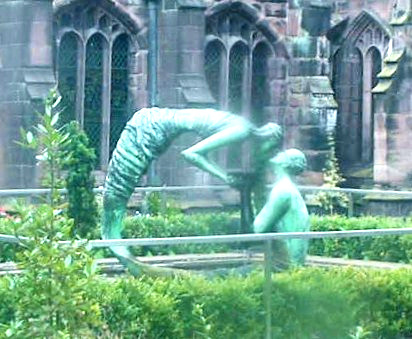
61. chester fountain

I have been thinking about the use of tenses in writing.

I was taught (and yes, I’m a dinosaur) to use the past simple tense for telling stories. All the books I read were this tense, sometimes known as narrative tense, and I got used to both reading and writing in it. But how far should we go in sticking with one tense?  I thought I’d look at a few tenses and my feelings about them.

The past perfect tense.

I have always appreciated the advice that the use of the past perfect (‘he had begun’, rather than ‘he began’) should be avoided whenever possible, and left for occasions when it was essential to differentiate the times involved. Whole passages written in the past perfect are hard to read and usually unnecessary; the time can often be suggested by other phrases at the beginning. Consider the following examples:

a)He had always liked the quietness of the early mornings. He had risen, dressed, and breakfasted before most people were awake. He had enjoyed the stillness, the birdsong uninterrupted by cars or conversation. He had luxuriated in the knowledge that this was his time. Since the accident that damaged his hearing, he no longer appreciated these things.

b)Before the accident that damaged his hearing, he liked the quietness of the early mornings. He rose, dressed, and breakfasted before most people were awake. He enjoyed the stillness, the birdsong uninterrupted by cars or conversation. He luxuriated in the knowledge that this was his time. Now, he no longer appreciated these things.

The second version is, in my opinion, easier to read and gives exactly the same information. But of course there are occasions when the use of the past perfect is mandatory, if the author is not to employ a great deal of circumlocution. Consider:

 He knew he had seen her before somewhere but was unsure when or where.

I have tried, unsuccessfully, to replace the past perfect in this sentence. ‘Had seen’ can be erased but then you need ‘had been’, ‘had appeared’ or something similar to make sense.

The past imperfect tense.

I have always looked askance at American editors (to my knowledge this is something totally confined to the USA) who suggest that the use of ‘was’ is unacceptable. Sometimes, the imperfect tense is the only one that will do. Consider the following:

a) He was crossing the road when a car almost knocked him down.

b) He crossed the road. A car almost knocked him down.

Note that in the second version, the act of crossing the road is finished. We have no idea when the car almost knocked the character down. Did it mount the pavement? Of course we could alter the information to read:

c) A car almost knocked him down as he crossed the road.

d) As he crossed the road a car almost knocked him down.

But quite often the writer wants to establish an impression of movement before introducing something that might curtail that movement. The contrast is important. Hence the first version.

A whole passage written in the imperfect is unlikely to be either necessary or easy to read, although to show movement, it might be necessary to use more than one imperfect verb in a sentence e.g.

He was flying, soaring, winging his way through the clouds. (Note that ‘was’ is not repeated and is assumed to apply to all the actions.)

‘He flew, soared, winged his way through the clouds’ does not, I submit, have the same effect and the ‘music’ of the sentence, read aloud, is drastically altered.

 There may be cases of too much use of the tense, but to cut it out altogether seems arbitrary and strange. Admonitions about its use seem to go hand in hand with a misunderstanding of verbs and a fear of using the passive voice, which is certainly something to be avoided wherever possible in a story because it makes the account seem impersonal. That’s one reason for its use in reports or other non-fiction documents although even there it is less than ideal. But the difference between ‘he was running to catch the train when the rain started’ (imperfect) and ‘this effect was observed by several scientists’ (passive) is surely one all editors should understand.

The present tense.

There is a fashion, one that has become more and more pronounced in the last few years, for stories to be written in the present tense. I remember a time when the only use of the present would be for a section where the author needed to engender a sense of immediacy or urgency in contrast with the rest of the writing. I have a feeling the current use of the present is intended to convey a sense that the reader is watching a film, that events are happening as the reader reads, and that everything is both current and exciting. I can understand this motive, but I do wonder how the writer can then impose an even greater sense of urgency when required.

I personally find long pieces of writing in present tense quite hard to read. I am getting more used to it, but it is not my favourite way to take in information and I have been known to put down a book after the first page having realised that the present tense is to be used throughout. I think when I read I want to know what happened, not what is happening. I need to have some certainty in the back of my mind that for the author at least, the story is finished, and I can rely on it reaching a conclusion. I lose this if the present tense is the chosen one.

This is obviously to some extent due to my own upbringing and habits, but it is also a reaction to everything seeming to be too immediate and less of a story. Stories, for me, take place outside my own time and place, and need to be told in a form that suits that slight distance. I have come across thrillers and detective stories that use the present tense technique and I find them irritating; when everything is present and immediate there is less room for surprise or shock.  I have accepted some present tense fanfiction with a sigh, if the plot is appealing, especially fantasy or sci fi tales set around familiar characters transported in time and space. I have got used to the tense in short stories or even shorter pieces of fiction (e.g. flash fiction) but I have to say that in novels I dislike it intensely.

I would never, ever write in the present tense. I would find it extremely awkward to do so. The present appears quite often enough in dialogue and the narrative in between stays, for me, firmly in the past.

How do other people react to the different tenses? Does it depend on the reader’s age, native language, familiarity with particular types of documentation, or any other factors? What do you think? And which tense do you automatically start to use when you begin to write?

Points of View (from a writer’s point of view).

58. Points of View
Should a writer switch the point of view of narrative, and if so when and how?

Of course, any story can be written from one point of view, maybe that of one character and maybe that of the author/narrator. If the character p.o.v. is used, the writing can be in first or second person though it is, for most readers, truly difficult to follow second person writing for any length of time and the technique is not often used. A narrator can use first person to tell a story in which they are an observer and not personally involved, and this type of narrator is not always the author. When the author uses an omnipotent authorial voice and tells the story in third person it can be easier to involve the reader in a number of different threads and the actions of a large cast, but the technique can also be distancing, and can lead the author into commentary on the storyline that does not stem from within the plot.

To avoid distancing and such problems many writers choose to write in third person but make it clear that the narrative is proceeding from the tight point of view of one of the characters. This works well until there is a necessity to show some part of the story that could not be witnessed by the character concerned. Methods of dealing with this include other characters recounting the events concerned either in person or by letter, but this can be irritating for the reader who wants to follow the story as it happens and not ‘after the event’ wherever possible.

And so we come to multiple points of view. Some readers don’t mind switches of p.o.v. and others find them hard to handle. My own view on this is that such a switch should always come at a natural break in the text, and should probably be shown in some way such as by a new chapter or part of a chapter and that there should be some kind of introduction of the new p.o.v. usually by the use of the character’s name in the first few sentences.

I was led to think more about this by my current project, the third volume of my fantasy detective series. Where crime and detection are concerned it can be important to allow a plot to develop in a linear fashion. My detective has assistants and at various points of the plot they are separated, sometimes for quite some time. At one point, they are completely out of touch. It would be clumsy to have them constantly reporting to each other and could make the flow of the story jerky, so I have chosen to use a different p.o.v. in different chapters, bearing in mind the warnings I gave in the last paragraph. Obviously when they meet again they can report but it doesn’t have to interrupt the narrative for long.

I now find myself progressing very slowly. I am constantly having to check who has done what, and also who knows, when they found out, and so on. Otherwise, subsequent actions and conversations wouldn’t make sense. I need to have multiple tabs open and move between them. This slows me down physically, of course, but even more so, it slows me down mentally and throws me out of my own story for a while each time I have to check. And of course, as the author, I know what happens but my characters don’t and I mustn’t let them see too much too soon.

I don’t think there’s an answer, though I admit to feeling, at the moment, as if I will never use multiple viewpoints again. (I’m only using two but it’s driving me mad.)

I know I’ve been ‘absent’ this month – I’ve been struggling with my novel! I’d be interested to hear whether other people have the same issues when they are writing, and also how switching viewpoint affects you as readers.

Young Adult Fiction – some thoughts.

56. Young Adult Fiction

I recently bought and read a book called The Prince of Mist by Carlos Ruiz Zafón. I had previously read The Shadow of the Wind by the same author and had enjoyed it immensely. This book advertised itself as ‘young adult’, which was quite a change of genre, but as I’m interested in books for younger readers I thought I’d try it. It’s a kind of thriller and a kind of ghost story, but I found it very disappointing. Neither the location nor the characters were sufficiently developed to enable me to get thoroughly into the book and the parts that some reviewers thought scary seemed overdone and ridiculous to me. However, it did leave me with some questions about young adult books in general that I want to discuss.

First of all, the genre is somewhat nebulous. Some authors and publishers seem to mean ‘teenage’ by the term – perhaps trying to lure teenage readers by calling them young adults. Some seem to mean they want to target readers between the ages of fifteen and twenty-five, and specialise in ‘coming of age’ stories. Yet others seem to apply the term to anything that is ‘lighter’ reading, stories that are shorter or less complex than what are presumably ‘fully adult’ books. Zafón says he wrote the kind of story he would have liked to read as a teenager but hoped it would appeal to all ages. I find all this confusing. The only conclusion I can tentatively come to is that publishers regard the term as a marketing tool.

Secondly, even if the target audience is young, I am not at all convinced that the readers deserve some of the stories handed out to them. Personally, I was reading ‘fully adult’ books at quite a young age, particularly the classics, and was perfectly capable of coping with quite complex plots, language and structure. I also had sufficient general knowledge to handle references to well known historical, geographical or scientific facts, etc.  However, younger readers do not always have the experience to empathise with older characters and might prefer  heroes, heroines, and even villains to reflect their own lives and emotions. This would be true, I suppose, of films and shows, too, so a middle aged detective (for example Poirot, or Morse) might appeal to fewer young readers or viewers, though I admit I enjoyed Poirot when I was a teenager. The main protagonists in Zafón’s story were teenagers, which actually made them less interesting to even the youngest of adult readers, particularly because the average adult would know quite well that most teenagers would be physically incapable of the heroic feats they were portrayed as engaging in. (A group of teenagers must confront a ghostly monster and try to defeat it.) I suspect most teenagers would know that, too. I accept that a lighter kind of novel is probably better without too many sub-plots or a cast of hundreds, and that a short novel can do without an overabundance of descriptive detail or philosophical meanderings, but I do think that plenty of people, both teen and adult, want light reading that still respects their intelligence. And I do think that teenage heroic figures need to be realistic, even within a fantasy or paranormal tale.

Thirdly, I was annoyed, in The Prince of Mist, and in some other YA books, by the over-simplification of the language. It is not necessary to avoid complex sentences or ‘difficult’ vocabulary even with older primary age students so they certainly shouldn’t be dismissed from YA novels. I am not sure whether Zafón or his translator was at fault but I found the results irritating and staccato. I have, however, found the same level of simple sentences in some books directed at an adult audience (including the Swedish Wallander detective series), so maybe it’s just a style I dislike. If a series of books are actually intended for people whose reading skills are limited, I suppose some publishers might advertise them as YA to avoid stigmatising readers. But that leaves other young readers short-changed. And I’m pretty certain the Zafón book was never intended for this category.

So these were some of my thoughts: I did, as a teenager, want stories with comparatively fast-paced action, but when I read Les Miserables (I was about twelve) I just skimmed the philosophical asides and carried on with the story. Zafón’s story had such fast-paced action I was unable to suspend disbelief. The only time I have ever needed a dictionary by my side (for fiction) was when I read (as an adult) Eco’s The Name of the Rose, and that was because I didn’t know, and wanted to know, some of the mediaeval architectural terms used. I think we cheat young readers if we don’t give them the chance to come across unusual words. There are stories, such as retellings of fairy tales, that demand spare language and simple sentences, but modern thrillers, in my opinion, do not.

I then began to wonder whether my own fantasy detective series is a YA series and whether I should, when I eventually publish, market it as such. It deals with coming of age, with starting a career and learning new skills, and with the beginnings of romance. In that sense, it’s about young people and likely to appeal to them.  The individual novels aren’t long epics – they average about seventy thousand words. They aren’t particularly complex, because each deals with one specific crime or series of crimes. There is, admittedly, a teenage dragon. But should I be concerned about what age group I am writing for? I started writing the series for myself, not for anyone else. And should I worry about the language?  It isn’t especially difficult but I haven’t tried to keep it simple. Something I have tried to do is to keep sex out of the stories, other than by implication, because I am not personally fond of finding explicit sex in what starts out as a lightweight detective novel. That’s really where the series differs a lot from some of my other work. It’s the only way in which I think I have leaned towards a YA series, apart from the subject matter.

I have enjoyed some YA books enormously. Others leave me less than impressed. This, I think, has been true ever since I was a teenager myself. What I don’t know is whether I should be using the term to describe what I have written – for marketing purposes – or whether I should simply ignore the entire issue. I certainly would not like to think my books were directed solely at teenagers, though I am fairly sure they would appeal to older teens and younger adult readers.

I’d love to have your views on the subject and I know some of you have written in the YA field. Can we define it? Should we? And is it a minefield or is it somewhere stories can find a comfortable home?

Meanwhile, to anyone who loved The Shadow of the Wind for its convoluted plot, detailed locations, three dimensional characters and beautiful language, be warned – The Prince of Mist is probably not for you!!

Spring, and a good review.

55. Spring and a good review.

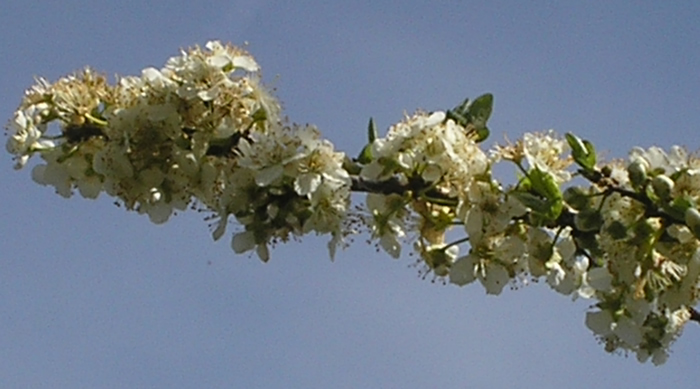
The illustration is a branch of our plum blossom in Portugal. Unfortunately we had heavy rain, which the bees hated, and I suspect there will be a poor fruit crop. But the blossom was pretty…

We’re back in UK and I’m enjoying being online again for much longer!

My mood has lightened considerably in the last few days. Spring would appear to have reached England and there are actually signs of green on a few trees. There is quite a bit of sunshine, too, no longer accompanied by freezing temperatures.

I was really thrilled to get good reviews of my novellas in the April issue of Wilde Oats, an online zine that specialises in gay short stories but also has, every time, a number of in-depth and thoughtful reviews. I have often bought books following their recommendations. If you’d like to see what Matt Brooks had to say about my writing, go to http://www.wildeoats.com/review_ThreeNovellasByJayMountney.html
After that, stay to explore the other reviews! For those of you who have Kindles, bear in mind that my novellas are now available from Amazon, too, in mobi format.

I have been struggling with my laptop recently. The cursor has a mind of its own and jumps around all over the place, worse in some applications (like email) than others. A few days ago it got so bad I could barely use the keyboard. I’m told this is a fairly common laptop problem and has something to do with the thumbpad. A build-up of static is one suggested cause… I’ve cleaned the thumbpad assiduously (and used a cloth intended for spectacles) and things are more or less back to normal – not perfect, but acceptable.  At least I will be able to write again, something that simply wasn’t possible last week!

So, I have no poetry, no news on my novels, and no real news at all. But I thought it was time I posted!

Writing conditions

OLYMPUS DIGITAL CAMERA

No apologies for iris two posts running. This group are comparatively privileged creatures; no snow to contend with! They’re by our water butt opposite the kitchen door of our Portuguese house.

We came out to Portugal at the beginning of the month and I knew that internet might be a problem. We have had huge rows with Portuguese Telecom, who have kept replacing our broadband with dial-up, failed (five times now) to replace faulty routers, taken money via direct debit when they know quite well we are not getting any service, then lied, lied, and lied about all of this. So I was prepared to be out of touch, and thought I’d get lots of writing done instead.

The plan didn’t work.

We had the biggest row yet with PT and cancelled the service altogether. Then we chose a mobile internet option but because we are here only intermittently we decided to have the pay-as-you-go version, reasoning that it would be cheaper over the whole year. It probably will, but only because I am being very strict with myself and allowing a maximum of an hour a day online. I log on, deal with email, download things to answer, bookmark things that look interesting for investigation back in UK, skim the main blogging sites I use and log off. Later, I log on to send emails I have composed offline, but so far I haven’t managed to spare the time to make blog posts. This is the first! It’s quite remarkable how much you can refrain from reading or exploring when there’s a clock ticking. But I admit to feeling partially disabled!

So why am I not writing? Well, I am, but it’s all going very slowly. It turns out that I am not a solitary writer. I need my online social life to galvanise me into thinking, let alone writing. I need to watch clips, look at art, listen to new music. I need to chat to people via GoogleTalk. These things, while they appear to take up time that should be spent writing, in fact seem to be necessary to my creative processes. I am not a particularly active social networker, or I didn’t think I was. I don’t use either Twitter or Facebook and have no intention of starting either; I prefer longer, more leisurely means of communication. I use WordPress, Dreamwidth and Livejournal. I read other people’s posts on Blogger, watch recommended things on YouTube and browse DeviantArt. I also discuss my writing with my betas and this takes some online time though if I use email it shouldn’t matter that I read and reply to their comments offline.

I am intrigued by the way that all these activities seem to spur me on to writing more. A lot of people advise writers to switch off entertainment and communication and bury themselves in peace. It doesn’t seem very productive for me. I know that in terms of reading or viewing I need to turn from one genre to another and can’t, for example, read two or three thrillers in a row, or watch a couple of documentaries back to back with any enjoyment. It would appear that my writing needs frequent periods of ‘not writing’ to happen in an orderly fashion so perhaps the same psychological needs for variety are at work.

Then, of course, there is the fact that I can’t use online sites for research the moment a query occurs to me. As I think I’ve said before, fantasy is not exempt from the need for research and I find myself leaving blanks for later infilling more and more often with notes like ‘insert information or description here’ or ‘look up possibilities for names’ and so on. This makes my writing feel jerky and less under my control.

Also, it is cold here. Not nearly as cold as UK and I feel faintly guilty grumbling, but although the temperatures are higher and there is no snow except on the high mountains we can see from our balcony, the outside temperature is closely matched by the inside one, other than in the main living room which usually has blaring TV. Conditions for writing are not adequately met. I can be quiet, warm or comfortable but not often all three at once and I find cold, noise and discomfort all distract me. So do the possibilities of going outside to photograph spring flowers including the iris that head this post.

I hadn’t realised just how many factors influence my writing. I don’t have a favourite chair or view, or any kind of mascot or special drink, clothes or snack. I don’t listen to music all the time. I can tune out some TV and some conversation. I thought I was fairly relaxed about where and when I wrote. Obviously not! In three weeks I have only managed about 3000 words. I can usually manage that in three days when I am ‘into’ a new story.

How do the other writers among my readers manage? Do you have to have every condition perfect? Are there absolutes without which you can’t write? It would be interesting to hear from you!

A reaction to some writing advice.

51, writing advice

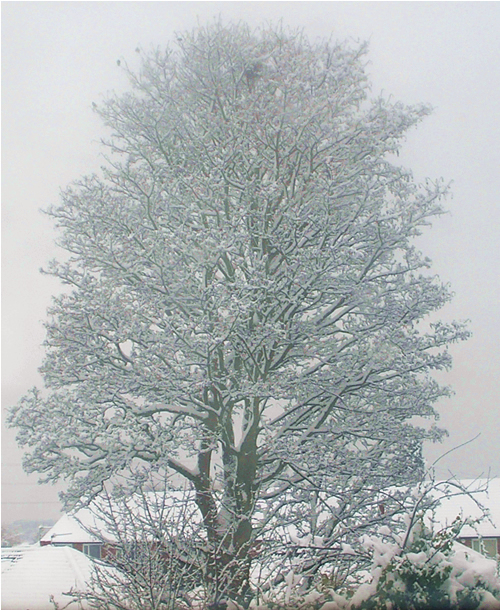
The photographs I choose to illustrate my posts are usually vaguely linked to the topic, even if only in my mind. This isn’t. It’s just the tree at the end of our garden in the current weather.

I have been musing about various pieces of advice I have seen, from authors who feel sufficiently confident about their own status to tell other writers what to do. I am quite sure they mean well and equally sure that the advice works for them. However, everybody writes differently, not only in terms of their style etc. but also in respect of the entire process of writing.

One frequent admonition is to cut your first draft drastically. One author went so far as to say to a friend of mine that if you didn’t cut a third of your first draft you couldn’t be editing properly.

I know at least two writers (one of them with many publications to his name, and very popular) who write first drafts that have gaping holes in them. There are fragile links that have scribbled notes such as ‘insert dialogue here’ or ‘maybe a sex scene’ or even ‘do some research’.  I can totally understand how this comes about. The writer wants, indeed needs, to get to the end of the basic story, and doesn’t want to stop to flesh out some scenes until that end has at least been reached a first time. It is then possible to go back and fill in the gaps, calmly, and bearing the ultimate ending in mind. But what would happen if these writers cut their first drafts by a third? Chaos, I should think.

I don’t leave gaps in my first draft, or only the occasional one where I need to research something like the correct spelling of a foreign place name. The story, which has usually been simmering in my head for some time, simply flows out onto the page or screen until I reach the ending, or an ending. (The ending might change.) On the way, I edit details. When starting a new chapter I always re-read the previous chapter; that puts my mind back into the flow of the story, and usually prevents plot or name errors. It also gives me the chance to spot minor problems such as overuse of a particular word, or some clumsy dialogue. So those get corrected at that stage. Then I hand everything over to a beta reader.

My beta readers (and I have used several) have one thing in common. They all, without fail, ask me to expand what I have written. They used to tell me to add more dialogue but I’ve got into better habits recently, and now the main complaint is that I need to include more explanation because readers aren’t psychic. If I cut that first draft by a third my betas would presumably be incoherent with rage!

I’m sure there are writers who ‘overwrite’ at first; they put in anything and everything that occurs to them and are particularly prone to inserting purple prose that pleases them but no-one else. Certainly for them the advice is good. But there are many of us who ‘underwrite’ and the advice is bewildering. I can almost guarantee that my initial draft will eventually be expanded by about a third…

Another piece of advice is to write what you know. This is so widespread as to be almost trite. It also bears some closer investigation. Obviously it can’t mean that you should always stick with your own surroundings, gender, experiences. If it did, we would have no genre fiction whatsoever. And yet one of my friends was told, on a writing course, that she should not attempt to write outside her own experience – as she was at the time writing a murder mystery, both she and I were somewhat shocked by the advice.

Surely the advice simply means that you should do adequate research and that you should try to build on your own experienced emotions when developing your characters. We can all write villains, and can ‘know’ them, too, by extrapolating from the fleeting thoughts we have had and taking them to extremes. I am, of course, talking about villains with some semblance of reality and not melodramatic stereotypes. And of course we should always make sure that we know what we are writing about, which is not the same as only writing what we know from our own experience.

Perhaps it’s because much of my writing is fantasy that I distrust the ‘write what you know’ adage. And perhaps those who give the advice confine their reading to modern novels set in modern surroundings?

Some of you are writers. How do you approach your first draft? What do you think of the advice I have treated with such contempt?  What advice have you come across that is truly worth following? Let me know!

January

50. January 13

I tend to hibernate in January. It’s partly the weather, which has been cold and miserable, and partly a kind of post-Christmas inertia which hits me every year. My blog has suffered along with everything else.

I have, however, started writing again. I’ve written the first three chapters of the third volume in my fantasy detective series. Genef, trainee investigator, along with her mentor, Rath, and her teenage dragon friend, Scratch, have travelled to The Ice Country to track down a crown that was stolen from their queen and that they believe might have been traded to a collector in this cold and forbidding place. They have just learned that they must go further inland, battling snow, ice and criminals. I’m enjoying the story. I know the rough outline, of course; some plotting is essential to any kind of mystery.  But the details are always a surprise and a pleasure to discover. I got tired of editing and formatting and decided I deserved some writing time.

I have been to the cinema twice. This is unusual for me because I tend to wait until films are available on DVD. We have a DVD projector and a reasonably big screen and most things are fine on that.

We decided to see Skyfall at the cinema to get the full benefit of the special effects and I have to say it was worth it. The film is excellent. It is quite different from most of the Bond films and doesn’t really fit the series well. I think it is better than the others, especially the more recent ones, particularly because it does not rely on gadgets, and the villain is not a stereotype. Daniel Craig brings a grittiness and realism to the Bond role that I think the other actors never matched.

Then we went to see The Hobbit – again. This time we saw the 3D version and it was truly spectacular. I absolutely loved it. In 3D the fight scenes were much easier to follow, which was good.  I was also surprised at how much more detail I noticed second time around. It’s a film that repays a second look!

I spent some time – almost a week – reading the final volume of Robert Jordan’s Wheel of Time. After fourteen volumes (fifteen if you count the prequel, written a long time after the first books) that came out over twenty years, I was glad to reach a conclusion but sad in some ways to say goodbye to an old friend. Jordan, of course, died before the cycle was complete and the last books were written by Brad Sanderson, relying on extensive notes and plans. I know the story is Jordan’s but I think Sanderson is probably a better writer. He managed to keep my interest through a very long ‘last battle’ with lots of military detail, and that’s something very few writers could do. The ending was satisfactory but in some ways I was sorry to reach it. However, I would never read the series again. Now that I know the fates and futures of the main group of characters the earlier books would lose their appeal. That’s odd, because the same is not true of, for example, The Lord of the Rings, which bears frequent re-reading. I wonder what makes the difference? Jordan attempted to create a myth but I think ultimately failed in that respect.

I then turned to Pratchett’s Snuff, which was funny, serious and glorious, and to David Crystal’s The Fight for English, the subtitle of which is How the Pundits Ate, Shot and Left, a book which made me think very carefully about the way our language has developed over the centuries, and thus brings me back to my own writing.

January is almost over and perhaps I will manage to blog more often once Spring is on the way.