
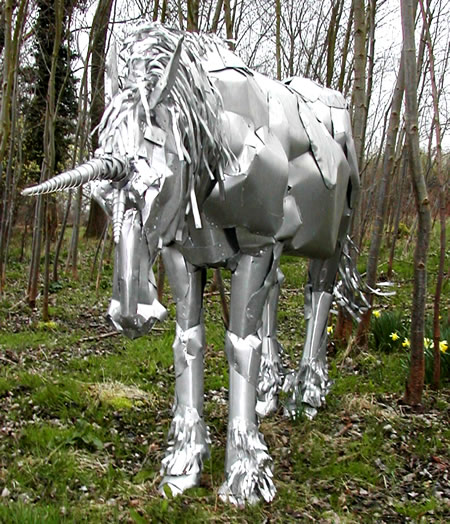
Why Fantasy?
I have, from a very early age, found myself drawn to ‘genre’ fiction. Even within the ‘classics’ I prefer to find elements of fantasy or crime or at the very least, romance. For example, Midsummer Night’s Dream and The Tempest are my favourites of Shakespeare’s plays.
I like the way that this kind of fiction enables us to explore the human condition without any heavy preaching or moralising and lets us approach otherwise taboo subjects without placing them in recognisable places or communities. Genre fiction at its best shines a spotlight on issues like race, sex, class, insanity, bullying, religion, political power and other issues whilst superficially telling an exciting tale about alien planets, fantasy creatures, the solving of crime, the sweetness (or tragedy) of romance or the fascination of history. It is well placed to alter perceptions and change attitudes. As an adult I am unlikely to be swayed by it and hope that I have already opened my eyes to many of the messages contained in fiction, but as a teenager I found myself able to question many things I had been taught because the books I read posed questions. I found, and still find this valuable.
When I read what is sometimes known as mainstream fiction or even litfic, I often find myself admiring the execution but bored by the content. In fiction, I want excitement, stories that have me reading till late at night to find out what happens, or tales that set fire to my imagination. I do not particularly want to read about ordinary people living ordinary lives, however well described. In short, I require fiction to provide a kind of escapism, not from anything but to unknown worlds in my head. This applies to films as well as books.
There is a school of thought that tells writers to write what they know. Taken literally that advice would effectively rid the world of all speculative fiction and a great deal of crime/thriller fiction. It would also do away with books told from the point of view of animals, such as Watership Down, and would mean authors could only write about their own gender in stories set in their own home towns. So it cannot be taken literally, though I have known a friend given this advice very firmly on a recent writing course. (She was writing a crime story with a male hero.) However, it does help to be familiar with any genre – or location – before embarking on writing in it, and that means reading a great deal, and analysing what is read.
This is where reading genre fiction diverges sharply, for me, from reading mainstream fiction. Instead of being bored by the content I am enthralled, but instead of admiring the execution (almost a ‘given’ with mainstream fiction) I find myself being extremely critical and judging what I read by a host of criteria. I am far more likely to find a book completely wonderful or totally dire and I could go on at length on what I find good and bad in different genres.
So when I came to wanting to write myself, I naturally wanted to write in one of my favourite genres.
Sci-fi is out. I tried a couple of short stories and failed miserably. My science education was simply not good enough and whilst research can substitute for poor early learning the research would be huge and not particularly interesting, for me, in itself. To have to understand physics in order to write convincingly about space travel would not appeal to me. I can allow myself to write fanfic in sci-fi fandoms, utilising other people’s research to underpin stories with no intent to publish, to entertain myself and my friends. But original sci-fi: no.
Crime is a possibility but again, a lot of research is needed. Police and other agencies need to be presented convincingly and the research needed would again be vast and uninteresting. I have to admit that cop shows are another fanfic favourite, for writing as well as reading, and again I let the originals provide adequate background for procedural aspects.
The same thing applies to historical fiction. Although good writers can sometimes keep me reading and loving their work, I can only admire their meticulous research and could never emulate them. I read non-fiction history as well as fiction but I skip from era to era and never get sufficiently invested in any particular period to know it in depth.
I am not sufficiently interested in ordinary romance, set in modern times, to write it although I love Jane Austen and other romantic ‘classics’. I tend to get bored at quite an early point in the relationship and could not see myself with the enthusiasm to write a whole novel. I mostly dislike horror and am not usually too keen on supernatural beings such as vampires who interact with humans.
Fantasy is a different matter. I am wholly engaged in the fantasy worlds I read about, and in the ones that then spring to my own mind. I continue to live in the worlds I have read about and I want to share my worlds with other people. It is perhaps strange to say that the research needed never seems like work. Make no mistake, fantasy needs research. Names, physical characteristics of people, animals and plants, weather systems, planets, architectural styles – they all have to be written in such a way that readers will suspend disbelief and that means a lot of underlying work. It is no good having daffodils in a tropical jungle or winged animals that are too heavy to fly. Those are obvious errors but they exemplify the way the writer needs to build a fantasy world adequately and with credible detail. This is where I do write what I know. I use settings I know well, repopulate them with my own creations, tweak the flowers and animals, and make subtle alterations to the road systems and the houses. In a sense, whenever I am out and about, or travelling, I am observing and doing ‘field’ research.
Once I have a ‘world’, I can use it to tell a story that appeals to me. I enjoy romance and crime, and to some extent I tend to put both those into my stories. I have an elf detective, a fae family with assorted love dramas, a prince solving a mystery surrounding unicorns, and shorter tales that involve murder, theft, and betrayal. A constantly recurring theme in my writing is culture clash – between countries, between classes, between species, between the adherents of beliefs. It’s something I have researched and dealt with on a professional basis in my career and I suppose it is close to my heart – at any rate, I seem to write about it, even when I am ostensibly writing about elves or unicorns.
Within all speculative fiction there is the possibility of asking ‘what if?’ What would happen if societies did or did not behave in certain ways? Not just individuals, but nations, religions, whole swathes of people. How would these people react if something different was dropped into their midst? That possibility is what sparks my imagination and then the characters come along to show me how the answers would play out in individual lives.
Fantasy enables me to ask and answer questions about social issues. It also enables me to build worlds that fascinate me and people them with characters who interest me. It satisfies deep needs and at the same time is fun. This is true both for what I read and for what I write.
How do you feel about fantasy? Do you enjoy it? Does it make a difference to your opinions about anything? And how about genre fiction in general? What are your thoughts?


 Jay's World